Cedar Tree Pruning: Expert Step-By-Step Guide
Master safe and effective methods to prune cedar trees for optimal health, shape, and longevity without harmful topping practices.
Proper Cedar Tree Pruning Techniques
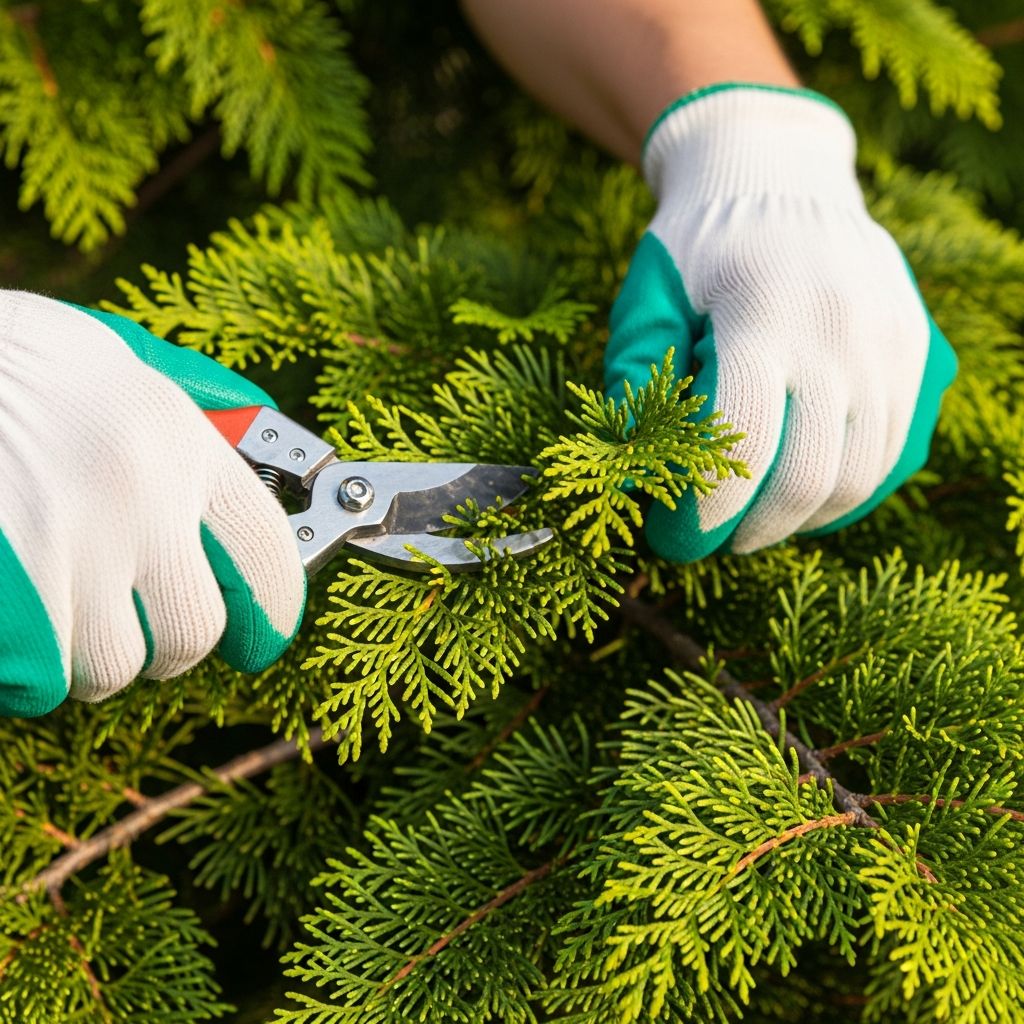
Cedar trees are resilient evergreens prized for their dense foliage, aromatic wood, and versatility in landscapes. However, improper pruning can lead to structural weakness, disease vulnerability, and unsightly growth. This guide explores scientifically backed methods to prune cedars effectively, emphasizing natural shaping over destructive practices like topping, which experts universally condemn.
Understanding Cedar Tree Biology and Pruning Needs
Cedar trees, belonging to genera like Thuja or Cedrus, feature layered branches with scale-like needles that regenerate from lateral buds rather than epicormic shoots. This biology dictates selective pruning to maintain vigor. Pruning enhances air circulation, light penetration, and structural integrity, reducing risks from pests like bagworms or fungal pathogens such as Phytophthora root rot.
- Key Benefits: Improves tree health by removing deadwood, balances crown weight to prevent splitting, and refines aesthetics for hedges or specimens.
- Common Pitfalls: Over-removal stresses the tree, triggering weak regrowth; topping severs vascular tissues, leading to decay and dieback.
Arborists recommend limiting cuts to 25% of live canopy per season to avoid shocking the tree’s physiology.
Optimal Timing for Cedar Pruning
The best window for pruning cedars aligns with their dormant periods to minimize sap loss and disease entry. Late winter to early spring, before new buds swell, is ideal for structural work, as it allows healing before active growth. For light shaping, early summer post-flush works well for hedges.
| Season | Suitable Pruning Type | Reason |
|---|---|---|
| Late Winter/Early Spring | Heavy structural cuts | Dormancy reduces stress; wounds heal by growth spurt. |
| Early Summer | Light shaping, hedge maintenance | New growth hardens; avoids winter storm damage. |
| Fall | Avoid except deadwood removal | Open cuts invite pathogens before dormancy. |
Regional climates influence timing; in cooler zones, delay until frost risk passes.
Essential Tools for Precision Pruning
Sharp, clean tools ensure clean cuts that seal rapidly, preventing tear-out and infection. Invest in bypass pruners for twigs up to ¾-inch, loppers for 1-2 inches, and a pruning saw for thicker limbs.
- Pruning Shears: Precision for small branches; sharpen regularly.
- Loppers: Leverage for medium cuts; extendable handles aid reach.
- Pruning Saw: Curved blade for larger removals; foldable for safety.
- Pole Pruner: For high hedges without ladders.
- Disinfectants: 10% bleach solution between trees.
Sterilize tools to curb disease spread, especially in multi-tree landscapes.
Step-by-Step Guide to Pruning Cedar Trees
Approach pruning systematically: assess, prioritize, execute, and review. Start from the ground up for safety and balance.
- Assess Overall Health: Circle the tree, noting dead, rubbing, or co-dominant leaders. Use binoculars for crowns.
- Remove Dead and Diseased Wood: Cut to the branch collar—the swollen ridge where branch meets trunk—avoiding stubs. This promotes compartmentalization.
- Thin Dense Interior: Selectively remove 20-30% of crowded branches to boost airflow; target inward-growing shoots.
- Raise the Lower Canopy: Gradually shorten bottom limbs for clearance, preserving natural taper. Aim for 6-10 feet off ground on mature trees.
- Shape Upper Crown: Tip lightly or shear hedges vertically, maintaining pyramidal form. Never flat-top.
- Step Back Frequently: Check symmetry from multiple angles; adjust incrementally.
For overgrown hedges, stage reductions over years: cut back one-third annually to encourage back-budding.
Pruning Young vs. Mature Cedars
Young cedars (under 5 years) need minimal intervention—focus on training a central leader. Stake if needed, but prune sparingly to build taper.
Mature specimens require crown reduction: shorten outer branches to laterals at least one-third the limb’s length, preserving form. Avoid ladder work on big trees; hire certified arborists for heights over 10 feet.
Hedge Maintenance: Shaping Without Stress
Cedar hedges thrive with trapezoidal profiles—wider at base, narrower top—for sunlight penetration. Trim bi-annually: once for growth control, once for refinement.
- Base width: Equal to mature height.
- Top taper: 10-20 degrees inward.
- Height consistency: Use string lines for uniformity.
Power shears speed work but risk scalping; hand tools yield natural results.
Dangers of Topping and Why to Avoid It
Topping—severing leaders at flat plane—cripples cedars. It starves the crown of photosynthates, sparks epicormic sprouts weak against wind, and invites decay fungi via large wounds. ANSI A300 standards deem it unacceptable, as stubs fail to compartmentalize properly.
Consequences include:
- Reduced lifespan by 50% or more.
- Increased hazard from brittle regrowth.
- Unaesthetic “witches’ broom” appearance.
Opt for gradual reduction instead: drop height 20-30% per session over years.
Promoting Regrowth and Recovery
Healthy cedars respond to proper cuts with vigorous lateral budding. Water deeply post-pruning, mulch bases (not touching trunk), and fertilize sparingly with balanced NPK in spring. Monitor for pests; insecticidal soap treats spider mites.
Regrowth timelines:
| Cut Severity | Regrowth Expectation | Timeline |
|---|---|---|
| Light thin (10-20%) | Dense, natural | 1 season |
| Moderate reduction (25%) | Moderate fill-in | 1-2 seasons |
| Heavy (avoid >25%) | Slow, sparse | 2+ seasons |
FAQs
Can I prune cedars in summer?
Yes, for light maintenance after new growth hardens, but avoid heavy cuts to prevent sunscald on exposed branches.
How do I fix an over-pruned cedar?
Patience is key; provide optimal care and allow natural recovery. Severe cases may need professional evaluation.
Is topping ever okay for cedars?
No; it compromises health irreversibly. Use crown reduction for height control.
What if my cedar hedge is too tall?
Reduce gradually over 2-3 years, shearing to lateral branches while compressing sides inward.
Do I need to seal pruning wounds?
No; modern arboriculture shows trees heal best au naturel. Sealants trap moisture and pathogens.
Professional Services and Safety
For trees over 15 feet or near power lines, engage ISA-certified arborists adhering to ANSI A300. They use lifts for safe access, ensuring compliance and insurance. Homeowners: Wear gloves, eye protection, and sturdy footwear; ground larger limbs to avoid kickback.
In summary, thoughtful pruning sustains cedar vitality, transforming landscapes with enduring beauty.
References
- Pyramidal Hedge Topping Done Right! — JF Hedge Trimming Ltd. 2023-01-06. https://www.youtube.com/watch?v=UIKrYxKvIBQ
- Here’s A Guide To Trimming & Pruning Trees — Red Cedar Inc. 2017-07-06. https://www.redcedarinc.com/blog/2017/07/06/guide-pruning-trees/
- Raising the Skirt of a Tree – Trimming lower branches — YouTube. N/A. https://www.youtube.com/watch?v=Fet2pc5Q_TE
- Trimming Cedar Trees: How to Trim and Prune Cedar Trees — Bunyon Bros. N/A. https://bunyonbros.com/blog/trimming-cedar-trees/
- Pruning Cedar Trees: Expert Tips — Crown Arborists. N/A. https://www.crownarborists.ca/pruning-cedar-trees/
Similar Articles








Read full bio of Sneha Tete