Shield Your Sprinklers: A Complete Guide to Protecting Sprinkler Heads From Damage
Keep every drop where it belongs by protecting your sprinkler heads before they break.
How to Protect Sprinkler Heads and Stop Costly Damage
Sprinkler heads are small, but repairing or replacing them over and over quickly becomes expensive and frustrating. Protecting them proactively keeps your lawn greener, reduces water waste, and cuts down on surprise repair days in the yard.
Why Sprinkler Head Protection Matters
Most irrigation problems start at the sprinkler head. When those small plastic or metal parts bend, crack, or get buried, water goes everywhere except where you want it. That leads to brown patches, soggy areas, and higher water bills. A little protection around each head helps absorb impacts and keeps the body of the sprinkler safely in place.
Because sprinkler systems usually run when you are not outside watching them, damage often goes unnoticed for weeks. That means water may be spraying straight into the sidewalk, driveway, or street every time the zone runs. Simple protection methods keep heads visible, upright, and safe from the everyday abuse of lawn care and foot traffic.
Common Causes of Sprinkler Head Damage
Understanding what actually harms sprinkler heads makes it easier to choose the right kind of protection. Different yards face different threats depending on layout, how often vehicles cut across the grass, and how you mow.
- Lawn mowers and string trimmers: Blades, wheels, and trimmer line can crack housings, break risers, or force heads lower into the soil.
- Vehicles and carts: Cars, delivery trucks, trailers, and riding mowers crush heads that sit near driveways or at the edge of parking pads.
- Foot traffic and pets: Repeated stepping, kids’ play, and dogs running the same path can gradually tilt or sink a head.
- Soil movement: Settling, erosion, and heavy rain can cause heads to sit too low or lean, changing the spray pattern and making them easier to hit.
- Improper installation: Heads set too high, too low, or without any surrounding support are more vulnerable to impacts.
Most yards experience a mix of these issues. The goal is to create a simple barrier or buffer around each sprinkler that absorbs force and keeps the head aligned with the finished grade of the lawn.
How to Spot a Vulnerable Sprinkler Head
Some problems show up only when the system is running, so plan to test each zone at least once at the beginning of the season. Watching the spray pattern for just a few minutes tells you a lot about which heads need help.
- Head sits below the surrounding soil: If grass or soil hides the top of the head, it is very easy to hit with a mower wheel or deck.
- Water spraying in the wrong direction: A crooked or tilted head may have been bumped or stepped on and is more likely to be damaged again.
- Leaking or bubbling around the body: Water seeping at the base instead of spraying cleanly usually indicates cracking or loose connections.
- Visible gouges or scuffs: Fresh cuts, scrape marks, or missing plastic often come from mower impacts.
- Head wobbles when touched: A loose or unstable head has almost no protection from the next bump.
Any head that is low, loose, or sitting at a strange angle is a candidate for some sort of guard, donut, or boundary around it.
Types of Sprinkler Head Protectors
Sprinkler head protection usually falls into a few categories: rigid rings, flexible joints, visible markers, and homemade guards. The right approach depends on your budget, the type of soil, and how much traffic the area receives.
| Protector Type | Best For | Main Benefits | Typical Cost Level |
|---|---|---|---|
| Rigid rings or “donuts” | Lawns with mower damage and sinking heads | Creates a hard, visible barrier and stabilizes soil around the head | Low to medium |
| Wire or metal guards | High-traffic areas and near driveways | Strong physical shield against wheels and heavy equipment | Medium |
| Swing joints / flexible connections | New installations and major repairs | Allows the head to flex instead of snapping when hit | Medium |
| Flags and markers | Seasonal or temporary protection | Makes heads easy to see to avoid mowing directly over them | Very low |
| DIY sleeves and collars | Budget-friendly, small projects | Repurposes common materials to create simple barriers | Very low |
You do not need the same solution for every head. High-risk spots near driveways or walkways might deserve stronger protection, while quiet zones in the middle of the lawn often do fine with simple rings or careful trimming around the head.
Using Protective Rings Around Sprinkler Heads
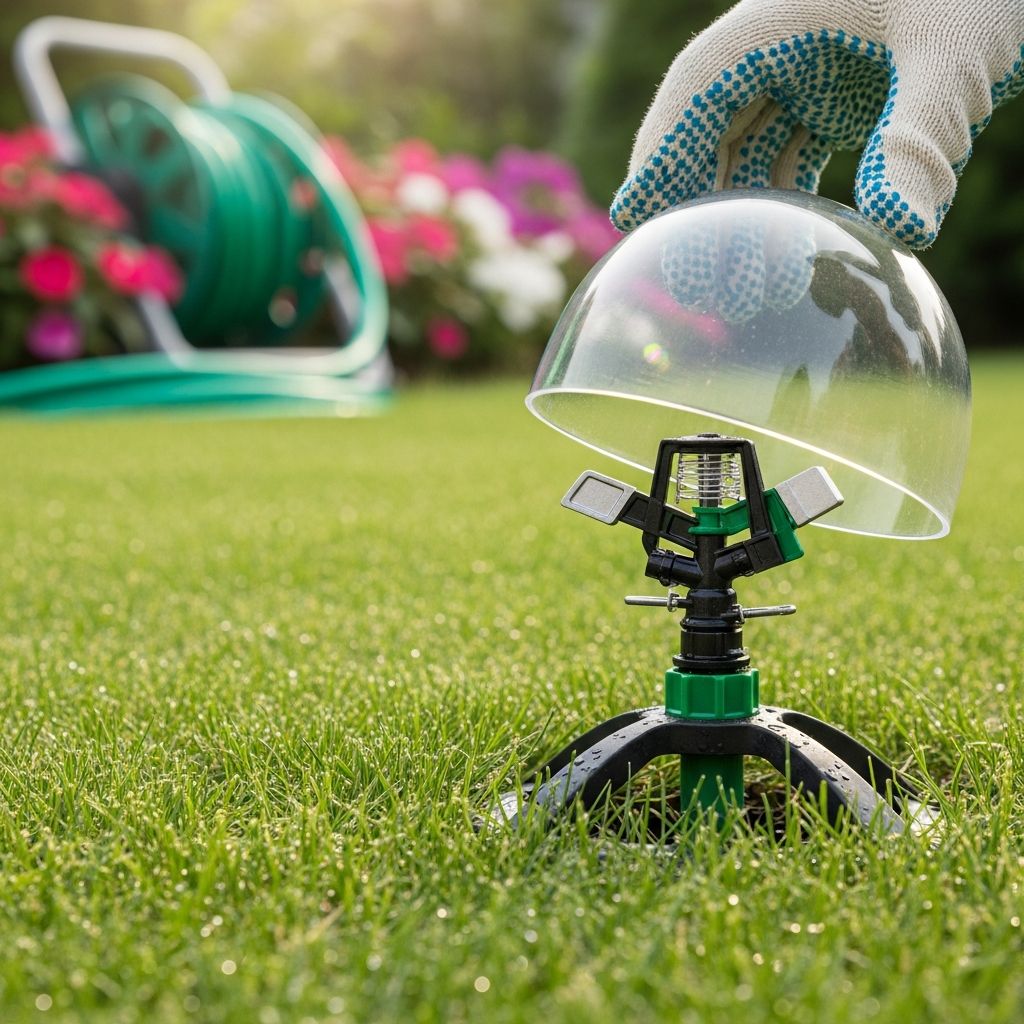
One of the most popular ways to protect a sprinkler is to surround it with a rigid ring that sits just above or exactly at ground level. This ring prevents mower wheels from getting too close and keeps soil from slowly creeping up over the top of the head.
These rings come in materials like plastic, rubber, or concrete. Concrete and heavy plastic versions are very durable and help hold their shape for many seasons. Lighter plastic rings are easier to cut and adjust, making them useful where you want a snug fit around odd-shaped heads or in tight planting beds.
Basic Installation Steps for Protective Rings
- Run the sprinkler zone briefly to confirm exact head location and height.
- Trim or remove grass in a circle around the head slightly larger than the ring.
- Use a trowel to create a shallow, even trench around the sprinkler body.
- Place the ring over or around the head, keeping its top at or barely above lawn height.
- Backfill and tamp soil against the outside of the ring, then re-seat any removed sod.
- Test the sprinkler again to ensure it can pop up freely and the spray pattern is not blocked.
When sized and installed correctly, the ring becomes part of the landscape. Grass can grow right up to the outside edge while the head itself stays clean, visible, and better protected from passing equipment.
Guarding Heads With Wire or Metal Shields
In particularly exposed locations, such as the corner of a driveway or the edge of a parking pad, a simple ring may not be enough. In those spots, wire or metal guards shaped like a small cage or hoop can absorb direct hits that would otherwise destroy the sprinkler.
These guards usually anchor into the soil with short legs or stakes. They rise slightly taller than the sprinkler head, so when a wheel or mower deck bumps into the guard, the impact transfers to the ground around the guard instead of to the sprinkler itself.
- Use taller guards where vehicles may drive over the area or where large riding mowers operate.
- Choose corrosion-resistant materials, such as galvanized or coated metal, for long life outdoors.
- Check each guard in the spring and tighten or reset any that have loosened over winter.
Metal guards may stand out more than low-profile rings, but in heavy-use zones they can easily pay for themselves in avoided repair costs and replacements.
Flexible Connections: Let the Sprinkler Move Instead of Break
Another layer of protection comes not from what you put around the sprinkler, but from how you connect it to the underground piping. Flexible joints and short sections of flexible tubing allow the head to move slightly if bumped instead of snapping off at a rigid connection.
This approach is especially helpful in lawns with soft soil or in yards where people and pets cross over the same heads frequently. When someone steps on a head connected to a flexible joint, the head can tilt and spring back with far less risk of cracking the fitting or shattering the riser.
When to Upgrade to Flexible Joints
- During any major irrigation repair or redesign project.
- When you are already digging to replace a broken head or leaking elbow.
- In new installations where you want to build damage resistance from the start.
Flexible joints cost more than a rigid riser but dramatically reduce the number of catastrophic breaks. Combined with a simple guard or ring, they create a very robust installation.
DIY Sprinkler Head Protection on a Budget
If you are handy and enjoy repurposing materials, there are many ways to create your own sprinkler head protectors. The key is to use something rigid enough to stand up to occasional contact, but not so tall or bulky that it becomes a trip hazard or mowing obstacle.
Here are several low-cost ideas:
- Cut plastic sleeves: Short lengths of sturdy plastic pipe can be cut into rings and set around the head like a store-bought donut.
- Upcycled containers: Rigid cups or small can-like containers, trimmed and sunk into the soil, can act as protective collars for isolated heads.
- Homemade concrete collars: A simple mold and a bag of concrete mix can produce heavy-duty rings that last for many years.
- Decorative stone borders: For heads in beds or near walkways, a tight ring of small stones or pavers keeps traffic away from the head itself.
Whatever DIY solution you choose, keep the inner opening large enough that the sprinkler can pop up freely and the spray is not blocked. It is better to err slightly on the wide side than to create a narrow collar that interferes with the water pattern.
Mowing and Trimming Techniques That Protect Sprinklers
Even the best guards will not help much if the mowing habits around them are careless. A few small changes to the way you mow and trim can greatly reduce the risk of accidentally hitting a sprinkler head.
- Slow down near known sprinkler locations: Reducing speed gives you more control over the mower deck and wheels.
- Leave a buffer strip: Mow up to a small invisible boundary around heads, then finish up with a string trimmer in a controlled way.
- Avoid vertical trimming directly on the head: Holding a trimmer line right on the sprinkler body can gouge or crack plastic housings.
- Teach other users the layout: Anyone who mows your lawn should know where the sprinklers are and how to avoid them.
Good mowing technique works together with protectors. Guards are the safety net, but careful equipment use is still the first line of defense.
Maintenance: Keeping Heads Level, Clean, and Visible
Even protected sprinkler heads benefit from quick seasonal checkups. Most inspections take only a few minutes per zone and can prevent bigger problems later in the year.
- Flush and test each zone: Run the system and watch for weak heads, low spray, or heavy misting that might indicate clogs or pressure issues.
- Re-level heads: Gently lift or lower any that sit too high or low compared to the surrounding soil.
- Clear grass and debris: Remove thatch, clippings, and built-up soil from around the top of every head and protector ring.
- Check protectors for movement: Re-seat or tighten rings and guards that have shifted or become loose.
- Inspect for cracks: Replace any head that shows clear damage, even if it still operates, to avoid sudden leaks later.
By pairing physical protection with light maintenance, you extend the life of your entire irrigation system and keep water distribution even across the lawn.
Planning Protection for High-Risk Zones
Not every sprinkler in your yard faces the same level of danger. Planning your protection strategy around risk zones gives you better results with less effort and expense. Focus first on areas that see the most traffic or that sit near hard surfaces.
- Driveway edges and corners: Use stronger guards, metal hoops, or heavy rings to protect from vehicles and trailer wheels.
- Play areas: Combine flexible joints with low-profile collars so kids can play without worrying about breaking heads underfoot.
- Side yards and access paths: Where equipment is often moved or stored, use very visible protectors and consider relocating especially vulnerable heads.
- Steep slopes: On hillsides where soil erodes or slides, stabilize heads with rings and backfill material that resists washing away.
In some extreme cases, it may be worth re-routing a line or moving a head a short distance if it continually gets damaged, even with guards in place.
FAQs About Sprinkler Head Protection
Do all sprinkler heads need guards?
No. Heads in the middle of an open lawn with low foot traffic may do fine without any added protection if they are installed at the correct height and are clearly visible. Guards and rings are most valuable where there is a real chance of impact from wheels, mowers, or feet.
Will protective rings affect the way my sprinklers water the lawn?
When sized and installed correctly, rings should not interfere with the spray pattern. The opening needs to be wide enough to let the nozzle clear the collar and distribute water without hitting the sides. If you notice water splashing off the protector, step the ring size up or adjust the head height.
Is it better to raise low sprinkler heads or just add protection?
Low heads should always be raised to match the lawn grade first. Protection can then be added to keep them from sinking again or being hit. Adding a guard around a head that sits too low does not solve the underlying coverage and visibility problems.
How often should I check my system for damage?
At a minimum, inspect every head at the start of the watering season and again mid-season. In yards with heavy activity or frequent mowing, glancing over high-risk zones every few weeks helps catch problems before they cause major leaks or dry spots.
Can I install sprinkler head protection myself?
Most homeowners can install basic rings, guards, and DIY collars with just a trowel and a utility knife. For deeper plumbing changes, such as adding flexible joints or relocating heads, those comfortable with basic PVC or tubing work can handle the job, while others may prefer to hire an irrigation professional.
Final Thoughts
Sprinkler head protection does not require complicated tools or expensive products. With a mix of simple barriers, better mowing habits, and occasional inspections, you can dramatically cut down on broken heads, wasted water, and patchy grass. Treat each vulnerable head as a small investment worth guarding, and your entire irrigation system will perform more reliably season after season.
Similar Articles






Read full bio of Sneha Tete