Protecting Kids: Pool Safety Essentials
Essential strategies to prevent child drownings in residential pools through barriers, supervision, and education.
Swimming pools offer endless summer fun for families, but they pose serious risks to young children, who can drown in moments without proper precautions. Drowning remains a leading cause of death for kids under 5, yet simple, layered defenses like barriers, alarms, and vigilant supervision can prevent most incidents.
Understanding the Hidden Dangers of Home Pools
Residential pools account for the majority of child drownings, with nearly 70% occurring in familiar backyard settings where parents least expect trouble. Toddlers often slip away unnoticed from inside the home, accessing water through unlocked doors or windows. Studies from high-pool-density states like Arizona, California, and Florida reveal that 46% of victims were last seen indoors, wandering out unsupervised. Factors like slippery decks, powerful drains, and even shallow spa water amplify hazards, making constant awareness vital.
Unlike public facilities with lifeguards, home pools rely entirely on homeowners for safety. Even strong swimmers face risks from exhaustion, seizures, or entrapment in suction fittings. No single measure eliminates danger entirely, but combining physical barriers, technology, and behavioral rules creates robust protection.
Building Impenetrable Physical Barriers
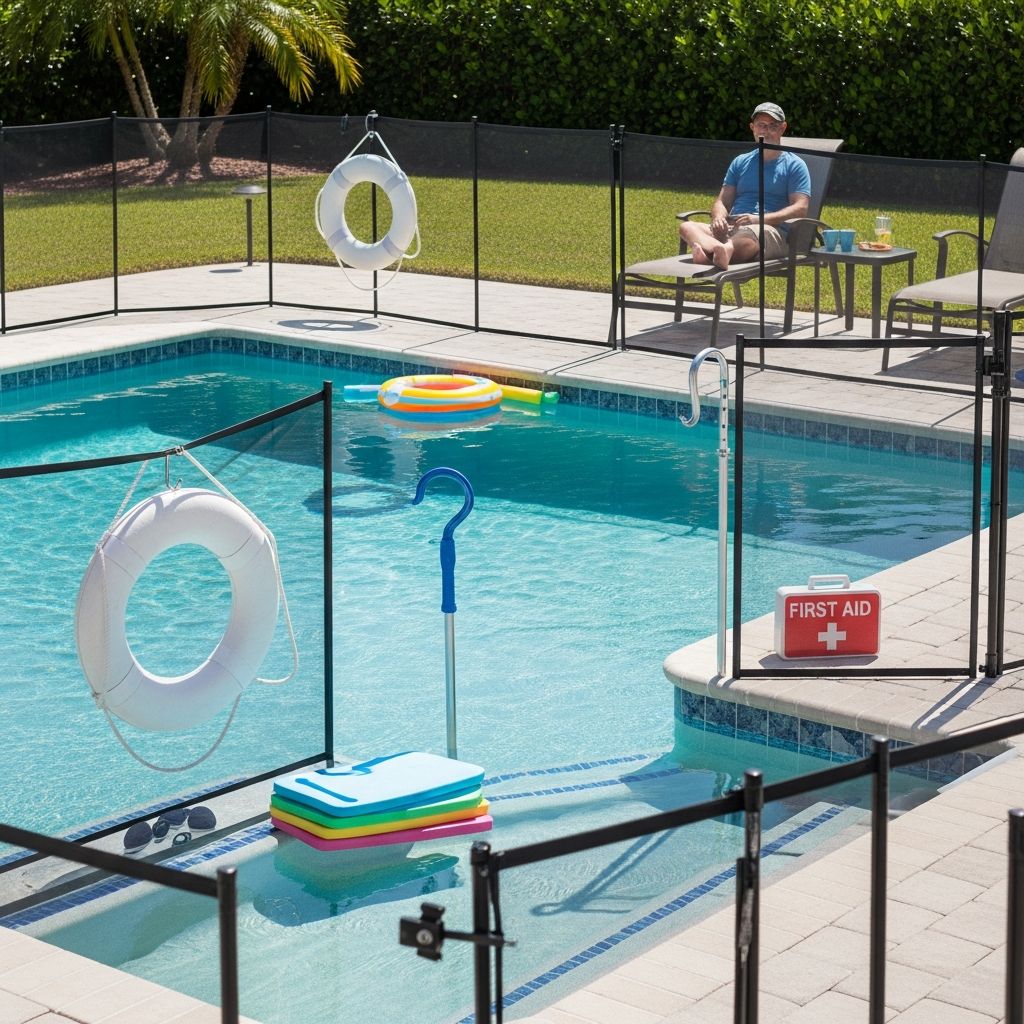
The cornerstone of pool defense is a four-sided isolation fence that fully separates the water from the house and yard. This design slashes drowning risk by 83% compared to partial fencing along property lines. Fences must stand at least 4 feet tall, feature non-climbable materials, and include self-closing, self-latching gates opening outward with latches at least 54 inches high.
- Vertical slats spaced no more than 4 inches apart to block small bodies from squeezing through.
- No handholds, footholds, or gaps under the fence larger than 4 inches from ground level.
- Gates tested daily to ensure automatic closure and secure latching beyond toddler reach.
State laws, such as Florida’s Residential Swimming Pool Safety Act, mandate these features for pools built after 2000, yet older installations demand retrofitting. Keep furniture, ladders, and toys away from fences to deter climbing. For above-ground pools and hot tubs, similar isolation applies, treating them as equally hazardous.
Advanced Covers and Alarms for Extra Security
Beyond fencing, power-operated safety covers that span the entire pool surface provide a critical backup, supporting adult weight without sagging. Avoid flimsy solar or winter blankets, which create false solidity and trap children underneath in as little as 2 inches of water. Rigid covers meeting ASTM standards add reliability but never replace fencing.
Pool alarms detect surface disturbances or water entry, sounding alerts at doors, windows, and gates. Door alarms with 110-decibel sirens prevent indoor escapes, while wristband alarms monitor individual children. These devices buy precious seconds for response, especially during brief distractions.
| Barrier Type | Key Features | Risk Reduction |
|---|---|---|
| Four-Sided Fence | 4+ ft high, self-latching gate, no climbable elements | 83% vs. three-sided |
| Safety Cover | Power-operated, full pool span, ASTM-approved | Prevents access when closed |
| Alarms | Door/window, pool surface, wearable | Early detection layer |
The Critical Role of Unwavering Supervision
No fence or gadget substitutes for “water watching”—designating one alert adult solely responsible for eyeing children in and near water, within arm’s reach of toddlers. Drownings happen silently and swiftly, often during lulls when caregivers multitask. Assign shifts among guests at parties, avoiding alcohol or phones.
Clear the pool of toys post-swim to eliminate temptations drawing kids back unsupervised. Enforce rules like no running, pushing, diving into shallow ends (<9 feet), or using restrictive gear like mermaid tails. Bad weather, especially lightning, demands immediate evacuation.
Empowering Children Through Swim Skills and Rules
Formal swim lessons cut drowning odds by 88% for ages 1-4, teaching breath control, floating, and reaching edges. Start at age 1, prioritizing toddlers and those with special needs like autism. Lessons build confidence but don’t make kids drown-proof—pair with barriers.
Instill lifelong habits: stay away from drains to avoid hair/limb entrapment, only swim with buddies, and recognize lifeguard signals. U.S. Coast Guard-approved life jackets aid non-swimmers but never replace supervision.
Eliminating Drain Hazards and Other Risks
Suction drains in pools and spas can trap hair, suits, or limbs fatally. Mandate anti-entrapment covers per Virginia Graeme Baker Pool & Spa Safety Act standards, and teach kids: “Know your drains—don’t play near them”. Inspect for cracks or missing covers before use.
Address electrical outlets, chemicals, and sharp edges around pools. Stock rescue gear: shepherd’s hooks, life rings, and CPR-trained adults nearby. For hot tubs, limit time to 15 minutes for kids and cool water to 102°F max.
Legal Requirements and Community Standards
While no federal fence law exists, states like Florida enforce multi-layer protection: fences or approved alternatives for new pools. Check local codes for compliance. When visiting others’ homes, scout access points and hazards preemptively.
Homeowner associations or rentals may impose rules—verify insurance covers safety upgrades, as lapses risk liability.
Frequently Asked Questions
What is the most effective pool barrier?
A four-sided isolation fence with self-closing gates reduces risk by 83%.
Are swim lessons enough to protect my child?
No—lessons reduce risk by 88% but require barriers and supervision.
Can pool noodles replace life jackets?
No; use only Coast Guard-approved jackets for non-swimmers.
How do I check my drain cover?
Ensure it’s anti-entrapment compliant; replace if broken.
What if my pool is above-ground?
Apply same four-sided fencing rules.
Daily Habits for Lasting Safety
Conduct weekly safety audits: test gates, alarms, covers, and drains. Educate all caregivers and model compliance—no drinks poolside. Customize for ages: armbands for infants, swim tests for older kids. These routines transform pools from perils to safe havens.
Tragedies are preventable—70% of drownings hit unexpected moments, but layered defenses intervene. Commit to vigilance; every second counts.
References
- Pool Safely — CPSC. 2023. https://www.poolsafely.gov
- WaterSmartFL – Drowning Prevention — Florida Government. 2024. https://www.watersmartfl.com/layers.html
- Drowning Prevention and Pool Safety for Children — Osceola County Sheriff. 2023-10-01. https://www.osceolasheriff.org/drowning-prevention-and-pool-safety-for-children/
- Pool safety for children — Nicklaus Children’s Hospital (YouTube). 2023. https://www.youtube.com/watch?v=aaRaIkSlo8A
- Home Swimming Pool & Hot Tub Safety — American Red Cross. 2024. https://www.redcross.org/get-help/how-to-prepare-for-emergencies/types-of-emergencies/water-safety/home-pool-safety.html
- Pool Safety for Children — The Kidz Docs. 2023. https://www.thekidzdocs.com/safety/Pool-Safety-for-Children
- Pool Dangers and Drowning Prevention — American Academy of Pediatrics. 2024-05-01. https://www.healthychildren.org/English/safety-prevention/at-play/Pages/Pool-Dangers-Drowning-Prevention-When-Not-Swimming-Time.aspx
- Water Safety for Kids — Florida DCF. 2024. https://www.myflfamilies.com/watersafety
- Guidelines for Keeping Your Pool Safe and Healthy — CDC. 2024-03-15. https://www.cdc.gov/healthy-swimming/safety/what-you-can-do-to-stay-healthy-in-swimming-pools.html
Similar Articles





Read full bio of medha deb