Pruning Gerbera Daisies: Expert Guide For More Blooms
Master the essential techniques for pruning Gerbera daisies to boost blooms, maintain health, and ensure vibrant growth year-round.
Pruning Gerbera Daisies: Expert Guide
Gerbera daisies, with their bold colors and long-lasting blooms, add striking beauty to gardens, patios, and indoor spaces. Proper pruning is key to their vitality, encouraging new flowers, removing diseased parts, and preventing common issues like rot. This guide covers everything from basic cuts to seasonal strategies, ensuring your plants flourish.
Understanding Gerbera Daisy Growth Habits
These tender perennials thrive in USDA zones 8-10 as warm-season annuals elsewhere. They form rosettes of basal leaves from a central crown, sending up sturdy stems topped with daisy-like flowers in vibrant hues. Growth centers at the crown, where stems meet roots, making precise cuts essential to avoid damage.
Leaves emerge continuously, while flower stems elongate rapidly. Without pruning, spent blooms and yellowing foliage accumulate, diverting energy from new growth and inviting pests or fungi. Regular maintenance keeps plants compact, healthy, and blooming profusely.
Essential Tools for Pruning Success
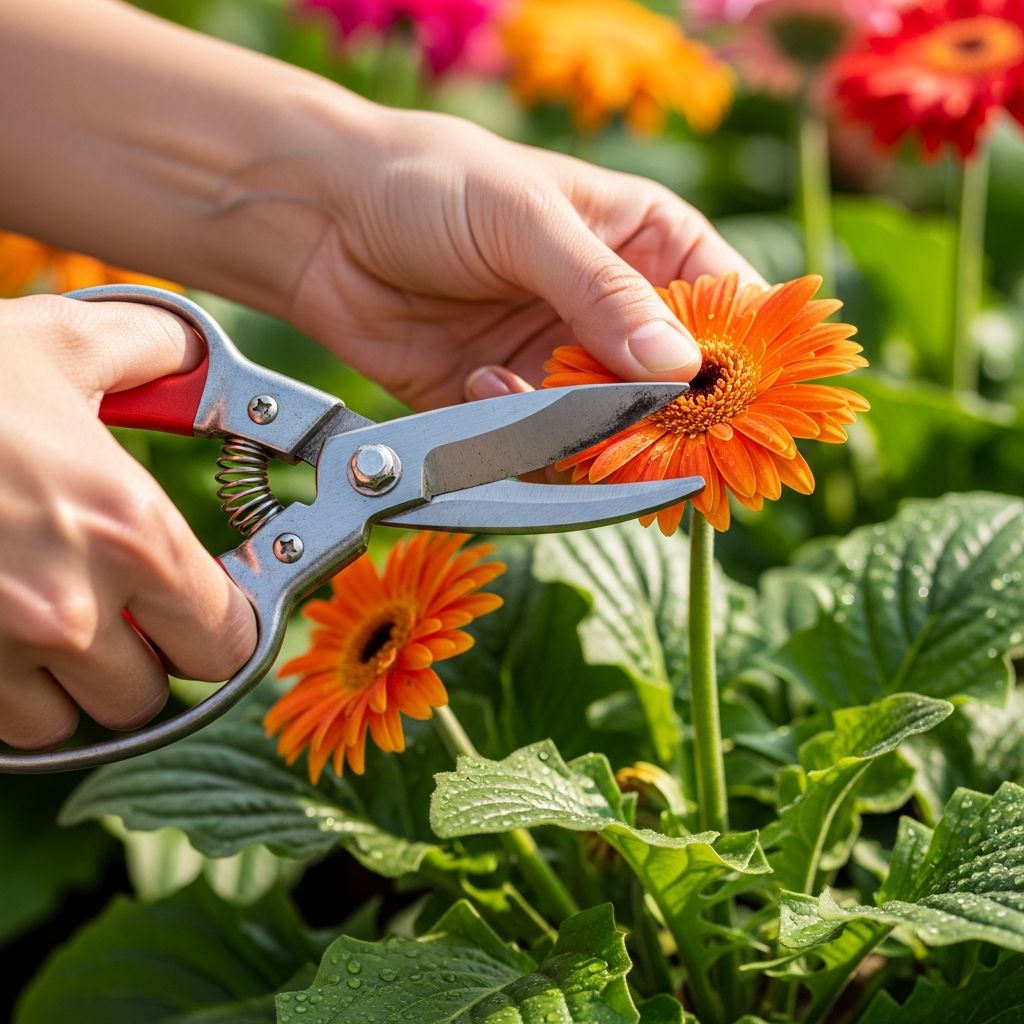
Sharp, clean tools minimize plant stress and infection risk. Here’s what you’ll need:
- Pruning shears or scissors: For stems and thicker leaves; bypass types prevent crushing.
- Knife: For precise cuts at the crown on delicate tissue.
- Alcohol wipes or sanitizer: Clean tools between cuts to stop disease spread.
- Gloves: Protect hands from sap and thorns on older plants.
Sterilize tools with rubbing alcohol before and after use, especially on multiple plants.
Step-by-Step Pruning Techniques
Follow these methods for healthy, vigorous Gerbera daisies.
Deadheading Spent Flowers
Remove faded blooms promptly to redirect energy. Snip the entire stem at the base, near the crown, using shears. Cut at a 45-degree angle to shed water and reduce rot risk. This promotes reblooming within weeks.
Avoid leaving stubs, as they decay and harbor fungi. In peak season, deadhead weekly for continuous displays.
Trimming Yellow or Damaged Leaves
Pinch or cut old, yellowed, holed, or diseased leaves at the crown throughout the growing season. Angle cuts allow drainage; straight cuts trap moisture.
For minor tidying, pinch with fingers. Dispose of debris: compost healthy trimmings, trash diseased ones to prevent reinfection.
Seasonal Cutbacks
In fall, before frost in cooler zones, cut plants to 1 inch above soil. This removes weakened growth and preps for dormancy. In zones 1-6, dig and overwinter indoors.
Spring pruning revitalizes: trim dead winter remnants to spur fresh shoots.
Optimal Timing for Pruning
Prune during active growth, mornings on dry days, allowing cuts to heal before evening dew. Avoid wet weather to curb fungal spread.
| Season | Pruning Focus | Frequency |
|---|---|---|
| Spring | Remove winter dieback | Once at start |
| Summer | Deadhead flowers, trim leaves | Weekly |
| Fall | Hard cutback to 1 inch | Pre-frost |
| Winter | Minimal; indoors only | As needed |
Preventing Common Pruning Mistakes
Steer clear of these pitfalls:
- Overwatering cuts: Water at soil level, never overhead.
- Blunt tools: Dull blades tear tissue, inviting bacteria.
- Ignoring the crown: Cuts too high leave decay-prone stumps.
- Pruning in heat: Above 90°F stresses plants; opt for evenings.
Integrating Pruning with Overall Care
Soil and Planting
Plant in well-drained, organic-rich soil. Space 12-18 inches apart, crown at or above soil line to avoid rot. Use raised beds or pots if drainage is poor.
Sun and Water
Provide morning sun, afternoon shade. Water deeply but infrequently, letting crowns dry between sessions. Mulch with 2-3 inches of pine straw to retain moisture and suppress weeds.
Fertilizing
Apply slow-release fertilizer 2-3 times per season or liquid every two weeks. Address iron/manganese shortages with micronutrient sprays.
Troubleshooting Pruning-Related Issues
Even with care, problems arise. Here’s how to fix them:
- Bent stems: Normal post-bloom; cut at base.
- Missing buds: Check for thrips or slugs; use neem oil (evenings, under 90°F).
- Root rot: Improve drainage; dry soil, repot if severe. Rarely reversible.
Indoor Pruning for Year-Round Blooms
Pot-grown Gerberas suit overwintering. Prune as outdoors, but reduce frequency. Bright indirect light, moderate water, and monthly fertilizer keep them flowering.
Benefits of Consistent Pruning
Regular trims yield bushier plants, more blooms, and fewer pests. Energy focuses on vigor, not decline. Expect 20-50 flowers per season from well-maintained specimens.
Frequently Asked Questions (FAQs)
Can I prune Gerbera daisies in winter?
Minimal pruning indoors; focus on dead leaves. Hard cutback is fall.
How do I know if a leaf needs removal?
Yellow, spotted, or holed—cut at crown.
Will pruning make more flowers?
Yes, deadheading redirects energy to new buds.
What if my plant rots after pruning?
Ensure angled cuts, dry crowns, good drainage.
Are Gerbera daisies toxic?
Safe for pets/humans in moderation; sap may irritate skin.
Advanced Tips for Pro-Level Results
Divide crowded crowns every 2-3 years post-pruning for propagation. Experiment with colors: reds, pinks, whites thrive similarly. Track pruning logs to refine timing per microclimate.
Incorporate companion plants like marigolds for pest deterrence. Monitor for whiteflies/aphids; neem controls safely.
References
- Gerbera Daisy Plants Questions & Answers — Gardening Know How. Accessed 2026. https://questions.gardeningknowhow.com/tag/gerbera-daisy-plants/page/7/
- How to Prune a Gerbera: Gerbera Plant Care — ehowgarden (YouTube). 2014-01-20. https://www.youtube.com/watch?v=AZ2ja1fkj-k
- Pruning Red Gerbera Daisies! — itsgardeningtime (YouTube). 2021-06-06. https://www.youtube.com/watch?v=OumkvQ6bHiw
- Gerbera Daisy Care: Essential Growing Tips for Home Gardeners — Clemson Cooperative Extension (HGIC). Accessed 2026. https://hgic.clemson.edu/factsheet/gerbera-daisy/
Similar Articles








Read full bio of Sneha Tete