Breaking Down Your Pull-Out Sofa: A Complete Disassembly Guide
Master the art of safely taking apart your pull-out sofa with expert strategies and practical step-by-step instructions.
Understanding Your Pull-Out Sofa Structure
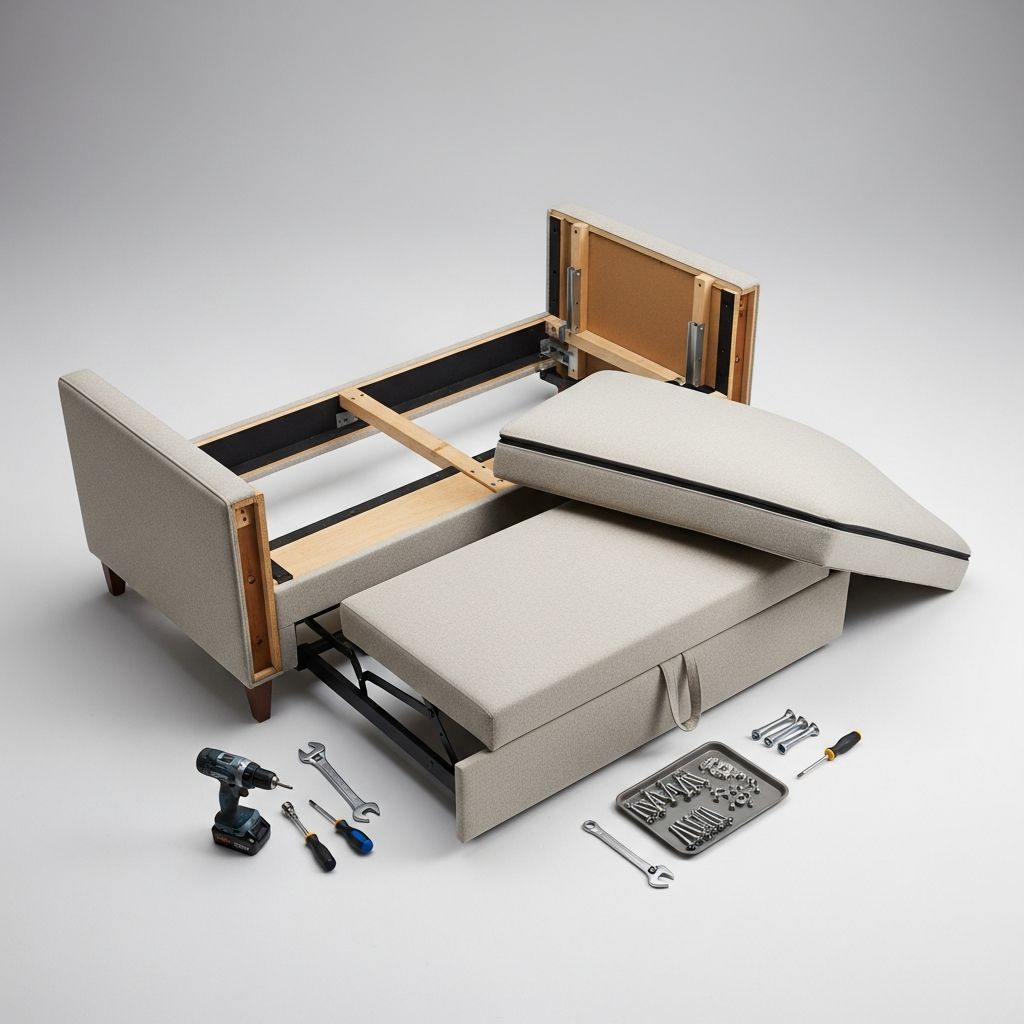
A pull-out sofa represents a sophisticated piece of furniture engineering that combines seating comfort with sleeping functionality. Before you attempt any disassembly work, it is crucial to understand the fundamental architecture of your particular model. Pull-out sofas typically consist of several interconnected components, including the main frame, cushioned seating surfaces, the mechanical bed mechanism, arms, legs, and various fastening hardware that holds everything together as a unified structure.
Each manufacturer designs their pull-out sofas with unique specifications and assembly methods. Some models feature a straightforward pull mechanism, while others incorporate complex locking systems and specialized brackets. The better you understand your specific sofa’s construction, the more efficiently you can approach the disassembly process. Taking time to familiarize yourself with how the various parts relate to one another will prevent unnecessary damage and wasted effort.
Essential Tools and Materials for the Job
Successful disassembly begins with gathering the appropriate tools and materials before you start working. Having everything prepared and within reach reduces frustration and prevents unnecessary trips back and forth during the project.
Your basic toolkit should include:
- Screwdrivers: Both Phillips-head and flathead varieties in multiple sizes to accommodate different fastener types
- Wrenches and sockets: A complete wrench set or socket set to handle bolts of various dimensions
- Pliers: For gripping, bending, and removing stubborn fasteners
- Allen wrenches: Hexagonal wrenches for specialty bolts that may be used in your sofa’s construction
- Rubber mallet: A soft-faced hammer useful for tapping components loose without causing damage
- Furniture blankets or moving pads: To protect both the sofa and your flooring during disassembly
- Ziplock bags and containers: For organizing and storing hardware so nothing gets lost
- Permanent marker: For labeling bags and parts to track where each component originated
- Tape: Masking tape or painter’s tape for marking screw locations and bolt positions
- Measuring tape: Helpful for documenting dimensions and ensuring proper reassembly alignment
Beyond tools, you’ll need workspace supplies. Ensure you have adequate lighting in your work area, as locating small fasteners in dim conditions is unnecessarily challenging. A clean, open space free from obstacles allows you to work safely and prevents components from rolling away or getting damaged by being stepped on.
Preparing Your Work Environment and Sofa
Proper preparation of your workspace and the sofa itself significantly impacts the success of your disassembly project. Begin by clearing the area surrounding your pull-out sofa, removing any obstacles that could hinder your movement or create safety hazards. Lay down furniture blankets or protective coverings to safeguard your flooring from scratches and to provide a clean surface for placing components as you remove them.
Next, remove every cushion from your sofa. This includes back cushions, seat cushions, throw pillows, and any decorative elements. Different sofas secure their cushions differently—some use zippers, others rely on velcro, while some are simply placed without attachment. Take note of how each cushion attaches so you can reinstall them correctly later. Set all cushions aside in a designated area where they won’t collect dust or get damaged during the disassembly process.
Once the cushions are removed, you’ll have clearer access to the sofa’s underlying structure. This is the time to inspect the entire unit carefully. Look for any visible fasteners, noting their locations and types. Check the assembly documentation or instruction manual that came with your sofa—these materials often contain invaluable information about how your specific model is constructed and which fasteners hold the primary components together.
Operating the Pull-Out Mechanism Safely
The pull-out bed mechanism is the defining feature of this furniture type, and understanding how it operates is essential before attempting disassembly. Begin by fully extending the bed to its open position. This positioning allows you to see exactly how the mechanism connects to the main sofa frame and where the key attachment points are located.
Examine the mechanism thoroughly while it’s in the extended position. Look for any locking bars, latches, or release handles that secure the bed in place. Many pull-out sofas feature a metal bar at the foot of the bed mechanism that contains a locking system. Locate this bar and identify how the locking mechanism works before you attempt to move it.
Once you’ve identified all the locking points, look for the fasteners that attach the bed mechanism to the sofa frame. These are typically located on either side of the mechanism where it connects to the main frame. Some models use bolts, others use heavy-duty screws, and some employ specialized locking brackets. Understanding which fastening method your sofa uses will determine which tools you need to employ.
Detaching the Sofa Arms and Structural Components
The sofa arms are often among the first components you’ll want to remove during disassembly, as they can hinder access to other parts of the structure. Before removing the arms, examine how they connect to the main frame. Most arms use bolts or screws that secure them at the base where they meet the main sofa body.
Locate each arm bolt or screw and document their locations. If your sofa has multiple fasteners per arm, take note of exactly where each one is positioned. Using the appropriate tool—wrench for bolts, screwdriver for screws—carefully remove each fastener, keeping them organized in labeled bags so you know which fasteners belong to which arm.
Some sofa arms incorporate hooks or mechanical linkages that extend into the main frame. As you lift the arm away, you may need to gently manipulate it to disengage these internal connections. A rubber mallet can be helpful here—tap the arm gently near the back to encourage it to release from any hooks or locking mechanisms. Never force an arm away from the frame, as this can damage both the arm and the frame’s connection points.
After removing the arms, you may need to detach additional structural elements such as the backrest, mid-section supports, or footrests, depending on your sofa’s configuration. Follow the same methodical approach: locate fasteners, document their positions, remove them carefully, and organize them by component.
Accessing and Removing the Bed Frame
The bed frame itself is the core mechanical component of your pull-out sofa, and its removal requires careful attention. With the sofa extended and the arms removed, you can now access the attachment points where the bed frame connects to the main sofa structure. These connections typically run along both sides of the sofa where the mechanism pivots.
To facilitate easier access to these connection points, you may want to lay the sofa on its back or tilt it at an angle so you can see and reach the fasteners underneath. Use furniture blankets to protect the upholstery during this repositioning. Once positioned, locate each bolt or screw that secures the bed mechanism to the frame and remove them systematically, keeping track of where each one came from.
As you remove fasteners, the bed mechanism will become increasingly loose. Be prepared to support the weight of the mechanism as fasteners are released. Depending on your sofa’s design, the bed frame may be quite heavy, so you might need assistance from another person to safely lift and remove it. Never attempt to lift an overly heavy mechanism alone, as this risks dropping the component and causing injury.
Once all fasteners are removed, carefully slide or lift the bed mechanism away from the main sofa body. Some mechanisms may require gentle rocking or manipulation to fully disengage from the frame. Take your time with this step to avoid damaging the mechanism or the surrounding structure. Once removed, place the bed mechanism on a protected surface where it won’t be damaged or become a tripping hazard.
Detaching Springs, Rails, and Hardware Systems
With the primary bed mechanism removed, your sofa will likely have several remaining components that require attention. These may include support springs, metal rails, locking bars, and various hardware systems that assisted in the bed mechanism’s operation.
Springs are often attached to the frame using bolts or specialized brackets. Carefully remove these attachment points, keeping the springs supported so they don’t suddenly snap or cause injury. Metal rails that guide the bed mechanism’s movement should also be detached from both the frame and the mechanism itself using the appropriate tools.
Any locking bars or mechanical components should be handled with equal care. These elements often experience significant stress during normal sofa use, so their fasteners may be tightly secured. If a fastener resists initial removal attempts, apply a small amount of penetrating oil and wait several minutes for it to work before trying again. This approach is far gentler than forcing a stuck fastener, which could strip the bolt or damage the surrounding material.
Removing Legs and Final Structural Elements
The sofa legs are crucial for facilitating movement and maneuvering the remaining structure through tight doorways and passages. Removing the legs is typically one of the final disassembly steps and is usually straightforward. Most sofa legs either screw into threaded sockets on the bottom of the frame or use a simple twist-locking mechanism.
To remove screw-in legs, place your sofa on its back and use the appropriate tool—usually a wrench or socket—to unscrew each leg from its socket. Support the sofa adequately so it doesn’t shift as you remove each leg. For twist-locking legs, simply rotate them in the designated direction until they release. Organize the legs and their fasteners together so you can easily identify them during reassembly.
With the legs removed, your sofa becomes significantly more compact and easier to maneuver. The final step involves removing any remaining components you haven’t already detached, such as the back panel, seat platform, or frame sections that can be separated. Carefully examine the structure to identify any remaining fasteners or connection points and address them systematically.
Organization Strategies for Hardware and Components
Throughout the disassembly process, organization is paramount to ensuring successful reassembly. Develop a clear system for storing every bolt, screw, nut, and fastener you remove. Using ziplock bags labeled with permanent marker is highly effective—mark each bag with the component it came from and its location (e.g., “Right Arm Bolts” or “Bed Mechanism Top Left Screws”).
Create a detailed inventory list or take photographs of your disassembled components. Digital photos from multiple angles provide invaluable reference material when you’re ready to reassemble the sofa. Note which tools were used for each component, as this information will guide your reassembly process.
Store all hardware in a secure container that won’t be accidentally discarded. A large plastic storage bin works well for this purpose. Keep this bin in a safe location where it won’t be moved or disturbed until you’re ready to reassemble your sofa.
Protecting Components During the Disassembly Process
As you remove various components, protect them from damage that could affect their function or appearance. Fabric upholstery can easily snag or tear if it gets caught on fasteners or rough edges. Use furniture blankets as protective coverings for completed components as you work through the disassembly process.
Wood frame elements should be handled carefully to prevent gouges or splinters. If components will be stored for an extended period before reassembly, consider wrapping them in plastic to protect them from dust and moisture. Metal components may benefit from light oiling to prevent rust development during storage.
When laying components down during the disassembly process, always place them on protective surfaces such as furniture blankets or cardboard. Never rest upholstered sections directly on concrete or rough flooring, as this can damage the fabric and backing materials.
Troubleshooting Common Disassembly Challenges
Despite careful planning, you may encounter challenges during disassembly. Stuck fasteners are among the most common problems. If a bolt or screw refuses to turn, apply a penetrating oil lubricant and allow it time to work. Tapping the fastener gently with a hammer can sometimes break corrosion and help it release. If the fastener head becomes stripped, carefully work a rubber band under your screwdriver or wrench to improve grip and increase your leverage.
Damaged fasteners that cannot be salvaged should be noted carefully. You’ll need to obtain replacement hardware that matches the original specifications before reassembly. When in doubt about fastener specifications, take one of the damaged fasteners to a hardware store where staff can help identify an appropriate replacement.
If components seem fused together or won’t separate despite removing all visible fasteners, resist the urge to force them apart. Instead, carefully inspect the area again to ensure you haven’t missed any fasteners. Sometimes components are secured by hidden bolts or latches that aren’t immediately obvious.
Frequently Asked Questions
Q: How long does it typically take to fully disassemble a pull-out sofa?
A: The timeline varies based on the sofa’s complexity and your experience level, typically ranging from one to three hours. Sofas with straightforward designs and minimal hardware disassemble more quickly, while models with multiple mechanisms and complex fastening systems require additional time for careful work.
Q: Do I need the original assembly manual to take apart my sofa?
A: While the original manual is incredibly helpful, it isn’t absolutely essential. However, it significantly simplifies the process by showing how components connect. If you don’t have the manual, you can often find it online by searching for your sofa’s brand and model number, or contact the manufacturer directly for assistance.
Q: What should I do if I discover broken components during disassembly?
A: Document the damage with photographs and carefully set the broken component aside. Contact the furniture manufacturer about obtaining replacement parts. Many manufacturers offer replacement components for damaged pieces, which is far more cost-effective than replacing the entire sofa.
Q: Is it possible to disassemble a pull-out sofa without professional help?
A: Yes, most people can disassemble their pull-out sofas independently with proper tools and patience. However, having a second person available to assist with heavy components and provide support is valuable, especially when removing the bed mechanism or maneuvering large pieces through doorways.
Q: How should I store disassembled sofa components?
A: Store components in a dry location protected from temperature extremes and moisture. Keep them upright or in positions that won’t stress the structure, and maintain the protective coverings. Store all hardware in sealed containers in the same location so you can easily gather everything for reassembly.
Q: What’s the most important thing to remember during disassembly?
A: Organization and documentation are critical. Take photographs, label every bag of hardware, and maintain detailed notes about the disassembly sequence. This preparation ensures that reassembly will be significantly easier and faster, and you’ll know exactly where each component belongs.
References
- How to Take Apart a Sofa Bed for Moving — Spaze Furniture. Accessed January 2026. https://spaze.com/blogs/news/how-to-take-apart-a-sofa-bed-for-moving
- How to Disassemble Sleeper Sofa: a Quick Guide — Fit My Sofa. Accessed January 2026. https://fitmysofany.com/how-to-disassemble-sleeper-sofa-a-quick-guide/
- Comfort Sleeper Disassembly Instructions — Room & Board. 2011. https://www.roomandboard.com/images/pdf/RNB_sleeper_disassembly.pdf
- How To Take Apart A Sleeper Sofa For Moving — SofaBed. Accessed January 2026. https://www.sofabed.com/blogs/furniture-buying-guide/how-to-take-apart-sleeper-sofa-for-moving
- How Do You Open And Close A Sofa Bed (Complete Guide) — Jennifer Furniture. Accessed January 2026. https://www.jenniferfurniture.com/blogs/furniture-buying-guide/how-do-you-open-and-close-sofa-bed
Similar Articles








Read full bio of Sneha Tete