Fitting Queen Box Springs Through Tight Spaces
Expert techniques to maneuver or modify a queen box spring for narrow doors, stairs, and tricky home access points without damage.
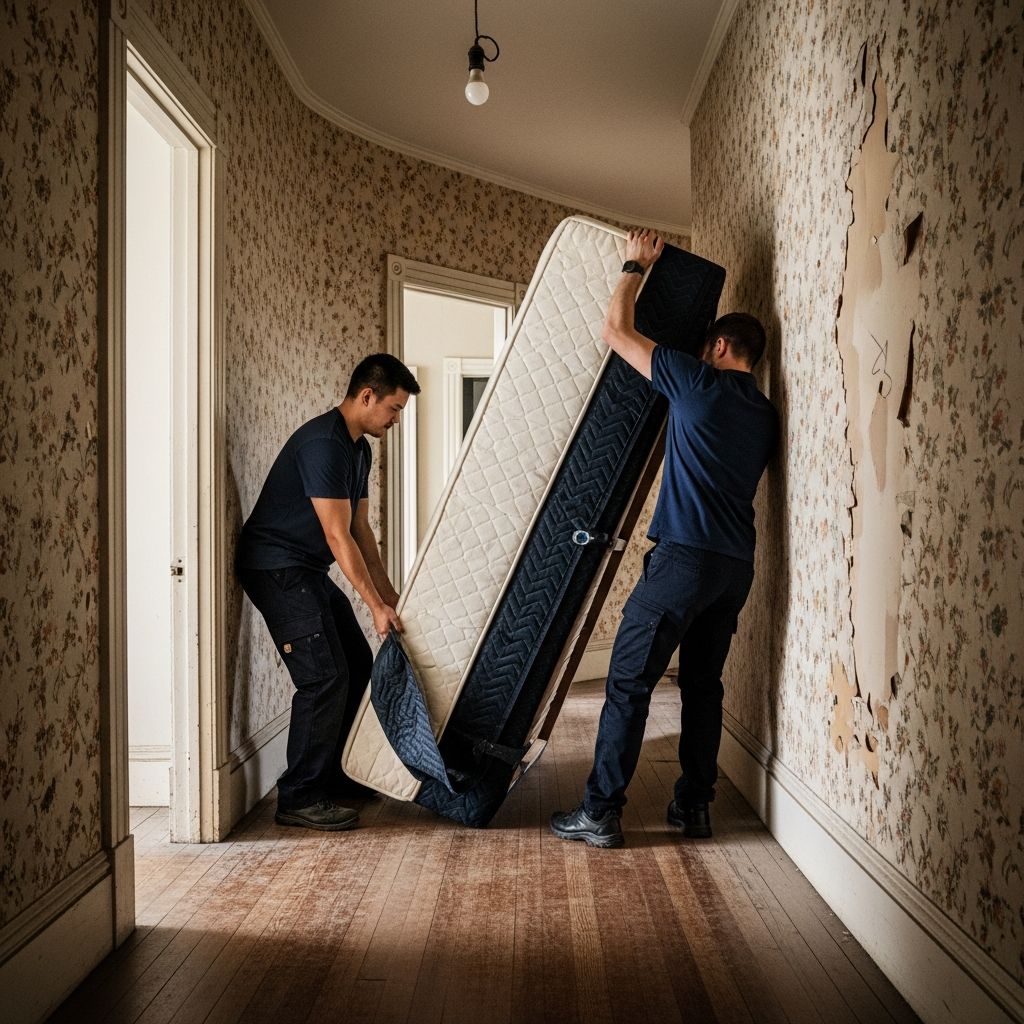
Queen-size box springs measure approximately 60 by 80 inches, making them challenging to navigate through standard 30- to 36-inch doorways or narrow staircases in many homes, especially apartments or older buildings. This guide provides practical, hands-on solutions to transport them intact or by temporary modification, ensuring they support your mattress effectively afterward.
Understanding Box Spring Dimensions and Challenges
Standard queen box springs are rigid foundations typically 5 to 9 inches thick, designed for stability under a mattress. Their width exceeds most interior door frames, leading to common issues during moves. Tight turns on staircases compound the problem, as the length prevents pivoting without scraping walls or frames.
- Typical measurements: 60 inches wide, 80 inches long, 5-9 inches high.
- Common obstacles: 32-inch doors, 28-inch stair widths, angled hallways.
- Risks without preparation: Damage to walls, doors, or the box spring itself.
Planning ahead with measurements of your path—doors, stairs, hallways—prevents frustration. Split queen box springs (two 30×80-inch units) avoid these issues entirely but aren’t retrofittable to standard singles.
Preparation Before Attempting to Move
Assess your route meticulously. Measure the narrowest points and compare to the box spring’s dimensions. Clear furniture, secure loose items, and protect floors with blankets or cardboard.
| Path Element | Average Width (inches) | Queen Box Spring Fit? |
|---|---|---|
| Standard interior door | 30-36 | No (60″ width) |
| Staircase landing | 28-32 | No |
| Hallway | 36-42 | Marginal |
Gather helpers—two to four people—for lifting and guiding. Wear gloves to protect hands from wires or fabric edges.
Method 1: Non-Destructive Maneuvering Techniques
Before modifications, try these low-risk approaches to thread the box spring through without cutting.
- Vertical tilting: Stand the box spring on its 9-inch edge, reducing effective width to about 60 inches long but maneuverable for doors. Pivot slowly at 45-degree angles.
- Corner rotation: Two people lift one end high while the other guides the low end around corners, compressing diagonal space.
- Bungee securing: Wrap long bungee cords around the center to slightly bow the frame, gaining 2-4 inches of flexibility for turns.
- Disassemble peripherals: Remove any attached legs or center supports if present.
These work for 20-30% of cases, per moving expert accounts, especially with 36-inch doors. If unsuccessful, proceed to folding.
Method 2: DIY Folding by Cutting and Reassembly
For impossibly tight spaces, temporarily cut the box spring into a foldable unit. This halves the width to roughly 60×40 inches when folded, ideal for stairs or doors. Reversible with basic tools, it maintains structural integrity post-repair.
Tools and Materials Required
- Staple remover or pliers
- Hand saw or reciprocating saw (for wood/metal frames)
- Measuring tape
- Drill with Phillips bit and 5/32-inch pilot bit
- 2×4 lumber pieces (1-foot sections, 4-6 needed)
- 2.5-inch deck screws (8-12)
- Staple gun with 3/8-inch staples
- Metal mending brackets (optional, narrow type)
- Safety goggles, gloves, hammer
Step-by-Step Disassembly for Folding
- Work surface setup: Place box spring upside down on a protected flat floor. Wear goggles.
- Remove bottom fabric: Pull staples halfway around the perimeter from one long side’s center, folding fabric back to expose internal wood slats (1×3 or similar).
- Expose side fabric: Gently tug and staple-remove center sections on long sides to reveal crosswise wood without slashing fabric.
- Mark and cut wood: Measure exact center (40 inches from ends). Saw through all longitudinal wood slats and any metal cross-supports at this line. Avoid springs/wires—they bend safely.
- Fold test: Stand on side, fold halves together (fabric inward), tucking loose fabric inside. Secure with bungee if needed for transport.
Folded size: Approximately 60x40x18 inches, fitting most stairs. Transport to destination.
Reassembly Process
- Unfold and straighten: Lay flat. Use hammer on 2×4 block to gently tap bent wires/springs back to shape.
- Reinforce cuts: Position 2×4 under each cut slat. Pre-drill two angled pilot holes per side to prevent splitting. Secure with two deck screws per slat. Repeat for all cuts.
- Bracket option: For metal frames, add narrow mending plates across joints, screwed firmly.
- Re-staple fabric: Flatten bottom and side fabrics, stapling securely every inch along edges. Trim excess if needed.
- Test stability: Press down firmly; it should feel solid before adding mattress.
Total time: 30-60 minutes. This method preserves 95% of original strength if done precisely.
Safety Guidelines and Common Pitfalls
Prioritize safety to avoid injury or damage.
- Wear protection: Goggles for sawdust/flying staples; gloves for sharp wires.
- Stable surface: Avoid uneven floors to prevent slips.
- Team lift: Never solo-handle; distribute weight evenly.
- Pitfalls: Over-cutting wood weakens frame; skipping pilots cracks slats; ignoring bent wires causes sagging.
If box spring has heavy-gauge metal (common in newer models), use a reciprocating saw for efficiency but go slow.
Alternatives to Cutting Your Box Spring
Not ready for DIY? Consider these options.
- Split box springs: Purchase pre-split queens (two twins side-by-side) for future moves.
- Adjustable bases: Metal frames that disassemble fully, often with folding capabilities.
- Professional movers: Specialized services use winches or disassembly for $100-300.
- Low-profile or foam: Switch to thinner foundations (3-5 inches) that bend more readily.
Long-Term Maintenance After Modification
Post-reassembly, inspect annually. Tighten loose screws, check for fabric tears. A modified box spring lasts 7-10 years with proper care, matching originals. Avoid excess weight (over 500 lbs total load).
Frequently Asked Questions (FAQs)
Can I fold a box spring without cutting?
Minimal flex is possible with tilting and bungees, but full folding requires cuts for rigid wood frames.
Will cutting void the warranty?
Yes, most manufacturers void warranties on modifications. Check yours first.
How much weight can a repaired box spring hold?
Properly reinforced, it supports 400-600 lbs, like new, if pilots and screws are used correctly.
Is this safe for king-size box springs?
Similar process scales up; cut at center, use longer reinforcements.
What if my box spring is all metal?
Bend or bolt-cut cross members; reinforce with angle irons instead of wood.
References
- Fitting A Queen Size Box Spring Through Tight Stairways or Doorways — Southern Sisters Planning (WordPress). 2014-11-06. https://southernsistersplanning.wordpress.com/2014/11/06/fitting-a-queen-size-box-spring-through-tight-stairways-or-doorways/
- How to make a queen-size box spring foldable to fit … – YouTube — YouTube Video Transcript. Approx. 2010s (timeless DIY). https://www.youtube.com/watch?v=bFI0YBqNj4M
- How to Move a Box Spring Up a Narrow Staircase – YouTube (Ask This Old House) — This Old House / YouTube. Timeless (official contractor demo). https://www.youtube.com/watch?v=8xRSCgwQV00
Similar Articles







Read full bio of medha deb