Mastering Railing Post Spacing for Safe Installations
Learn professional techniques for calculating and installing properly spaced railing posts.
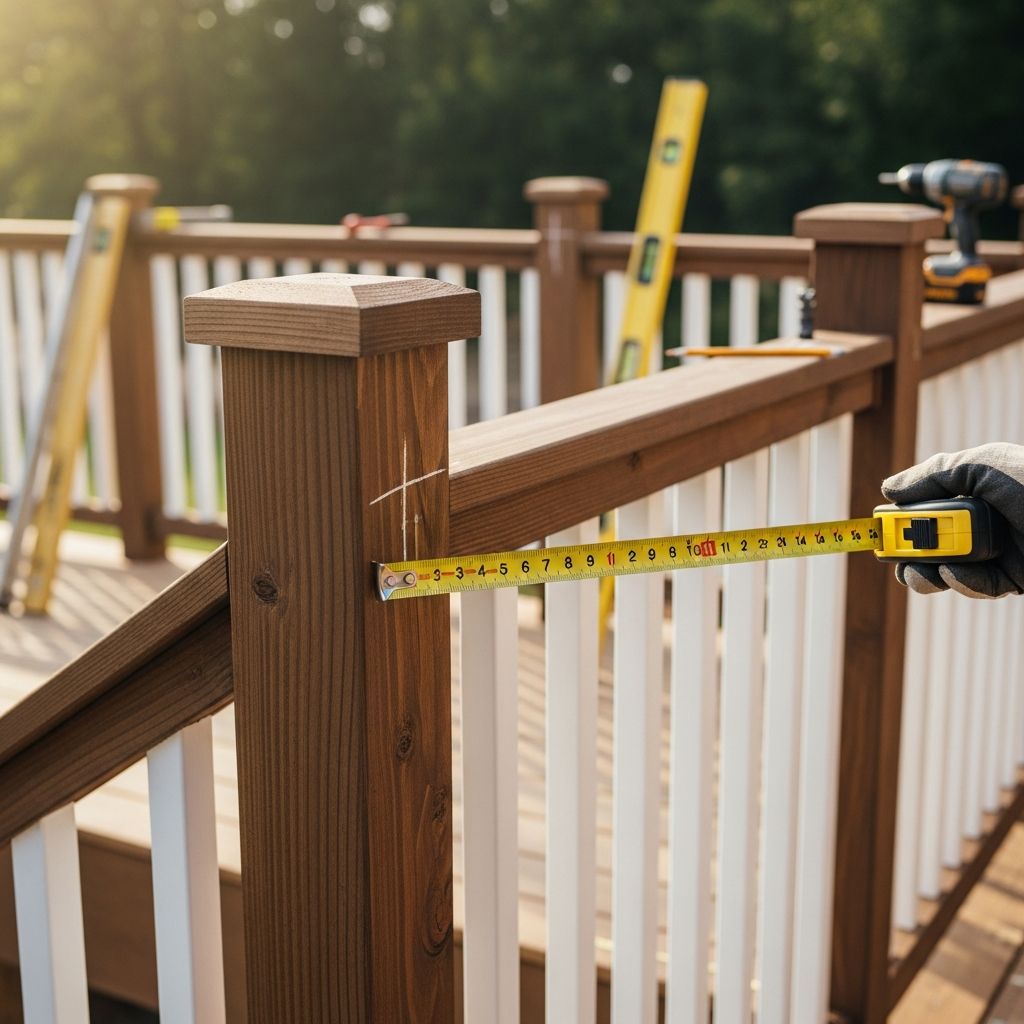
Understanding Railing Post Spacing Fundamentals
Proper railing post spacing is a critical component of deck and stair construction that directly impacts both safety and aesthetic appeal. The distance between individual posts forms the structural foundation of your railing system, determining how well the entire assembly can withstand lateral forces and user impact. Building codes and industry standards establish specific requirements for post spacing to ensure that railings maintain their integrity under stress while preventing accidental passage through gaps.
The primary concern driving post spacing regulations centers on safety requirements that prevent children and objects from passing through openings in the railing system. These requirements vary depending on the type of railing you are installing, whether it involves traditional spindles, modern cable systems, or alternative designs. Understanding these baseline requirements helps ensure your installation meets both legal standards and practical safety considerations.
Determining the Distance Between Posts
The spacing between railing posts begins with accurate measurement of your available installation area. Start by measuring the total horizontal distance where your railing will be installed, accounting for existing structures, walls, or corner posts that will anchor your system. This measurement becomes your reference point for all subsequent calculations.
For most deck and stair applications, posts should be spaced no more than four to six feet apart, depending on your local building codes and the type of railing system you have selected. Standard recommendations suggest dividing your total horizontal distance by the maximum allowable span to determine the minimum number of posts required. For example, a deck section measuring thirty feet in length would require a minimum of five posts if using six-foot spacing, or six posts if following a more conservative four-foot maximum spacing.
When measuring the distance, always measure from the outside edges of existing end posts or structural supports. This “clear span” represents the actual distance that will be divided among your intermediate posts. Some installations may have existing posts that cannot be relocated, requiring you to calculate spacing around these fixed points rather than selecting spacing dimensions freely.
Accounting for Post Width in Your Calculations
A frequently overlooked element in spacing calculations involves the width of the posts themselves. Posts constructed from pressure-treated lumber, composite materials, or metal vary in their standard dimensions. A four-by-four inch post, commonly used in deck construction, occupies actual space within your railing run that must be subtracted from your overall measurement.
When calculating the usable span between posts, subtract the width of each intermediate post from your total measurement. For instance, if you have a twenty-foot railing section with three interior posts, each measuring four inches wide, you would subtract twelve inches total from your twenty-foot measurement, leaving a usable span of nineteen feet four inches to be divided among your spacing intervals.
The position at which you measure post width matters significantly. Measure across the thickest dimension perpendicular to your railing run. This ensures accurate accounting of the space occupied by each post. For posts with angled or rounded edges, measure at the widest point to maintain a conservative calculation that ensures proper spacing throughout the installation.
Mathematical Approach to Even Spacing
Achieving visually consistent spacing across your railing requires a systematic mathematical approach rather than attempting to space posts by eye. The goal is to create uniform distances between all posts, which enhances both the appearance and structural integrity of your installation.
Begin by dividing your total clear span measurement by the number of intervals created by your posts. If you determine that four posts will be used in a thirty-foot section, you create five intervals: one before the first post, three between intermediate posts, and one after the final post. Dividing thirty feet by five intervals yields six feet per interval, providing a straightforward spacing dimension.
Converting measurements to a single unit simplifies calculations significantly. Transform feet into inches or use decimal representations consistently throughout your work. Working in inches often proves easier when dealing with spacing measurements that may include fractional values. A thirty-foot span equals three hundred sixty inches, which divides more easily into fractional spacing dimensions.
Building Code Requirements and Safety Standards
Building codes establish specific spacing requirements that vary by jurisdiction and application type. Most residential deck railings require that posts be spaced no more than six feet apart, while some conservative codes mandate four-foot maximum spacing. Stair railings frequently have more stringent requirements, often limiting post spacing to four feet or less due to the higher stress loads involved in stair construction.
Beyond post-to-post distances, codes also regulate the spacing between spindles, balusters, or other infill elements connecting adjacent posts. The “four-inch sphere rule” appears frequently in building codes, specifying that no opening in the railing should permit passage of a sphere with a four-inch diameter. This requirement prevents small children from becoming trapped in gaps or passing through the railing.
Commercial and public-access railings typically have even more restrictive requirements, sometimes limiting post spacing to three feet or incorporating additional diagonal bracing elements. Before beginning your installation, consult your local building department to determine the specific codes applicable to your project. Code requirements supersede general guidelines and represent the minimum safety standards for your region.
Cable Railing Post Spacing Considerations
Cable railing systems introduce additional complexity to post spacing calculations because the cables themselves must maintain specific tension and spacing to meet safety requirements. Cable railings gain their strength from the tension in the cables rather than rigid spindles, fundamentally changing how spacing calculations are approached.
Most cable railing systems allow post spacing up to five feet, though some manufacturers restrict spacing to four feet for maximum safety margins. When posts are spaced farther apart, the cables must be positioned closer together to maintain compliance with the four-inch sphere rule and to prevent excessive deflection under load. For each additional foot of span beyond the standard four-foot maximum, cables must be moved approximately one-quarter inch closer together to account for increased deflection.
Cable railing manufacturers often provide specific guidelines for post spacing and cable positioning combinations. Some systems incorporate post stiffeners or reinforcement brackets that enable greater post spacing while maintaining cable compliance standards. These reinforcement options add cost but provide flexibility in design when wider post spacing is desired for aesthetic or structural reasons.
Practical Installation Techniques
After calculating your post spacing, translate these measurements into physical installation points using clear marking methods. String lines and chalk marks help identify post locations before permanently securing them in place. Transfer your calculated spacing dimensions directly from your measurement calculations to your actual installation surface.
Use a long level to verify that all posts remain perfectly vertical before proceeding with the next stage of installation. Posts that lean even slightly will create visual distortion in your railing appearance and may fail to meet spacing requirements. Check plumb in multiple directions, and make adjustments before securing posts with fasteners or adhesive.
For deck installations, locate posts relative to the deck frame structure, ensuring that posts are positioned to transfer loads directly to supporting beams or structural elements. Posts installed improperly may appear correctly spaced but fail functionally because loads are not properly distributed through the deck structure.
Addressing Irregular Spaces and Obstacles
Real-world installations rarely involve perfectly rectangular spaces suitable for mathematically perfect spacing. Doors, windows, corners, and existing architectural features often interrupt railing runs, creating irregular sections that require modified spacing calculations.
When obstacles interrupt a railing run, calculate spacing for each unobstructed section independently rather than attempting to maintain consistent spacing across interrupted spaces. A doorway opening in the middle of a railing run effectively creates two separate railing sections that should be spaced based on their individual dimensions rather than attempting to maintain continuity across the opening.
Corner installations present particular challenges because posts must transition from one railing run to another at ninety-degree angles. Corner posts typically occupy more visual space than intermediate posts, and spacing on each side of the corner may differ to accommodate the perpendicular transition. Calculate spacing for each linear run separately, allowing spacing dimensions to change at corner posts if necessary.
Common Spacing Mistakes and Solutions
Many builders overcomplicate spacing calculations, leading to errors that require rework during installation. The most frequent mistake involves failing to account for end posts or structural elements when performing division calculations, resulting in incorrect spacing that gradually compounds across the railing length.
Another common error involves inconsistent rounding of decimal calculations. When working with fractional spacing dimensions, maintain precision throughout calculations before rounding the final measurement. Rounding intermediate values can introduce cumulative errors that become apparent only after posts are installed at incorrect locations.
Failing to verify local building code requirements before installation often results in completed railings that do not meet applicable safety standards. Time spent checking codes at the project planning stage prevents costly modifications after construction is underway.
Tools and Resources for Spacing Calculations
Modern construction projects benefit from specialized calculators designed specifically for railing spacing problems. Online spindle spacing calculators accept your measurements and automatically determine optimal post and spindle spacing that balances aesthetic requirements with code compliance. These tools eliminate manual calculation errors and provide clear visualizations showing how spacing will appear in the final installation.
Smartphone applications designed for construction professionals often include railing spacing calculators integrated with other measurement and calculation tools. These applications allow you to enter measurements on site and immediately see recommended spacing options, facilitating better decision-making during the planning phase.
Traditional methods using tape measures and pencil calculations remain valid and require no technology beyond basic arithmetic. Experienced installers often prefer working with physical measurements and marking systems because they maintain direct contact with the actual installation space rather than relying on digital approximations.
Post Material Selection and Spacing Impact
The material chosen for your railing posts influences spacing calculations and structural requirements. Wood posts, composite materials, aluminum, and steel each have different strength characteristics affecting how far apart posts can be safely spaced.
Pressure-treated lumber posts offer good strength-to-weight ratio but are subject to movement and potential deterioration if not properly maintained. Composite materials provide enhanced durability with consistent dimensional stability but may have different load ratings than traditional wood. Metal posts provide maximum strength and minimal maintenance but often cost significantly more than alternative materials.
Regardless of material selection, posts must be properly secured to the underlying structure through adequate fastening methods. Posts that are merely surface-mounted without connection to structural framing can pull free from the installation surface, creating dangerous conditions regardless of spacing calculations. Secure all posts using fastening methods specified by manufacturers or required by building codes for your specific material combination.
Verification and Adjustment During Installation
Even with careful pre-installation calculations, field conditions sometimes necessitate minor spacing adjustments. Slightly out-of-square structural elements or measurement inconsistencies may require redistributing spacing across the installation to maintain visual balance and code compliance.
If spacing inconsistencies emerge during installation, make adjustments incrementally across the affected section rather than concentrating the adjustment in a single location. Small spacing variations distributed across multiple intervals remain visually imperceptible, while concentrated spacing changes appear obviously incorrect.
Measure and verify spacing at multiple points along the railing run rather than relying on initial calculations alone. Cumulative measurement errors can create situations where the final post ends up several inches from its calculated position, necessitating adjustment to subsequent spacing dimensions.
Frequently Asked Questions
Q: What is the maximum allowable distance between railing posts?
A: Most building codes specify a maximum of four to six feet between posts, though some jurisdictions may be more restrictive. Check your local building code requirements before installation, as these represent minimum safety standards.
Q: How do I calculate spacing if my railing has an odd measurement that doesn’t divide evenly?
A: Divide your measurement by your proposed number of intervals to determine the spacing per interval. If this produces a decimal or fractional result, work with that exact dimension rather than rounding, then round only your final measurement after all calculations are complete.
Q: Should I space posts based on inside measurements or outside measurements?
A: Measure from the outside edges of existing end posts or structural supports, and account for the width of intermediate posts by subtracting their dimensions from your total span measurement before calculating spacing intervals.
Q: Can cable railings use different post spacing than spindle railings?
A: Yes, cable railing systems often allow up to five-foot post spacing in some applications, though spindle railings typically require four to six-foot maximum spacing. Cable railings require closer cable spacing when posts are farther apart to maintain code compliance.
Q: What adjustments are needed for sloped or curved installations?
A: For sloped installations like stair railings, calculate spacing along the slope rather than horizontal distances. Use a string line or flexible measuring device along the actual slope to measure distances accurately before calculating spacing intervals.
Q: How do I handle spacing when a railing turns a corner?
A: Calculate spacing for each linear section separately. A corner post may have different spacing dimensions on each side, which is acceptable as long as each straight section meets code requirements independently.
References
- Spindle Spacing Calculator — Omni Calculator. 2025. https://www.omnicalculator.com/construction/spindle-spacing
- A Guide to Cable Railing Spacing — RailFX. 2025. https://www.railfx.net/a-guide-to-cable-railing-spacing/
- How to Calculate Even Deck Baluster Spacing — MT Copeland. 2025. https://mtcopeland.com/blog/how-to-space-balusters-evenly-every-time/
- Deck Railing Post Spacing Guide — DecksDirect. 2025. https://www.decksdirect.com/knowledge-builders/deck-railing-post-spacing
- Deck Baluster & Spindle Spacing Calculator — Decks.com. 2025. https://www.decks.com/calculators/baluster-spacing-calculator/
Similar Articles








Read full bio of Sneha Tete