Raising Door Thresholds: Complete DIY Guide
Master the art of elevating your door threshold for better accessibility, weather protection, and seamless flooring transitions with this detailed DIY tutorial.
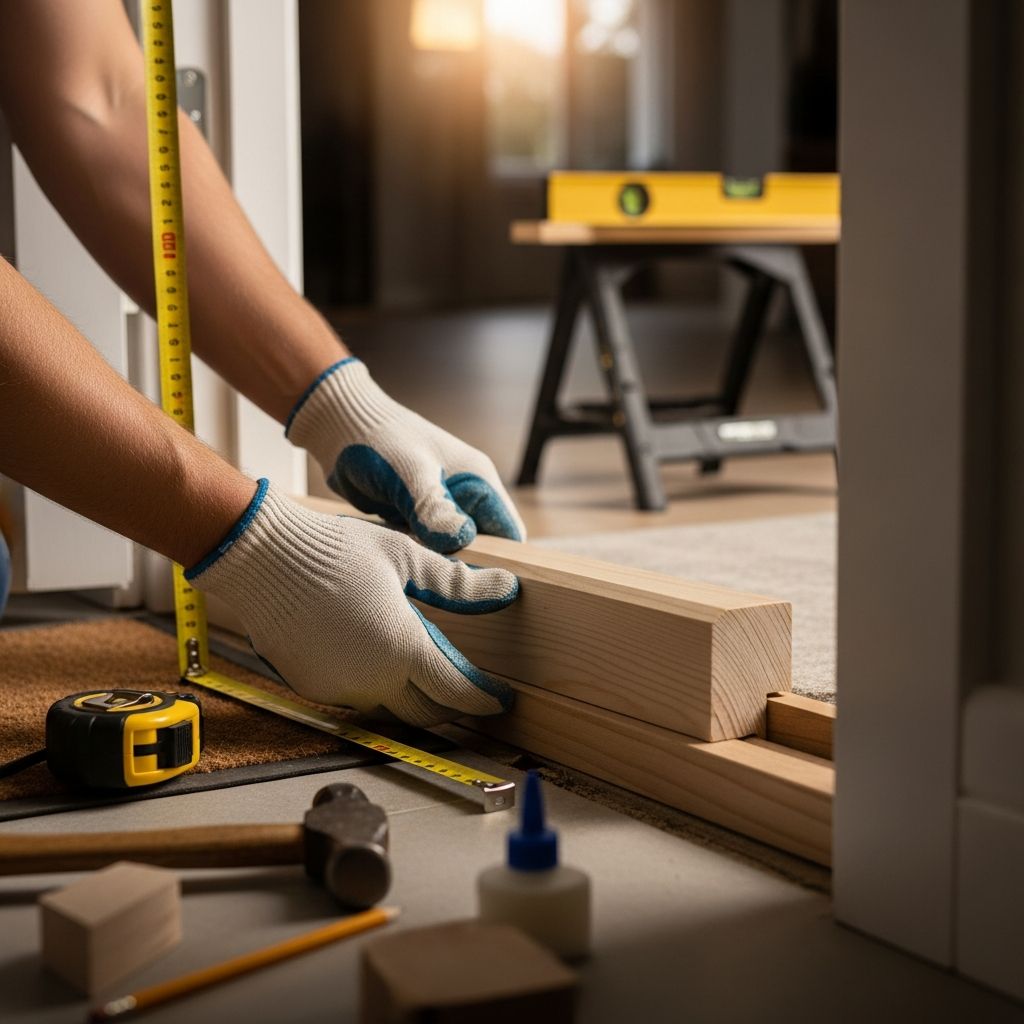
Elevating a door threshold becomes necessary when flooring changes create gaps, doors drag, or weather sealing fails. This process enhances accessibility, prevents moisture entry, and ensures smooth door operation across interior and exterior doorways.
Understanding Threshold Elevation Needs
Door thresholds serve as transitional elements between rooms or indoor-outdoor spaces. Raising them matches new flooring levels, improves energy efficiency, and complies with accessibility standards. Common triggers include tile installations raising interior floors or settling foundations lowering exterior sills.
- Interior scenarios: New carpet or hardwood elevates floors, causing doors to bind.
- Exterior scenarios: Patio slabs shift higher, creating tripping hazards or water pooling.
- Accessibility benefits: Proper height reduces obstacles for wheelchairs or walkers.
Before starting, assess the height difference. Measure from the subfloor or sill to the highest flooring point on both sides. Aim for a 1/4 to 1/2 inch rise initially, adjusting as needed for door clearance.
Essential Tools and Materials for the Job
Gathering the right supplies prevents mid-project delays. Focus on durable, weather-resistant options for exterior applications.
| Category | Items | Purpose |
|---|---|---|
| Tools | Circular saw, jigsaw, chisel, pry bar, drill, level, tape measure, hacksaw, sandpaper | Cutting, removing, measuring, leveling |
| Power Tools | Hammer drill, oscillating multi-tool (optional) | Precise demolition and fastening |
| Materials | Threshold material (oak, aluminum, composite), construction adhesive, exterior screws/nails, silicone caulk, wood sealer, shims | Building, securing, sealing |
| Safety Gear | Gloves, safety glasses, dust mask, knee pads | Protection during work |
Invest in adjustable thresholds for flexibility. Composite or aluminum resists rot better than wood in damp areas.
Preparing the Work Area Safely
Safety and preparation set the foundation for success. Clear the doorway of furniture and protect adjacent floors with drop cloths.
- Disconnect power to nearby outlets if drilling.
- Prop the door open or remove it entirely for access.
- Ventilate the space, especially when using adhesives or sealants.
Inspect for underlying issues like rot or pest damage. Repair subfloor problems first to avoid future failures.
Removing the Existing Threshold
Old thresholds often adhere tightly with screws, nails, or caulk. Methodical removal preserves surrounding jambs and casing.
Begin by scoring caulk lines along edges with a utility knife. Remove weatherstripping or seals gently. Locate fasteners—typically under carpet edges or in visible slots—and extract them with a screwdriver or impact driver.
Use a pry bar or chisel to lift the threshold. Work from one end, tapping lightly with a hammer if stuck. For stubborn installs, apply penetrating oil and wait 15 minutes.
- Cleaning post-removal: Scrape residue, vacuum debris, and wipe with mineral spirits for a dry surface.
- Damage check: Probe sill for softness indicating rot; replace compromised wood.
Allow the area to dry fully, especially outdoors, to ensure adhesive bonds properly later.
Measuring and Customizing the New Raised Threshold
Precision measurements prevent gaps or overhangs. Account for jamb profiles and flooring thickness.
Measure doorway width inside the casing, adding 1/16 inch for fit. For height, add desired rise (e.g., 1/8 inch per scribe method) to match flooring. Transfer jamb contours using a template: butt a flexible strip against the jamb and trace irregularities.
Cut length with a miter saw for clean ends. Width via table saw, beveling top edges at 45 degrees for smooth transitions. Notch ends with a jigsaw to hug jambs snugly.
Test-fit dry: place in position, check door swing, and mark adjustments. Sand high spots; recut if needed.
Installing the Elevated Threshold Securely
With preparations complete, installation focuses on alignment and fastening.
Apply a zig-zag bead of construction adhesive to the sill. Position the threshold, tapping gently with a rubber mallet until flush. Predrill pilot holes to prevent splitting: one every 12 inches, starting 3 inches from ends.
Secure with 10d or 12d exterior-grade nails or screws, countersinking heads. For metal thresholds, use tin snips and self-tapping screws.
Reinstall door stops if removed. Trim door bottom if it now drags—typically 1/8 inch clearance needed.
Sealing and Finishing for Longevity
Weatherproofing extends lifespan. Fill nail holes with exterior putty, sanding smooth once dry.
Apply generous silicone caulk around perimeter, tooling for a concave seal. Seal wood ends and bottom with polyurethane to block moisture.
For interiors, match paint or stain. Exteriors benefit from UV-resistant finishes.
Troubleshooting Common Challenges
Issues arise from uneven sills or mismeasurements. If the door binds post-install:
- Shim under threshold for level.
- Plane door bottom evenly.
For water intrusion, add a sill pan or drip edge. Persistent rot signals drainage problems—extend downspouts away from foundation.
Maintenance Tips for Lasting Performance
Annual inspections catch wear early. Check caulk integrity, tighten fasteners, and reseal as needed. Sweep debris to prevent moisture traps.
Replace every 10-15 years outdoors, sooner in harsh climates.
FAQs
What height should a raised threshold be?
Typically 1/4 to 3/4 inch above the highest adjacent flooring, ensuring 1/8 inch door clearance.
Can I raise an interior threshold the same way?
Yes, but use indoor adhesive and omit heavy weatherproofing; focus on aesthetics.
How do I handle uneven concrete sills?
Grind high spots or build up lows with mortar before adhering.
Is a permit required for threshold work?
Rarely for minor DIY, but check local codes for exterior structural changes.
What if my door won’t close after raising?
Trim the door bottom using scribed lines and a circular saw, sealing the cut end.
References
- Step-by-Step Guide: How to Install a Threshold on an Exterior Door — Pease Doors. 2023. https://peasedoors.com/blogs/news/step-by-step-guide-how-to-install-a-threshold-on-an-exterior-door
- How to Make an Exterior Door Threshold — Ask This Old House (YouTube). 2022-10-15. https://www.youtube.com/watch?v=jCTEbDOxk9g
- Replacing a Door Threshold — Fine Homebuilding. 2021-05-20. https://www.finehomebuilding.com/project-guides/windows-doors/replacing-a-door-threshold
- How to Remove and Replace a Threshold — The Home Depot. 2024. https://www.homedepot.com/c/ah/how-to-remove-and-replace-a-threshold/9ba683603be9fa5395fab9084bd5fe5
Similar Articles








Read full bio of Sneha Tete