REC Solar Panels Review: Efficiency, Cost, and Warranty Explained
In-depth review of REC solar panels, including performance, pricing, pros, cons, and who they are best for.
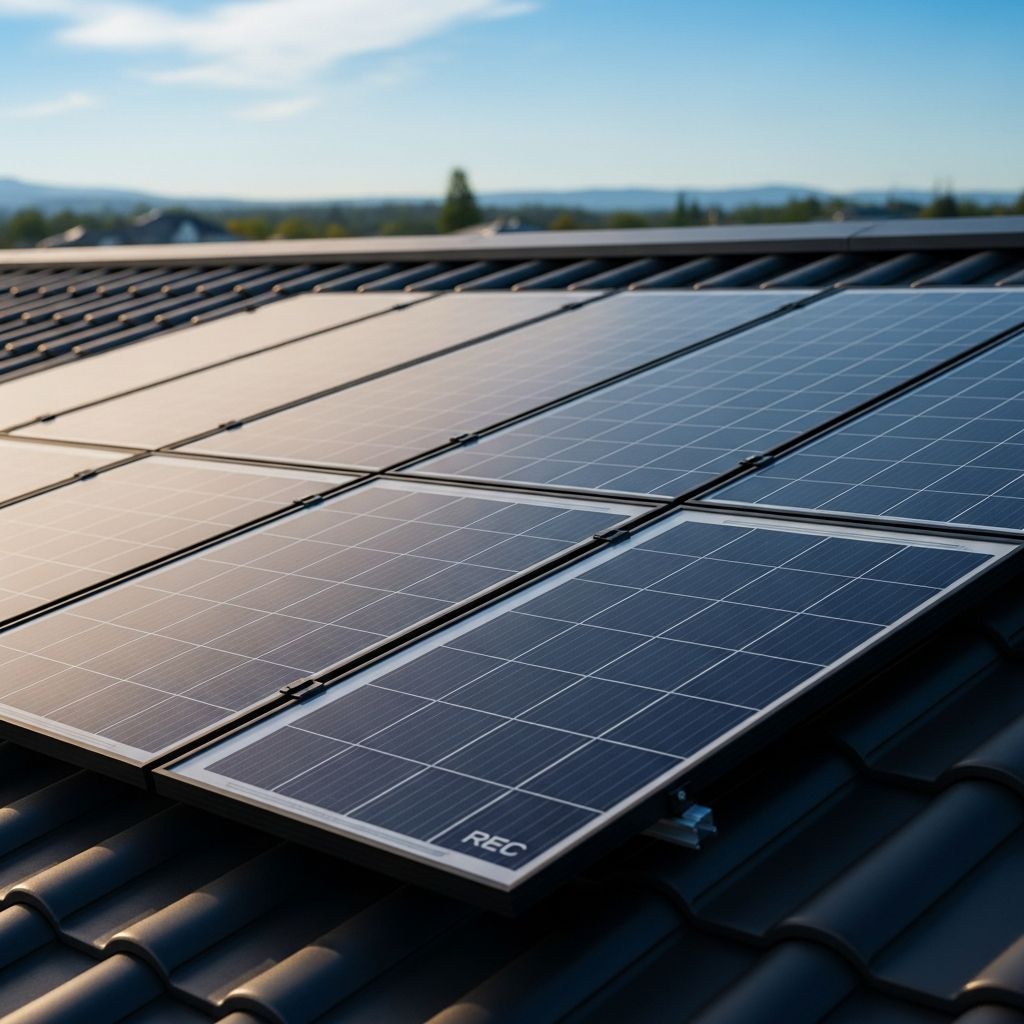
REC Solar Panels Review: Are They Right for Your Home?
REC is widely regarded as one of the top-tier solar panel manufacturers, known for combining strong energy performance with robust warranties and a reputation for long-term reliability. This detailed review walks through REC’s main panel lines, efficiency ratings, costs, warranties, and ideal use cases so homeowners can make an informed decision about installing REC solar on their roof.
About REC as a Solar Brand
REC (Renewable Energy Corporation) is a long-established solar manufacturer that focuses on premium residential and commercial solar modules. The brand positions itself as an efficiency and durability leader, with engineering aimed at high power density and low long-term degradation.
REC panels are commonly used by reputable solar installers that specialize in higher quality equipment rather than budget-only solutions. This makes REC a solid choice for homeowners who want dependable long-term output and are comfortable paying slightly more upfront for better performance.
Main REC Solar Panel Product Lines
REC’s catalog is organized into several core product families, each targeting a different mix of price, efficiency, and aesthetics. While exact model names may change over time, most REC options fit into the following categories.
REC Alpha and Alpha Pure Series
The REC Alpha and Alpha Pure families are the brand’s flagship solar panels, built using advanced cell technologies designed to maximize output in limited roof space. Typical Alpha modules offer high wattage in a compact footprint, making them particularly useful on small or partially shaded roofs where every square foot must count.
- Very high efficiency ratings compared with mainstream panels.
- Excellent low-light performance, which helps maintain production on cloudy days or during early mornings and late afternoons.
- Strong warranty backing, often paired with tighter annual degradation limits than standard panels.
REC TwinPeak and Mid-Tier Options
The REC TwinPeak and other mid-tier lines aim to balance price and performance. These panels may not reach the same efficiency levels as Alpha models, but they often still outperform many basic panels available through lower-cost installers.
- Competitive efficiency at a more moderate price point.
- Half-cut cell and split-junction-box designs are common, improving shade tolerance and reducing resistive losses.
- Similar mechanical quality and weather resistance to REC’s premium lines.
Entry-Level REC Models
REC also offers more value-oriented product lines that provide solid performance without all the premium enhancements. These models are designed for cost-sensitive projects while still maintaining REC’s baseline construction quality standards.
- Lower price per watt than Alpha and some TwinPeak variants.
- Suitable for homeowners with larger roof areas who do not need maximum power density.
- Still backed by brand-name warranties and long-term support compared with no-name import panels.
REC Solar Panel Efficiency
Efficiency measures how much of the sunlight hitting the panel is converted into usable electricity. Higher efficiency REC panels generally range in the upper teens to over 21–22%, depending on the model and generation. This places them among the better-performing options on the residential market.
High efficiency is especially important when roof space is limited, obstacles create layout constraints, or local energy usage is high. A more efficient REC module can deliver more watts in the same footprint, often allowing homeowners to reach their target system size with fewer panels.
Typical Efficiency Ranges
| REC Product Line | Typical Wattage Range | Approx. Efficiency Range | Best Use Case |
|---|---|---|---|
| Alpha / Alpha Pure | High 300s to 400+ W | Around 20–22%+ | Premium efficiency, small roofs, high energy demand |
| TwinPeak and mid-tier | Low to mid 300s W | Around 19–21% | Balanced cost and performance |
| Value / entry-level models | ~300–330 W (varies) | Roughly 18–20% | Larger roofs and budget-conscious installs |
While minor percentage differences might appear small, they can translate into noticeable changes in system size, layout flexibility, and lifetime energy output. For many homeowners, the highest-efficiency REC models justify their premium if roof space is tight or utility rates are high.
REC Solar Panel Warranty
REC is known for providing strong warranty protection that covers both the physical product and its long-term energy performance. Typical REC warranties span 20–25 years, depending on the model and whether the system is installed by an authorized REC partner.
A standard REC warranty package usually consists of two main components: product (or equipment) coverage and performance coverage. Product coverage deals with manufacturing defects and failures, while performance coverage guarantees that panels will still produce a specified percentage of their original power after a set number of years.
Product Warranty Coverage
- Generally 20–25 years for most residential panels.
- Protects against material and workmanship defects that result in operational failure.
- May offer extended terms or upgraded coverage when installed by approved REC installers.
Performance Warranty and Degradation
REC’s performance warranty outlines how much power the panel is expected to deliver as it ages. All solar panels gradually degrade due to exposure to sunlight and weather, but REC’s high-end modules often feature lower annual degradation rates than many standard panels.
- Initial year may allow a small drop from nameplate rating, followed by a controlled annual degradation limit.
- End-of-warranty output is usually guaranteed at a relatively high percentage of the original rating, helping protect long-term energy savings.
- Some premium REC lines feature particularly tight degradation guarantees, which contribute to their reputation in the premium category.
REC Solar Panel Cost and Value
REC panels typically sit in the mid-to-high price tier of the residential solar market. Exact costs vary by region, installer, system size, and incentives, but homeowners often pay more per watt for REC compared with purely budget-focused brands.
Despite the higher initial price, REC panels can deliver strong lifetime value when efficiency, durability, and warranty coverage are taken into account. Higher efficiency can reduce the number of panels and racking needed, while better long-term performance increases total kilowatt-hours generated over decades.
Factors That Influence REC Pricing
- Model choice: Premium Alpha or Alpha Pure modules cost more per watt than mid-tier or entry models.
- Installer markup: Different installers apply different margins, labor rates, and bundled service offerings.
- System size: Larger systems often enjoy lower per-watt prices than very small ones.
- Incentives and financing: Tax credits, rebates, and low-interest loans can significantly affect out-of-pocket cost and payback period.
Performance in Real-World Conditions
Lab ratings are important, but real-world energy production depends on how panels behave in everyday conditions. REC designs many of its panels to limit power loss in high heat, partial shade, and low-light scenarios. Half-cut cells and advanced soldering patterns can reduce electrical resistance and mitigate some of the impacts of shading.
Homeowners in hot climates or regions with frequent cloudy weather may benefit from these design choices, as they can help keep actual production closer to the rated output. Over 20–25 years, small advantages in temperature coefficient and shade tolerance add up to significant additional kilowatt-hours.
Installation and Compatibility Considerations
REC panels can pair with most mainstream inverters, optimizers, and racking systems, so installers usually have flexibility in system design. For best performance and to maintain warranty coverage, using experienced installers that are familiar with REC specifications is strongly recommended.
Before choosing REC panels, a solar professional should evaluate roof orientation, shading, local climate, and electrical loads. In some cases, the higher power density of REC Alpha modules may enable more optimal string configurations or easier integration with battery storage systems.
Ideal Roof and System Types for REC
- Homes with limited or partially shaded roof space that benefit from high-efficiency modules.
- Properties with high utility rates where maximizing lifetime output yields higher financial returns.
- Homeowners prioritizing long warranties and strong brand reputation over absolute lowest upfront price.
Pros and Cons of REC Solar Panels
REC has many advantages compared with generic solar brands, but it may not be the perfect fit for every project. The following pros and cons will help clarify how REC compares with other options in the market.
Key Advantages
- High efficiency options that deliver strong power density per square foot.
- Reputation for quality control and durability across multiple product generations.
- Robust product and performance warranties, especially on premium lines.
- Good long-term value thanks to low degradation and solid real-world output.
- Attractive modules with clean aesthetics that suit visible roof faces.
Potential Drawbacks
- Higher price per watt than some lower-cost competitors and generic imports.
- Availability may depend on local installer networks and regional distribution.
- Not always necessary for very large roofs where slightly lower efficiency panels can still meet energy goals at lower cost.
How REC Compares to Other Premium Brands
REC competes with other top-tier manufacturers that emphasize efficiency, aesthetics, and long warranties. Differences between these brands often come down to marginal efficiency variations, temperature performance, and warranty details rather than drastic performance gaps.
Homeowners comparing REC to similar premium brands should evaluate system-level quotes rather than focusing solely on panel specs. Installer quality, design choices, and total system price usually have as much impact on savings as small differences in panel efficiency.
REC vs Budget Solar Panels
| Feature | REC Panels | Budget Panels |
|---|---|---|
| Upfront panel cost | Moderate to high | Low |
| Efficiency | Generally high | Low to moderate |
| Warranty strength | Long and comprehensive | Shorter or more limited |
| Brand reputation | Well-established global manufacturer | Varies widely; some lesser-known brands |
| Long-term value | High for many homes | Depends heavily on quality and degradation |
Who Should Choose REC Solar Panels?
REC is particularly well suited for homeowners who prioritize long-term energy production, premium warranties, and brand reliability. These buyers often plan to stay in their homes long enough to see the full benefit of higher efficiency and slower degradation.
On the other hand, homeowners with extensive, unshaded roof space and a tight budget might achieve their goals with more affordable panels and a larger array. In such cases, REC can still be a good choice, but its premium features may not be strictly necessary to meet energy targets.
Signs REC Is a Good Match
- You anticipate staying in the home for 10–25 years or more.
- Your roof has limited area or complex sections, and you need high power density.
- You value strong brand reputation, tested reliability, and comprehensive warranties.
- Your electricity rates are high, increasing the long-term payoff of better panels.
Buying Tips for Homeowners Considering REC
When shopping for a solar system that includes REC panels, request multiple quotes from installers that offer the brand. Ensure that each proposal specifies the exact REC model, wattage, warranty terms, expected annual production, and total system cost.
It is also wise to ask whether the installer holds any special REC certifications or partner status, which might unlock enhanced warranty coverage. Finally, compare not just the sticker price but also projected 25-year energy production, as higher-output systems can generate more value despite slightly higher upfront costs.
Frequently Asked Questions About REC Solar Panels
Are REC solar panels considered high quality?
Yes. REC is generally regarded as a high-quality, premium-leaning brand with a strong track record of reliable panels, especially in its Alpha and TwinPeak series. The combination of efficiency, durability, and robust warranties positions REC alongside many other top-tier solar manufacturers.
How long do REC solar panels last?
REC panels are designed to operate productively for 25 years or more when properly installed and maintained. Their warranties typically cover at least two decades of product and performance, and many systems continue generating meaningful power even beyond the official warranty period.
Are REC solar panels more expensive than average?
REC panels usually cost more than the least expensive options on the market but are often comparable to other premium brands. Many homeowners find that the added efficiency, better degradation rates, and strong warranties justify the additional upfront expense through higher lifetime energy production.
Can REC panels work with solar batteries?
REC panels are compatible with most common battery-ready inverters and system architectures. When pairing REC modules with batteries, a qualified installer should design the system so that the panel array, inverter, and storage components are correctly sized and configured.
How do REC solar panels perform in hot climates?
Like all solar panels, REC modules lose some efficiency as temperatures rise, but their engineering aims to minimize these losses as much as possible. Features such as advanced cell interconnections and high-quality materials help maintain solid output even on very hot days, which can be an advantage in sunny, warm regions.
Final Thoughts on REC Solar Panels
REC solar panels offer an appealing combination of high efficiency, robust warranty coverage, and strong brand reputation. For homeowners who care about long-term performance and are willing to invest in premium equipment, REC stands out as a compelling option.
Before making a final decision, homeowners should compare REC-based system quotes with proposals using other brands, carefully reviewing total system cost, projected output, and installer quality. With the right design and installation, REC panels can anchor a solar array that delivers reliable, long-term savings and clean energy for decades.
Similar Articles







Read full bio of Sneha Tete