Refrigerator Compressor Replacement: Step-By-Step Guide
Master the essential steps to safely extract and replace your refrigerator compressor.
Understanding Your Refrigerator Compressor
The compressor serves as the heart of your refrigeration system, responsible for circulating refrigerant throughout the cooling cycle. When this critical component fails, your entire refrigerator stops functioning properly, leading to food spoilage and increased energy consumption. Understanding how to safely remove and replace a compressor is an essential skill for homeowners seeking to maintain their appliances efficiently. This comprehensive guide will walk you through the entire process, from initial preparation to final testing, ensuring you can tackle this repair with confidence and safety as your primary concern.
Recognizing When Compressor Removal Becomes Necessary
Several warning signs indicate that your refrigerator compressor may need removal and replacement. If your refrigerator fails to maintain proper cooling temperatures despite running continuously, the compressor may be failing. Strange noises emanating from the back of the unit, including clicking, buzzing, or grinding sounds, often signal compressor distress. Additionally, if your electric bills spike unexpectedly, a struggling compressor working overtime to maintain temperature could be the culprit. Some refrigerators may stop cooling entirely while still making noise, suggesting the compressor has seized or lost its ability to compress refrigerant effectively.
Essential Safety Considerations Before Beginning
Safety must be your primary concern throughout the entire compressor removal process. Begin by disconnecting your refrigerator from all electrical power sources by unplugging the unit or switching off the circuit breaker dedicated to it. This eliminates the risk of electrical shock while you work with internal components. Never attempt to work on a powered refrigerator, as you could suffer serious injury from electrical current or moving parts.
Refrigerant handling requires special attention since these chemicals can cause frostbite on contact and pose environmental hazards if released improperly. Many jurisdictions require certification to handle certain refrigerants legally. If your refrigerator uses older refrigerants like CFC-based Freon, you may need to contact a licensed technician for safe recovery and disposal, as these substances damage the ozone layer. Newer refrigerators typically use more environmentally friendly refrigerants, but proper recovery procedures remain mandatory.
When removing and handling refrigerant lines, wear protective gloves to prevent cold burns and potential chemical contact. Sharp metal edges throughout the refrigerator’s interior can cause cuts, so move deliberately and carefully. If you lack experience with appliance repair, consider consulting a professional technician, as improper compressor removal can result in system damage, personal injury, or environmental violations.
Gathering Your Tools and Materials
Proper equipment preparation ensures efficiency and safety throughout the removal process. Before disconnecting your refrigerator, gather the following essential tools:
- Screwdrivers (both Phillips and flathead) for removing panels and fasteners
- Socket wrench set for disconnecting bolts securing the compressor
- Tubing cutter for cleanly severing refrigerant lines
- Flare nut wrenches designed specifically for refrigerant connections
- Refrigerant recovery system for safe extraction and storage of cooling fluids
- Manifold gauge set for monitoring system pressure
- Nitrogen cylinder and regulator for pressure testing
- Vacuum pump for removing air from the system
- Soldering torch and appropriate solder for reconnecting lines
- Multimeter for electrical diagnostics
- Flashlight or headlamp for visibility in dark spaces
- Work gloves for hand protection
- Container for storing disconnected fasteners and small parts
Having all tools assembled before starting prevents interruptions and ensures you can work methodically through each step without scrambling for equipment mid-repair.
Preparing Your Workspace and Refrigerator
Before touching any compressor components, remove all food and beverages from your refrigerator and freezer compartments. Since compressor replacement typically requires several hours, storing perishables in coolers with ice ensures they remain at safe temperatures. Transfer frozen items to an additional freezer if available, or use dry ice for extended preservation.
Pull your refrigerator away from the wall, providing adequate space to access the back panel comfortably. Ensure your workspace has good lighting, as the compressor area is typically dark and difficult to see. Clear the surrounding floor space to prevent tripping hazards and allow tools to rest safely without rolling away.
Accessing the Compressor Location
The compressor is located at the rear bottom of your refrigerator, typically visible once the back access panel is removed. This panel usually features multiple screws holding it in place. Locate and unthread all fasteners, setting them aside in your dedicated container. Some refrigerators have panels held by clips rather than screws, requiring gentle prying to release without damage. Once removed, set the panel aside in a safe location where it won’t be accidentally stepped on or damaged.
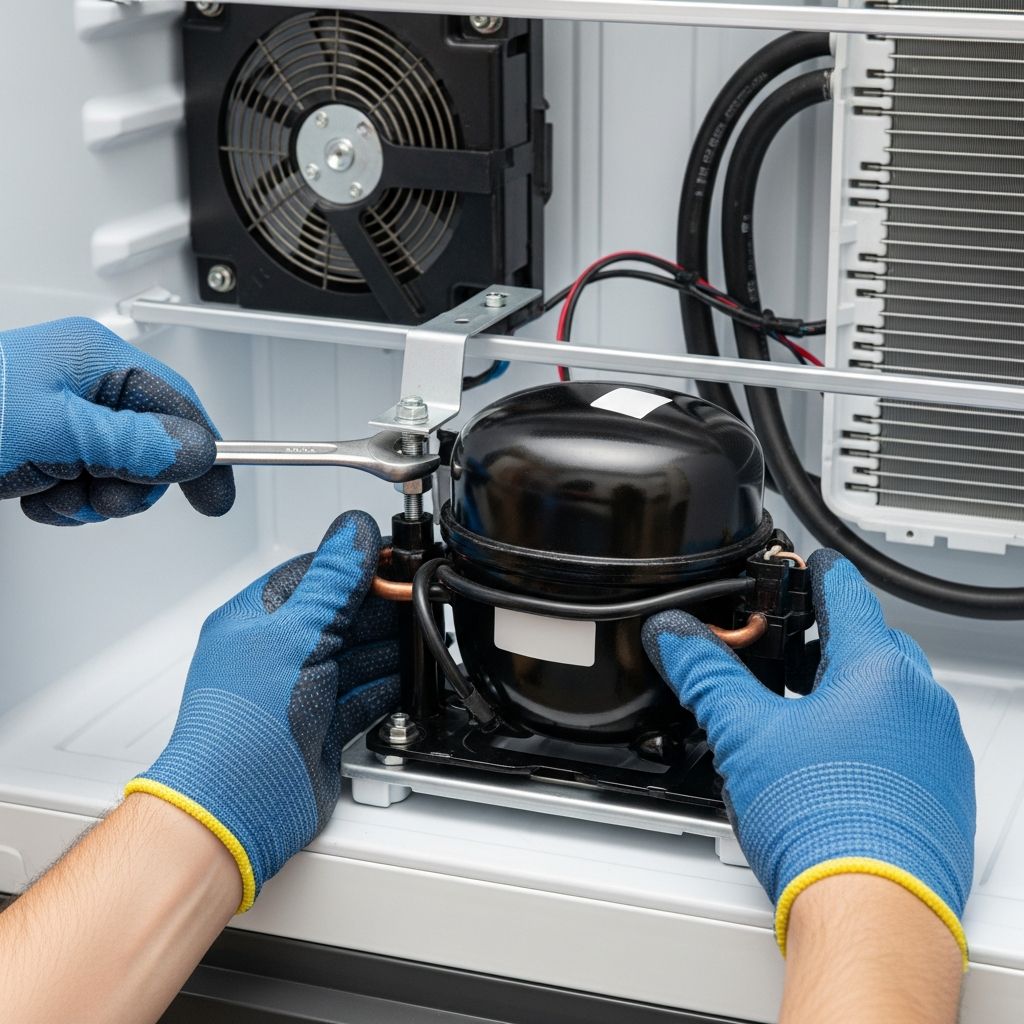
With the back panel open, you’ll see the compressor mounted horizontally on a bracket or base. Three tubes extend from the compressor: the suction line (inlet), the discharge line (outlet), and the process tube used for system charging. Familiarizing yourself with these components before disconnecting anything helps prevent confusion during reassembly.
Electrical Disconnection Procedures
Before removing any mechanical connections, photograph the electrical wiring configuration using your smartphone. This reference image proves invaluable during reinstallation, ensuring wires reconnect to correct terminals. Carefully disconnect the power cable from the compressor terminal, noting its position. Remove the relay, which sits atop or near the compressor and provides starting voltage. The capacitor, recognizable by its cylindrical shape, stores electrical charge and must be safely discharged before handling. The overload protector acts as a thermal fuse, disconnecting power if the compressor overheats.
Document each component’s position and connection before removal. Some technicians label wires with masking tape, creating a detailed removal map. This documentation proves invaluable if you must troubleshoot electrical issues during reassembly.
Refrigerant Recovery and System Depressurization
Refrigerant removal represents one of the most critical steps in compressor extraction. Improper handling contaminates the environment and violates regulations in many jurisdictions. Connect your refrigerant recovery system according to manufacturer instructions, attaching it to the process tube through a perforating valve. Activate the recovery system, allowing it to extract refrigerant from the sealed system into its collection tank. This process may require 30 minutes to several hours, depending on system charge volume.
Once refrigerant recovery completes, the system remains under vacuum. To prevent air infiltration during disassembly, connect a nitrogen cylinder to the manifold and introduce nitrogen at approximately 50 PSI pressure. This inert gas prevents oxidation of internal components and provides pressure to help purge remaining refrigerant.
Removing Refrigerant Lines and Compressor Mounting
With refrigerant safely recovered and nitrogen pressure applied, locate the points where tubing connects to the compressor. Using your tubing cutter, make clean cuts on both the suction and discharge lines, leaving approximately 20-30 millimeters of tubing extending from the process tube connection point. This remaining length provides adequate material for reconnection when installing the replacement compressor. Avoid crushing the tubing during cutting, as deformed ends prevent proper flare nut connections.
Once tubing is separated, remove the bolts securing the compressor to its mounting bracket. These fasteners typically require socket wrenches sized between 1/4 inch and 1/2 inch, depending on your refrigerator model. With all bolts removed, carefully lift the compressor free from the bracket, being mindful of any dangling components that might snag.
System Cleaning and Filter Replacement
If your compressor motor burned out internally, burned insulation material and copper particles contaminate the refrigerant system, potentially damaging the replacement compressor. System cleaning becomes mandatory in these cases. A soldering torch with neutral flame heats a tube connector welded to the suction line. A solvent recovery cylinder, charged with approximately 500 milliliters of specialized refrigeration system cleaner, attaches to the suction line, with its return line directing used solvent to a collection container. Injecting solvent through the system flushes contaminants from evaporator coils, condenser coils, and all internal passages.
After solvent circulation, inject nitrogen at low pressure to expel residual cleaning fluid from the system. This prevents solvent from mixing with refrigerant, which would reduce cooling efficiency and damage compressor lubricant.
The drier filter should be replaced whenever a compressor is removed, as this component absorbs moisture that corrodes internal passages. Using your soldering torch, solder a Schrader valve onto an available filter connection point before welding the filter assembly onto the condenser outlet. Connect the filter to the capillary tube and solder it securely in place.
Installing the Replacement Compressor
Position the new compressor in the mounting bracket, ensuring it aligns properly with attachment points. Insert and tighten all mounting bolts securely, but avoid over-tightening, which can strip threads or crack mounting brackets. The compressor should feel firmly secured without excessive force applied during final tightening.
Reconnect the suction and discharge tubing to their respective compressor ports, using flare nut wrenches to create leak-free connections. Begin tightening by hand to ensure threads align properly, then finish tightening with wrenches. Over-tight connections can crack fittings, while under-tight connections leak refrigerant.
Pressure Testing and Leak Detection
Before charging the system with refrigerant, confirm all connections remain leak-free. Using your nitrogen cylinder and manifold, introduce nitrogen into the system at approximately 50 PSI pressure. Listen carefully for hissing sounds indicating leaks. For more reliable detection, apply soapy water to all connection points, joints, and welds, watching for bubble formation that reveals leakage locations.
If leaks appear at connection points, release nitrogen pressure carefully and tighten fittings incrementally. Re-pressurize and retest until no bubbles form. If welded joints leak, those areas require re-soldering before proceeding. Once leak-free, release nitrogen pressure completely.
Electrical Component Reinstallation
Reconnect the relay to the compressor terminal, referring to your reference photograph to ensure correct orientation. Install the capacitor and overload protector according to manufacturer specifications and your photographic documentation. These components must connect in proper sequence, as incorrect installation prevents the compressor from starting.
Reconnect cooling system wires to relay terminals and overload protector terminals, using your reference image to guide placement. Replace the electrical components cover once all connections are verified as correct and secure.
System Evacuation and Refrigerant Charging
Connect your vacuum pump to the manifold gauge set and operate it for 30 minutes to one hour, removing all air from the system. Once vacuumed, the system should hold pressure without rising, indicating effective air removal. Release the vacuum by closing manifold valves slowly, preventing moisture-contaminated air from entering.
With the system properly evacuated, charge it with the correct refrigerant type and quantity specified by your refrigerator manufacturer. This information appears on a label affixed to the back of your unit or in the owner’s manual. Using your manifold gauge set and refrigerant cylinder, introduce refrigerant slowly until the system reaches proper charge pressure.
Final Testing and Verification
Once refrigerant charging completes, visually inspect all tube connections, solder joints, and electrical connections to confirm proper positioning. Plug your refrigerator back into the electrical outlet and activate it using the power switch. Listen for the compressor motor to start smoothly without grinding, clicking, or squealing sounds. Within minutes, cool air should flow from the evaporator into the refrigerator compartment.
Monitor the temperature for several hours, ensuring it reaches and maintains the proper cooling range for your unit. Check the condenser coils on the back for warm discharge air, confirming refrigerant circulation. Inspect all connection points once more for any signs of refrigerant leakage.
Proper Disposal of Old Refrigerant
Never release refrigerant directly into the atmosphere, as it causes serious environmental damage. Contact your local waste disposal facility or an EPA-certified refrigeration technician to properly dispose of recovered refrigerant. Many regions require proof of proper disposal, so document the process and retain receipts from certified disposal facilities.
Long-Term Maintenance for Compressor Longevity
Once your new compressor operates successfully, implement regular maintenance to extend its lifespan. Keep the condenser coils clean by vacuuming or brushing them monthly to remove dust accumulation that restricts heat dissipation. Verify that the condenser fan operates freely and rotates smoothly without obstruction. Inspect door seals quarterly for cracks or deterioration, replacing them if they no longer create an airtight closure.
Maintain consistent temperature settings and avoid overloading your refrigerator, allowing adequate airflow throughout the compartment. These simple practices reduce compressor workload and prevent premature failure of your new component.
Frequently Asked Questions
Q: Can I replace a refrigerator compressor without professional help?
A: Compressor replacement requires specialized tools, refrigerant handling certification, and technical knowledge. While mechanically inclined homeowners may succeed, improper procedures can damage the system or violate environmental regulations. Many jurisdictions legally restrict refrigerant work to certified technicians. Consider your skill level honestly before attempting this repair yourself.
Q: How long does compressor replacement typically take?
A: Professional technicians typically complete compressor replacement in 2-4 hours, depending on accessibility and system complexity. DIY attempts may require 6-12 hours or longer due to tool setup, learning curve, and troubleshooting needs.
Q: What causes compressor failure?
A: Compressors fail due to extended overuse, contaminated refrigerant, inadequate lubrication, electrical surges, or manufacturing defects. Regular maintenance helps prevent many failure modes, but compressors are mechanical components with finite lifespans.
Q: Is it worth replacing the compressor or buying a new refrigerator?
A: If your refrigerator is less than 10 years old with compressor failure as the only issue, replacement is usually cost-effective. Older units or those with multiple failing components may justify replacement.
Q: What type of refrigerant does my refrigerator use?
A: Check the label on your refrigerator’s back panel or consult the owner’s manual. Common types include R-134a (newer models), R-22 (older models), and R-410A (high-efficiency models). Different refrigerants require different handling procedures.
References
- How to Replace a Refrigerator Compressor — Authorized Service. 2024. https://authorizedco.com/refrigerator-repair/how-to-replace-a-refrigerator-compressor/
- Easy Guide to Replacing a Faulty Refrigerator Compressor — HNK Parts. 2024. https://www.hnkparts.com/blog/post/how-to-replace-refrigerator-compressor
- EPA Guidelines on Refrigerant Recovery and Recycling — U.S. Environmental Protection Agency. 2025. https://www.epa.gov/ozone-layer-protection/refrigerant-recovery-and-recycling
- Safe Handling of Refrigerants in HVAC Systems — American Society of Heating, Refrigerating and Air-Conditioning Engineers (ASHRAE). 2024. https://www.ashrae.org/
- Home Appliance Safety Standards — Underwriters Laboratories (UL). 2025. https://www.ul.com/
Similar Articles



Read full bio of medha deb