Relocating a Light Switch: Complete Guide
Master the art of moving light switches safely with this detailed DIY tutorial covering planning, wiring, and troubleshooting for flawless results.
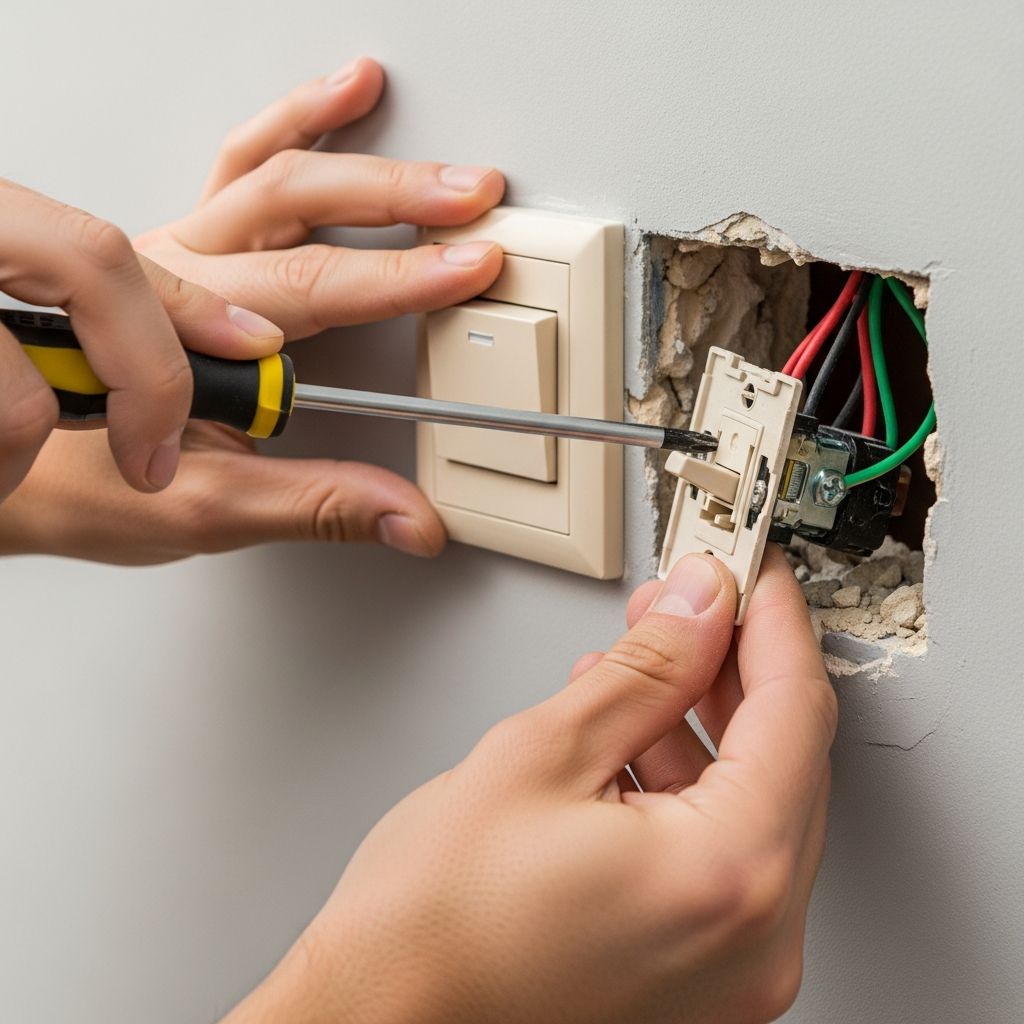
Shifting a light switch to a more convenient location enhances room functionality and aesthetics. This process involves disconnecting the existing setup, extending or rerouting wires, and securing everything at the new position. Proper execution ensures safety and compliance with electrical codes.
Why Relocate a Light Switch?
Homeowners often move switches to improve accessibility, such as placing them near door entryways instead of behind furniture. Other reasons include modernizing outdated placements during renovations or accommodating new fixtures. According to electrical standards, switches should be at 48 inches above the floor for standard use, making relocation practical for ergonomic benefits.
Before starting, evaluate if your home’s wiring supports extension without major overhauls. Older homes may require professional assessment due to knob-and-tube systems, while modern NM-B (Romex) cable allows easier fish-taping through walls.
Essential Safety Precautions
Electricity poses severe risks; always prioritize safety. Begin by identifying the circuit breaker serving the switch—label it if unmarked. Use a non-contact voltage tester to confirm power deactivation at multiple points.
- Shut off power: Flip the breaker and verify with tester.
- Wear protective gear: Insulated gloves and safety glasses prevent shocks or debris injury.
- Avoid assumptions: Test all wires; black is typically hot, white neutral, bare/green ground.
- Check local codes: Permits may be needed for wall alterations.
Never work on live circuits. If unsure, consult a licensed electrician to avoid fire hazards or code violations.
Tools and Materials Required
Gather these items for a smooth project:
| Category | Item | Purpose |
|---|---|---|
| Tools | Voltage tester, wire strippers, needle-nose pliers, screwdriver set, fish tape, drywall saw | Testing power, preparing wires, pulling cables, cutting access |
| Materials | New single-pole switch, NM-B 14/2 or 12/2 cable, wire nuts, electrical box, cover plate, cable staples | Replacement parts, extending circuits safely |
| Other | Fish tape lubricant, painter’s tape, stud finder | Easing wire pulls, marking paths |
Select switch amp rating matching your circuit—15A for standard lighting.
Planning the New Switch Location
Choose a spot on a stud-free wall section, ideally 12-18 inches from doors. Use a stud finder to avoid structural interference. Measure wire path: vertical runs through walls are simplest; horizontal may need attic/basement access.
Sketch a diagram labeling power source, old switch, new position, and light fixture. Calculate cable length—add 20% extra for bends. For multi-switch setups, note traveler wires if applicable, though this guide focuses on single-pole.
Step-by-Step Relocation Process
Step 1: Disconnect the Existing Switch
Remove cover plate screws, then switch mounting screws. Gently pull out to expose wires without stressing them. Note connections: hot (black) on brass screw, load (black to light) on other brass, ground on green.
Unscrew wires clockwise loops ensure secure release. Cap exposed ends with nuts; tuck into box.
Step 2: Install New Electrical Box
Cut a precise opening at the new site using drywall saw, matching box dimensions (typically 4×2 inches). Secure old-work box with wings or screws into drywall. Ensure box extends 1/4 inch beyond surface for flush cover.
Step 3: Run and Connect New Wiring
Fish new cable from old box to new using fish tape. At old box: splice incoming hot to new cable hot, pigtail neutrals if present, connect grounds.
- Strip 3/4 inch insulation, twist grounds together with nut.
- Hook blacks clockwise on switch terminals: line (power in) bottom, load (to light) top.
At new box: replicate connections. For direct extension, connect identically. Test continuity before closing.
Step 4: Mount and Wire the New Switch
Form clockwise loops on wire ends with pliers. Attach ground first to green screw, then hots to brass. Fold wires neatly, push switch in, secure with screws. Avoid over-tightening to prevent cracks.
Step 5: Final Testing and Finishing
Install cover plate loosely first. Restore power, test functionality—light should toggle on/off smoothly. Tighten plate, inspect for heat or sparks. Patch old hole with spackle, sand, paint.
Advanced Considerations for Complex Moves
If walls are insulated, use flexible conduit or access via attic. For 3-way switches, maintain traveler pairs (red/black). Smart switches require neutral wires; verify presence.
Long runs may need junction boxes midway for code compliance (every 100 feet max unsupported). Dimmers demand compatible fixtures to avoid buzzing.
Common Mistakes and Troubleshooting
| Issue | Cause | Solution |
|---|---|---|
| Switch doesn’t work | Reversed hot/load wires | Swap brass terminals, retest |
| Sparks or heat | Loose connections | Tighten screws, check loops |
| Flickering light | Voltage drop in long wire | Use thicker gauge cable |
| No ground | Older wiring | Piggyback to box if grounded |
If light stays on/off, power likely bypassed—double-check splices.
Benefits of DIY Relocation
Save $200-500 versus electrician fees. Gain skills for future projects like adding outlets. Enhances home value with optimized layouts. Always prioritize safety over speed.
Frequently Asked Questions (FAQs)
Can I move a switch without running new wire?
Limited to surface-mounted extensions or wireless remotes; true relocation needs wiring.
What’s the difference between 14/2 and 12/2 cable?
14-gauge for 15A circuits, 12-gauge for 20A—match breaker rating.
Do I need a permit?
Check local codes; minor relocations often exempt, but structural cuts may require one.
How far can I extend wiring?
Up to 100 feet unsupported, but voltage drop limits practical distance.
Is it safe for renters?
Only with landlord approval; alterations may void leases.
Pro Tips for Success
- Photograph wiring before disconnecting.
- Use wire labels for complex jobs.
- Test incrementally: power on only after full assembly.
- Upgrade to LED-compatible switches for efficiency.
Relocating a light switch transforms usability. Follow these steps meticulously for reliable results. For intricate wiring or doubts, hire pros to safeguard your home.
References
- Wiring Light Switch 101: A Comprehensive DIY Guide — Residence Supply. 2023-05-15. https://residencesupply.com/blogs/news/wiring-light-switch-101-a-comprehensive-diy-guide
- How to Install a Light Switch / Single Pole Switch — YouTube (Video Transcript). 2022-08-10. https://www.youtube.com/watch?v=ro3DSQQHfbM
- DIY How to install or replace a light switch for beginners! — YouTube (Video Transcript). 2021-11-20. https://www.youtube.com/watch?v=HreHB638a2g
- How to Replace a Light Switch — Dummies.com. 2024-01-12. https://www.dummies.com/article/home-auto-hobbies/home-improvement-appliances/electrical/how-to-replace-a-light-switch-185346/
Similar Articles








Read full bio of Sneha Tete