Complete Guide to Removing Air from Vehicle Cooling Systems
Master the essential technique for maintaining optimal engine cooling performance and reliability.
Understanding Air Pockets in Your Cooling System
Your vehicle’s cooling system operates under precise conditions, with coolant circulating continuously to regulate engine temperature and prevent overheating. When air becomes trapped within this sealed network of passages, hoses, and chambers, it creates a significant problem. These air pockets prevent coolant from reaching critical engine components, creating hot spots that can cause engine damage, overheating, and potential mechanical failure.
Air infiltration typically occurs after maintenance work, such as radiator replacement, hose repairs, thermostat changes, or coolant system flashing. Even small amounts of trapped air can substantially reduce cooling efficiency. Recognizing the need for system bleeding and understanding the proper procedures ensures your vehicle maintains optimal thermal management and longevity.
Essential Tools and Materials for the Bleeding Process
Before beginning any cooling system work, gather the necessary equipment to ensure safety and efficiency:
- Spill-free radiator funnel kit: Specifically designed to contain coolant and prevent environmental contamination while allowing trapped air to escape
- Appropriate coolant type: Always use the coolant specified in your vehicle’s owner manual, as different types have varying chemical compositions
- Catch container: Positioned beneath drain points to collect old coolant safely
- Wrenches and screwdrivers: For accessing bleed valves and radiator caps
- Jack and jack stands: To elevate the vehicle’s front end when necessary
- Rags and towels: For spill cleanup and temperature protection
- Safety glasses and gloves: Essential protective equipment for handling hot coolant
- Owner’s manual: Your vehicle-specific guide for identifying system components and recommended procedures
Initial Preparation and Safety Considerations
Safety must be your primary concern when working with cooling systems. Never remove radiator caps or attempt system work while the engine is warm, as pressurized coolant can cause severe burns. Always allow the engine to cool completely before beginning any maintenance.
Position your vehicle on level, solid ground away from traffic. Engage the parking brake and place the transmission in Park. If your procedure requires elevating the front end, use proper jack stands rated for your vehicle’s weight. Review your owner’s manual to identify the location of the radiator cap, expansion tank, bleed valves, and any system-specific features unique to your model.
Check the coolant level in the overflow tank while the engine is cold. It should align with the “COLD” marking. Warm up the engine slightly to verify thermostat operation if your system includes a bleed valve. Understanding your specific cooling system layout prevents confusion during the bleeding process.
Traditional Cooling System Bleeding Method
The classic approach to removing air from cooling systems remains effective for most vehicles manufactured before electronic self-bleeding systems became standard.
Positioning and Initial Setup
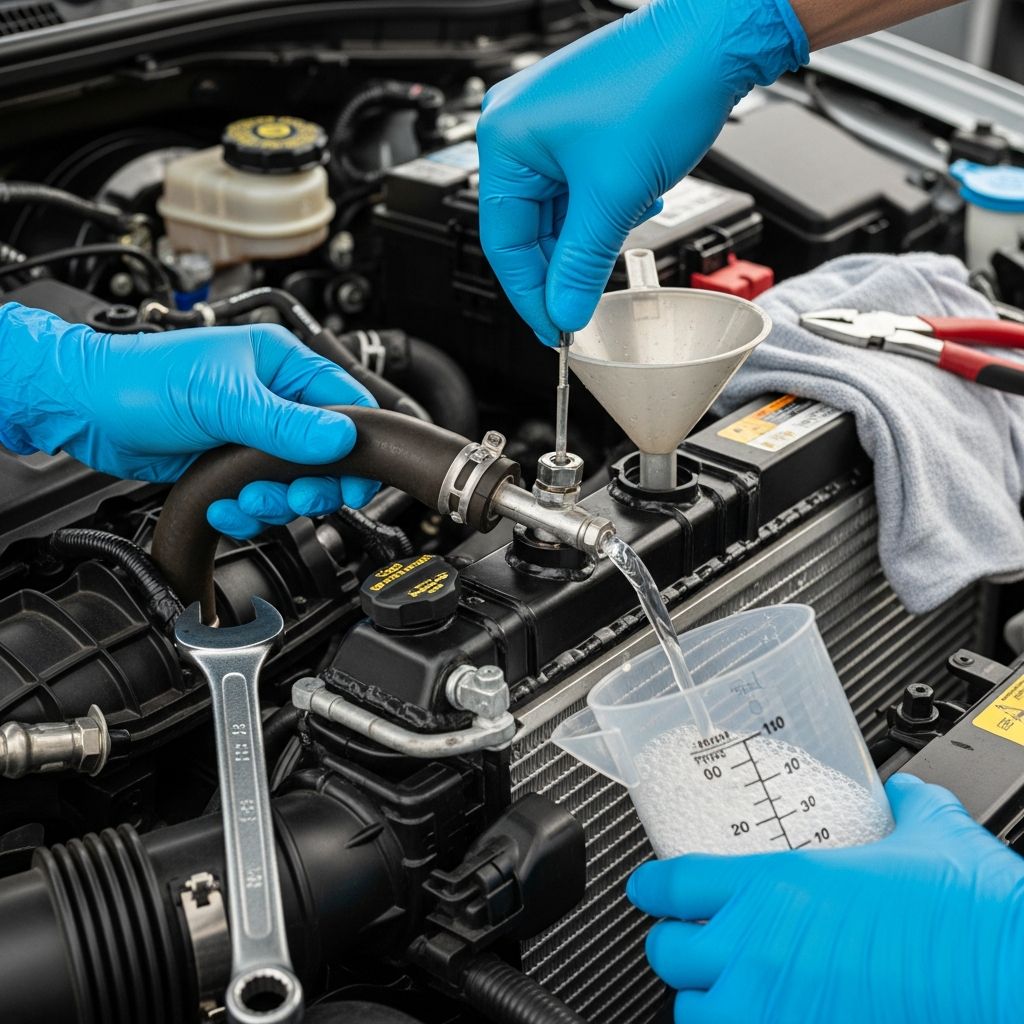
Begin by parking on a slight incline with the front of the vehicle elevated, if safely possible. This positioning helps air rise naturally toward the highest point in the system. Remove the radiator cap only after confirming the engine is completely cool. Attach your spill-free funnel securely to the radiator filler neck or expansion tank, ensuring a tight seal that prevents additional air entry during the process.
Slowly pour coolant into the funnel until it reaches the maximum level marker. This initial fill ensures the system contains sufficient coolant to circulate properly once the engine starts. Leave the funnel in position during the entire procedure.
Engine Startup and Heater Activation
Place the transmission in Park or Neutral and set the parking brake. Start the engine and allow it to idle while you activate the interior heating system. Turn the climate control to the highest temperature setting, but keep the fan speed on low initially. This action opens the heater core valve, allowing coolant to circulate through this component and expel trapped air. Without this step, you may end up with a heating system that only produces cold air.
As the engine warms and approaches normal operating temperature, the thermostat gradually opens. You’ll observe a sudden drop in coolant level within the funnel, typically followed by visible bubbles rising through the liquid. This represents the primary circulation event, where the system achieves full flow and begins releasing trapped air effectively.
Active Burping Techniques
While the engine idles, perform deliberate actions to dislodge stubborn air pockets. Locate the upper radiator hose connecting the radiator to the engine and apply firm, repeated squeezes. Each squeeze should produce a corresponding surge of bubbles in your funnel, indicating air movement toward the exit point.
Gently increase engine RPMs to approximately 1,500 to 2,000 for 15 to 20-second intervals. This elevated speed spins the water pump faster, creating increased pressure that forces coolant through narrow passages where air commonly becomes trapped. The combination of squeezing hoses and brief RPM increases typically dislodges the most stubborn air pockets within 15 to 30 minutes of active work.
Completion and Final Checks
Continue this process until you observe a steady, solid stream of coolant in your funnel with no more bubbles or sputtering. At this point, the system has achieved proper air removal. Allow the engine to cool completely before proceeding further. Once cool, use the stopper provided with your funnel kit to plug it, then carefully remove the funnel assembly. Pour any remaining coolant back into its original container to minimize waste.
Securely reinstall the radiator cap, then check the coolant level in the overflow tank. Top it off to the “COLD” line if the level has dropped during the procedure. Your cooling system is now properly bled and ready for normal operation.
Electronic Self-Bleeding Systems for Modern Vehicles
Many contemporary vehicles feature electronic water pumps and sophisticated cooling management systems that enable automated air removal. These systems simplify the bleeding process significantly by using controlled pump operation rather than manual methods.
Understanding Electronic Bleeding Procedures
Modern vehicles with self-bleeding capabilities typically feature expansion tanks rather than traditional radiator caps. Begin by filling the expansion tank to the maximum line while the engine remains cold. Your vehicle’s onboard computer can then execute a preprogrammed bleed cycle that circulates coolant efficiently without manual intervention.
Activating the Bleed Cycle
The specific activation method varies by manufacturer and model year. Most commonly, this involves pressing the accelerator pedal firmly to the floor for approximately 10 seconds while the engine is running. This action signals the vehicle’s computer to activate the electric water pump at elevated speeds. You should hear and feel the pump engaging, and observe coolant movement within the expansion tank.
Allow the pump cycle to complete fully. Once the pump stops operating, the bleed cycle has finished. Check the coolant level one final time and add coolant as needed to reach the maximum marker. This automated approach proves incredibly effective for complex modern cooling systems and reduces the time and effort required compared to traditional methods.
Working with Bleed Valves
Some cooling system designs include dedicated bleed valves, which appear as small screws protruding from radiator housings or coolant passages. These valves provide a direct route for air escape during the bleeding process.
Locate your system’s bleed valve using your owner’s manual, as positions vary considerably by vehicle make and model. While the engine remains cold, loosen the valve approximately one-half turn using an appropriately sized wrench. Do not completely remove it. Begin filling the radiator or expansion tank slowly with coolant. As coolant approaches the bleed valve location, you should hear a hissing sound as trapped air escapes. Continue adding coolant slowly until you observe sputtering at the valve opening, indicating the transition from air to coolant.
Once a steady stream of coolant flows from the bleed valve without sputtering, tighten the valve carefully. Overtightening can strip threads, particularly on plastic valve housings, so apply firm but moderate pressure. The system is now full with minimal air remaining.
Troubleshooting and Warning Signs
After completing the bleeding process, monitor your vehicle for indicators that air pockets remain or underlying problems exist.
Common Issues and Their Meanings
| Warning Sign | Likely Cause | Recommended Action |
|---|---|---|
| Persistent overheating despite bleeding | Coolant flow obstruction, thermostat failure, or water pump malfunction | Professional diagnosis required; do not ignore |
| White, sweet-smelling exhaust smoke | Coolant leaking into combustion chambers, indicating head gasket failure | Stop driving immediately; seek professional repair |
| Frothy or milky-looking engine oil | Coolant mixing with engine oil, causing internal contamination | Immediate professional service required to prevent engine damage |
| Heater blows only cold air | Air trapped in heater core circuit | Rerun bleeding procedure with heater set to maximum temperature |
| Coolant leaking from bleed valve area | Valve not fully sealed or threads damaged | Attempt gentle retightening; professional service if leak continues |
Timing and Duration Expectations
The active, hands-on portion of the bleeding procedure typically requires 15 to 30 minutes of engine running time. This duration accounts for the engine warming to operating temperature, thermostat opening, and air bubbles gradually working toward the exit point. The exact timeframe depends on your vehicle’s cooling system size, design, and how much air became trapped during the maintenance that necessitated bleeding.
Modern vehicles with electronic self-bleeding systems often complete the process in just a few minutes once the bleed cycle activates. Regardless of method, patience remains essential. Rushing the process risks leaving residual air pockets that create problems later.
Best Practices for Long-Term Cooling System Health
Maintain your cooling system’s integrity by checking coolant levels monthly and observing the overflow tank markings. Use only the specific coolant type recommended by your vehicle manufacturer, as mixing incompatible types can cause corrosion and reduced cooling efficiency. Replace your entire coolant system according to your owner’s manual schedule, typically every 30,000 to 100,000 miles depending on coolant type and vehicle age.
Inspect hoses and connections periodically for signs of deterioration, cracks, or leaks. Address any seeping coolant immediately to prevent air infiltration during normal operation. When performing any cooling system maintenance, follow the manufacturer’s procedures and don’t hesitate to consult your owner’s manual or professional technicians for model-specific guidance.
Frequently Asked Questions
Can a cooling system bleed itself without manual intervention?
Your cooling system can release some air naturally through circulation between the overflow tank and thermostat area. However, achieving complete and proper air removal requires either manual bleeding procedures or electronic self-bleeding systems. Relying solely on passive circulation often leaves residual air pockets.
Is it dangerous to bleed a cooling system myself?
The process is generally safe when you follow proper precautions. Always ensure the engine is completely cool before removing any caps or opening valves. Never open pressurized system components while the engine is warm, as escaping coolant can cause severe burns. Wear appropriate protective equipment and work in a well-ventilated area.
What should I do if my heater still blows cold air after bleeding?
This typically indicates air remains trapped in the heater core circuit. Repeat the bleeding procedure, ensuring the heater is set to maximum temperature before starting the engine. You may need to perform additional squeeze maneuvers on hoses near the heater inlet and outlet. If cold air persists after multiple bleeding attempts, a professional should inspect the system for blockages or failed components.
How often should I bleed my cooling system?
Bleeding is necessary only after maintenance work that opens the cooling system, such as radiator replacement, thermostat service, or hose repairs. During normal operation without system work, you should never need to bleed the system. Regular coolant level checks and scheduled fluid replacements prevent most air-related issues.
References
- How to Bleed Air from Cooling System: A Simple DIY Guide — KK Richardson. Accessed February 2026. https://www.kkrichardson.com/kwik-blog/how-to-bleed-air-from-cooling-system/
- How to Properly Bleed a Car Cooling System by Yourself — Acton Service Centre. Accessed February 2026. https://www.actonservicecentre.co.uk/blog/bleed-a-car-cooling-system-by-yourself/
- How To Bleed Air From A Car Radiator In 5 Easy DIY Steps — Natrad. Accessed February 2026. https://natrad.com.au/info-advice/how-to-bleed-a-car-radiator/
- A Beginner’s Guide On How to Burp a Coolant System — CarParts.com. Accessed February 2026. https://www.carparts.com/blog/a-beginners-guide-on-how-to-burp-a-coolant-system/
Similar Articles


Read full bio of Sneha Tete