How to Remove Mold from Bathroom Ceiling
Master DIY mold removal: eliminate bathroom ceiling mold safely and effectively using proven methods.
How to Remove Mold from Bathroom Ceiling: A Complete Guide
Mold in your bathroom ceiling is more than just an aesthetic problem—it’s a sign of moisture buildup that requires immediate attention. Bathrooms are naturally humid environments, making them prime breeding grounds for mold and mildew. Whether you’re dealing with a small patch or extensive growth, knowing how to effectively remove mold from your bathroom ceiling is essential for maintaining a healthy home. This comprehensive guide will walk you through everything you need to know, from preparation to prevention.
Understanding Bathroom Mold
Mold thrives in bathrooms because of the combination of moisture, warmth, and poor air circulation. When you shower or bathe, steam rises and collects on your ceiling, creating the perfect environment for mold spores to settle and multiply. Over time, these spores develop into visible mold colonies that not only look unsightly but can also pose health risks, particularly to individuals with allergies or respiratory conditions.
The key to preventing and removing mold is understanding that moisture is the culprit. Spores are present everywhere in our homes, but they only grow when they encounter moisture. Without proper ventilation to remove this moisture quickly, mold will inevitably develop on your bathroom ceiling. This is why addressing the root cause—excess humidity—is just as important as cleaning the visible mold.
What You’ll Need Before Starting
Before tackling your moldy bathroom ceiling, gather all necessary materials and safety equipment. Having everything ready will make the process smoother and ensure you work safely throughout the project.
Safety Equipment
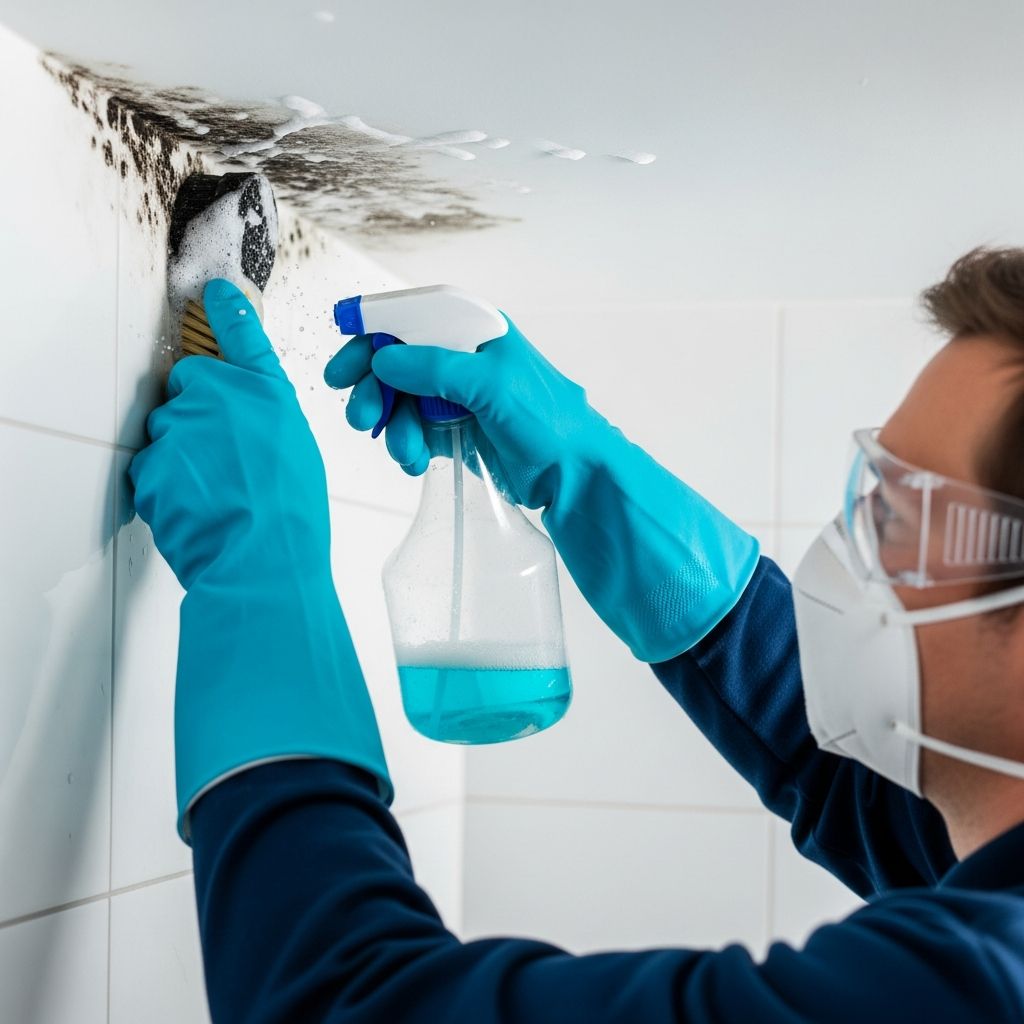
Protecting yourself is the first priority when removing mold. You’ll need safety goggles to protect your eyes from cleaning solutions and any debris that might fall from the ceiling. A respiratory mask or N95 mask is crucial, as it prevents you from inhaling mold spores and cleaning fumes. Plastic gloves protect your hands from harsh chemicals and mold contact. Some people also prefer wearing old clothes that they don’t mind getting dirty, as mold removal can be a messy process.
Cleaning Solutions
You have several options for cleaning solutions. A natural and effective choice is a vinegar and water solution mixed in a 1:1 ratio. Vinegar is an organic cleaning material that works well in enclosed bathroom spaces without releasing harmful volatile organic compounds. Alternatively, you can use commercial mold removers, bleach solutions, or baking soda pastes, depending on your preference and the severity of the mold.
Cleaning Supplies
Gather spray bottles for applying your cleaning solution, sponges or soft-bristled brushes for scrubbing, clean towels or rags for drying, and a bucket for mixing solutions if needed. If you plan to repaint after cleaning, you’ll also need primer and bathroom-appropriate paint (semi-gloss is recommended for moisture-prone areas).
Step-by-Step Mold Removal Process
Step 1: Prepare Your Bathroom
Start by improving ventilation. Open any windows and turn on your bathroom exhaust fan if you have one. This helps remove fumes from cleaning solutions and allows moisture to escape. Remove any items from the area where you’ll be working, and consider laying down newspaper or drop cloths to protect your flooring and fixtures from drips or spills.
Step 2: Mix Your Cleaning Solution
If you’re using vinegar, mix equal parts white vinegar and water in a spray bottle. This solution is effective against most household mold and mildew without the strong chemical smell of commercial cleaners. For stubborn mold, you might increase the vinegar concentration slightly. If you prefer a commercial solution, follow the manufacturer’s instructions for proper mixing and application.
Step 3: Wear Your Safety Gear
Before spraying anything, put on your safety goggles, respiratory mask, and plastic gloves. Don’t skip this step—it’s critical for protecting yourself from mold spores and cleaning fumes. Make sure your mask fits snugly around your nose and mouth, and that your gloves cover your wrists.
Step 4: Apply the Cleaning Solution
Spray your cleaning solution generously on the moldy areas of your ceiling. Allow it to sit for 10 to 15 minutes. This dwell time gives the solution time to penetrate the mold and break down its structure, making it easier to remove. For severe mold, you might need to apply multiple coats.
Step 5: Scrub the Mold
Using a soft-bristled brush or sponge, gently scrub the treated areas. Work in circular motions to effectively remove the mold without damaging the ceiling material. Be careful not to apply too much pressure, as ceiling materials can be delicate. Continue scrubbing until the mold is visibly removed and the surface appears clean.
Step 6: Rinse and Dry
After scrubbing, rinse the area thoroughly with clean water using a spray bottle or damp cloth. This removes any remaining cleaning solution and mold spores. Then, dry the ceiling completely with clean towels or rags. Thorough drying is essential because any remaining moisture can allow new mold to grow. You might want to leave the exhaust fan running for several hours to ensure complete dryness.
Step 7: Apply Primer
Once the ceiling is completely dry, apply a layer of primer. This step serves two important purposes: it blocks any remaining stains from the mold and seals the surface to prevent moisture from penetrating the ceiling material. Use a primer specifically designed for bathrooms or moisture-prone areas for best results.
Step 8: Paint Your Ceiling
After the primer dries, apply your chosen paint. For bathroom ceilings, semi-gloss paint is an excellent choice because it resists moisture better than flat paint and is easier to clean. Apply according to the paint manufacturer’s instructions, typically using two coats for complete coverage. Semi-gloss paint’s reflective quality also helps brighten your bathroom space.
Natural vs. Commercial Cleaning Solutions
When deciding between natural and commercial solutions, consider the severity of your mold problem and your personal preferences.
| Solution Type | Pros | Cons | Best For |
|---|---|---|---|
| Vinegar & Water (1:1) | Natural, non-toxic, affordable, effective for most mold, safe for enclosed spaces | Slower acting on severe mold, strong vinegar smell | Light to moderate mold, regular maintenance |
| Bleach Solution | Powerful, fast-acting, kills mold and disinfects | Harsh chemicals, strong fumes, can damage materials, not eco-friendly | Severe mold, heavily contaminated areas |
| Baking Soda Paste | Natural, gentle, safe, leaves no toxic residue | Requires more scrubbing, slower acting | Light mold, maintenance cleaning |
| Commercial Mold Removers | Formulated specifically for mold, quick results, various strengths available | Expensive, chemical fumes, environmental concerns | Stubborn mold, time-sensitive situations |
Preventing Mold from Returning
Removal is only half the battle. To prevent mold from returning to your bathroom ceiling, you need to address the moisture problem.
Improve Ventilation: Use your exhaust fan during and after showers. For maximum effectiveness, run it for at least 20-30 minutes after bathing. If you don’t have an exhaust fan, consider installing one, as it’s one of the most effective mold prevention tools.
Reduce Humidity: Keep your bathroom well-ventilated by opening windows when weather permits. You can also use a dehumidifier to maintain humidity levels below 50 percent, which discourages mold growth.
Regular Cleaning: Wipe down your bathroom ceiling weekly with a dry cloth or do a quick spray and wipe with vinegar solution monthly. This prevents mold from establishing itself in the first place.
Fix Leaks Immediately: Any water leaks from pipes or the roof above your bathroom must be addressed promptly. Standing water is an open invitation for mold.
Improve Air Circulation: Keep bathroom doors open when possible to allow humid air to escape into other parts of your home. Install a ceiling fan if your bathroom lacks air circulation.
When to Call a Professional
While most bathroom ceiling mold is manageable as a DIY project, certain situations warrant professional help. If the mold covers an area larger than 10 square feet, if you suspect mold behind your ceiling tiles, if you have health concerns about mold exposure, or if the mold returns repeatedly despite your prevention efforts, consult a professional mold remediation company. They have specialized equipment and expertise to handle extensive contamination safely.
Health Considerations
Mold exposure can trigger allergic reactions, asthma attacks, and respiratory issues in sensitive individuals. Symptoms include sneezing, coughing, itchy eyes, and shortness of breath. If you or your family members experience these symptoms in conjunction with visible mold, take the problem seriously. Wearing proper safety equipment during removal is not optional—it’s essential for protecting your health.
Frequently Asked Questions
Q: How long does it take to remove mold from a bathroom ceiling?
A: The actual removal process typically takes 1-2 hours for small to moderate mold patches. However, including drying time, priming, and painting, the entire project could take several hours or even a full day depending on ceiling size and paint drying times.
Q: Can I paint over mold without removing it?
A: No, this is a common mistake. Paint will not stop mold growth; it will only trap it underneath. The mold will continue to spread beneath the paint, potentially making the problem worse. Always clean and remove mold before painting.
Q: Is vinegar really effective against bathroom mold?
A: Yes, vinegar is surprisingly effective for most household mold. It contains acetic acid, which kills mold and mildew. However, for severe infestations or certain types of mold, you might need stronger solutions.
Q: What type of paint should I use on bathroom ceilings?
A: Semi-gloss or high-gloss paint is recommended for bathroom ceilings because these finishes resist moisture better than flat paint. Many manufacturers also make specific bathroom ceiling paints with mold-fighting properties.
Q: How often should I clean my bathroom ceiling to prevent mold?
A: Perform a light cleaning with vinegar and water solution once a month, and do a thorough visual inspection monthly. If you notice early signs of mold, address it immediately rather than waiting for it to spread.
Q: Can I use bleach instead of vinegar?
A: Yes, bleach is more powerful than vinegar, but it’s also harsher and produces strong fumes. In a closed bathroom space, vinegar is generally recommended because it’s less toxic and still highly effective for most mold situations.
Q: What should I do if the mold keeps coming back?
A: Recurring mold indicates an ongoing moisture problem. Investigate and fix the root cause: improve ventilation, ensure your exhaust fan is working properly, check for leaks, and consider using a dehumidifier to maintain proper moisture levels.
Conclusion
Removing mold from your bathroom ceiling is a manageable DIY project when you follow proper procedures and safety protocols. By understanding why mold grows, taking appropriate safety precautions, and addressing both the visible mold and underlying moisture issues, you can restore your bathroom to a clean, healthy state. Remember that prevention is easier than removal—maintain good ventilation, monitor humidity levels, and perform regular maintenance to keep mold from returning. With these strategies in place, you’ll enjoy a fresher, healthier bathroom for years to come.
References
- How to Remove Mold From a Bathroom Ceiling — Family Handyman. 2025-09-06. https://www.familyhandyman.com/project/remove-mold-from-bathroom-ceiling/
- Mold Remediation Guidance — U.S. Environmental Protection Agency. 2024. https://www.epa.gov/mold
- Humidity and Health — Centers for Disease Control and Prevention. 2024. https://www.cdc.gov/healthyplaces/healthtopics/mold.htm
- Acetic Acid as an Antimicrobial Agent — PubMed Central. 2020. https://www.ncbi.nlm.nih.gov/pmc/articles/PMC7268677/
Similar Articles





Read full bio of medha deb