Removing Brick Veneer: Complete DIY Guide
Master the step-by-step process to safely demolish brick veneer, protect your home's structure, and achieve professional results without hiring pros.
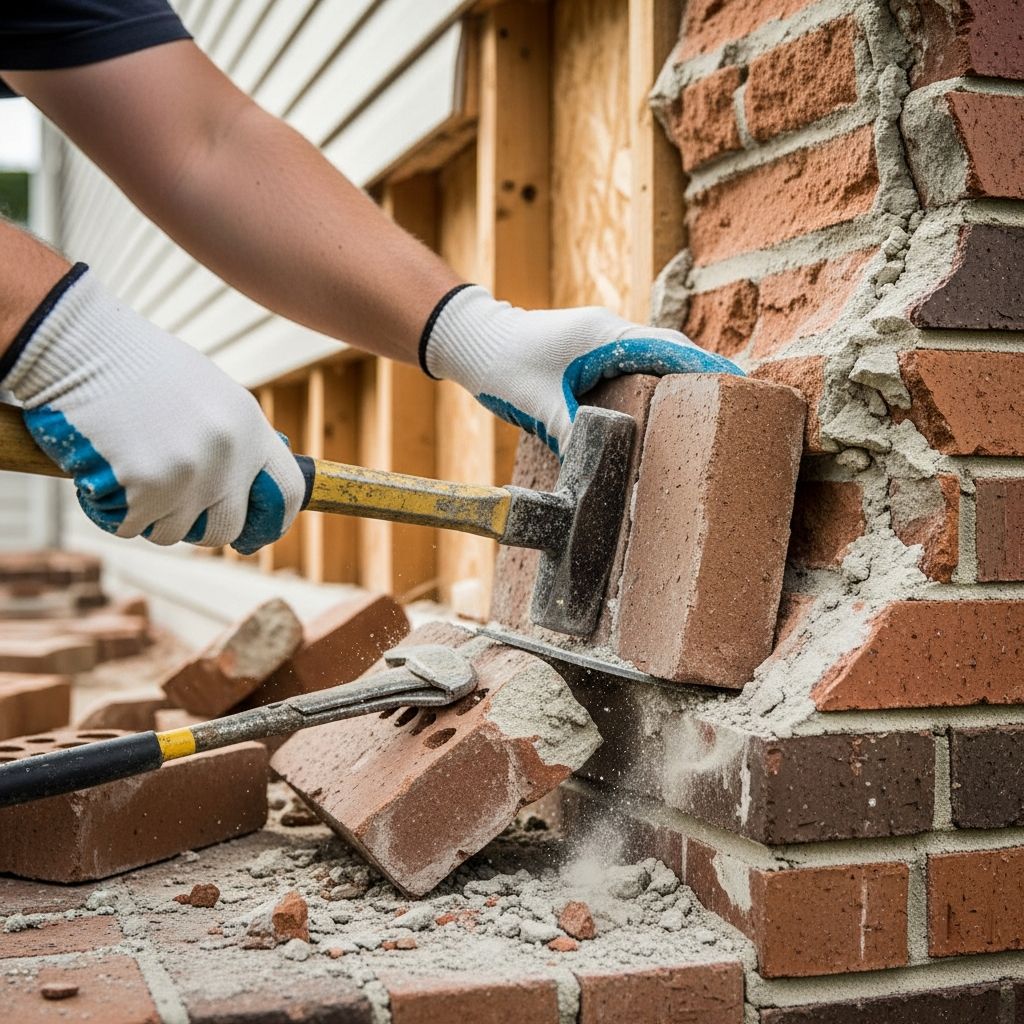
Brick veneer offers timeless appeal to home exteriors, but when remodeling or expanding calls for its removal, the task demands careful planning and execution. This guide provides a thorough roadmap for homeowners tackling this project, ensuring structural integrity while minimizing damage to underlying surfaces.
Understanding Brick Veneer and When to Remove It
Brick veneer consists of a single layer of bricks attached to a home’s outer wall, typically with mortar joints and metal ties anchoring it to the sheathing. Unlike structural brick, it serves as decorative siding, creating an air gap for drainage and ventilation. Removal becomes necessary during additions, window enlargements, siding replacements, or to modernize aesthetics.
Common scenarios include converting porches to indoor spaces, updating outdated facades, or addressing moisture issues behind the veneer. Assess your wall’s condition first: older installations from the 1960s or earlier may have softer mortar, easing removal, while newer ones require more robust methods.
Essential Safety Precautions Before Starting
Prioritize protection to avoid injuries from falling debris, dust, or tool mishaps. Wear heavy-duty gloves, safety goggles, ear protection, and a dust mask or respirator, especially when grinding or chiseling generates silica particles.
- Secure the work area with tarps to contain debris and protect landscaping.
- Inspect for electrical lines, plumbing, or structural elements behind the veneer.
- Use stable scaffolding or ladders for elevated work, ensuring compliance with height safety standards.
- Work with a partner for heavy lifting and overhead tasks.
- Check weather forecasts to avoid rain, which complicates cleanup and risks substrate damage.
Tools and Materials You’ll Need
Gather equipment suited to manual or powered approaches based on project scale. Manual methods suit small areas, while power tools accelerate larger jobs like 160 square feet.
| Category | Tools | Purpose |
|---|---|---|
| Manual | Mason’s chisel, 3-lb hammer, pry bar | Precise mortar cutting and brick extraction |
| Powered | Air hammer (e.g., $11 model from Harbor Freight), rotary hammer drill with 3/4″ chisel bit, angle grinder with diamond blade | Fast mortar grinding and brick breakup |
| Cutting | Circular saw or grinder with diamond blade | Straight perimeter cuts for clean edges |
| Support | Scaffolding, compressor (3 HP for air tools), extension cords | Safe elevated access and tool operation |
| Cleanup/Repair | Shop vac, tarps, mortar hawk, new flashing | Debris management and wall prep |
Planning Your Demolition Strategy
Evaluate the scope: for edges near additions, prioritize straight lines to integrate new walls seamlessly. Start from the top on multi-story sections to control fallout. Decide on salvage: intact bricks require gentle handling for reuse, saving halves for clean terminations.
Mark boundaries with chalk lines. For openings under 3 feet, remove a few courses above to maintain temporary stability. Test mortar hardness in an inconspicuous spot to choose tools—soft joints yield to chisels, hard ones to grinders.
Step-by-Step Removal Process
Step 1: Prepare the Surface
Clear obstacles and cover windows/doors. Score painted surfaces with a grinder to reveal joints. For precision edges, make multiple passes with a diamond blade saw at varying depths, up to halfway through bricks, then drill relief holes with a hammer drill.
Step 2: Break into the Mortar
Select a starting brick at the top or edge. Insert a mason’s chisel shallowly into horizontal and vertical joints, tapping lightly with a hammer to deepen cuts gradually. Work around the brick until it loosens—expect 45 seconds to a minute manually, or 10 seconds with an air hammer.
Pry gently to avoid stressing adjacent bricks. For stubborn mortar, switch to a rotary hammer’s chisel bit, focusing inward from ends to minimize vibration damage.
Step 3: Extract Bricks Systematically
Remove in rows downward, stacking salvaged pieces aside. Use an angle grinder for tight spots, keeping the blade against brick undersides without gouging sheathing. In video demos, air hammers excel by grinding edges precisely while pulling back to protect plaster or drywall.
Step 4: Address Power Tool Techniques
Air hammers from budget compressors transform labor-intensive jobs. Hook up, position the chisel under brick edges, and pulse to sever ties without deep substrate penetration. Rotary hammers with Bosch-style bits handle sound 1968-era mortar effectively.
Step 5: Clean Up Mortar Residue
Scrape residual mortar from sheathing using a wire brush or shop vac. Inspect for damaged ties or weepholes, removing obstructions.
Protecting and Repairing the Substrate
Exposed sheathing risks moisture intrusion post-removal. Install PVC through-wall flashing at transitions to direct water outward. Add foam weatherstripping for movement accommodation between frame and veneer remnants.
Patch drywall or plaster dents from tool impacts. For additions, ensure new framing aligns with veneer edges, weaving in matching bricks if extending.
Common Challenges and Pro Tips
Challenge: Hard Mortar – Use grinders first; they remove without shocking bricks.
Challenge: Elevated Work – Scaffold investment pays off for second-floor starts, balancing speed and safety.
Pro Tip: Save half-bricks for neat edges. Helpers speed salvage by cleaning mortar off knocked-out pieces. Match new mortar profiles with rakers for seamless joints.
Alternative Methods for Specific Scenarios
- Small Repairs: Drill 1/4-inch holes, chisel fragments, grind remnants.
- Large Walls: Combine saw cuts for perimeters, then sledge inner sections judiciously.
- Window Remodels: Remove triangular areas above lintels, managing water with sloped sills.
Post-Removal Finishing Touches
After debris clearance, apply house wrap or WRB over sheathing. Install new siding promptly. For brick extensions, mix mortar to match color profiles, lay with spacing rulers, and tool joints consistently. Slope sill bricks 1 inch past lowers for drainage.
FAQs
Is a sledgehammer safe for brick veneer removal?
No—reserve for non-edge areas after scoring; it risks uneven damage and sheathing impacts.
How long does 160 sq ft take?
With power tools and help, a weekend; manual doubles time.
Can I reuse removed bricks?
Yes, if gently extracted—clean thoroughly for structural reuse.
What if I damage the wall behind?
Patch with flashing and WRB; consult pros for structural concerns.
Do I need a permit?
Check local codes, especially for load-bearing appearances or additions.
References
- Brick veneer demolition – Fine Homebuilding — Fine Homebuilding. 2026 (accessed). https://www.finehomebuilding.com/forum/brick-veneer-demolition
- How to remove brick veneer – YouTube — Mary Jenkins. 2015-01-08. https://www.youtube.com/watch?v=T39hHC9nV4U
- Take the Fear out of Brick Veneer – Fine Homebuilding — Fine Homebuilding. 2026 (accessed). https://www.finehomebuilding.com/project-guides/siding-exterior-trim/take-fear-brick-veneer
- How To Remove Brick.. Porch to Room Addition Project Vid#2 – YouTube — MrKistel. 2017-10-02. https://www.youtube.com/watch?v=rnIKqe40nEI
Similar Articles








Read full bio of medha deb