Removing Casters From Vintage Furniture: Step-By-Step Guide
Expert guide to safely detach old casters from antique pieces for restoration and modern updates.
Removing Casters from Vintage Furniture: A Complete Guide
Antique and vintage furniture often features metal casters attached to the legs, originally designed for easy mobility across carpets and floors. Over time, these components rust, break, or clash with modern aesthetics, prompting removal for restoration projects. This detailed guide explores safe, effective ways to detach casters while preserving the wood integrity of your heirloom pieces. Whether you’re updating a dresser, chair, or cabinet, understanding caster types and removal strategies ensures professional results without splintering or gouging the legs.
Understanding Caster Attachments in Old Furniture
Casters on vintage items typically secure via several mechanisms, each requiring specific handling. Common designs include pressed metal plates nailed or stapled into the leg bottom, friction-fit sleeves driven into pre-drilled holes, peened rivets stamped with an “X” pattern for locking, and screwed ferrules encircling the leg base. These were popular from the late 19th century through the mid-20th century, when households relied on casters to shift heavy pieces for cleaning rolled-up rugs or sweeping under furniture.
Recognizing the attachment style begins with flipping the piece upside down on a padded surface to inspect the leg undersides. Look for visible nails, screws, or a stamped “X” indicating peening. Friction types show no fasteners, relying instead on tight wooden sockets. Rusty conditions, common after decades of use, demand penetrating oils like WD-40 to loosen corrosion before prying.
Essential Tools for Caster Removal
Gathering the right tools prevents damage and speeds the process. Prioritize flathead screwdrivers in various sizes for initial prying, pry bars (2-in-1 models for versatility), hammers for controlled tapping, and pliers for gripping loose parts. Safety gear includes work gloves to protect hands from sharp edges and safety glasses against flying debris. Additional aids: wire brushes for cleaning ferrules, penetrating lubricants, and a drill with precise bits for stubborn sockets.
- Flathead screwdriver: Ideal for lifting nail heads or prying peened joints.
- Pry bar: Provides leverage for plate separation; select one with a narrow tip.
- Hammer: Use a rubber mallet to minimize vibration shock to wood.
- Penetrating oil: Apply to rusted areas 15-30 minutes prior to work.
- Drill bits: 11/32-inch for steel sockets, 3/8-inch for plastic; low speed only.
Work on a stable, padded workbench to support the furniture evenly, avoiding pressure points that could crack legs.
Step-by-Step Removal Techniques by Caster Type
Different attachments call for tailored approaches. Always start with lubrication on suspected rust points and gentle testing to avoid forcing parts.
Plate-Mounted Casters
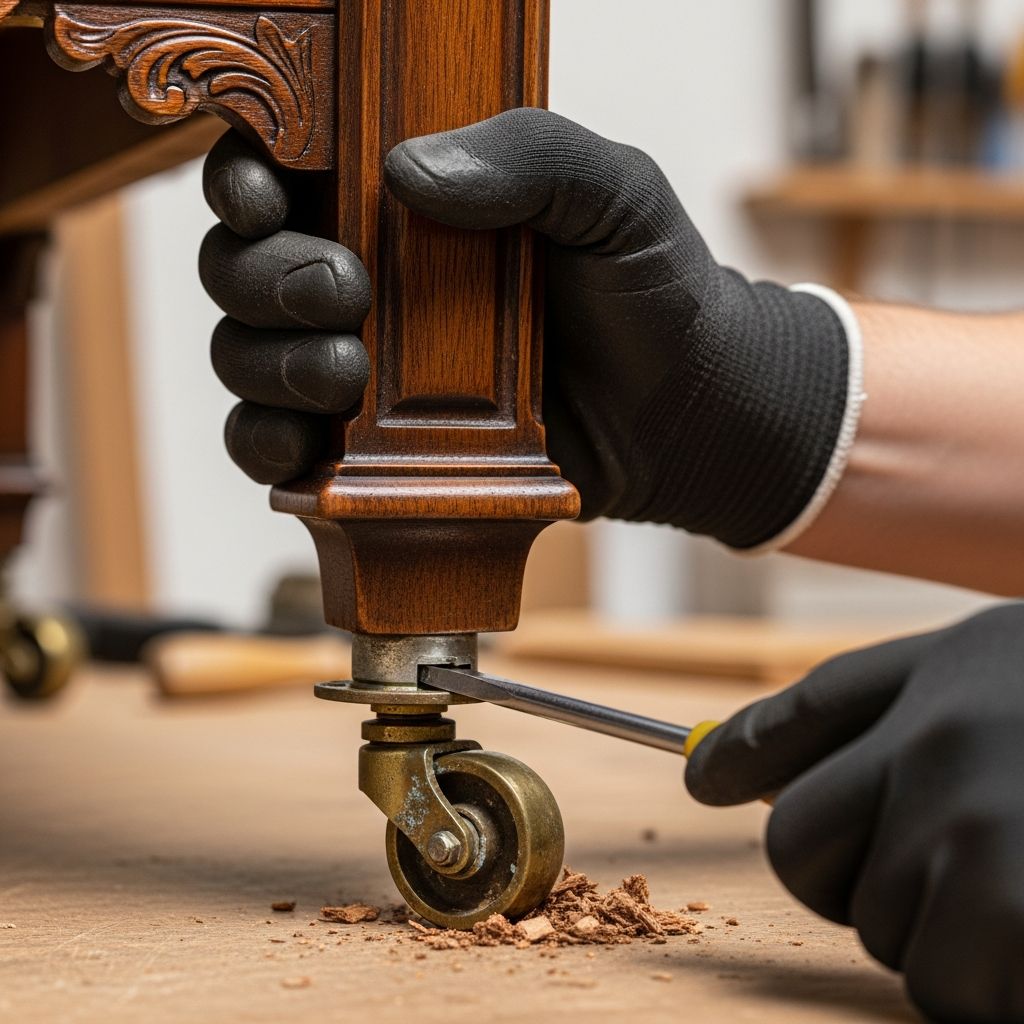
These feature a flat metal plate nailed or tacked under the leg. Position the furniture inverted securely. Insert a screwdriver or pry bar tip between the plate edge and wood, tapping lightly with a hammer to lift nails. Work around all sides progressively until the plate pops free. For stubborn ones, rock the tool back and forth while applying steady upward pressure.
Friction-Fit Sleeve Casters
Sleeves hammer into leg holes for a snug fit. Spray oil into any gaps and let penetrate. Pry the wheel assembly outward using two screwdrivers on opposite sides for even force. If seized, tap the pry bar strategically while twisting the caster. Extract the sleeve last with pliers if it remains embedded.
Peened or Riveted Designs
Identified by an “X” stamp, these use deformed metal to lock components. Straighten the peening with a screwdriver tip, then pry the assembly apart. Rust may require oil and patience; avoid excessive force to prevent sleeve spin in the wood.
Screwed Ferrule Casters
Ferrules are collars screwed around the leg base holding the caster. Brush rust from screw heads with a wire brush moved horizontally to protect wood grain. Unscrew counterclockwise; if stripped, use pliers or a screw extractor. Loosen the ferrule afterward with prying.
Socket-Embedded Types
Steel or plastic sockets with barbed teeth grip solid wood. Lift teeth sequentially with a screwdriver, then pry the socket out. For broken remnants, drill slowly at 90 degrees with the specified bit size—the friction spins out the metal without enlarging the hole.
Pro Tip: Test each leg individually, photographing before-and-after for reference during refinishing.
Handling Challenges: Rust, Breakage, and Wood Protection
Rust intensifies grip, often chipping tools or splintering wood. Counter this by soaking with oil overnight for severe cases. If a caster resists, heat gently with a hairdryer to expand metal slightly. Broken sockets demand precision drilling: maintain perpendicular alignment to preserve leg stability.
Protect wood by wrapping leg tips in painter’s tape before prying. Clean residues post-removal with mineral spirits on a soft cloth, avoiding soakage into joints. Inspect for hidden damage like cracks from prior stress, repairing with wood glue and clamps if needed.
| Caster Type | Primary Tool | Lubricant Needed? | Drill Required? |
|---|---|---|---|
| Plate-Mounted | Pry Bar + Hammer | Sometimes | No |
| Friction Sleeve | Screwdrivers x2 | Yes | Rarely |
| Peened Rivet | Screwdriver | Yes | No |
| Screwed Ferrule | Screwdriver/Pliers | Sometimes | No |
| Socket Embedded | Screwdriver + Drill | Yes | Often |
After Removal: Finishing and Alternatives
Once casters are off, level legs with tapered plugs or furniture levelers for stability. Sand ferrule marks smooth, progressing from 120 to 220 grit, then apply stain and finish matching the piece. Modern alternatives include felt pads for hard floors, rubber cups over leg ends, or brass/wood wheel casters for retained mobility without floor damage.
Store removed casters cleaned and oiled for future projects—wire wheel rust off and lubricate axles. This preserves history while adapting to contemporary needs.
Safety Precautions and Best Practices
- Secure furniture to prevent tipping; use sawhorses for large items.
- Wear gloves and glasses; rusty metal shards pose cut and eye risks.
- Avoid high-speed drilling to prevent bit binding or wood burning.
- Test finishes on hidden areas post-refinishing.
- For valuable antiques, consult a professional restorer if unsure.
Frequently Asked Questions (FAQs)
What if the caster socket breaks inside the leg?
Use a low-speed drill with the correct bit size (e.g., 11/32″ for steel) to spin and extract the fragment without damaging the hole.
Can I reuse antique casters after removal?
Yes, clean rust with a wire wheel, oil moving parts, and install on other pieces. Replace wheels if worn.
Will removing casters ruin the furniture value?
Not if done carefully; many collectors prefer leg-direct contact for authenticity. Document changes for provenance.
How do I handle super-rusted casters?
Apply penetrating oil liberally, wait 30+ minutes, and use heat or extra prying leverage. Patience prevents wood tears.
What replaces casters for floor protection?
Felt pads, rubber bumpers, or Teflon glides offer smooth gliding without scratches.
This process transforms dated furniture into sleek, functional staples. With methodical steps, even novices achieve pro-level outcomes, breathing new life into family treasures.
References
- How To Remove Antique Castor Wheels Off Furniture — Salvaged Inspirations (YouTube). 2024-02-28. https://www.youtube.com/watch?v=NG_8K5k4cJg
- How do I remove these casters? — The Talking Machine Forum. Accessed 2026. https://forum.talkingmachine.info/viewtopic.php?t=46882
- Caster Socket Removal from solid wood legs — MyChairParts.com. Accessed 2026. https://www.mychairparts.com/caster-socket-removal-from-solid-wood.html
- How To Remove Antique Furniture Casters — Hunker. Accessed 2026. https://www.hunker.com/13403998/how-to-remove-antique-furniture-casters/
Similar Articles




Read full bio of medha deb