Removing Glass Tile Backsplash: Complete Guide
Master the step-by-step process to safely dismantle your glass tile backsplash without major wall damage or hazards.
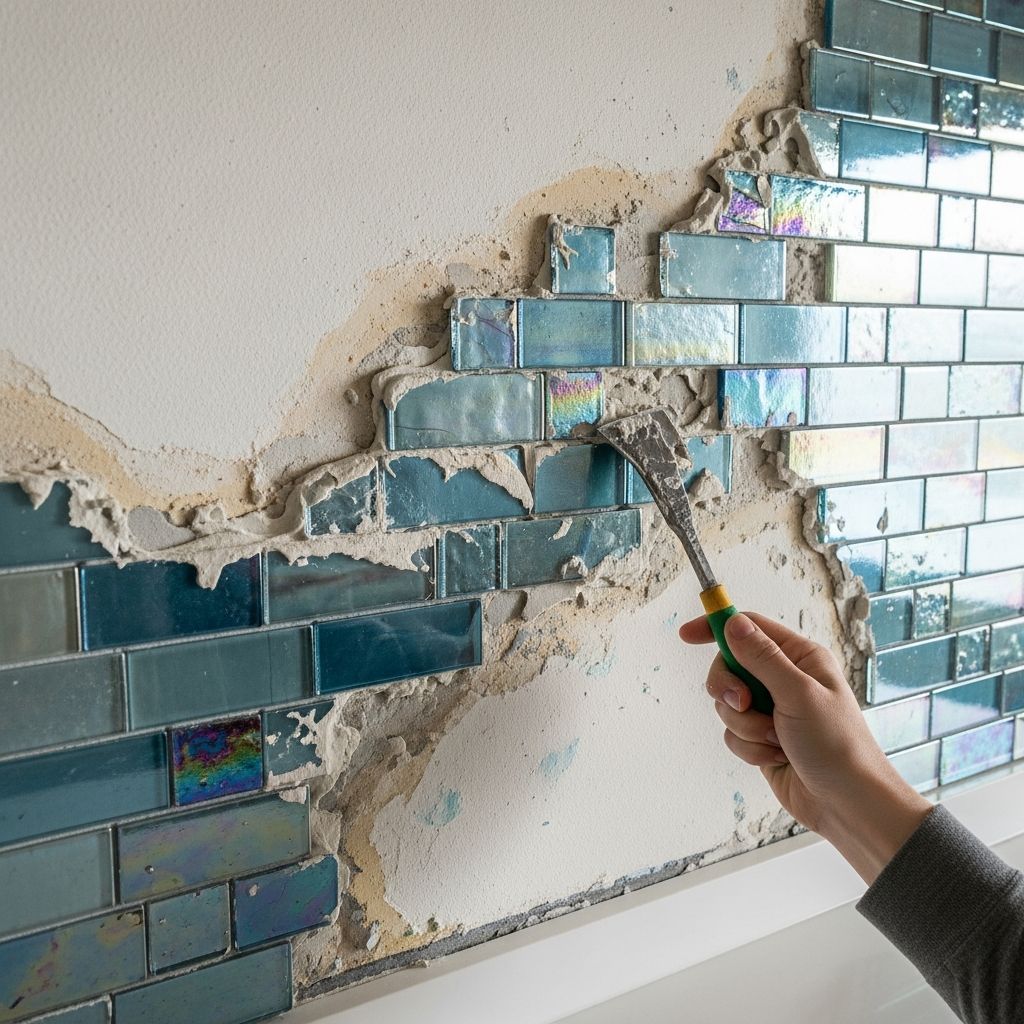
Glass tile backsplashes add a sparkling, modern touch to kitchens, but when it’s time for an update, removal can seem daunting. This comprehensive guide walks you through every phase, from preparation to finishing touches, ensuring you achieve professional results at home. Whether dealing with delicate mosaic sheets or larger panels, proper techniques minimize damage to underlying drywall and countertops.
Why Remove a Glass Tile Backsplash?
Updating your kitchen often starts with the backsplash. Glass tiles, prized for their reflective quality and ease of cleaning, may need removal due to dated styles, color mismatches with new cabinets, or damage from heat and moisture. Homeowners frequently opt for seamless quartz or granite slabs post-removal for a sleeker look without grout lines. The process reveals the wall behind, allowing for uniform surfacing that elevates the entire space.
Safety Precautions Before Starting
Prioritizing safety prevents injuries and electrical hazards. Kitchens typically feature outlets and switches embedded in backsplashes, so begin by shutting off power at the breaker box. Verify with a voltage tester or plug-in lamp—no sparks allowed. Wear protective gear: safety goggles to shield eyes from flying shards, a dust mask or respirator for fine particles, heavy-duty gloves to handle sharp edges, and long sleeves for skin protection.
Clear the area of appliances and cover counters with heavy plastic sheeting or drop cloths. Use painter’s tape to secure edges, protecting granite, quartz, or laminate from scratches. Hang plastic sheeting over doorways to contain dust, and position a shop vacuum nearby for immediate cleanup. These steps create a controlled workspace, reducing cleanup time significantly.
Essential Tools and Materials
Gathering the right equipment streamlines the job. Here’s a curated list tailored for glass tile removal:
- Utility knife: Scores caulk and grout lines precisely.
- Oscillating multi-tool: Cuts through grout and thin drywall sections efficiently.
- Chisel or flathead screwdriver: Pry tiles loose without excessive force.
- Hammer or rubber mallet: Provides controlled taps to break bonds.
- Pry bar: Lifts larger sections gently.
- Shop vacuum and heavy-duty trash bags: Manages debris.
- Drop cloths and plastic sheeting: Protects floors and counters.
- Drywall patch kit, joint compound, sandpaper: For repairs.
Invest in quality tools; cheaper versions dull quickly on glass. An oscillating tool with diamond-grit blades excels on mesh-backed mosaics.
Step-by-Step Removal Process
Step 1: Clear Countertop Attachments
Inspect for countertop lips or solid backsplash pieces like granite. Slice caulk seals with a utility knife along edges where tile meets counter. Start at exposed corners, using a flathead screwdriver and hammer to gently pry. Work methodically around the perimeter until the piece loosens. Avoid slamming; tap lightly to prevent counter chips. Once free, lift straight up—adhesives often release cleanly, though minor drywall paper tears may occur.
Step 2: Score Grout Lines
Glass mosaic tiles on mesh backings bond tightly via thin grout. Use an oscillating multi-tool to cut grout lines shallowly, about 1/8 inch deep. This weakens connections between tiles, allowing individual removal. For stubborn spots, a utility knife works manually. Scoring prevents the “web effect” where prying one tile pulls others, risking large drywall gouges.
Step 3: Pry and Remove Tiles
Select a starting edge, like near outlets. Insert a chisel flat against the wall under a tile edge, tap gently with a hammer to slide underneath. Apply upward torque to pop tiles free—the mesh backing often detaches in chunks. Work in small sections; larger sheets become unwieldy and heavy. If preserving drywall is key, chisel parallel to the surface to minimize paper tears. Expect 2-4 hours for 50 square feet, depending on experience.
Step 4: Handle Stubborn or Damaged Areas
Mesh-backed glass resists clean removal due to flexible backing distributing force unevenly. If tiles won’t budge, cut small drywall sections (4-6 inches wide) with the oscillating tool down to the countertop level. Remove tile-embedded drywall in manageable pieces into heavy tubs for disposal. This method, though more invasive, saves time and ensures smooth reinstallation surfaces.
Step 5: Clean Up Debris
Vacuum constantly to avoid grinding shards underfoot. Double-bag glass waste in contractor bags to prevent punctures. Wipe walls with a damp microfiber cloth to remove adhesive residue—avoid soaking to prevent drywall swelling.
Dealing with Drywall Damage
Tile removal inevitably mars the wall. Superficial paper tears require joint compound: apply thinly, feather edges, sand smooth after drying (24 hours). Deeper gouges need drywall patches: cut holes square, insert mesh tape and screws, mud over multiple layers. For full sections removed, measure, cut new drywall, screw to studs, tape, mud, and sand. Prime before new backsplash installation. Patience here yields seamless results.
Common Mistakes and How to Avoid Them
| Mistake | Consequence | Solution |
|---|---|---|
| Not scoring grout | Tiles pull drywall paper | Cut lines first with multi-tool |
| Excessive force | Cracked counters or studs | Use controlled taps, start small |
| Skipping safety | Injury from shards or dust | Full PPE, power off |
| Poor cleanup | Slippery floors, lingering dust | Vacuum continuously |
Patience trumps power—rushing amplifies damage.
Repairing and Preparing for New Backsplash
Post-removal, inspect for moisture damage behind tiles, common in kitchens. Dry thoroughly, treat mold with bleach solution if needed. Sand repairs to 120-grit smoothness, prime with drywall sealer. For new installs, consider peel-and-stick options or slabs extending to counters. Measure precisely; backsplash height typically spans 4-6 inches above counters.
Alternative Methods for Tricky Spots
Around outlets, remove covers first, score around boxes. For single tiles, chip carefully with chisel—no need for full demo. In tight corners, hand tools outperform power ones. If tiles are large-format glass, heat guns soften adhesives, but test for melting risks.
Cost and Time Estimates
DIY removal costs $50-150 in tools/materials, versus $500+ professionally. Time: 4-8 hours for average kitchen. Rent multi-tools if not owning. Disposal fees vary; check local rules for glass/construction waste.
FAQs
Can I remove glass tiles without replacing drywall?
Yes, with careful chiseling and scoring, but expect minor repairs. Mesh mosaics challenge preservation.
What’s the best tool for grout cutting?
Oscillating multi-tool with grout blade—fast and precise.
How do I protect countertops?
Frog tape and plastic sheeting; pry from edges inward.
Is it safe to DIY electrical areas?
Power off and test; cap wires if needed, or hire electrician.
Can I reuse removed glass tiles?
Rarely intact; most shatter. Donate salvageable pieces.
Pro Tips from Experienced DIYers
- Work top-to-bottom to catch falling debris.
- Label breaker for future jobs.
- Photograph wiring before demo.
- Practice on a small test area.
- Enlist a helper for heavy lifting.
Transforming your kitchen starts with confident demo. Follow these steps for success.
References
- How to Remove a Tile Backsplash From a Kitchen — Simply2moms. Accessed 2026. https://simply2moms.com/how-to-remove-a-tile-backsplash-from-a-kitchen/
- DIY How to remove mesh glass mosaic tile backsplash — YouTube (Handz for Hire channel equivalent). 2026 access (original ~2020). https://www.youtube.com/watch?v=rfxqrtQnzvk
- How To Remove Backsplash Tile Like A CHAMP — YouTube (Handz for Hire). 2019-07-10. https://www.youtube.com/watch?v=6-IPQtQe3jM
- Is it possible to remove a single tile from backsplash? — Houzz Discussions. Accessed 2026. https://www.houzz.com/discussions/4338812/is-it-possible-to-remove-a-single-tile-from-backsplash
Similar Articles


Read full bio of Sneha Tete