Removing Scratches From Stainless Steel: Complete Guide
Master the art of removing scratches from stainless steel with proven techniques and professional tips.
Removing Scratches from Stainless Steel: A Complete Guide
Stainless steel appliances add a modern, sleek aesthetic to any kitchen, but they’re susceptible to scratches that can detract from their appearance. Whether you’ve accidentally dragged a pot across your refrigerator door or noticed fine scratches accumulating over time, the good news is that most stainless steel scratches can be effectively removed with the right techniques and materials. This comprehensive guide will walk you through proven methods for eliminating both light and deep scratches from your stainless steel surfaces.
Understanding Stainless Steel Scratches
Not all scratches are created equal. The severity of a scratch determines which removal method will work best. Light scratches are typically surface-level marks that don’t penetrate deeply into the material, while deep scratches may gouge the surface noticeably. Understanding the difference between these two types is crucial for selecting the appropriate repair strategy and achieving the best results.
Light scratches often appear as fine lines on the surface and can usually be felt rather than seen depending on the angle of light. Deep scratches, by contrast, are clearly visible and can typically be felt with your fingernail. Identifying which type of scratch you’re dealing with will help you avoid using overly aggressive methods on minor imperfections or wasting time with gentle techniques on significant damage.
Removing Light, Fine Scratches from Stainless Steel
Light scratches are the easiest to address and typically require minimal effort and inexpensive materials. If you can gently rub your finger over the scratch and barely notice it, you’re dealing with a light scratch that should respond well to gentle polishing treatments.
Materials You’ll Need
Before starting the scratch removal process, gather the following items:
- Soft microfiber cloths (multiple)
- White vinegar
- Stainless steel scratch remover (such as Bar Keeper’s Friend)
- Whitening toothpaste (optional alternative)
- Baking soda (optional alternative)
Step One: Clean the Surface
Begin by thoroughly cleaning the affected area. Use a soft microfiber cloth dampened with white vinegar to wipe down the scratched surface. This initial cleaning removes dust, dirt, food residue, and other stains that could interfere with the scratch removal process. Pay special attention to working in the direction of the grain, as this helps maintain the appliance’s finish. After wiping, rinse the area well with water and dry it completely with a clean microfiber towel.
Step Two: Apply the Scratch Remover Solution
Finding the direction of the grain is essential before applying any product. While stainless steel grain is less pronounced than some other surfaces, it’s still important to identify it. Look closely at the surface and determine whether the grain runs horizontally or vertically. This directional awareness prevents you from creating new scratches while attempting to remove existing ones.
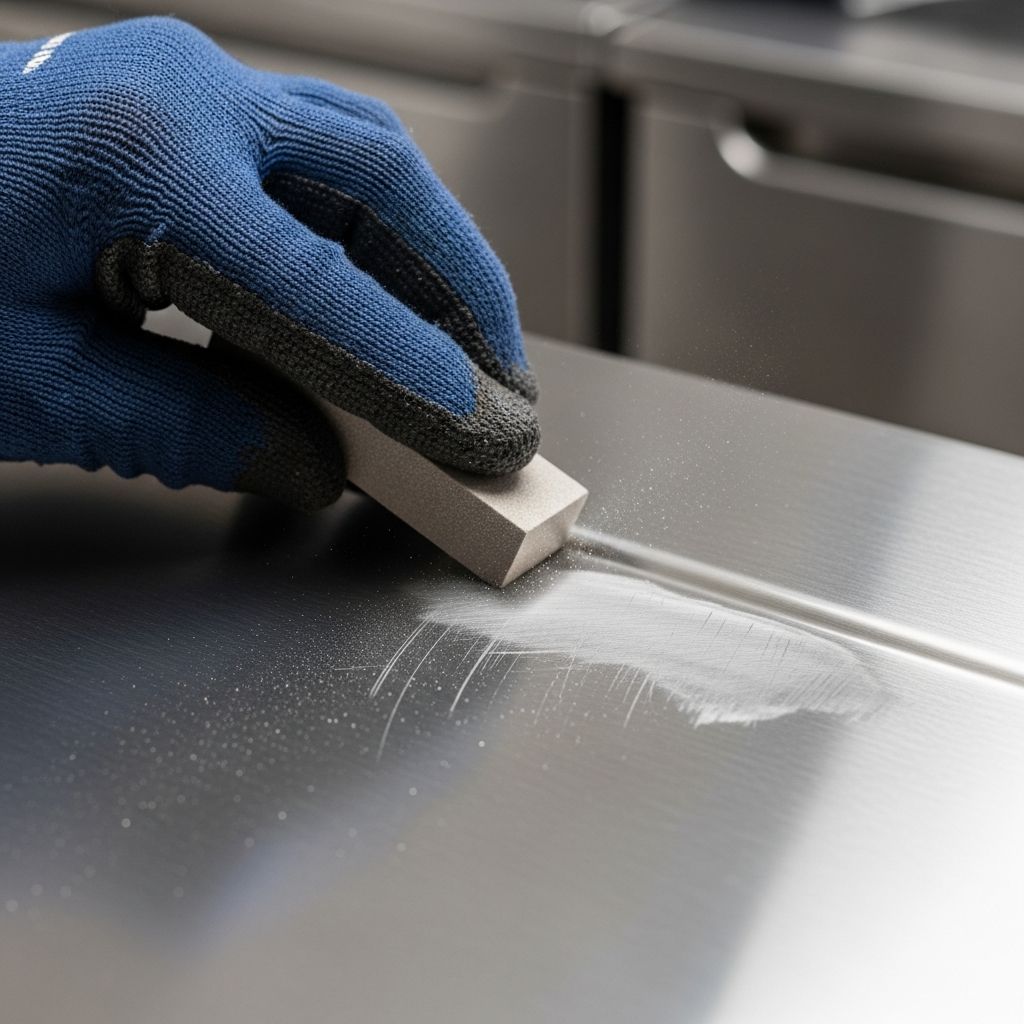
Once you’ve identified the grain direction, apply your chosen scratch remover product. If using a commercial stainless steel scratch remover like Bar Keeper’s Friend, apply a small amount to a clean, soft cloth. If you prefer a natural alternative, mix whitening toothpaste or baking soda with a small amount of water to create a spreadable paste. Rub the solution into the scratched area using firm, consistent pressure in the direction of the grain. Keep working the product back and forth over the scratch, allowing it to penetrate the surface.
Step Three: Rest and Repeat
After working the solution into the scratch for several minutes, let it rest for approximately five minutes. This waiting period allows the product to work more effectively on the scratched area. Using a clean microfiber cloth, wipe away the excess remover solution. Examine your appliance carefully to determine if the scratch has diminished or disappeared.
If the scratch is still visible, repeat the process starting from the application step. You may need to repeat this process two or three times to achieve complete scratch removal. Once the scratch is no longer visible, remove any remaining product residue with a cloth dampened in diluted vinegar, then dry the surface with a clean cloth to prevent water spots.
Removing Deep Scratches from Stainless Steel
Deep scratches require a more aggressive approach but demand careful execution to avoid causing additional damage to your appliance. If light scratch removal methods haven’t worked, or if you can clearly see and feel the depth of the scratch, you’re dealing with a deep scratch that requires buffing with an abrasive pad.
Materials and Equipment
Deep scratch removal requires more specialized tools than light scratch treatment:
- Abrasive or scouring pad (400 to 600 grit rating)
- Soft microfiber cloths (multiple)
- Rubbing compound or cooking oil
- Stainless steel scratch removal kit (such as Scratch-B-Gone) as an alternative
- White vinegar
- Water
Important Considerations Before Starting
Before attempting to remove deep scratches yourself, understand that this process carries some risk. Using an abrasive pad incorrectly could cause additional damage to your appliance’s finish. If you’re uncertain about your ability to execute this technique properly, consider consulting a professional. However, if you decide to proceed, follow these directions carefully and work slowly and methodically.
Step One: Clean the Surface Thoroughly
Just as with light scratches, begin by cleaning the area. Use a soft cloth and white vinegar to remove all dirt and residue from the scratched area. Ensure the surface is completely clean and dry before proceeding to the next step. This prevents debris from getting caught under your abrasive pad and causing new scratches.
Step Two: Buff with the Abrasive Pad
This is the critical step where precision matters most. Select an abrasive pad in the 400 to 600 grit range, which provides enough abrasiveness to work on deep scratches without being overly destructive. Apply oil generously to the abrasive pad—yes, this will get messy, but the oil is crucial for protecting the surrounding surface. Using moderate, controlled pressure, buff the scratched area with the grain. Never press hard or work against the grain, as this can create new scratches or damage the finish significantly. The goal is to gently buff away the scratch while maintaining the integrity of the surrounding surface.
Step Three: Rest and Inspect
After buffing, take a break and examine the scratch carefully. You may need to continue buffing if the scratch remains visible. Use a clean microfiber cloth to continue buffing the area, still maintaining the grain direction. Repeat the buffing process as needed, typically using multiple cloths to work away excess oil. Continue until most of the oil residue is gone.
Once you’re satisfied with the results, wipe the area down thoroughly with a clean cloth dampened in diluted vinegar to remove all remaining oil and product residue. Dry the surface completely with a final clean cloth to prevent water spots and streaking.
When to Consider Professional Help
Some scratches are simply too deep or extensive to handle with home remedies and DIY methods. If you’ve attempted to remove a deep scratch using the methods outlined above and haven’t achieved satisfactory results, it may be time to consult a professional. Professionals have access to specialized equipment and techniques that can handle severe damage without risking further harm to your appliance. Additionally, some deep scratches may be better served by professional refinishing or polishing services designed specifically for stainless steel.
Maintaining Your Stainless Steel Appliances
While scratches are an inevitable part of owning stainless steel appliances, preventive maintenance can minimize their occurrence and keep your surfaces looking beautiful for years to come.
Daily Care and Maintenance
Establishing a regular cleaning routine is the first line of defense against visible damage. Wipe down your stainless steel surfaces regularly with a soft microfiber cloth to remove fingerprints, dust, and spills before they cause problems. For most daily cleaning, you don’t even need chemical cleaners—warm water and a microfiber cloth are often sufficient.
Proper Cleaning Techniques
Always clean in the direction of the grain to maintain the finish and prevent creating new scratches. Use only soft cloths and non-abrasive cleaning products. Avoid harsh chemicals and abrasive scrubbing pads for routine cleaning, reserving these tools only for scratch removal. When cleaning, use gentle pressure and circular motions that follow the grain pattern rather than working against it.
Protective Practices
Be mindful of how you use your stainless steel appliances. Use cutting boards when preparing food on stainless steel surfaces, avoid dragging pots and pans across the surface, and be careful with sharp objects. Consider using protective pads under frequently moved items to prevent scratches. These simple precautions can significantly reduce the frequency of scratches and maintain your appliances’ appearance.
Regular Polishing
Periodically polishing your stainless steel surfaces with a grain-direction-following technique and appropriate oil or polish can help maintain their luster and protective qualities. This regular maintenance not only keeps your appliances looking their best but may also help prevent some types of surface damage.
Comparison of Scratch Removal Methods
| Scratch Type | Severity | Best Method | Materials Needed | Time Required |
|---|---|---|---|---|
| Light Scratch | Surface-level | Non-abrasive scratch remover or paste | Microfiber cloth, vinegar, Bar Keeper’s Friend or toothpaste | 15-30 minutes |
| Fine Scratch | Barely visible | Gentle polishing with product | Soft cloth, scratch remover, water | 10-20 minutes |
| Deep Scratch | Clearly visible gouge | Abrasive pad buffing with oil | 400-600 grit pad, oil, microfiber cloth, vinegar | 30-60 minutes |
| Severe Damage | Multiple deep scratches | Professional refinishing | Professional equipment and expertise | Varies |
Frequently Asked Questions
Q: What causes scratches on stainless steel appliances?
A: Scratches result from various sources including dragging cookware, dropping utensils, aggressive cleaning, and general wear over time. Even minor contact with sharp or abrasive objects can create visible scratches on stainless steel surfaces.
Q: Can all scratches be completely removed?
A: Light and moderate scratches can usually be completely or nearly completely removed with proper techniques. Very deep scratches or gouges may be difficult or impossible to eliminate entirely through DIY methods and might require professional attention or refinishing.
Q: Is it safe to use abrasive pads on stainless steel?
A: Yes, when used correctly with proper grit (400-600) and adequate oil, abrasive pads are safe for stainless steel. However, improper use with excessive pressure or against the grain can cause damage. Always start gently and proceed carefully.
Q: What’s the best product for removing stainless steel scratches?
A: Bar Keeper’s Friend is a highly recommended commercial option for light scratches. For natural alternatives, whitening toothpaste or baking soda mixed with water work well. For deep scratches, specialized stainless steel scratch removal kits provide the best results.
Q: How do I know which direction the grain runs on my appliance?
A: Look closely at your stainless steel surface under good lighting. The grain pattern, while subtle, typically runs either horizontally or vertically. Run your fingers across the surface to help identify the direction, then work your cleaning and buffing in that same direction.
Q: Can I prevent scratches on stainless steel?
A: While you can’t completely prevent scratches, you can significantly reduce them by using soft cloths, using cutting boards, avoiding dragging items across surfaces, and establishing a regular gentle cleaning routine. Protective pads under frequently moved items also help.
Q: Is professional scratch removal worth the cost?
A: For deep or extensive scratching, professional services may be worth considering to avoid potential DIY damage. However, most homeowners can successfully handle light to moderate scratches using the techniques and materials outlined in this guide at a fraction of the professional cost.
Conclusion
Stainless steel scratches don’t have to be permanent. With the right knowledge, materials, and techniques, you can restore your appliances to their original appearance and keep them looking beautiful for years to come. Whether you’re dealing with light surface scratches or more serious gouges, this comprehensive guide provides you with the tools and instructions needed to tackle the problem effectively. Remember to always work in the direction of the grain, start gently, and know when to seek professional help for severe damage. By combining proper scratch removal techniques with regular maintenance and protective practices, your stainless steel appliances will maintain their stunning appearance and functionality for the long term.
References
- How to Remove Pesky Scratches on Stainless Steel — THOR Kitchen. 2025. https://www.thorkitchen.com/blogs/post/how-remove-pesky-scratches-stainless-steel
- How To Clean a Stainless Steel Sink — This Old House. 2025. https://www.thisoldhouse.com/cleaning/21515076/how-to-clean-a-stainless-steel-sink
- The 5 Best Stainless Steel Cleaners (2025 Review) — This Old House. 2025. https://www.thisoldhouse.com/kitchens/best-stainless-steel-cleaner
- Keep the Stainless Spotless — This Old House. 2025. https://www.thisoldhouse.com/21018824/23-quick-fixes
- Clean Up The Cooktop — This Old House. 2025. https://www.thisoldhouse.com/21017718/35-super-fast-fixes-and-easy-upgrades
Similar Articles



Read full bio of medha deb