Repair Frayed Carpet Seams: Step-By-Step DIY Guide
Master DIY techniques to restore frayed carpet seams and maintain a flawless floor appearance without professional help.
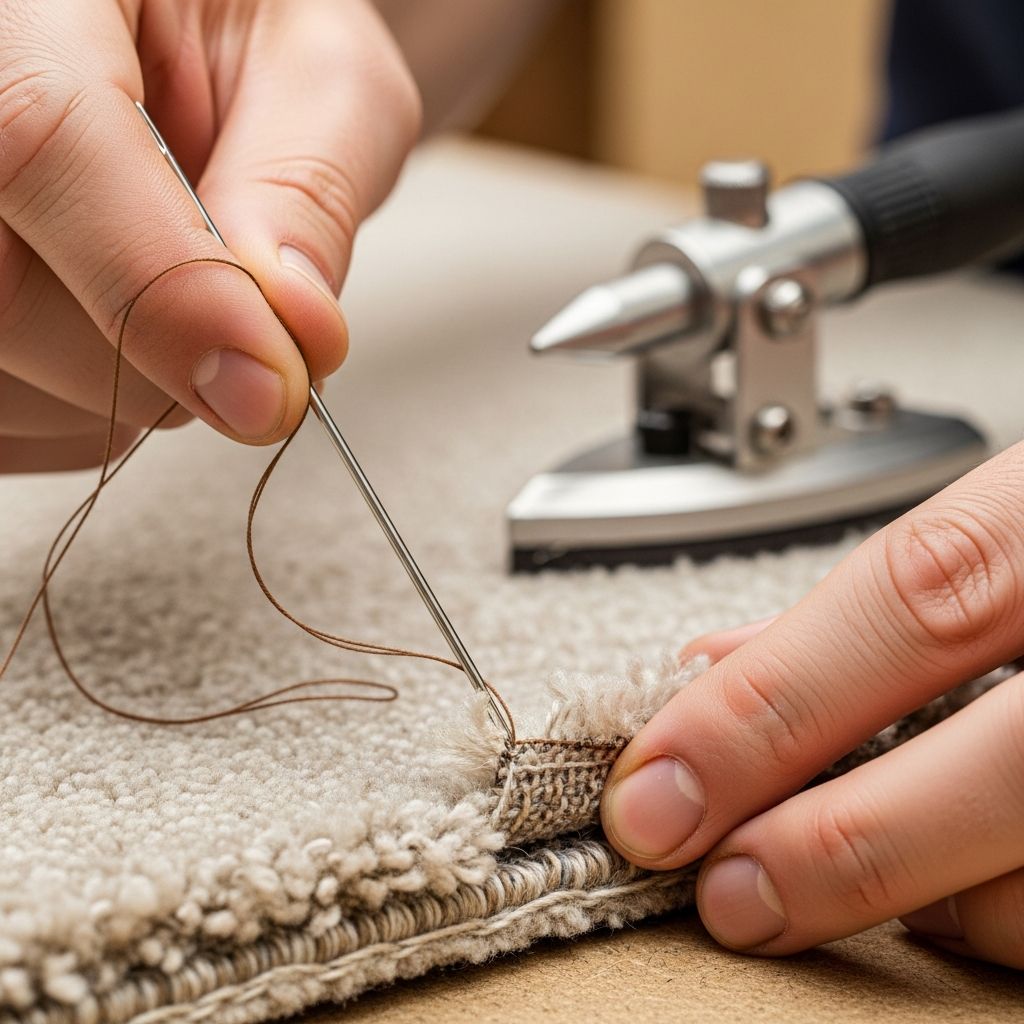
Repair Frayed Carpet Seams: Complete DIY Guide
Restoring frayed carpet seams revitalizes your flooring, eliminating visible wear and preventing further damage. This guide provides detailed instructions for diagnosing issues, gathering tools, executing repairs, and maintaining results for enduring smoothness.
Understanding Carpet Seam Problems
Carpet seams join separate pieces of carpet, often necessary in larger rooms. Over time, foot traffic, furniture movement, and humidity cause fraying, where edges separate, fibers loosen, or gaps appear. Early detection preserves carpet integrity.
- Common causes: Heavy use in high-traffic areas, poor initial installation, moisture exposure, or pet activity.
- Warning signs: Visible lines, buckling, loose threads, or dirt accumulation along joins.
- Impact: Unrepaired seams lead to tripping hazards, accelerated wear, and costly full replacements.
Inspect seams regularly by running a hand across the floor or using bright light to spot irregularities. Addressing issues promptly extends carpet lifespan significantly.
Essential Tools and Materials for the Job
Gather these items before starting to ensure efficiency and safety. Most are affordable and available at hardware stores.
| Tool/Material | Purpose | Tips |
|---|---|---|
| Utility knife or carpet cutter | Precise cutting of seams | Keep blades sharp to avoid jagged edges |
| Seam iron or heat gun | Activating adhesive tape | Use low heat settings to prevent scorching |
| Carpet seam tape (hot-melt) | Binding edges together | Choose width matching your carpet pile |
| Carpet stretcher or knee kicker | Removing slack and tensioning | Rent for one-time use if not frequent |
| Pliers and seam roller | Gripping and pressing seams | Opt for rubber-coated pliers to protect fibers |
| Cleaning solution and vacuum | Prepping surfaces | Test cleaners on inconspicuous areas |
Additionally, prepare gloves, a straightedge, and masking tape for clean lines. Total cost for basics typically ranges from $50 to $150.
Preparing the Repair Area
Clear the space around the frayed seam for unobstructed access. Move furniture and vacuum thoroughly to remove debris that could interfere with adhesion.
- Protect adjacent flooring with drop cloths.
- Examine the seam length and note any buckling or curling.
- Clean edges with mild detergent, rinse, and dry completely—moisture weakens bonds.
- Mark the seam line with chalk for precision.
For best results, work in a well-ventilated area, especially when heating adhesives. Allow 24-48 hours post-repair before heavy use.
Step-by-Step Repair Process
Follow these proven steps, inspired by professional techniques, to disassemble, realign, and reseal the seam invisibly.
Step 1: Carefully Separate the Seam
Lift the carpet gently from one side using pliers or a carpet doll tool. Poke into corners sideways to avoid damage, then fold back sections.
- Apply heat from a seam iron or gun to soften existing adhesive without burning backing.
- Use a sharp utility knife to slice along the seam, tracing pressure points for straight cuts.
- Remove old tape cleanly; roll up sections neatly to minimize mess.
Aim to cut minimally—about 1-2 rows of tufts—to retain material for rejoining.
Step 2: Trim and Align Edges
With pieces folded back, trim frayed fibers. Create matching beveled edges by removing a slight angle from each side for tight mating.
- Fold and row-cut: Press down, cut two rows back, and repeat for evenness.
- Test-fit without adhesive; adjust for flush alignment without gaps.
- If gaps persist, trim excess sparingly to avoid over-cutting.
Precision here ensures the seam blends seamlessly with surrounding carpet.
Step 3: Apply Seam Tape and Reactivate
Position hot-melt seam tape under the seam, adhesive side up. Center it precisely.
- Preheat seam iron to medium (test on scrap).
- Press iron over tape for 8-10 seconds per section, then roll firmly with seam roller.
- Swoop fibers together while hot to seal invisibly.
Avoid overheating; bubbles may form but relax with vacuuming or steaming later.
Step 4: Stretch and Secure the Carpet
Tension restores tautness. Use a power stretcher or knee kicker to pull carpet firmly onto tack strips.
- Start from the seam outward, securing one side then the other.
- Trim excess at walls and tuck edges with a tuck tool.
- Walk on or weight down for 24 hours to set.
Proper stretch prevents future separation.
Advanced Techniques for Challenging Repairs
For severely damaged seams or patterned carpets, consider these methods.
- Fill piece insertion: Cut out bad section, splice in matching scrap, and seam both ends.
- Pinch sealing: Leave micro-gap while ironing to force glue upward, sealing fibers.
- Transition repairs: Blend with adjacent rooms using transition strips if full restretch isn’t feasible.
Practice on remnants first for confidence.
Preventing Future Seam Issues
Proactive care minimizes recurrence. Place furniture glides, use area rugs in traffic zones, and maintain humidity between 40-60%.
- Vacuum seams weekly with a beater-bar free tool.
- Professional steam cleaning annually relaxes fibers.
- Avoid dragging heavy items; lift instead.
Monitor high-wear areas like hallways and stairs closely.
Frequently Asked Questions (FAQs)
Can I fix a carpet seam without a seam iron?
Yes, a heat gun works alternatively, but control temperature to avoid melting. Results may vary without proper heat activation.
How long does a DIY seam repair last?
With quality materials and technique, 5-10 years in moderate traffic, matching professionally installed seams.
What if my carpet is glued down?
Use more caution lifting; cut smaller sections and heat adhesive incrementally to prevent tears.
Is it worth repairing versus replacing?
For localized fraying on otherwise good carpet, repair saves 80% over replacement costs.
Can pets cause seam fraying?
Yes, claws snag edges; trim nails regularly and use deterrents.
Troubleshooting Common Mistakes
Errors happen—here’s how to correct them.
| Issue | Solution |
|---|---|
| Visible seam line | Reheat and roll more firmly; shear high fibers even. |
| Buckling after repair | Restretch fully to tack strips. |
| Burn marks | Trim affected area and patch; use lower heat next time. |
| Gluing everywhere | Wipe excess immediately; swoop technique prevents spread. |
Patience yields professional outcomes.
Safety Considerations During Repair
Prioritize protection: unplug irons when not in use, wear gloves against hot surfaces, and ensure stable footing on lifted carpet. Ventilate for adhesive fumes and keep children/pets away.
DIY repairs empower homeowners, saving hundreds while refreshing spaces. With practice, these skills handle most flooring challenges.
References
- How to repair a carpet seam – YouTube — KYK Creations. 2023-05-15. https://www.youtube.com/watch?v=-9ylAjaO9FE
- How To Repair A Carpet Seam PART 1 – YouTube — Cleaning Service Pro, LLC. 2018-10-20. https://www.youtube.com/watch?v=ceytVC77MSk
- Sealing Carpet Seams | Flooring Forum – DIY & Professional — Flooring Forum. 2015-03-12. https://www.flooringforum.com/threads/sealing-carpet-seams.575/
- Daily vlog carpet seam repair – YouTube — KYK Creations. 2023-02-10. https://www.youtube.com/watch?v=_hFHyTmBLIM
Similar Articles


Read full bio of Sneha Tete