Repairing Cracked Furnace Heat Exchangers
Discover safe methods to diagnose, repair, and prevent cracks in your furnace heat exchanger for reliable home heating.
Repairing Cracked Furnace Heat Exchangers: A Comprehensive Homeowner’s Guide
The furnace heat exchanger is a vital component in gas furnaces, responsible for transferring heat from combustion gases to the air circulated throughout your home while keeping harmful byproducts safely contained. When it develops cracks, it poses serious risks like carbon monoxide leaks, making prompt action essential. This guide explores detection methods, repair strategies, preventive measures, and key decisions for long-term reliability.
Understanding the Furnace Heat Exchanger and Crack Risks
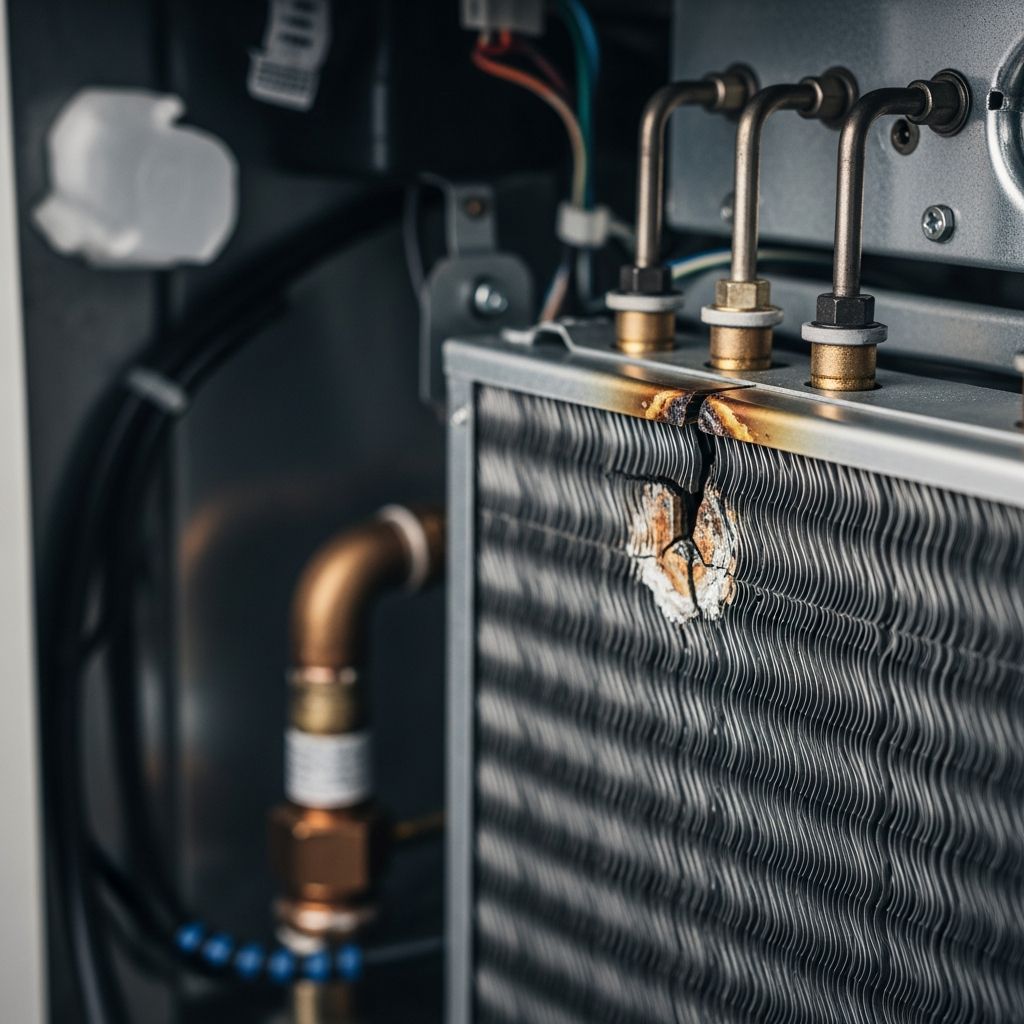
A heat exchanger consists of metal tubes or coils that endure extreme temperature cycles, expanding and contracting thousands of times per heating season. Over time, metal fatigue, corrosion, or overheating can lead to cracks. These fissures allow combustion gases, including deadly carbon monoxide (CO), to mix with household air, creating a silent hazard.
Typical lifespan ranges from 10 to 15 years with proper care, but factors like poor airflow or dirty filters accelerate damage. A cracked unit often triggers furnace shutdowns via safety switches, but subtle leaks may go unnoticed without inspection.
Recognizing Early Warning Signs of Damage
Identifying issues early prevents escalation. Common indicators include:
- Unusual furnace noises: Banging, rattling, or popping sounds signal stress on the exchanger.
- Visible flames or soot: Yellow, flickering flames or black buildup near the burner or flue indicate incomplete combustion.
- Odors and air quality issues: Metallic smells or frequent CO detector alarms point to leaks.
- Performance problems: Short cycling, where the furnace turns on and off rapidly, or reduced airflow.
- Physical evidence: Rust, discoloration, or warping on accessible parts.
If multiple signs appear, shut down the system immediately and inspect further.
Step-by-Step Safety Shutdown Procedures
Before any hands-on work, prioritize safety:
- Turn off the thermostat to stop furnace operation.
- Switch off power at the circuit breaker.
- For gas furnaces, close the main gas supply valve.
- Allow the unit to cool completely, typically 30-60 minutes, to avoid burns.
These steps prevent accidental startups, shocks, or gas exposure. Verify all utilities are disconnected using a non-contact voltage tester.
Conducting a Thorough Visual and Manual Inspection
With the system off and cool, access the heat exchanger, often located behind the burner assembly. Remove access panels per your model’s manual.
- Use a strong flashlight to scan for hairline fractures, especially at bends, joints, or weld seams.
- Look for soot marks, which highlight leak paths, or corrosion pits.
- Employ a mirror on an extendable rod for hard-to-reach areas.
- Check connected components like the flue pipe for discoloration.
For confirmation, perform a simple “candle test”: Light a candle near suspected cracks during a controlled burner test (only by qualified individuals) to observe if flames are drawn in, indicating a breach.
Advanced Diagnostic Tools for Accurate Detection
Visual checks suffice for obvious damage, but pros use specialized equipment:
| Method | Description | Pros |
|---|---|---|
| Combustion Analyzer | Measures gas composition and efficiency. | Detects subtle leaks via abnormal readings. |
| Pressure Test | Pressurizes the exchanger and monitors for drops. | Quantifies integrity objectively. |
| Borescope Camera | Flexible camera inspects internals. | Visualizes hidden cracks without disassembly. |
DIY users can rent borescopes, but interpretation requires experience. Pressure testing involves sealing ports, attaching a gauge and pump, and holding 1-2 psi for 5-10 minutes—no drop means it’s intact.
DIY Repair Options for Minor Cracks
Small cracks (<1/4 inch) in non-critical areas may be patched temporarily, though professionals advise caution due to safety implications.
Surface Preparation Essentials
Clean the area meticulously:
- Wire brush away rust and scale.
- Sand to bare metal.
- Wipe with solvent like acetone; ensure dryness.
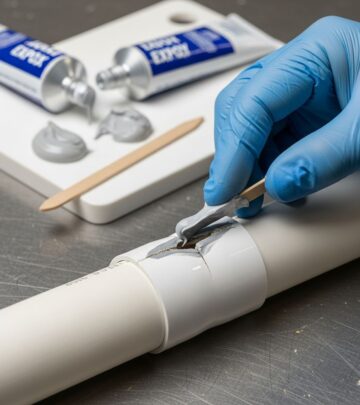
High-Temperature Sealant Application
Choose furnace-rated epoxy or ceramic sealant (rated 2000°F+):
- Apply with a putty knife, forcing material into the crack.
- Build up slightly above the surface.
- Cure per instructions, often 24 hours.
- Smooth excess after hardening.
This method suits hairline issues but isn’t permanent.
Welding for Structural Fixes
For larger cracks, TIG or MIG welding by skilled DIYers with proper gear:
- Remove the exchanger if possible.
- Use matching filler rod.
- Weld slowly to prevent warping.
- Post-weld grind and re-test.
Thin metals demand low heat to avoid burn-through.
Professional Repair Versus Full Replacement
Repairing demands expertise; costs range $500-$1500 for parts and labor. Heat exchanger swaps require full disassembly, risking damage to aging furnaces.
| Option | Cost Estimate | Pros | Cons |
|---|---|---|---|
| Repair (Seal/Weld) | $300-$800 | Quick, affordable for minor issues. | Temporary; safety risks if fails. |
| Exchanger Replacement | $1000-$2000 | Restores original function. | Labor-intensive; other parts may fail soon. |
| Full Furnace Swap | $3000-$7000 | Modern efficiency, warranty. | Higher upfront cost. |
Replace entirely if the furnace exceeds 10-12 years, per manufacturer guidelines.
Post-Repair Testing and Startup Protocols
Verify integrity before resuming use:
- Reassemble securely.
- Conduct pressure test again.
- Run a full cycle, monitoring for issues.
- Use a CO detector nearby.
Observe flames (steady blue), listen for anomalies, and sniff for exhaust odors.
Preventive Maintenance to Avoid Future Cracks
Prolong exchanger life through diligence:
- Filter changes: Every 1-3 months to ensure airflow.
- Annual inspections: Professional checks catch early wear.
- Vent clearance: Keep registers unobstructed.
- Balanced system: Proper sizing prevents overheating.
- Limit short cycling: Address thermostat or duct problems.
These habits reduce stress, enhancing efficiency and safety.
Frequently Asked Questions (FAQs)
Can I fix a cracked heat exchanger myself?
Minor patches are possible with proper tools and sealants, but welding or major work requires pros due to risks.
How much does heat exchanger repair cost?
Expect $300-$2000 depending on method and location; full replacement often exceeds repair value.
Is a cracked heat exchanger dangerous?
Yes—CO poisoning risk is high; evacuate and call experts if suspected.
How do I test for cracks without tools?
Visual checks and CO detectors provide initial clues; pros use advanced diagnostics.
When should I replace my entire furnace?
If over 10 years old or multiple issues present, opt for replacement for safety and efficiency.
Final Safety Reminders
Never ignore symptoms; CO is undetectable without alarms. Install detectors on every level, test monthly, and service annually. When in doubt, consult certified HVAC technicians to safeguard your home.
References
- How to Repair Cracked Heat Exchanger Quickly and Safely at Home — Sun Heating & Cooling. 2024. https://www.sunheating.com/how-to-repair-cracked-heat-exchanger/
- Comprehensive Solutions for Repairing a Cracked Heat Exchanger — Donovan Jorgenson. 2024. https://donovanjorgenson.com/how-to-fix-a-cracked-heat-exchanger/
- What To Do If Your Furnace Has A Cracked Heat Exchanger — Call Mattioni. 2024. https://www.callmattioni.com/blog/t-heat-exchanger-repair/
- Cracked Heat Exchanger: What Does It Mean? — Trane. 2025. https://www.trane.com/residential/en/resources/troubleshooting/gas-furnaces/cracked-heat-exchanger/
- Furnace Heat Exchanger: Safety & Repair Guide (2025) — Royalty Heating & Air. 2025. https://www.royaltyheatingair.com/blog/furnace-heat-exchanger
Similar Articles


Read full bio of medha deb