Baby Powder Ant Repellent: 4 Easy Steps To Keep Ants Out
Discover how baby powder disrupts ant trails and entry points for safe, effective household pest control without harsh chemicals.
Repel Ants Naturally with Baby Powder
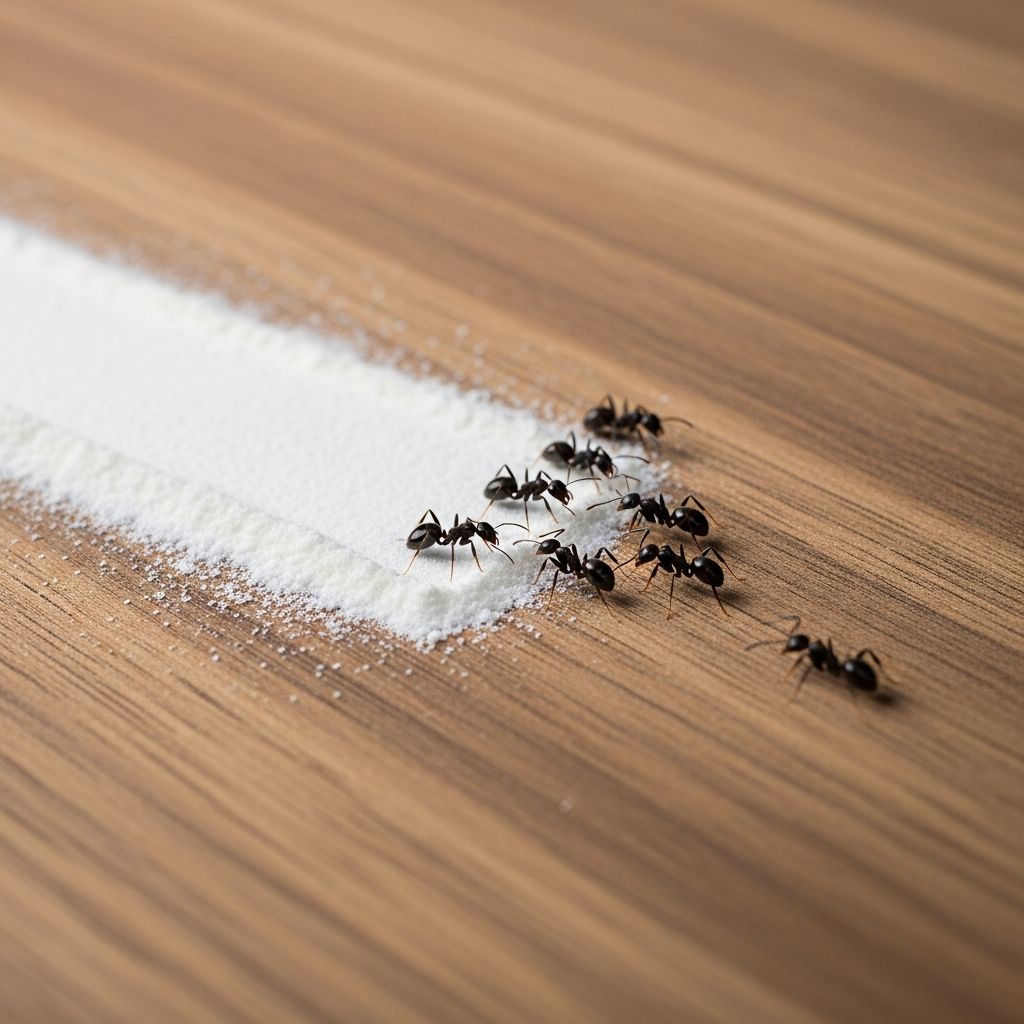
Baby powder, primarily composed of talcum, serves as an accessible, non-toxic barrier to deter ants from entering homes by disrupting their navigation and pheromone communication systems.
The Science Behind Baby Powder’s Ant-Repelling Power
Ants rely on chemical signals called pheromones to mark paths from their colony to food sources. These invisible trails guide thousands of workers efficiently. When ants encounter baby powder, its fine talc particles cling to their bodies and antennae, masking these scents and causing disorientation.
Research from student experiments confirms talc as the primary active ingredient affecting ants’ sense of touch. Talc creates an unstable surface that ants avoid due to poor traction, while also absorbing pheromones from trails. Fragrance plays a minor role, but even aged powder retains effectiveness through talc alone.
Unlike insecticides, baby powder does not kill ants outright. Instead, it acts as a physical and chemical blocker, prompting ants to seek alternative routes. Particles adhere during attempts to cross, which ants then groom off, further delaying colony foraging.
Identifying Common Household Ant Invaders
Understanding ant species helps tailor defenses. Small pavement ants and odorous house ants respond well to powder barriers, showing aversion to talc-coated paths. Larger carpenter ants may persist longer but still hesitate at thick lines.
- Trail followers: Form visible lines to kitchens or pantries.
- Scout ants: Single explorers testing new entry points.
- Swarm signs: Sudden increases indicate nearby nests.
Inspect cracks near windows, doors, sinks, and baseboards—prime entry zones where powder excels indoors.
Step-by-Step Guide to Applying Baby Powder Barriers
For optimal results, use unscented, talcum-based powder. Avoid cornstarch versions, as they clump in humidity and lose efficacy faster.
- Clean surfaces: Wipe trails with soapy water or vinegar to erase pheromones before applying powder.
- Locate hotspots: Follow ants backward to sources like spills or plants.
- Apply generously: Sprinkle a continuous ½-inch wide, ⅛-inch thick line across trails and entries. Use a shaker for even coverage.
- Monitor and refresh: Reapply every 2-3 days or after cleaning/vacuuming. Dry conditions maximize duration.
Test in inconspicuous areas first to avoid residue on fabrics. Outdoors, wind and rain reduce longevity, limiting use to sheltered porches.
Enhancing Effectiveness with Mixtures and Combinations
| Method | Ingredients | Benefits | Application Notes |
|---|---|---|---|
| Basic Barrier | Baby powder alone | Simple, safe for pets/kids | Indoor trails, ½-inch lines |
| Alcohol Boost | Baby powder + ethanol (diluted) | Dries faster, stronger cling | Caution: Fumes toxic to ants/insects; apply away from colonies |
| Chalk Layer | Baby powder + sidewalk chalk dust | Amplifies disruption | Dusts trails heavily |
| Vinegar Prep | White vinegar wipe + powder | Erases scents pre-barrier | Equal parts water/vinegar |
Mix alcohol sparingly to prevent killing ants prematurely via fumes, which defeats repulsion goals. Let mixtures dry fully before reintroducing ants.
Targeted Zones for Maximum Protection
- Kitchen counters: Around sinks, appliances, pet bowls.
- Entryways: Door thresholds, window sills.
- Bedrooms/Bathrooms: Baseboards, near plants.
- Pet areas: Food stations—safe alternative to sprays.
For plant pests, dust soil surfaces lightly. Avoid over-application to prevent inhalation or mess.
Limitations and When Baby Powder Falls Short
Baby powder shines for minor incursions but struggles with large colonies or moist environments. Humidity causes clumping, erasing barriers. It’s temporary, requiring frequent reapplication, and ineffective outdoors against wind/rain.
Against fire ants or mound-builders, it offers no colony elimination. Pair with baits like borax for root solutions.
Pros vs. Cons
| Pros | Cons |
|---|---|
| Non-toxic, pet/child-safe | Short-term only |
| Cheap, readily available | Ineffective in wet areas |
| Quick to deploy | Messy residue |
| No harsh odors | Not for heavy infestations |
Integrated Pest Management: Beyond Baby Powder
Combine powder with prevention for sustainability:
- Seal cracks: Caulk gaps, weatherstrip doors.
- Eliminate attractants: Store food airtight, fix leaks.
- Bait strategically: Borax-sugar mixes for colony kill.
- Natural allies: Diatomaceous earth for desiccation.
UF/IFAS recommends powder for handling mounds safely, dusting tools to prevent escapes.
Frequently Asked Questions (FAQs)
Does baby powder actually kill ants?
No, it repels by disruption, not toxicity. Ants survive but avoid treated areas.
How long does a baby powder barrier last?
2-7 days indoors, less if disturbed or damp. Reapply as needed.
Is it safe around children and pets?
Yes, talcum-based is non-toxic when used as directed. Avoid inhalation; vacuum residues.
What if I have a big ant problem?
Use as a stopgap while deploying baits or calling professionals for nests.
Can I use it outside?
Limited success; better for sheltered spots. Opt for granules or sprays outdoors.
Cornstarch vs. talc baby powder—which is better?
Talc outperforms; cornstarch absorbs moisture poorly.
Safety Considerations and Best Practices
Opt for talc-free if asbestos concerns arise (modern powders are regulated safe). Store sealed to maintain dryness. Inhaling fine dust isn’t ideal—apply in ventilated areas. For ant keeping or studies, note alcohol mixes pose fumigation risks.
Word count: 1782 (excluding HTML tags/metadata).
References
- Using Baby Powder To Keep Ants Away — House Digest. 2024-10-15. https://www.housedigest.com/1887460/how-to-keep-ants-out-home-repel-baby-powder-hack/
- This Baby Powder Hack May Keep Ants Out Of Your Home — YouTube (The Conversation/Gardening Etc.). 2023-05-20. https://www.youtube.com/watch?v=k-agLY2MZfA
- The Defense Against Ants II: Why Are Ants Afraid of Baby Powder? — California State Science Fair (USC). 2007-05-12. https://www.csef.usc.edu/History/2007/Projects/J1923.pdf
- Baby powder — Formiculture Ant Forum. 2022-08-10. https://www.formiculture.com/topic/20946-baby-powder/
- Sustainable Fire Ant Control — University of Florida IFAS Extension. 2025-03-01. https://sfyl.ifas.ufl.edu/lawn-and-garden/sustainable-fire-ant-control/
Similar Articles



Read full bio of Sneha Tete