Replace Bath Cabinet Mirror: Step-By-Step DIY Guide
Master the art of swapping out your bathroom cabinet mirror with our detailed DIY guide for a fresh, professional finish.
Replace Bath Cabinet Mirror: Complete DIY Guide
Replacing the mirror on a bathroom cabinet refreshes the space and enhances functionality without major renovations. This process involves careful removal of the old mirror, precise measurements, and secure mounting of the new one, suitable for most homeowners with basic tools.
Why Update Your Bathroom Cabinet Mirror?
A dated or damaged mirror can make even the cleanest bathroom feel outdated. New mirrors offer better lighting reflection, larger sizes for improved visibility, or integrated features like LED lights. Common reasons include cracks from impacts, fogging from adhesive failure, or simply desiring a modern aesthetic. Updating it boosts perceived home value and daily usability.
- Visual upgrade: Modern designs with frameless edges or anti-fog coatings elevate style.
- Practical benefits: Larger mirrors expand perceived space; lighted options improve grooming tasks.
- Cost savings: DIY replacement avoids plumber or contractor fees, typically under $200.
Assessing Your Current Setup
Before starting, evaluate the cabinet and mirror type. Bath cabinet mirrors attach via clips, adhesive, or screws. Framed mirrors often use clips on cabinet sides; frameless ones rely on mastic or brackets. Check cabinet material—wood, laminate, or metal—affects removal methods. Measure the existing mirror’s dimensions: height, width, and depth from wall. Note any electrical wiring if replacing with a lighted model.
| Mirror Type | Common Attachment | Removal Difficulty |
|---|---|---|
| Framed | Clips/Screws | Low |
| Frameless | Adhesive/Clips | Medium |
| Lighted | Brackets/Wiring | High |
Gathering Essential Tools and Materials
Proper tools ensure safety and precision. Prioritize quality to avoid wall damage or uneven installs.
Core Tools
- Cordless drill with bits: For pilot holes in tile or wood; use carbide bits for ceramics.
- Stud finder: Locates secure mounting points; opt for models detecting pipes/wires.
- Spirit level (40cm+): Ensures plumb installation.
- Measuring tape (3m): Accurate sizing.
- Pry bar/putty knife: Gentle old mirror removal.
- Screwdriver set: Phillips/flathead for clips.
Required Materials
- New mirror: Match size or slightly larger; verify weight rating.
- Corrosion-resistant brackets: Adjustable for leveling; stainless steel.
- Wall anchors/screws: Toggle or expansion types for heavy loads.
- Bathroom silicone sealant: Fills gaps, moisture-proof.
- Painter’s tape/masking tape: Temporary marks and bracket spacing.
- Safety gear: Gloves, goggles, dust mask.
For electrical mirrors, add wire strippers, connectors, and ensure power shutoff.
Safe Removal of the Old Mirror
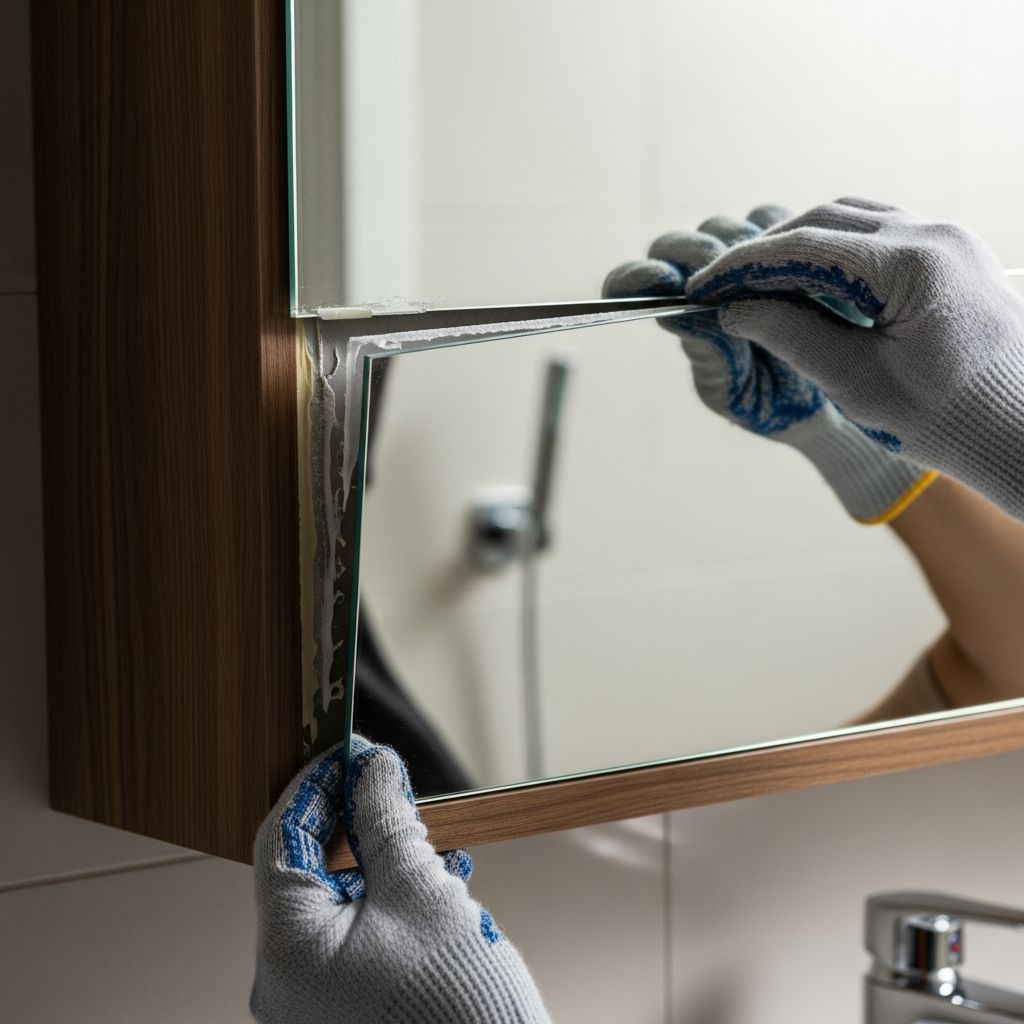
Power off electricity if applicable. Cover vanity surfaces with drop cloths to protect from shards. Wear gloves and goggles—mirrors shatter easily.
- Inspect attachments: Look behind for clips, screws, or adhesive residue.
- Release clips/screws: Unscrew side/top clips carefully; framed mirrors loosen from top.
- Apply heat if glued: Use hairdryer on low for 2-3 minutes to soften mastic; avoid overheating.
- Pry gently: Insert putty knife at top edge, work side-to-side; have helper hold to prevent falling.
- Catch and dispose: Lower slowly onto padded surface; wrap shards in newspaper for safe trash disposal.
If mirror resists, score edges with a utility knife to break seal. Never force—risks cabinet damage.
Preparing the Cabinet Surface
Clean the area thoroughly. Remove old adhesive with razor scraper and citrus-based remover. Sand rough spots lightly for smooth adhesion. Wipe with damp cloth; let dry fully. Inspect for water damage—repair as needed with wood filler.
- Check levelness: Place spirit level on cabinet frame.
- Locate studs: Essential for overhead cabinets; mark with tape.
Selecting and Measuring for the New Mirror
Choose a mirror fitting cabinet dimensions, ideally 1-2 inches smaller per side for clearance. Standard height: eye-level center at 60-65 inches from floor. For cabinets, align with frame edges. Frameless? Add 1/8-inch bevel to prevent chipping.
Pro tip: Test-fit with cardboard template before purchase.
Precise Installation Steps
Work with a partner for heavy mirrors over 20 lbs.
Marking Positions
Tape brackets together per manufacturer spacing, transfer to wall/cabinet with level. Mark drill points; double-check stud alignment.
Drilling and Anchoring
Drill pilot holes: Slow speed on tile to avoid cracks. Insert anchors; tap gently. For studs, direct screws suffice.
Mounting Brackets
Secure brackets with screws; apply silicone dots for stability. Verify levelness before tightening fully.
Hanging the Mirror
Lift into clips/brackets; start from bottom. Tighten sequentially; re-level as needed. For adhesive-only, spread even mastic layer, press firmly 24 hours.
Electrical for Lighted Mirrors
Shut power. Install junction box, connect wires (black-to-black, white-to-white, ground). Test before final secure.
Sealing and Finishing Touches
Caulk gaps with silicone; smooth with finger/tool. Clean mirror with ammonia-free glass cleaner. Allow 24-hour cure before use.
- Anti-fog spray: Apply for steam resistance.
- Lighting check: Ensure even illumination.
Troubleshooting Common Issues
| Problem | Solution |
|---|---|
| Mirror not level | Oversized shims behind brackets; loosen/retighten. |
| Wall damage from removal | Spackle, sand, repaint. |
| Adhesive won’t release | More heat or piano wire method. |
| Vibration looseness | Thread locker on screws. |
Safety Protocols Throughout
Always prioritize protection: Eye/face shields mandatory. Lift with legs, not back. Electrical work? Verify no power with tester. Children/pets away during process.
Enhancing Your Bathroom Post-Install
Pair with new cabinet hardware or LED strips. Consider defogging films or magnification add-ons for luxury feel.
Frequently Asked Questions (FAQs)
Can I replace a glued mirror without breaking it?
Yes, with patience: Heat, score, pry slowly. Success rate high for pros, 70% for beginners.
How heavy can a DIY mirror be?
Up to 50 lbs with proper anchors; consult ratings.
Do I need a plumber for this?
No, unless plumbing involved; pure mirror swap is DIY.
What’s the cost range?
$50-300 for mirror/tools; pro install $200+ extra.
How long does it take?
2-4 hours, plus drying time.
Maintenance for Longevity
Monthly: Clean with microfiber. Avoid abrasives. Check screws yearly for tightness. Humidity control prevents fogging.
References
- DIY Bathroom Mirror Installation: A Step-by-Step Guide for Aussie Handymen — Elegant Showers. 2023. https://www.elegantshowers.com.au/blogs/news/diy-bathroom-mirror-installation-a-step-by-step-guide-for-aussie-handymen
- Easy DIY Installation Tips for Wall-Mounted Bathroom Mirrors — Mod-Land. 2024. https://www.mod-land.com/blogs/led-mirror-blogs/easy-diy-installation-tips-for-wall-mounted-bathroom-mirrors
- How to Install a Lighted Bathroom Mirror: Easy DIY Guide — Home Repair Hub (YouTube). 2025-01-19. https://www.youtube.com/watch?v=CCNytSu04YE
- How To Hang A Bathroom Mirror: A Step-by-Step Guide — OkayMirror. 2024. https://okaymirror.com/how-to-hang-a-bathroom-mirror/
- How to Install a Bathroom Mirror — The Home Depot. 2024. https://www.homedepot.com/c/ah/how-to-install-a-bathroom-mirror/9ba683603be9fa5395fab90157f7b92
Similar Articles


Read full bio of medha deb