Replace Garbage Disposal Air Switch: Complete DIY Guide
Master the replacement of your garbage disposal air switch with our detailed DIY guide, ensuring safety and efficiency in your kitchen setup.
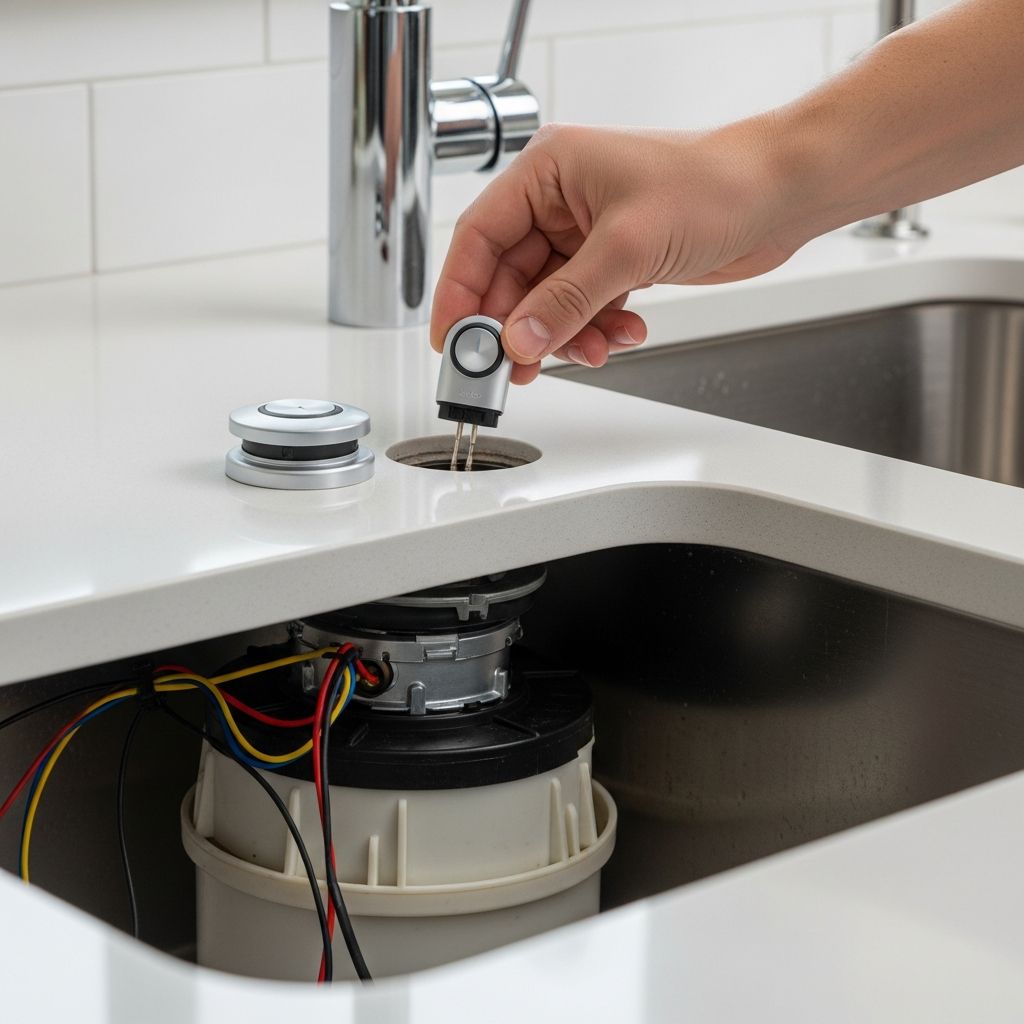
Garbage disposal air switches provide a safe, touch-free way to operate your kitchen sink’s waste processor. When one fails, replacing it restores functionality without complex wiring. This guide details the full process, from assessment to testing, empowering homeowners to handle the task confidently.
Understanding Air Switch Technology in Garbage Disposals
Air switches function through pneumatic activation, where pressing the button sends an air pulse via tubing to a control box. This box houses a relay that toggles power to the disposal unit, eliminating direct electrical contact at the wet sink area for enhanced safety. Unlike traditional wall switches, this design prevents shocks from water exposure, making it ideal for kitchen environments.
The system typically includes a countertop button, flexible air hose, and power module. Common failure points involve air leaks, worn buttons, or relay malfunctions, often due to prolonged moisture or physical wear. Recognizing these helps in deciding between repair and full replacement.
Assessing When Replacement is Necessary
Before starting, evaluate symptoms: intermittent activation, no response, or visible damage like cracked buttons or frayed hoses signal replacement needs. Test by pressing the button multiple times; inconsistent operation confirms issues. Inspect under the sink for loose connections or water damage.
- No activation: Likely air leak or relay failure.
- Sticky button: Debris buildup or mechanical wear.
- Flickering power: Faulty relay or poor electrical contacts.
If cleaning tubing or tightening fittings doesn’t resolve it, proceed to replacement. This DIY project suits those with basic handyman skills and takes 30-60 minutes.
Gathering Essential Tools and Replacement Parts
Proper preparation ensures smooth execution. Select a compatible air switch kit matching your disposal’s voltage (usually 120V) and button style.
Required Tools
| Tool | Purpose |
|---|---|
| Screwdriver set (Phillips/flathead) | Securing mounts and electrical covers |
| Adjustable wrench | Tightening fittings and hoses |
| Drill with bits | Modifying countertops if repositioning |
| Wire strippers/pliers | Handling electrical connections safely |
| Voltage tester | Verifying power is off |
| Utility knife | Trimming air tubing precisely |
Materials Checklist
- New air switch kit (button, hose, control box)
- Wire nuts/connectors
- Sealant or plumber’s tape
- Safety gloves and goggles
- Electrical tape
Purchase UL-listed kits for reliability. Manufacturer instructions are crucial for model-specific wiring.
Preparing Your Workspace Safely
Safety first: Locate your circuit breaker and switch off power to the disposal. Confirm with a voltage tester—no lights mean zero risk. Clear the sink area, lay down drop cloths, and gather tools nearby. If water lines are active, shut off the supply valve to avoid splashes.
Wear protective gear to shield against debris or accidental shocks. Document existing setup with photos for reference during reassembly.
Dismantling the Old Air Switch
Begin by removing the countertop button. Unscrew or unclip it, then detach the air hose carefully to avoid damaging the control box. Under the sink, unplug the disposal from the control box and wall outlet. Disconnect wires per color code—typically black (hot), white (neutral), green (ground)—using pliers.
Inspect the old unit for corrosion or wear, which might indicate broader plumbing issues. Dispose of it responsibly, recycling metal parts where possible.
Installing the New Air Switch Components
Position the new button at the optimal spot: within arm’s reach, away from direct water flow. If drilling is needed, mark the spot, use a pilot hole, and insert a rubber gasket for a watertight seal.
Air Hose Routing
- Measure distance from button to control box location.
- Cut hose to length with utility knife, ensuring clean edges.
- Push firmly onto button nipple and control box port—secure with clips if provided.
Mount the control box securely under the sink, ideally on a stable surface or with brackets, keeping it dry and accessible.
Electrical Wiring Setup
Strip wire ends 1/2 inch, connect to control box terminals: match hot to hot (black), neutral to neutral (white), ground to green screw. Use wire nuts for junctions. Plug the box into a GFCI outlet for added protection.
Reattach the disposal plug to the control box output. Double-check all connections for tightness.
Testing and Finalizing the Installation
Restore power at the breaker. Press the button: a firm push should activate the disposal for 5-10 seconds before auto-reverse or timeout. Test multiple cycles, checking for smooth operation and no unusual noises.
Monitor for leaks in the air hose or water seepage around the button. Apply silicone sealant if needed for countertop seals. Run water through the disposal to simulate real use.
Troubleshooting Common Replacement Challenges
Issues arise, but most are fixable on-site.
| Problem | Solution |
|---|---|
| Button unresponsive | Inspect hose for kinks/leaks; reseat connections. |
| Disposal won’t start | Verify wiring and power with tester; check relay. |
| Intermittent power | Tighten terminals; replace if relay faulty. |
| Water ingress | Reapply sealant; ensure gaskets are intact. |
If problems persist, consult a licensed electrician or plumber, especially for hardwired setups.
Maintenance Tips for Longevity
Extend life by monthly checks: clean button with mild soap, inspect hoses for cracks, and ensure the control box stays dry. Avoid forceful presses. Compatible with most brands like InSinkErator.
- Wipe button dry after use.
- Schedule annual full inspections.
- Upgrade to dual-outlet models for versatility.
Benefits of Air Switches Over Traditional Methods
Air switches enhance safety (no wet-hand electricity), aesthetics (sleek button), and convenience (easy access). They’re code-compliant in many areas and retrofit-friendly. Cost-effective at $20-50, they boost kitchen efficiency.
Frequently Asked Questions (FAQs)
Can I install an air switch on any garbage disposal?
Yes, most plug-in units (not hardwired) work with universal kits. Check voltage compatibility.
Is professional help required?
No, for DIY-savvy users; otherwise, hire for complex counters.
How long does replacement take?
30-60 minutes with preparation.
What if my countertop is granite?
Use a diamond bit for drilling; consider adhesive mounts.
Are air switches ADA compliant?
Many models offer touch-sensitive options for accessibility.
References
- How to Install a Garbage Disposal Air Switch — Kingston Brass. 2023-05-15. https://www.kingstonbrass.com/blogs/blog/how-to-install-a-garbage-disposal-air-switch
- Garbage Disposal Air Switch Install: A Comprehensive Guide — Christian Plumbing. 2024-02-10. https://www.christianplumbing.com/blog/garbage-disposal-air-switch-install-a-comprehensive-guide/
- How to INSTALL GARBAGE DISPOSAL AIR SWITCH — JOE ★ JET (YouTube). 2025-02-15. https://www.youtube.com/watch?v=woz-Zd5ARAM
- Kitchen Sink Top Mount Air Switch for Garbage Disposals — YouTube. 2023-11-20. https://www.youtube.com/watch?v=1MFxpj_LrdE
- Sink Top Push-Button “Air Switch” For Your Garbage Disposal — YouTube. 2024-06-12. https://www.youtube.com/watch?v=9rlBs80TKxA
- How to Install an Air Switch for a Kitchen Sink Disposal — YouTube. 2023-09-05. https://www.youtube.com/watch?v=TsGac8M9mL8
- SinkTop Garbage Disposal Air Switch — InSinkErator. 2025-01-10. https://www.insinkerator.com/en-us/shop/insinkerator/insinkerator-stsdualoutlet
Similar Articles


Read full bio of Sneha Tete