Replace Pull Rope On Garden Tiller: 5 Easy Steps
Step-by-step guide to fixing your tiller's starter rope, saving time and money on professional repairs.
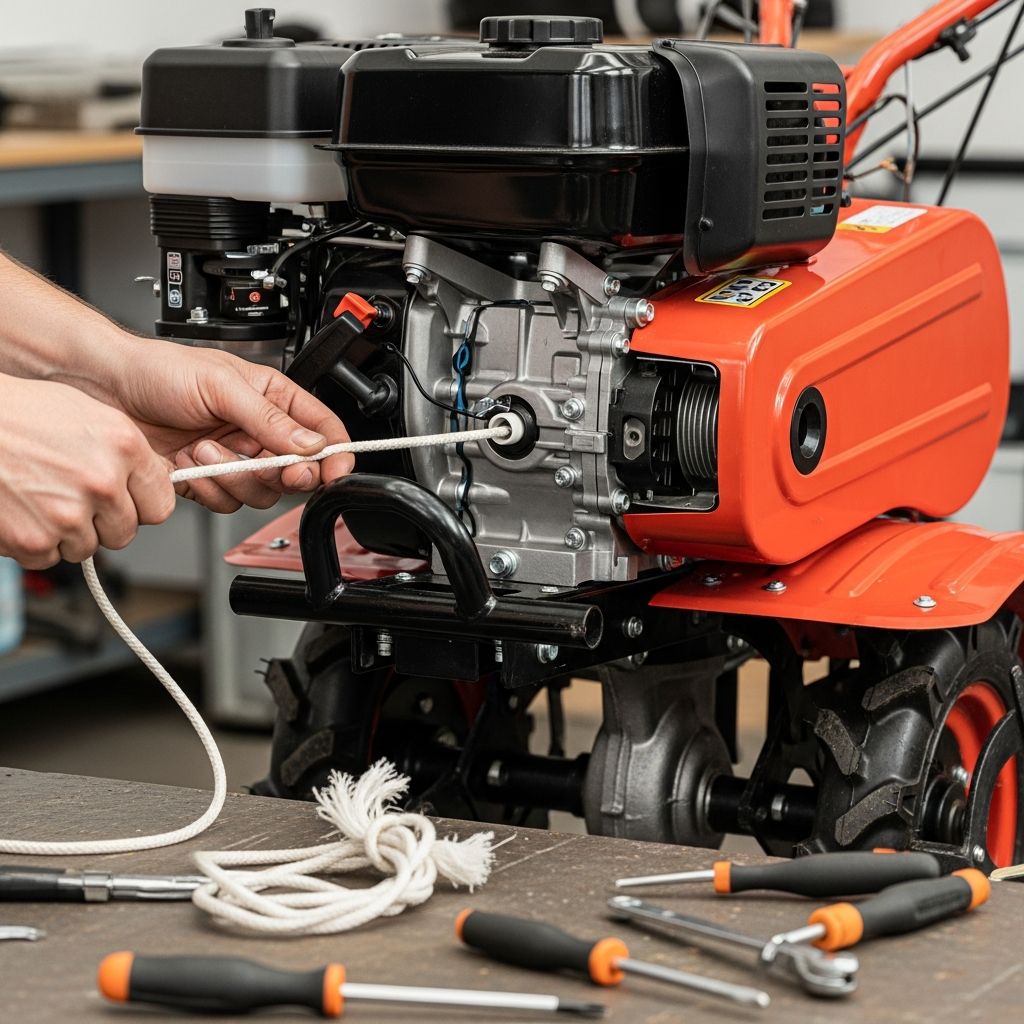
Replace Pull Rope on Garden Tiller
Garden tillers are essential for soil preparation, but a snapped pull rope can halt your work abruptly. Replacing the starter rope yourself is a straightforward task that restores functionality without expensive service calls. This guide provides detailed steps, safety protocols, and tips for common engine types like those from Briggs & Stratton and Tecumseh.
Understanding the Recoil Starter System
The recoil starter, often called the pull start assembly, uses a spring-loaded drum to spin the engine’s flywheel. A nylon rope connects the handle to this drum. Over time, UV exposure, friction, or improper pulls cause fraying or breakage. Key components include the rope, drum, rewind spring, pulley dogs (engagement pawls), and handle grip.
- Rope material: Durable braided nylon, typically 3/32 to 5/32 inch diameter and 5-7 feet long.
- Drum mechanism: Houses the spring; alignment holes must match for threading.
- Handle: Ergonomic grip with a knot-securing slot.
Inspect first: Remove the starter shroud to check if only the rope needs replacement or if the spring or dogs are damaged.
Gathering Essential Tools and Materials
Preparation ensures a smooth repair. Most jobs take 30-60 minutes with basic items.
| Item | Purpose | Notes |
|---|---|---|
| Screwdriver set (Phillips, flathead) | Removing shroud bolts | 7/16 or 3/8 inch sockets often needed |
| Replacement rope (90-120 lb test) | Main repair part | Cut to length; universal fits most tillers |
| Wire hook or needle-nose pliers | Threading rope through drum | Bent paperclip works as improvised tool |
| Allen wrench or screwdriver (for locking) | Holding spring tension | Must fit drum hole precisely |
| New handle grip | Comfort and security | Optional but recommended |
| Utility knife, gloves, eye protection | Safety and cutting | Always prioritize PPE |
Source quality parts from reputable suppliers to avoid premature failure. Avoid cheap cords that snap quickly.
Safety Measures Before Starting
Power equipment poses risks like spring recoil or sharp edges. Disconnect the spark plug wire first to prevent accidental starts. Work in a well-ventilated area away from fuel spills. Wear gloves to protect against cuts and eye gear for debris.
- Drain fuel if tipping the tiller.
- Let engine cool completely.
- Secure tiller on stable surface.
Step-by-Step Replacement Process
Follow these instructions carefully. Variations exist by model, but principles apply universally.
1. Disassemble the Starter Housing
Locate the recoil starter on the engine side, usually under a plastic or metal shroud. Remove air filter if blocking access. Unscrew 2-4 bolts (often 3/8 or 7/16 inch) holding the shroud. Gently lift the gas tank if secured by clips or additional fasteners. Disconnect throttle linkage and kill switch wire carefully.
Clean debris from the drum area with compressed air or a brush. Verify the rewind spring tensions properly by pulling the drum manually—dogs should engage and retract smoothly.
2. Remove the Old Rope
Wind the drum fully clockwise until tight, then insert an Allen wrench or screwdriver into the alignment hole to lock it. This prevents uncontrolled spring release. Cut the old rope near the drum knot and pull it out from the handle end. If stuck, use pliers gently. Remove the handle and discard.
Tip: Note drum hole orientation for re-threading.
3. Prepare and Thread the New Rope
Tie a temporary small knot at one end of the new rope. Create a wire hook from a paperclip to fish it through the drum’s entry hole. Align the drum hole with the exit port by rotating slowly while locked. Push the rope through using the hook until it emerges.
Pull until taut, secure with a larger knot inside the drum. Release the lock tool gradually, allowing the spring to take up slack. Reinsert the lock, thread through the handle slot, and tie another knot. Trim excess and tuck ends inside the grip.
4. Test the Mechanism
Remove the lock; pull the rope slowly—it should rewind smoothly without binding. Check dog engagement: the pulley should spin the crankshaft briefly. If not, realign or inspect for wear.
5. Reassemble the Tiller
Reverse disassembly: Secure shroud bolts evenly to avoid warping. Reconnect wires and linkage. Test pull several times before full reassembly. Start the engine to confirm operation.
Common pitfall: Overtightening bolts cracks plastic housings—snug is sufficient.
Troubleshooting Common Problems
Not all issues are rope-related. Diagnose systematically.
| Issue | Symptom | Solution |
|---|---|---|
| Rope won’t rewind | Slips or sticks | Check spring tension; lubricate lightly with dry graphite |
| Dogs not engaging | No crankshaft spin | Clean/replace pawls; inspect spring |
| Rope jams | Partial pull | Ensure proper knot size; realign holes |
| Hard starting post-repair | Engine cranks but won’t fire | Verify spark plug, fuel; check carburetor |
For Briggs & Stratton 5HP models, four shroud bolts are standard; Tecumseh may use rivets—drill if needed but prefer bolts.
Preventive Maintenance for Longevity
Extend rope life beyond repairs. Store tiller in shade to block UV damage. Use proper pulling technique: steady, full strokes without jerking. Annually inspect rope for frays, lubricate drum sparingly. Replace every 2-3 seasons or 100 hours use.
- Winterize by draining fuel and storing dry.
- Clean after muddy jobs.
- Upgrade to heavier rope for heavy use.
Model-Specific Variations
MTD rear-tine tillers with Briggs engines require removing side panels. Yardman/Tecumseh models involve tank lift and pop-rivet handling. Consult your manual for exact bolt counts. Universal recoil kits fit many, but measure rope length first.
Cost and Time Savings
DIY costs $5-15 for parts versus $100+ service. No special skills needed beyond basic mechanical aptitude. Videos aid visual learners.
Frequently Asked Questions (FAQs)
What size rope for most garden tillers?
3/32 to 1/8 inch diameter, 72 inches long. Check engine specs.
Can I repair without removing the shroud fully?
Sometimes, via handle end, but full access prevents errors.
What if the spring breaks during repair?
Source OEM rewind spring; wind clockwise 5-7 turns.
Is this fix safe for electric-start tillers?
Recoil is backup; same process applies.
How often should I replace the pull rope?
Every 50-100 starts or at visible wear signs.
Mastering this repair empowers reliable tiller performance season after season.
References
- Yardman Tiller Pull Cord Replacement Starter Rope — JustTheGoodBits (YouTube). 2017-04-20. https://www.youtube.com/watch?v=gzdAGX2CqYc
- How to fix the pull rope on a MTD rear tine tiller Briggs & Stratton 5HP — YouTube. 2022 (approx.). https://www.youtube.com/watch?v=MZuQlO_obSA
- HOW TO FIX Rototiller PULL ROPE STARTER. Briggs and Stratton — YouTube. N/A. https://www.youtube.com/watch?v=vRHOJmcPKU8
- Tiller Starter Parts — Home Depot Appliance Repair. N/A. https://www.appliancerepair.homedepot.com/Shop-For-Parts/a24c122/Tiller-Starter-Parts
- Recoil Starters and Pull Ropes — MTD Parts. N/A. https://www.mtdparts.com/en_US/engine-starters/recoil-starters-and-pull-ropes
Similar Articles


Read full bio of Sneha Tete