Replace Your Shower Drain: Easy Step-By-Step DIY Guide
Master the step-by-step process to swap out a faulty shower drain and prevent leaks with essential tools and pro tips for lasting results.
Replace Your Shower Drain: DIY Guide
A malfunctioning shower drain can lead to persistent leaks, standing water, and potential damage to your bathroom floor or subfloor. Replacing it yourself saves money and restores functionality quickly. This guide provides everything needed for a successful DIY project, from preparation to final testing.
Why Replace Your Shower Drain?
Over time, shower drains wear out due to corrosion, buildup of hair and soap scum, or improper sealing that allows water to seep underneath. Signs include slow drainage, visible rust, foul odors, or water pooling around the edges. Acting promptly prevents mold growth and structural issues. Most replacements take 1-2 hours with basic tools.
Gathering the Right Tools and Materials
Success starts with proper preparation. Assemble these essentials before beginning:
- Flathead screwdriver: For prying off the drain cover without damage.
- Adjustable pliers or channel locks: To grip and turn drain components securely.
- Hacksaw or tubing cutter: If trimming the drain pipe is necessary for a proper fit.
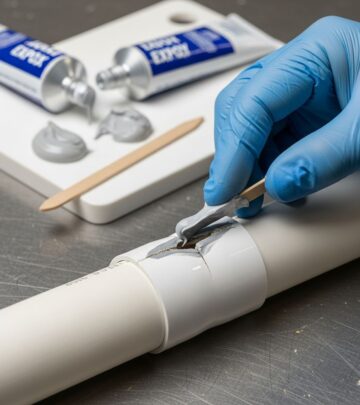
- Plumber’s putty or silicone sealant: Creates a reliable watertight barrier; use silicone for ABS drains.
- Replacement drain assembly: Match your shower base type—compression, solvent weld, or no-caulk styles work best for DIY.
- Plumber’s tape (Teflon): Seals threaded connections against leaks.
- Utility knife or scraper: Removes old sealant and debris.
- Gloves, rags, and bucket: For safety, cleanup, and catching water.
- Optional: Drain removal wrench or spanner tool for stubborn fittings.
Hardware stores carry complete kits for under $30, ensuring compatibility with standard 2-inch drains.
Preparing the Work Area
Clear the shower of items and lay down drop cloths to protect surrounding tiles or flooring. Turn off the water supply if accessing pipes below requires it. For access under the shower, remove ceiling panels in the room below or cut a temporary inspection hole. Wear gloves to handle potentially sharp or grimy parts. Have a flashlight ready for visibility in tight spaces.
Step-by-Step Removal of the Old Drain
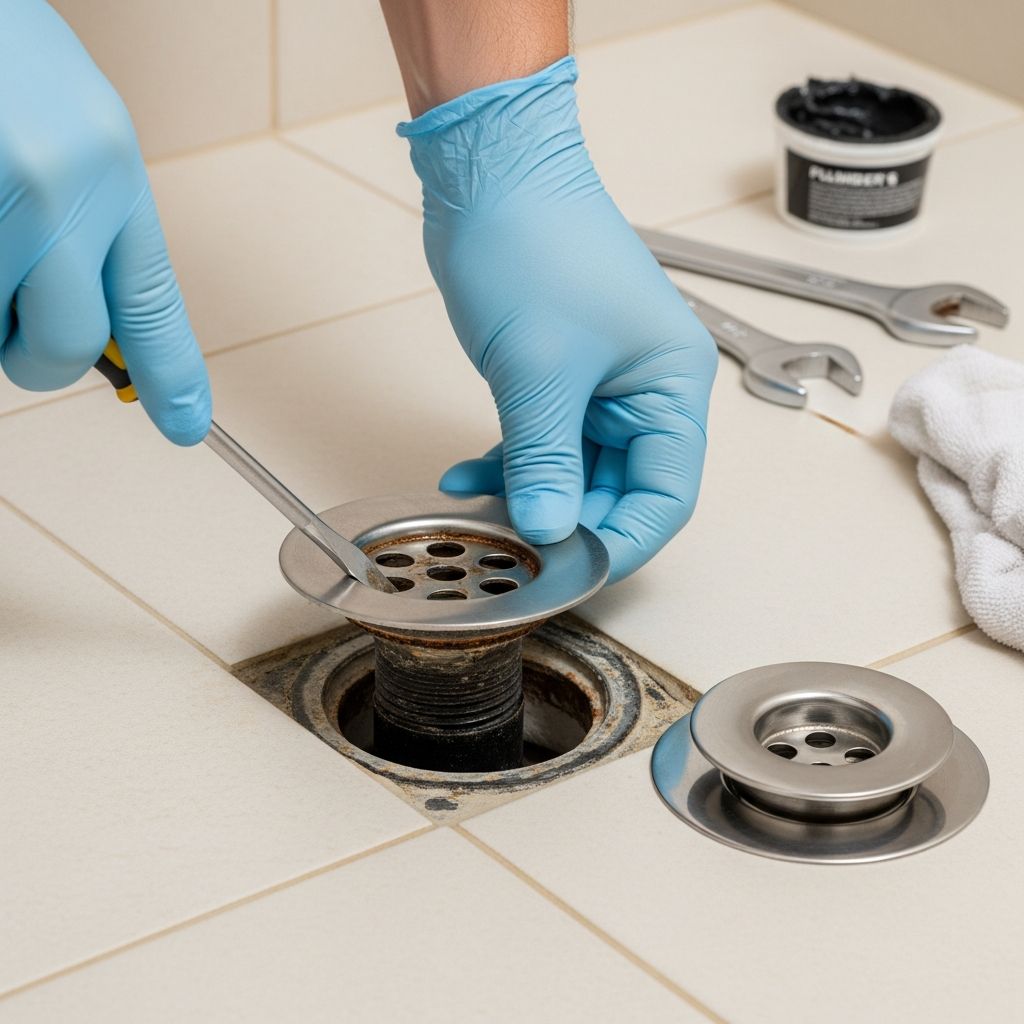
Remove the drain cover: Insert a flathead screwdriver under the edge of the chrome or plastic grate. Gently pry upward, working around the perimeter until it pops free. Avoid excessive force to prevent bending.
Loosen the drain body: Examine the visible drain flange. For threaded types, insert a screwdriver against the side and tap lightly with a hammer to break the seal (lefty loosey). Rotate counterclockwise. If stuck, use pliers on the flats or a dedicated wrench. Caution: Parts may drop into the pipe, so have a retrieval tool handy.
Disconnect from below: Access the underside if possible. Unscrew nuts, remove washers (rubber, friction, and sealing types), and lift the assembly out. Note the order of components for reassembly reference.
Clean thoroughly: Scrape away old putty, caulk, hair, and corrosion using a utility knife. Wipe the drain opening and pipe stub with rags. Ensure a smooth, dry surface for the new seal.
Installing the New Shower Drain
Different drain types require slight variations, but the process emphasizes secure sealing and alignment. Always follow your kit’s specifics.
For Compression or Standard Drains
Roll plumber’s putty into a 1/2-inch rope and press it under the new flange’s lip. For silicone, apply a thin bead.
Insert the drain into the opening from above, threading onto the pipe stub. From below, slide on the rubber gasket (bevel up), friction washer, and locking nut. Tighten clockwise with pliers until snug—avoid over-tightening to prevent cracking the shower base.
Wrap threads with plumber’s tape if applicable for extra security.
For No-Caulk or Preformed Base Drains
These self-seal designs simplify installation. Place the barrel flange with putty (or silicone for ABS), compress into the base hole, add washers and ring from below, and tighten. Set the base in position, then secure the pipe gasket and set screw over the drainpipe.
Adjusting Pipe Height
Test fit first. If the pipe protrudes too far, mark and cut with a hacksaw, ensuring it’s level and 1/4-inch below the base surface. Debur edges for smooth connection.
Finishing Touches and Sealing
Wipe excess putty or silicone from the top surface with a rag dipped in mineral spirits for a clean look. Reinstall the new grate, snapping or screwing it in place. Allow silicone to cure for 24 hours if used.
| Sealant Type | Best For | Drying Time | Cleanup Method |
|---|---|---|---|
| Plumber’s Putty | Brass/Chrome Drains | Immediate | Wipe with rag |
| Silicone Sealant | ABS Plastic Drains | 24 Hours | Mineral spirits |
| No-Caulk Gasket | Preformed Bases | None | N/A |
Testing for Leaks and Proper Function
Run water into the shower for 5-10 minutes, simulating use. Check top and bottom for drips. If leaks occur:
- Tighten fittings incrementally.
- Reapply sealant and washers.
- Verify pipe alignment—no gaps.
Flush with hot water to clear residue. Monitor over days for slow leaks.
Common Mistakes and How to Avoid Them
- Over-tightening: Cracks acrylic bases; hand-tighten then quarter-turn with tools.
- Wrong sealant: Never use putty on ABS—opt for silicone.
- Poor cleaning: Residue causes new leaks; scrub meticulously.
- Ignoring access: Plan underside entry to avoid incomplete removal.
- Mismatched parts: Measure pipe diameter (usually 2 inches) before buying.
Troubleshooting Persistent Issues
If drainage remains slow post-replacement, snake the line or use enzymatic cleaners. For base cracks, silicone underneath as a temporary fix before full repair. Persistent leaks may indicate pipe damage—consult a plumber.
Advanced Tips for Longevity
Install a hair catcher grate to minimize clogs. Annually inspect seals. For tile showers, solvent-weld drains bond permanently with primer and glue. Upgrade to adjustable-height models for uneven floors.
Cost Breakdown
| Item | Average Cost |
|---|---|
| Drain Kit | $15-40 |
| Sealants/Tools (if needed) | $10-20 |
| Pro Labor (alternative) | $150-300 |
DIY saves significantly while building skills.
Frequently Asked Questions (FAQs)
Can I replace a shower drain without removing the tile?
Yes, most jobs stay topside unless the pipe needs trimming. Access below if possible for full removal.
What’s the difference between putty and silicone?
Putty is non-hardening and easy cleanup; silicone bonds permanently but requires curing. Match to drain material.
How do I know if my drain pipe needs cutting?
Test fit: Pipe should sit flush or slightly below the base without gaps or protrusion.
Is this job suitable for beginners?
With care, yes—basic plumbing knowledge helps. Watch tutorials for visuals.
What if water still leaks after installation?
Recheck seals, washers, and tightness. Reapply sealant if needed.
References
- How to Replace a Shower Drain and Avoid Water Damage — Harmony Inspection. Accessed 2026. https://harmonyinspection.com/how-to-replace-a-shower-drain-and-avoid-water-damage/
- How to Replace or Install a Preformed Shower Drain — Oatey. Accessed 2026. https://www.oatey.com/resources/project-guides/replace-install-preformed-shower-drain
- How to change out a shower drain — YouTube (DIY Video). Accessed 2026. https://www.youtube.com/watch?v=JOwr3ASh730
- How to Install a Shower Drain: DIYer’s Guide — Lori K Bath. Accessed 2026. https://lorikbath.com/how-to-install-a-shower-drain/
- DIY Shower Drain Repair — YouTube (DIY Video). Accessed 2026. https://www.youtube.com/watch?v=6QgXIURCHG0
- How to Correctly Install a Shower Drain Assembly — YouTube (DIY Video). Accessed 2026. https://www.youtube.com/watch?v=fdgs5Vaefjg
Similar Articles







Read full bio of medha deb