Replace Your Well Pressure Tank: Complete DIY Guide
Master the step-by-step process to swap out your well pressure tank, restore steady water flow, and avoid costly pump damage with this expert homeowner tutorial.
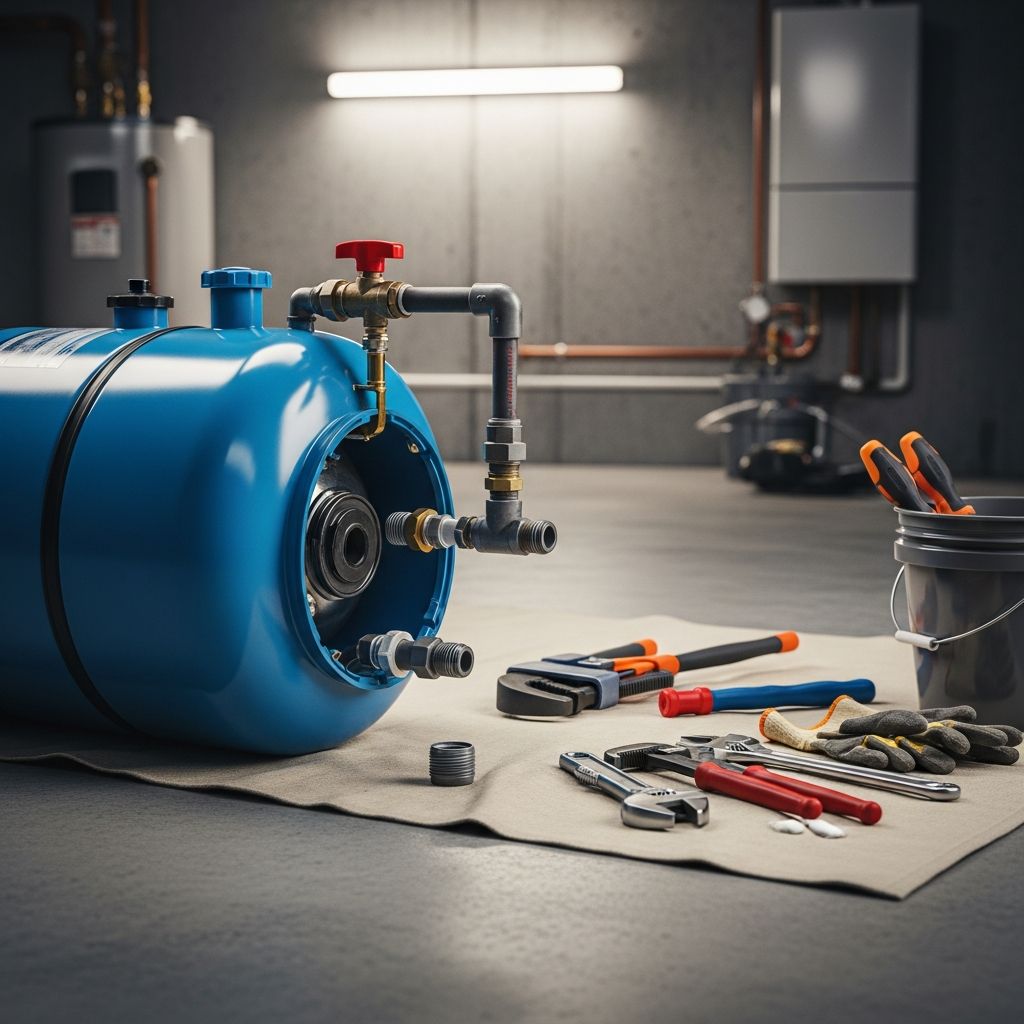
Well pressure tanks are essential components in private water systems, storing pressurized water to deliver consistent flow and protect pumps from overuse. When they fail, symptoms like sputtering faucets or short-cycling pumps emerge, signaling the need for replacement. This guide equips homeowners with the knowledge to handle the job independently, saving on professional fees while ensuring system reliability.
Understanding Well Pressure Tanks and Their Role
A well pressure tank maintains steady water pressure by holding a reserve of pressurized water and air. The air compresses as water enters, pushing it out when faucets open. Common types include bladder tanks, which use a flexible diaphragm to separate air and water, preventing corrosion, and older plain steel tanks, now less favored due to rust issues.
Bladder tanks dominate modern installations due to durability. They arrive pre-charged with air at around 38 psi for standard 40/60 psi switches, reducing waterlogging risks where air dissolves into water, causing pump strain. Proper function means the pump runs only 1-2 minutes per cycle, extending its lifespan significantly.
Spotting the Signs Your Pressure Tank Needs Replacing
Recognize failure early to avoid pump burnout, which can cost thousands. Key indicators include:
- Pulsating or sputtering water from taps, caused by the pump activating too frequently.
- Short-cycling: Pump turns on/off rapidly, often heard as clicking near the tank.
- Water at the air valve: Depress the Schrader valve atop the tank; water spurting means the bladder has ruptured.
- Low or inconsistent pressure despite a functioning pump.
- Excessive tank weight: A full tank feels unusually heavy due to waterlogging.
Test bladder integrity by draining the tank completely, then checking valve pressure with a tire gauge. It should match 2 psi below your pump’s cut-in pressure (e.g., 38 psi for 40 psi cut-in). If readings are off or water appears, replacement is urgent.
Selecting the Perfect Replacement Tank
Match your old tank’s size and type for seamless installation. Sizes range from 20-80 gallons, determined by pump flow rate (GPM), minimum runtime (1-2 minutes), and switch settings like 30/50 or 40/60 psi.
| Tank Size (Gallons) | Suitable Pump Flow (GPM) | Drawdown (Approx. Gallons) |
|---|---|---|
| 20 | 5-8 | 5-7 |
| 44 | 10-15 | 12-15 |
| 80 | 15+ | 20-25 |
Drawdown is usable water between pump cycles. Opt for reputable brands with warranties. Pre-charged bladder tanks are ideal. Check your system’s pressure switch first—common settings are 20/40, 30/50, or 40/60 psi. Purchase from plumbing suppliers; same brand simplifies fittings.
Gathering Tools and Materials
Prepare to minimize downtime, as your home loses water during the process. Essential tools:
- Two adjustable pipe wrenches or large channel locks.
- Tire pressure gauge and pump (for air charge).
- Garden hose, buckets, plumber’s tape (Teflon), or pipe dope.
- Socket set/ratchet for bolts, wire strippers.
- New pressure switch (recommended), unions if needed.
Safety gear: gloves, safety glasses. Materials: replacement tank, possibly T-fitting with unions for easy plumbing.
Preparation: Safety First and System Shutdown
Power down completely to avoid shocks or pump damage. Locate your electrical panel and flip the well pump breaker off. Then, shut the dedicated switch near the tank.
Relieve pressure by opening faucets throughout the house, starting closest to the tank. Attach a garden hose to the tank’s drain valve (often at the base) and run it to a floor drain or outside. Open the valve fully; water may take 10-20 minutes to drain fully. For speed, keep faucets open. Verify emptiness by gently rocking the tank—minimal sloshing.
Removing the Faulty Tank
With water drained, disconnect electrical: Remove the pressure switch cover, note wire positions (snap photo), and detach.
Plumbing: Use wrenches on unions at inlet (from pump) and outlet (to house). Loosen ring nuts counterclockwise; support the tank to prevent tipping. If bolted to a pad, unbolt with socket/ratchet.
Lift the tank away—20-gallon models weigh 30-50 lbs empty; larger ones need help. Inspect pipes and T-fitting; reuse if undamaged. Clean threads.
Setting Up the New Tank
Position the new tank upright in the old spot. Verify air pre-charge: Remove valve cap, check with gauge (adjust to 2 psi below cut-in using a bike pump). Do this empty.
Assemble bottom plumbing: If reusing T-fitting, wrap threads with 4-6 layers of plumber’s tape clockwise. Screw into tank outlet hand-tight, then wrench 1-2 turns. Ensure pipe orientation aligns with house lines.
Pro tip: Install unions on both sides for future ease. Add a new pressure gauge and switch if originals are worn—inexpensive upgrades.
Reconnecting and Securing Everything
Hoist tank into place. Thread inlet/outlet unions, tightening alternately to avoid stress. Hand-tighten first, then wrench snug—avoid over-torquing to prevent cracks.
Bolt to pad if applicable. Reattach pressure switch wires per photo/labeling. Double-check all connections for tape coverage.
Startup, Testing, and Pressurization
Close drain valve and faucets. Restore power via breaker and local switch. The pump activates, filling the tank. Listen for normal operation: It should cycle off at cut-out pressure (e.g., 50 or 60 psi).
Monitor the gauge: Steady build-up without leaks. Open faucets to test flow—no pulsation. Recheck air charge after 24 hours; top off if needed. Run system 10-15 minutes to bleed air.
If issues persist: Verify switch settings, check for leaks, or inspect pump.
Advanced Tips for Longevity and Troubleshooting
Maintain annually: Check air charge, inspect for corrosion. Size matters—undersized tanks cause short-cycling. For high-demand homes, consider larger drawdown.
Common pitfalls: Forgetting air charge leads to waterlogging. Mismatched sizes complicate fittings. Always match psi settings.
Frequently Asked Questions (FAQs)
How often should I replace my well pressure tank?
Expect 5-10 years lifespan, depending on water quality and maintenance. Test annually.
Can I replace it without draining the whole system?
No—draining prevents spills and pressure surprises. Use hose for control.
What if water comes from the air valve during testing?
Bladder failure confirmed; replace immediately to save the pump.
Do I need a permit for this DIY job?
Check local codes; most areas allow homeowner plumbing on private wells.
How do I adjust pressure switch settings?
Use switch nuts: Major for range, minor for differential. Consult manual.
Conclusion: Empower Your Home Water System
Replacing a well pressure tank restores reliable water delivery and safeguards your investment. With preparation and care, this 2-4 hour project yields lasting results. Tackle it confidently for a smoother-running well system.
References
- How to Replace a Well Pressure Tank in 6 Steps — Angi. 2023. https://www.angi.com/articles/how-to-replace-a-well-pressure-tank.htm
- How to Replace a Well Pressure Tank — YouTube (Home Repair Tutor). 2018-10-15. https://www.youtube.com/watch?v=9fTzXVIQDBY
- Replacing a well pressure tank — YouTube (DIY Creator). 2020-05-20. https://www.youtube.com/watch?v=WcENUayicPs
- A Step-by-Step Guide: How to Install a Well Water Pressure Tank — Commercial Industrial Supply. 2024. https://www.commercial-industrial-supply.com/blogs/resource-center/a-step-by-step-guide-how-to-install-a-well-water-pressure-tank
Similar Articles








Read full bio of medha deb