Replacing Central AC Fuses: Step-by-Step Guide
Master the art of diagnosing and swapping out blown fuses in your central air conditioner to restore cool air quickly and safely at home.
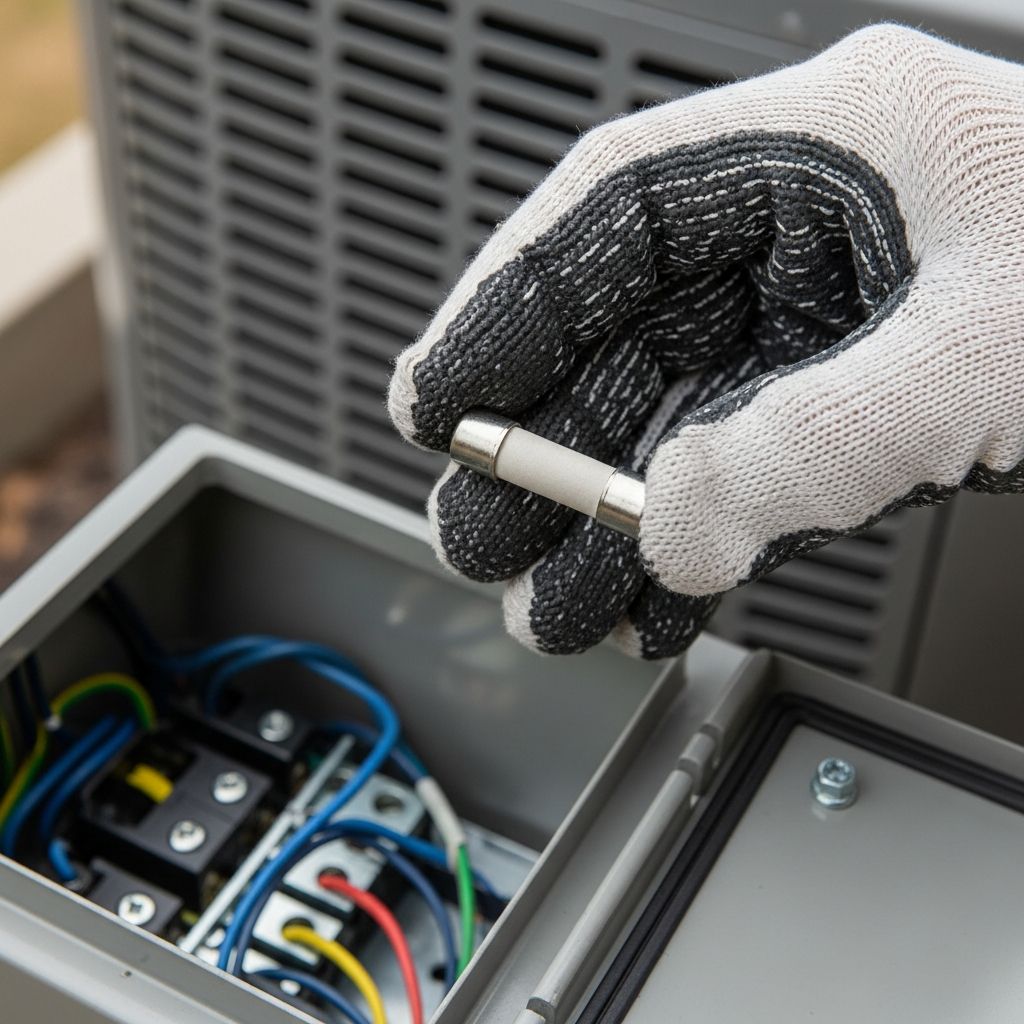
Central air conditioners rely on fuses to protect their electrical circuits from overloads. When these fuses blow, your AC stops working, often leaving you without cooling during peak heat. This guide provides a detailed walkthrough on safely identifying, testing, and replacing these fuses, empowering homeowners to handle common repairs independently.
Understanding Fuses in Central Air Systems
Fuses act as safety devices in your AC’s electrical setup, interrupting power flow when current exceeds safe levels. In central systems, they are typically housed in a disconnect box near the outdoor unit. These are often time-delay fuses rated at 20-30 amps for line voltage (220-240V) or smaller 3-5 amp fuses for low-voltage control circuits.
- Line voltage fuses: Protect the main power to the compressor and fan motor.
- Low-voltage fuses: Safeguard the thermostat and control board wiring.
- Common causes of blowing include short circuits, faulty capacitors, or wiring issues from rodents.
Knowing the difference helps in quick diagnosis, as symptoms vary: no power at all for line fuses versus humming outdoor unit for low-voltage ones.
Signs Your AC Fuse Has Blown
Before diving into repairs, confirm a blown fuse is the culprit. Look for these indicators:
- The outdoor unit hums but doesn’t start.
- Indoor blower fails to activate despite thermostat calls for cooling.
- Control board displays a fuse error light (on some modern units).
- No response even after resetting the thermostat.
Rule out other issues like tripped breakers or thermostat problems first by checking the main panel and batteries.
Essential Tools and Materials
Gather these items before starting to ensure a smooth process:
| Item | Purpose | Notes |
|---|---|---|
| Digital multimeter | Voltage and continuity testing | Set to AC volts (200V+) and continuity mode |
| Insulated pliers or fuse puller | Safe fuse removal | Prevents shocks; needle-nose recommended |
| Replacement fuses | Direct swap | Match exact amp rating; time-delay type |
| Screwdriver set | Accessing panels | Phillips and flathead |
| Work gloves and safety glasses | Personal protection | Non-conductive gloves preferred |
Available at hardware stores like Home Depot or HVAC suppliers.
Prioritizing Electrical Safety
Electricity in AC systems operates at high voltages, posing shock and fire risks. Always de-energize fully:
- Turn off the AC breaker at the main electrical panel.
- Remove the disconnect handle from the outdoor box.
- Use a non-contact voltage tester on wires to verify zero energy.
- Test fuses with multimeter for continuity only after power-off.
Warning: If uncomfortable with electrical work, hire a licensed HVAC technician immediately.
Finding the Disconnect Box
The disconnect is a gray or metal box mounted on the exterior wall near your outdoor condenser unit, often 3-5 feet high. It connects house power to the AC:
- Open the outer rainproof cover (pull or unscrew).
- Inside, locate the pull-out handle and fuses clipped to it or the back.
- Identify ‘line’ (incoming power) and ‘load’ (outgoing to unit) terminals.
Some units have fuses inside the handler near the furnace; check indoor air handler panels too.
Testing Fuses for Failure
Visual checks work for obvious melts, but use a multimeter for accuracy:
Visual Inspection
- Pull out fuses; look for blackened metal, broken filaments, or melting.
Voltage Test (Power On – Caution!)
With disconnect in but breaker off initially:
- Set multimeter to 240V AC.
- Test line lugs: Should read 220-240V if power reaches box.
- Test load lugs: 0V indicates blown fuse.
Continuity Test (Power Off)
- Switch to continuity/ohms (beep symbol).
- Touch probes to fuse ends: Beep means good; silence or infinity means bad.
Pro tip: Test both fuses, as pairs often blow together.
Step-by-Step Fuse Replacement Process
Follow this sequence precisely:
- Power down: Breaker off, disconnect pulled.
- Verify no voltage: Multimeter on load and line sides.
- Remove old fuses: Grip ends with pliers, pull straight out.
- Inspect wiring: Check for burns, loose connections, or rodent damage.
- Install new fuses: Match orientation (some have directional clips); push firmly.
- Reassemble: Replace disconnect handle securely.
- Power up: Turn breaker on, test AC operation.
Run a cooling cycle for 10-15 minutes; listen for normal operation.
Choosing the Correct Replacement Fuses
Never substitute with wrong ratings:
- Amp rating: Check unit nameplate (e.g., 30A max).
- Type: Time-delay (T or D) for motor surges; avoid fast-blow.
- Voltage: 240V for line fuses.
- Low-voltage: 3-5A automotive blade fuses often fit.
Consult your AC manual; oversizing risks fires, undersizing causes repeats.
Troubleshooting Persistent Fuse Blowing
If fuses blow again quickly:
| Possible Cause | Symptom | Solution |
|---|---|---|
| Short circuit | Immediate blow on power-up | Inspect/replace wiring, capacitors |
| Faulty compressor | Overcurrent draw | Professional amp test needed |
| Low refrigerant | Overheating compressor | Call for recharge/diagnosis |
| Thermostat wiring | Low-voltage fuse blows | Check shorts at thermostat |
Document blows: frequency indicates deeper issues.
Preventive Maintenance for Fuse Longevity
Extend fuse life with routine care:
- Annual professional inspections.
- Keep unit clear of debris.
- Secure loose wires annually.
- Upgrade to breakers if fuses are obsolete.
- Install surge protectors.
Schedule cleanings before summer.
Common Mistakes to Avoid
- Skipping voltage verification: Risks shock.
- Wrong fuse size: Causes fires or failures.
- Ignoring root causes: Leads to repeated costs.
- Working in wet conditions: Increases hazards.
When to Call a Professional
DIY suits simple swaps, but seek experts for:
- Recurring blows.
- Complex wiring.
- No power to disconnect.
- Indoor low-voltage issues.
Licensed techs use specialized tools for full diagnostics.
Frequently Asked Questions (FAQs)
What size fuse for my central AC?
Typically 20-30A time-delay; confirm on unit label.
Can I use a breaker instead of fuses?
Yes, many modern installs use breakers; conversions possible by pros.
Why does my AC hum but not start?
Blown line fuse preventing compressor activation.
Are AC fuses expensive?
$5-15 per pair; cheap fix versus $100+ service calls.
How often should I check fuses?
Seasonally or after storms/power surges.
References
- How to Replace Fuses on Your Central Air Conditioner — YouTube (Homesteady). 2012-01-27. https://www.youtube.com/watch?v=_rNG4PBOVFI
- How to Check for Blown Fuses and Replace Them — Woodacre HVAC. Accessed 2026. http://woodacrehvac.com/guide-finding-replacing-blown-fuses/index.html
- How To Replace a Fuse on a Furnace or AC Air Handler — YouTube. Accessed 2026. https://www.youtube.com/watch?v=LpE04dcwOvU
- The most common fix for a Home Central Air Conditioner — YouTube (funbro1). 2014-08-11. https://www.youtube.com/watch?v=IgQFNNFRWks
- How to Change a Fuse – Replace Disconnect Fuse — YouTube (Windy City Restaurant Equipment Repair). 2019-05-03. https://www.youtube.com/watch?v=VxRRIUtbmQU
Similar Articles








Read full bio of Sneha Tete