Replacing Wooden Chair Legs: Complete DIY Guide
Restore your favorite chairs with this detailed step-by-step tutorial on replacing broken or missing wooden legs at home.
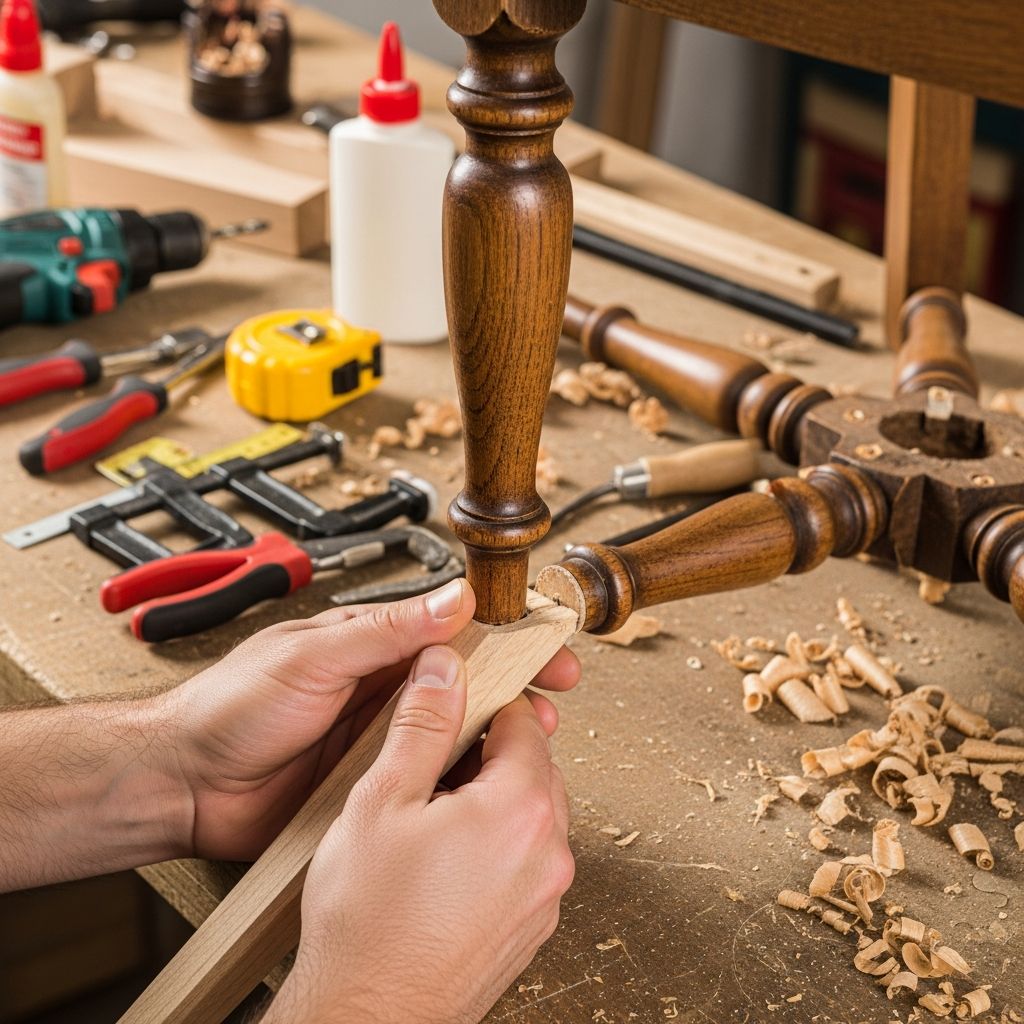
Wooden chairs endure daily wear, often leading to broken or loose legs that compromise safety and aesthetics. Replacing these components yourself saves money and extends furniture life, requiring basic woodworking skills and tools. This guide provides a thorough process for assessment, replacement options, fabrication, installation, and maintenance.
Assessing Chair Leg Damage and Preparation
Begin by inspecting the chair thoroughly. Check for cracks, wobbles, or complete detachment. A missing leg, as in many used furniture finds, demands precise measurement of remaining legs for length, diameter, angle, and taper. Use a tape measure for overall height and calipers for thickness variations. Note joint types—dowels, mortise-and-tenon, or bolts—affecting removal and reinstallation.
Disassemble carefully: flip the chair, label parts, and remove screws or glue joints with a chisel. Clean sockets with a drill or scraper to remove old glue. Safety first—wear gloves, goggles, and a dust mask during disassembly to protect against splinters and debris.
- Measure leg length from seat bottom to floor.
- Record top angle (often 5-7 degrees for stability).
- Examine wood type: oak for strength, pine for ease.
- Photograph angles and profiles for replication.
Choosing Replacement Methods: Buy or Build?
Options range from pre-made legs to custom builds. Off-the-shelf legs suit simple chairs but may mismatch antiques. For authenticity, fabricate from matching wood. Sites like Heritage Components offer universal fittings for screw-in installation, ideal for modern pieces.
| Method | Pros | Cons | Best For |
|---|---|---|---|
| Pre-made Legs | Quick, affordable | Limited customization | Contemporary chairs |
| Custom Turned Legs | Perfect match | Requires lathe skills | Antiques |
| Metal Reinforcements | Extra strength | Visible if unfinished | High-use areas |
| Dowel/Screw Plates | Easy install | May alter height | Quick fixes |
Pre-made legs install via plates or direct screw-in, often with 8-10mm dowels. Custom work shines for uniqueness.
Essential Tools and Materials for Success
Gather tools before starting to avoid interruptions. Basic kit includes saw, drill, planer, sander, clamps, and wood glue. Advanced users add lathes or routers for precision shaping.
- Cutting: Hand saw, jigsaw, or miter saw for angles.
- Shaping: Hand planer, belt sander, or orbital sander.
- Drilling: Drill with bits matching dowel size (e.g., 8mm).
- Joining: Wood glue (PVA or Titebond), clamps.
- Finishing: Sandpaper (120-220 grit), stain, paint.
- Safety: Glasses, gloves, ear protection.
Select hardwood blanks slightly longer than needed, like oak for durability over pine.
Fabricating Custom Wooden Chair Legs
Turn a wood blank into a leg by replicating the original profile. Clamp securely and mark dimensions from photos.
- Mark and Cut Length: Square cut bottom; angle top to match (use bevel gauge for 5-7 degrees).
- Shape Profile: Plane or sand tapers and curves, checking against existing legs by feel and sight.
- Drill Tenon: At top, bore hole matching seat socket depth and angle. Test fit dry.
- Smooth: Sand progressively to 220 grit for hand-friendly finish.
For lathe users, rough turn then refine. Beginners: hand tools suffice with patience. Ensure even taper—thicker at top for strength.
Repairing Instead of Full Replacement
For cracks or breaks, reinforce rather than replace. Glue fragments, clamp overnight, then route slots across the break for wood inserts.
- Apply glue generously to mating surfaces.
- Sand joint flush post-drying.
- Cut 3-5 grooves (1/4-inch wide) with router bit.
- Shape insert strips to fit snugly, glue and screw.
- Sand and fill gaps with sawdust-glue mix.
This ‘bone-like’ support restores integrity quickly.
Installing New or Repaired Legs Securely
Position chair upside down on a flat surface. Dry-fit all legs for levelness—no rocking.
- Glue Application: Coat tenon and socket liberally; add to rail joints if applicable.
- Insertion: Twist-push legs into place, aligning angles.
- Clamping: Use C-clamps or straps; check squareness with level.
- Curing: 24 hours minimum; weight if needed.
- Hardware: For bolt-on styles, drill precisely, use threaded inserts.
Angled plates aid non-traditional fits.
Finishing Touches for Professional Results
Match the chair’s look: sand entire undercarriage, apply stain or paint. Blend repairs seamlessly.
- Fill voids with colored epoxy.
- Multiple thin finish coats.
- Polyurethane for protection.
Test stability: sit, rock, load. Adjust as needed.
Advanced Techniques for Complex Chairs
Antique chairs may have steam-bent legs or intricate joints. Split oak logs for bends or consult turners. For wobbly sets, replace all legs uniformly.
Metal brackets under seats add longevity for heavy use.
Common Mistakes and Troubleshooting
Avoid misalignment causing wobbles—double-check angles. Weak glue fails from moisture; use waterproof types. Oversanding weakens structure.
| Issue | Solution |
|---|---|
| Leg too short | Shim with tapered wood |
| Loose fit | Swelling glue or wedges |
| Uneven floor | Adjustable glides |
| Cracking post-install | Dry wood, proper humidity |
Maintenance Tips for Long-Lasting Legs
Prevent future issues: tighten periodically, avoid dragging, use felt pads. Store off concrete floors to prevent moisture warp.
Frequently Asked Questions (FAQs)
What wood is best for chair legs?
Hardwoods like oak or maple for strength; match original for aesthetics.
Can I replace one leg only?
Yes, but match precisely to avoid imbalance.
How long does glue take to dry?
24 hours full cure; clamp 4-8 hours.
Do I need a lathe?
No for basics; hand tools work well.
What if my chair uses bolts?
Drill matching holes, use inserts for security.
References
- How do I replace a wooden chair leg? — iFixit. Accessed 2026. https://www.ifixit.com/Answers/View/571742/How+do+I+replace+a+wooden+chair+leg
- Fixing a Broken Chair or Table Leg — Instructables. Accessed 2026. https://www.instructables.com/Fixing-a-Broken-Chair-or-Table-Leg/
- How to Replace a Broken Chair Leg | Woodworking Tutorial — YouTube (Furniture Repair Channel). 2019-06-07. https://www.youtube.com/watch?v=ckUcecfQRb8
- An Easy DIY Guide to Attaching Furniture Legs — Heritage Components. Accessed 2026. https://heritagecomponents.com/pages/guides
- Wood Furniture Legs: installation tutorial — YouTube (wOod it). 2019-04-24. https://www.youtube.com/watch?v=xHEWT94ASQo
Similar Articles








Read full bio of medha deb