Restore Your Tiled Patio Table
Expert guide to fixing cracks, replacing tiles, and protecting your outdoor furniture for lasting beauty and durability.
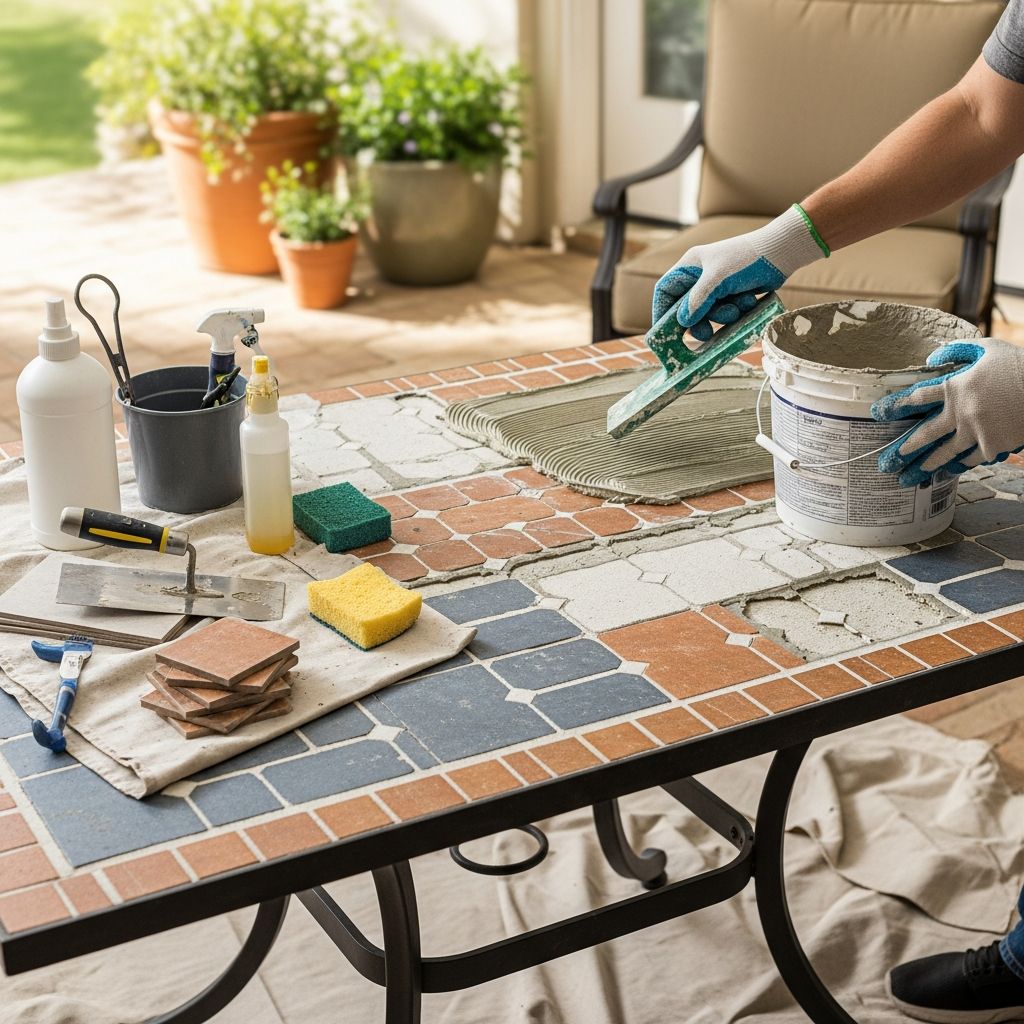
Outdoor spaces often feature tiled patio tables as focal points for gatherings, but exposure to sun, rain, and temperature swings leads to cracks, loose tiles, and faded finishes. Reviving these pieces extends their life, saves money, and enhances your patio’s appeal without buying new furniture. This guide provides a complete roadmap to diagnose problems, gather supplies, execute repairs, and maintain your table for years of use.
Understanding Common Damage in Tiled Outdoor Tables
Tiled patio tables endure harsh conditions that cause specific wear patterns.
Cracked tiles
result from impact or freeze-thaw cycles where water seeps into grout lines, expands, and fractures ceramic surfaces. Loose or missing tiles often stem from failed adhesives weakened by moisture. Underlying wood substrates suffer from rot—dry rot from fungi thriving in damp, poorly ventilated areas, and wet rot from prolonged saturation. Metal frames rust if not sealed, leading to instability. Early detection prevents escalation; inspect annually for hairline cracks, wobbly legs, or grout erosion.- Visual signs: Chips, discoloration, or bulging grout.
- Structural clues: Rocking motion or creaking under weight.
- Environmental factors: Proximity to sprinklers accelerates degradation.
Essential Tools and Materials for Successful Repairs
Stock up on quality items to ensure professional results. Basic tools include a utility knife for grout removal, hammer and chisel for stubborn tiles, and a drill for securing frames. Tiling specifics demand a notched trowel, grout float, mixing bucket, and sponges. Safety gear like gloves, goggles, and dust masks protects against shards and silica dust in thinset.
| Category | Items | Purpose |
|---|---|---|
| Tools | Notched trowel, grout float, utility knife, drill, clamps, saw | Spreading adhesive, applying grout, precise cutting |
| Materials | Thinset mortar, grout, replacement tiles, cement backer board, wood screws, sealant | Adhesion, filling joints, stable base, protection |
| Finishes | Outdoor urethane, primer, paint (optional) | Weather resistance, aesthetic refresh |
Choose frost-resistant tiles like porcelain or slate for longevity. Pressure-treated lumber or cedar resists rot better than standard 2x4s.
Step-by-Step Assessment and Preparation
Begin with a thorough evaluation. Flip the table upside down on a protected surface to examine the underside. Tap tiles gently—a hollow sound signals delamination. Document damaged areas with photos for reference. Clean debris using a stiff brush and mild soap solution; avoid pressure washers that force water into seams.
- Remove loose tiles by prying with a putty knife.
- Scrape old grout and adhesive completely.
- Sand rough spots on the substrate for smooth bonding.
- Check frame integrity; tighten bolts or replace rusted parts.
For rotten wood, cut out affected sections and splice in new pieces treated with preservative. Allow 24-48 hours drying time post-cleaning.
Building or Reinforcing a Sturdy Base
A weak foundation dooms repairs. If the original top is beyond salvage, craft a new one using cement backer board over plywood for rigidity. Cut to match your table base dimensions, typically 36-48 inches round or square. Frame edges with treated lumber to prevent flexing, securing with deck screws. This setup distributes weight evenly, crucial for heavy tile loads—expect 50-100 pounds for a standard table.
Pro tip: Position tiles avoiding seams in the backer board to minimize crack risks. Dry-lay the pattern first, adjusting for even spacing and edge coverage.
Applying New Tiles with Precision
Mix thinset to a peanut butter consistency. Spread with the notched side of the trowel, creating ridges for optimal adhesion. Press tiles firmly, using spacers for uniform joints (1/8-inch typical). For irregular spaces, shatter extras into mosaics—wear protection against flying fragments. Work in sections to prevent premature drying.
After 24 hours, mix sanded grout (for outdoor durability) and force into joints with a rubber float at 45 degrees. Wipe excess immediately with a damp sponge, rinsing frequently. Haze removal the next day uses a dry cloth. Full cure takes 72 hours; shield from rain with plastic sheeting.
Sealing and Finishing for Weather Resistance
Grout and tiles remain porous, inviting moisture. Apply penetrating sealer after full curing, following product dwell times. For painted updates, prime tiles first, then stencil patterns with chalk paint, finishing with water-based spar urethane in thin coats via foam roller. Multiple layers build protection without bubbling—sand lightly between applications.
Test seal effectiveness by sprinkling water; beads indicate success. Reapply annually.
Addressing Rot and Frame Issues
Wood rot demands aggressive treatment. Identify dry rot (shrunken, brittle wood) versus wet rot (darker, softer). Remove all infected material until sound wood appears, then apply borate-based fungicide. Replace with rot-resistant alternatives. For metal, wire-brush rust, prime, and paint with rust-inhibiting enamel. These steps ensure stability.
Seasonal Maintenance Strategies
Proactive care maximizes lifespan. In winter-prone areas, store indoors or cover with breathable tarps to avert snow load damage. Clean monthly with gentle solutions; avoid harsh chemicals eroding grout. Tighten hardware biannually. Opt for hardy materials like slate if re-tiling.
Creative Refresh Ideas Beyond Basic Repairs
Elevate your table with designs. Stencil geometrics or florals on tiles for custom flair. Mix sizes for mosaic effects using salvaged pieces. Embed glass for illumination under string lights. These touches personalize while reinforcing durability.
Frequently Asked Questions
Can I repair just a few cracked tiles without redoing the whole top?
Yes, remove damaged ones, clean the area, and adhere replacements matching existing grout color.
What if my table base is wobbly?
Reinforce legs with brackets or new lumber; level on adjustable feet.
How long does a repaired table last outdoors?
With proper sealing, 5-10 years; slate tiles extend to 15+.
Is cement board necessary under tiles?
Highly recommended for stability and crack prevention.
What sealer works best for grout?
Impregnating sealers like those for natural stone; avoid film-forming types prone to peeling.
Advanced Tips for Professional Results
Invest in a wet saw for clean cuts. Use leveling clips for flatness. For heavy tables, recruit help flipping. Monitor humidity during curing—ideal 50-70%. These refinements yield heirloom-quality pieces.
References
- How to Replace a Patio Table Top with Tile — Remodelaholic. 2015-06-15. https://www.remodelaholic.com/how-to-replace-patio-table-top-tile/
- Tile Top Patio Table Makeover — Chica and Jo. 2020-05-12. https://www.chicaandjo.com/tile-top-patio-table-makeover/
- How To Update An Old Outdoor Tile Table — Hip & Humble Style. 2019-06-20. https://hipandhumblestyle.com/2019/06/how-to-update-an-old-outdoor-tile-table/
- Fixing Ceramic Tile Table from Dry/Wet Rot — Engineering Yoda (YouTube). 2022-03-10. https://www.youtube.com/watch?v=PrM8cmLUDsg
Similar Articles




Read full bio of Sneha Tete