Restoring Antique Chairs by Sanding
Master the art of sanding antique dining chairs to breathe new life into cherished heirlooms with expert techniques and safety tips.
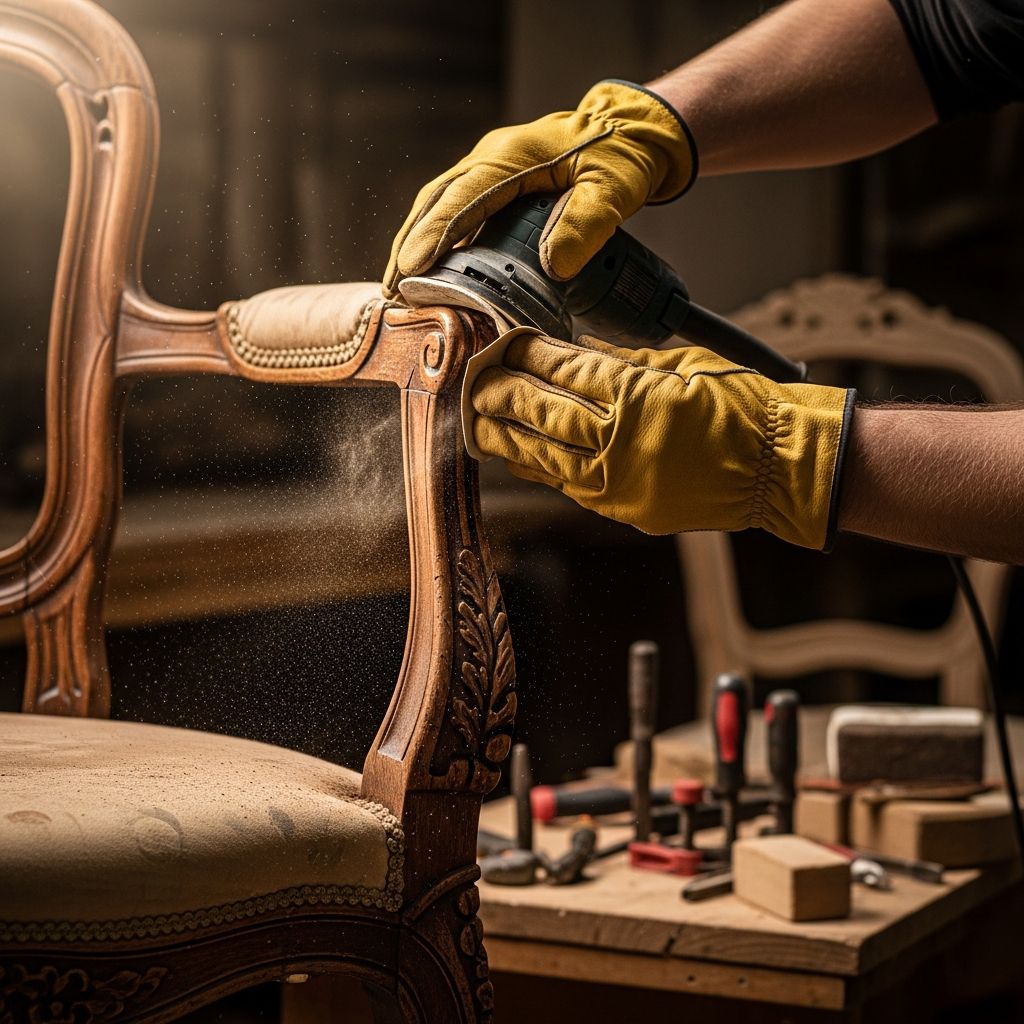
Reviving an antique dining room chair through sanding transforms worn pieces into stunning focal points. This process removes old finishes, smooths surfaces, and prepares wood for new stains or paints, all while respecting the item’s historical value. Proper sanding ensures longevity and enhances natural beauty without causing damage.
Why Sand Antique Dining Chairs?
Antique chairs often accumulate layers of outdated varnish, paint, or dirt that dull their appeal. Sanding strips these away, revealing the wood grain beneath. Unlike aggressive stripping, sanding allows controlled material removal, minimizing risks to delicate carvings or thin veneers common in vintage furniture. It also creates a uniform base for modern finishes, boosting durability against daily use.
Restoration via sanding preserves character. Fine details like spindles and contours retain subtle patina, adding authenticity. Homeowners restore these pieces to match contemporary decor or pass them to future generations, combining practicality with sentimentality.
Essential Tools and Materials
Gathering the right equipment streamlines the project and prevents mishaps. Start with quality sandpaper in progressive grits: coarse (80-120), medium (150-220), and extra-fine (320+). Orbital sanders speed up flat areas, while sanding blocks and contour grips handle curves.
- Orbital or random orbit sander for broad surfaces
- Sanding blocks or sponges for handwork
- Contour sanding grips for spindles and edges
- Tack cloths or lint-free rags for dust removal
- Cleaners like mineral spirits or vinegar-water mix
- Safety gear: dust mask, goggles, gloves
- Drop cloths and vacuum with brush attachment
Invest in a shop vacuum to capture fine dust particles, protecting lungs and workspace. For repairs, keep wood filler, clamps, and wood glue handy.
Preparing Your Workspace and Chair
Setup prevents contamination and accidents. Work in a well-ventilated garage or outdoors, covering floors with drop cloths. Disassemble the chair if possible: remove seats, unscrew loose joints, and label parts for reassembly.
Inspect for structural issues. Tighten joints, glue wobbly legs, and fill cracks with wood filler matched to the grain. Allow fillers to dry fully before proceeding. Clean surfaces with mineral spirits to dissolve grime without soaking the wood. This step ensures sandpaper glides smoothly rather than clogging.
| Preparation Checklist | Action | Purpose |
|---|---|---|
| Disassemble | Remove cushions, hardware | Access all surfaces evenly |
| Clean | Wipe with mineral spirits | Remove oils, dirt |
| Repair | Fill cracks, glue joints | Strengthen structure |
| Protect | Wear mask, goggles | Safety from dust |
Selecting the Perfect Sandpaper Grits
Grit choice dictates finish quality. Coarse grits (80-120) tackle thick finishes without deep gouges on antiques. Progress to finer ones for smoothness. A sequence like 80-120-220-320 yields professional results.
For antiques, avoid starting below 80 grit to prevent edge rounding on moldings. Hand-sand veneers lightly with 150+ to avoid burn-through. Test grits on scraps matching your wood type.
Mastering Sanding Techniques
Initial Coarse Sanding
Begin with 80-120 grit on an orbital sander for flat seats and backs. Move with the grain to lift old finish efficiently. Apply light pressure; let the tool do the work. Monitor progress to expose bare wood evenly.
Refining Contours and Details
Switch to hand tools for spindles and crevices. Wrap sandpaper around contour grips or fold sheets for precision. Progress grits every few passes, feathering edges to blend seamlessly.
Tip: Sanding against the grain creates scratches visible under finish. Always follow wood fibers direction.
Final Smoothing
Finish with 320+ grit for a glass-like surface. This prepares wood for stain absorption without raising fibers. Vacuum frequently and wipe with tack cloth between grits.
Cleaning After Sanding
Dust residue ruins finishes. After final sanding, wash with a 50/50 vinegar-water solution or tack cloth. Avoid over-wetting; pat dry immediately. Allow 24+ hours drying in a warm, dry area. This ensures optimal stain penetration.
Common Mistakes and How to Avoid Them
- Oversanding edges: Use sanding blocks to maintain square lines.
- Ignoring grain direction: Results in swirl marks; double-check flow.
- Skipping cleaning: Leads to fisheyes in paint; always de-dust thoroughly.
- Rushing grits: Jump gradually for flawless results.
- Forgetting safety: Dust causes respiratory issues; mask up.
Post-Sanding Finishing Options
Bare wood invites stain, paint, or oil. For natural looks, apply oil finishes. Stains enhance grain; test first. Top with polyurethane or wax for protection.
Apply thin coats, sanding lightly between (220 grit). Buff final layer for sheen. Reassemble once cured fully.
Preserving Antique Value During Restoration
Antiques demand gentle handling. Avoid power tools on fragile areas; hand-sand instead. Retain some wear in recesses for authentic patina. Consult appraisers if high-value; some finishes respond to cleaning alone.
FAQs
Can I sand veneer on antique chairs?
Yes, but cautiously with 150+ grit by hand or orbital sander. Avoid belt sanders to prevent sanding through thin layers.
How long does sanding take?
2-6 hours per chair, depending on condition and tools. Handwork on details extends time.
What if the wood won’t smooth?
Old finishes may need chemical strippers first, followed by sanding.
Is an orbital sander beginner-friendly?
Absolutely; its random motion reduces swirls. Practice on scrap wood.
How to store sandpaper?
In dry, airtight containers to prevent moisture warping.
Advanced Tips for Professional Results
Illuminate work with LED lights to spot missed scratches. Use compressed air for crevices. For turned legs, sanding poles or flexible shafts excel. Maintain sander pads clean for efficiency.
Experiment with liming wax post-sanding for rustic charm on oak chairs. Track progress with photos for evenness.
References
- Refinishing Old Dining Room Set — Instructables. Accessed 2026. https://www.instructables.com/Refinishing-Old-Dining-Room-Set/
- Furniture Sanding 101: How to Sand Wood Furniture — Little House of Four. 2021-09. https://www.littlehouseoffour.com/2021/09/how–to-sand-wood-furniture.html
- Refinishing wooden chairs from a thrift store — YouTube (Creative Tien). Accessed 2026. https://www.youtube.com/watch?v=hMtrODvy-mg
- How to Refinish Antique Furniture — Laurel Crown. Accessed 2026. https://www.laurelcrown.com/blog/refinishing-your-antique-furniture
Similar Articles




Read full bio of Sneha Tete