Revive Your Ping Pong Table Top: Step-By-Step DIY Guide
Expert guide to restoring your worn ping pong table surface for endless family fun and competitive play at home.
Revive Your Ping Pong Table Top: A Complete DIY Restoration Guide
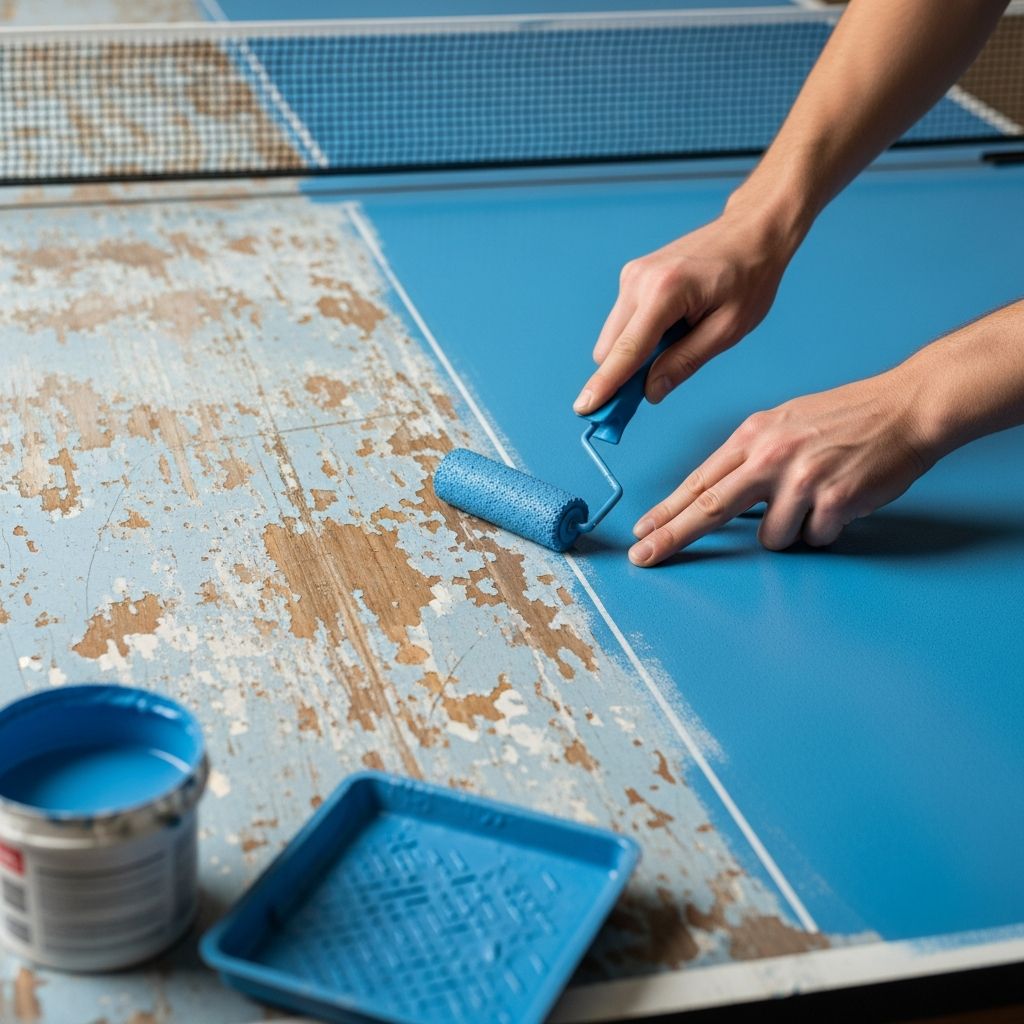
Restoring a ping pong table top breathes new life into an old favorite, transforming a scratched, faded surface into a smooth playing field ready for action. Whether it’s faded from years of play, water damage, or outdoor exposure, a proper resurface job ensures consistent ball bounce and durability. This guide provides detailed steps, materials, and tips drawn from proven techniques to achieve professional results at home.
Assess the Damage: When to Resurface Your Table
Before starting, evaluate your table’s condition. Look for uneven paint, deep scratches, delamination, or stains that affect playability. Minor wear like light scuffs can often be cleaned, but resurfacing is ideal for severe damage.
- Surface cracks or chips: These disrupt ball trajectory and require sanding and repainting.
- Faded colors: Sun exposure or heavy use dulls the green top and white lines, impacting visibility.
- Water spots: Moisture warps wood or peels paint, demanding thorough prep work.
- Bounce inconsistency: A rough texture from old paint layers hinders fair gameplay.
Tables made of MDF or plywood respond best to resurfacing, as these materials sand smoothly and accept paint well. Test bounce by dropping a ball from 12 inches; it should rebound 75-85% on a standard table.
Gather Essential Tools and Materials
Having the right supplies prevents mid-project delays. Focus on quality items for a flawless finish.
| Category | Item | Purpose | Notes |
|---|---|---|---|
| Sanding | 220-grit sandpaper or sanding block | Smooths old surface | Progressive grits: 120 for rough, 220 for finish |
| Painting | Satin green spray paint (2-3 cans) | Main table color | Outdoor-rated for durability, e.g., Italian Olive green |
| Painting | Flat white paint | Lines and edges | Chalkboard or latex for matte finish |
| Prep | Painter’s tape, drop cloths | Masking and protection | Blue tape for clean lines |
| Finishing | Tabletop epoxy (optional) | Seals and protects | Clear coat for heavy-use tables |
| Cleaning | Microfiber cloths, mild cleaner | Dust and residue removal | Avoid abrasives |
Budget around $50-100 for materials. Work in a well-ventilated garage or outdoors to manage dust and fumes.
Preparation: Clean and Protect the Workspace
Start with a spotless base. Remove nets, legs if possible, and all accessories. Wipe the entire table with warm soapy water using a microfiber cloth to eliminate dirt, grease, and residue. For stubborn stains, mix gentle cleaner with water and scrub lightly—never soak the surface to avoid warping.
Clear the area of flammables due to spray paint. Lay drop cloths under and around the table. If outdoors, hose off initial grime but ensure full dryness before sanding. Dry thoroughly with clean towels, then vacuum edges and crevices.
Mastering the Sanding Process
Sanding creates a uniform base for new paint. Begin with 120-grit to remove old paint flakes and imperfections, progressing to 220-grit for smoothness. Sand in circular motions with even pressure, focusing on high-traffic areas.
- Secure the table on sawhorses for easy access.
- Sand the top until matte and uniform—no shiny patches.
- Feather edges lightly to blend with sides.
- Vacuum dust frequently; wear a mask to avoid inhalation.
Expect green dust clouds—contain with plastic sheeting. After sanding, wipe with tack cloth or damp rag, then let air dry 24 hours. A smooth surface is crucial; rough spots cause paint to bubble or peel.
Painting Techniques for a Pro-Level Finish
Apply thin, even coats for optimal adhesion and bounce. Shake cans vigorously for 2 minutes.
Base Coat Application
Spray green paint 8-10 inches away in sweeping motions. Start with light mist coat, dry 1 hour, then 2-3 full coats, drying 2 hours between each. Avoid drips by overlapping strokes 50%.
Creating Crisp White Lines
Tape meticulously: measure 2cm wide lines per ITTF standards (1cm for singles). Apply thin white base coat over tape, dry fully, then green over. Peel tape slowly at 45 degrees while wet for sharp edges. Touch up chips with a fine brush.
Use foam rollers for brush-on paints to minimize texture—essential for flat finishes.
Advanced Finishing: Epoxy Sealing for Durability
For tournament-quality tables, seal with epoxy. After paint dries 48 hours, dam edges with tape. Mix and pour 2-3mm thick layer, spread with heat gun or torch to pop bubbles. Cure 72 hours. This adds waterproofing and UV resistance, ideal for garages or patios.
Epoxy vs. Paint-Only
| Method | Pros | Cons |
|---|---|---|
| Paint Only | Quick, cheap, good bounce | Less durable, reapply yearly |
| Epoxy Seal | Hard-wearing, smooth | Expensive, long cure time |
Reassembly and Final Touches
Once cured, reinstall nets and legs. Test levelness with a straightedge; shim if needed. Polish with microfiber for shine. Store covered away from sun to prevent fading.
Common Mistakes and How to Avoid Them
- Rushing dry times: Leads to peeling—always wait full intervals.
- Poor taping: Causes bleed; seal tape first.
- Heavy paint: Creates texture; thin coats only.
- Ignoring dust: Traps particles under paint—clean obsessively.
Maintenance for Long-Lasting Results
Weekly: Dust with dry cloth. Monthly: Mild soap wipe. Annually: Inspect for wear. Keep indoors or covered; avoid direct sun. Clean balls/paddles to minimize marks.
Cost Breakdown and Time Estimate
| Task | Time | Cost |
|---|---|---|
| Prep/Sanding | 4-6 hours | $10 |
| Painting | 3-5 hours + dry | $30-50 |
| Sealing (opt) | 2 hours + 72 cure | $50-80 |
| Total | 1-2 weekends | $90-140 |
FAQs
What paint is best for ping pong tables?
Satin or flat green spray paint with good adhesion; chalkboard paint for matte lines.
Can I resurface outdoors?
Yes, but choose UV-resistant paints and seal well to withstand weather.
How smooth should the final surface be?
Smooth enough for 80% ball rebound; test post-project.
Is epoxy necessary?
Not for casual use, but recommended for heavy play or moisture exposure.
How often resurface?
Every 3-5 years with proper care.
With patience, your revived table will host countless rallies. Enjoy the satisfaction of a like-new play surface!
References
- How to Resurface a Ping Pong Table — ClamorManagement (YouTube). 2012-10-11. https://www.youtube.com/watch?v=0sn91ToBTWg
- A Guide To Cleaning Your Ping Pong Table — STIGA US. Accessed 2026. https://www.stigaus.com/blogs/players-corner/how-to-clean-your-ping-pong-table
- How to refurbish a ping pong table — Home on 129 Acres. 2014-03-17. https://homeon129acres.com/2014/03/17/how-to-refurbish-a-ping-pong-table/
- Upgrading A Free Ping Pong Table with Epoxy — YouTube. Accessed 2026. https://www.youtube.com/watch?v=cHaLMrGMJAg
- Ping Pong Table Restoration Stiga Came out great — YouTube. Accessed 2026. https://www.youtube.com/watch?v=rK4SZhANIPs
- Repainting a table tennis table — TableTennisDaily Forum. Accessed 2026. https://www.tabletennisdaily.com/forum/topics/repainting-a-table-tennis-table.31113/
Similar Articles


Read full bio of Sneha Tete