Reviving Palms: Complete Guide to Fungal Fixes
Master proven strategies to identify, treat, and prevent fungal infections in palm trees for lasting health and vibrancy.
Palms add tropical elegance to gardens and landscapes, but fungal diseases can quickly turn their lush fronds brown and brittle. These infections thrive in humid, poorly ventilated areas, often starting as subtle spots or powdery coatings before spreading aggressively. Early detection and targeted action are key to saving affected trees, combining cultural practices, natural remedies, and approved fungicides. This guide draws from university extension services to equip you with practical steps for diagnosis, treatment, and long-term prevention, ensuring your palms flourish.
Spotting the Signs of Fungal Trouble in Palms
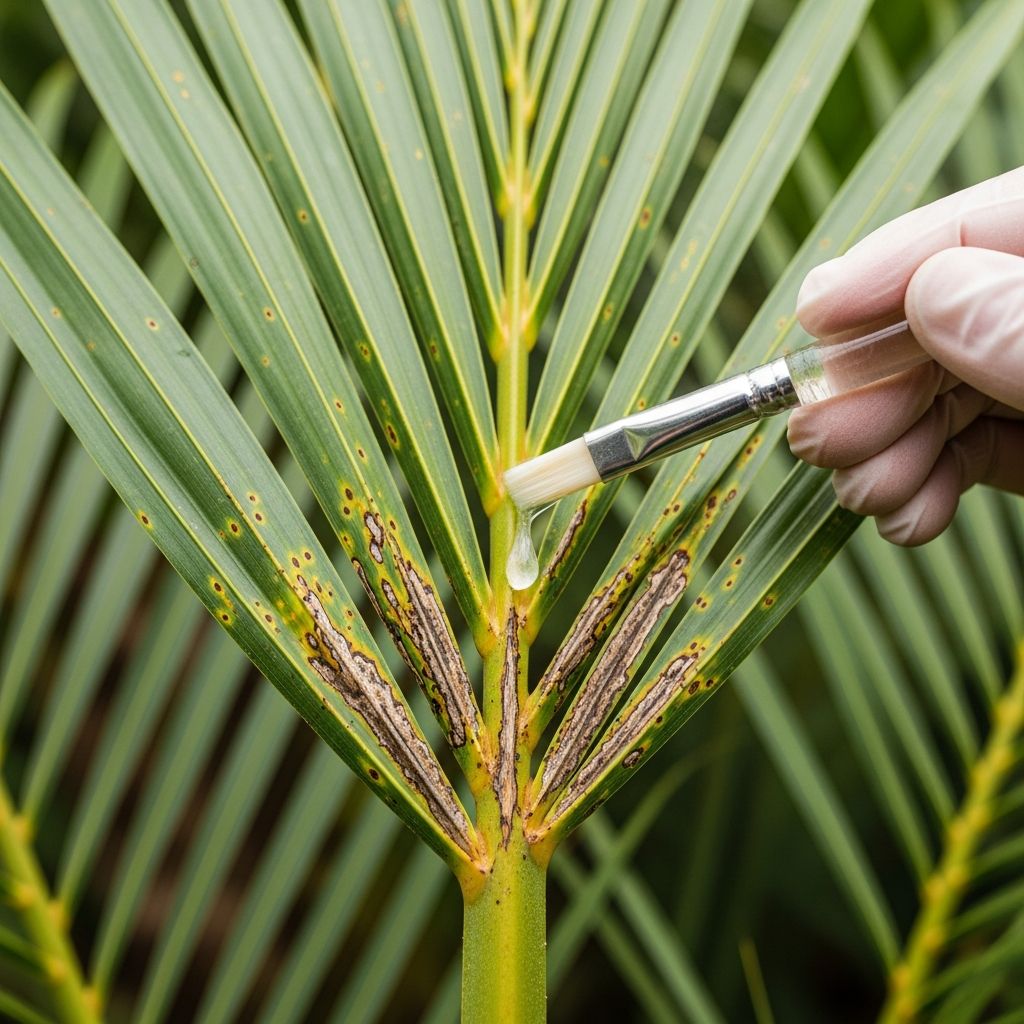
Fungal issues in palms manifest differently depending on the pathogen. Common indicators include white, cottony growths on leaf undersides, often called powdery mildew or white fungus, which blocks sunlight and stunts growth. Leaf spots appear as yellowing halos around dark lesions, progressing to blights that rot petioles and rachises under high humidity. Pink rot shows as salmon-colored spores on fresh cuts, while Ganoderma butt rot causes trunk decay at the base, signaled by a shelf-like conk. Nutritional mimics like manganese deficiency yellow older fronds, but true fungi produce mycelium or spores visible upon close inspection.
- White powdery patches: Starts on frond undersides, spreads if untreated, linked to high moisture.
- Brown leaf spots or streaks: Fusarium or leaf spot fungi, worsened by overhead watering.
- Trunk conks or softening: Ganoderma root and butt rot, irreversible once advanced.
- Wilting or rot at petiole bases: Blight diseases favored by poor air flow.
Inspect palms weekly during wet seasons, using a magnifying glass for spores. Differentiate from pests or nutrient issues via lab tests from local extensions if unsure.
Understanding Why Fungi Target Your Palms
Fungi exploit stressed palms, entering via wounds from pruning, storms, or tools. High humidity, overcrowding, and excessive nitrogen fertilizers create ideal conditions, as spores spread by wind, water splash, or contaminated equipment. Overhead irrigation wets foliage, prolonging dry-down and promoting mildew. Poor soil drainage traps moisture at roots, aiding butt rots like Ganoderma, which persists in soil indefinitely. Young or newly transplanted palms lack resilience, while mature ones suffer from cumulative damage. Climate plays a role: tropical regions see more leaf spots, while cooler, damp areas favor blights.
Step-by-Step Treatment Strategies for Infected Palms
Act swiftly upon detection to contain spread. Begin with sanitation, then apply remedies tailored to the fungus type.
Immediate Sanitation: Remove and Destroy Infected Material
Cut out affected fronds or sections using sterilized, straight-edge pruning saws—avoid chainsaws to prevent wound spread. Bag debris in plastic, dispose far from site, and clean tools by soaking in 1:3 pine oil-water or 1:1 bleach-water for 10 minutes. For small palms, remove entire plants if rot is basal; replace soil for Ganoderma sites. This cultural control reduces inoculum by up to 90% in early stages.
Optimize Watering and Cultural Practices
Switch to base watering with hoses, avoiding foliage wetting—drip systems excel for landscapes. Space palms 10-15 feet apart for air circulation, reducing humidity pockets. Mulch roots lightly to retain soil moisture without excess. Fertilize with balanced 8-2-12 formulas enhanced with micronutrients like manganese sulfate (1 tsp/gallon soil, 2-3x/year) to boost vigor.
| Fungus Type | Primary Action | Fungicide Option | Effectiveness Notes |
|---|---|---|---|
| White Fungus/Powdery Mildew | Prune + organic sprays | Baking soda (1 tbsp/gal + soap) | High if applied weekly |
| Leaf Spot/Blight | Sanitation + copper | Copper fungicides (label rates) | Preventative; not curative |
| Ganoderma Butt Rot | Remove tree | None effective | Soil avoidance key |
| Pink Rot | Wound protection | Temporary fungicides | Supports stressed palms |
Natural and Homemade Fungicide Recipes
For mild cases, eco-friendly sprays control growth without residues. Mix 1 tbsp baking soda + 1 tsp dish soap per gallon water; apply mornings weekly to air-dry. Diluted milk (1:9 with water) leverages proteins against mildew. Neem oil (2 tbsp/gal + soap) disrupts spores; ginger or apple cider vinegar (1:10) offer antimicrobial boosts. Test on small areas first to avoid phytotoxicity. Rotate solutions to prevent resistance.
Commercial Fungicides: When and How to Use
For severe infections, copper-based products like Bonide Liquid Copper or Southern Ag Liquid Copper suppress leaf spots and blights. Apply per label (e.g., 7-14 day intervals spring), using pump sprayers for coverage—large trees may need pros. Food-producing palms restrict to copper only. Fungicides aid but don’t cure; pair with cultural fixes.
Advanced Prevention for Fungus-Free Palms
Proactive care trumps reaction. Plant disease-resistant varieties like Phoenix canariensis over susceptible dates. Maintain soil pH 6.0-7.0 via tests, amending with manganese/iron chelates for deficiencies mimicking fungi. Prune minimally, disinfecting tools between palms. Enhance drainage with raised beds in heavy soils. Monitor via apps or extensions for local outbreaks. Annual micronutrient apps prevent stress. Landscape design matters: avoid shade traps, promote airflow with selective thinning.
Case Studies: Real-World Palm Recovery Successes
In Florida landscapes, sanitation plus copper sprays halted leaf spot epidemics, restoring 80% of treated palms. California IPM programs emphasize tool hygiene, reducing blight incidence by 70%. Homeowners using organic rotations on white fungus saw full recovery in 4-6 weeks. These underscore integrated approaches over single fixes.
Frequently Asked Questions (FAQs)
Can palm trees recover from severe fungal rot?
Basal rots like Ganoderma are fatal; remove promptly. Leaf issues often recover with sanitation and fungicides if addressed early.
Is baking soda safe for all palm types?
Yes for most; dilute properly and test first. Avoid on stressed or young palms.
How often should I apply copper fungicides?
Follow label: typically every 7-14 days during wet periods, as preventative.
Will fungi return if I replant in the same spot?
Ganoderma persists in soil—avoid palms there indefinitely. Solarize soil for others.
Do indoor palms get fungus too?
Yes, from overwatering. Use pebble trays for humidity control without wetting.
Troubleshooting Common Treatment Mistakes
- Overwatering post-treatment: Leads to recurrence; stick to deep, infrequent soaks.
- Skipping tool sterilization: Spreads spores—always disinfect.
- Ignoring nutrition: Deficiencies weaken resistance; test soil annually.
- Single remedy reliance: Integrate methods for best results.
Avoid these for sustained health. Consult arborists for mature specimens.
References
- How To Get Rid And To Cure Fungus On Palm Trees — Tree Lopping Townsville. 2023. https://treeloppingtownsville.com/how-to-get-rid-and-to-cure-fungus-on-palm-trees/
- Palm Diseases in the Landscape – Pest Notes — UC IPM (University of California Agriculture and Natural Resources). 2022-01-07. https://ipm.ucanr.edu/home-and-landscape/palm-diseases-in-the-landscape/pest-notes/
- Palm Diseases & Nutritional Problems — Clemson HGIC (Clemson University Cooperative Extension). 2024. https://hgic.clemson.edu/factsheet/palm-diseases-nutritional-problems/
- Managing Palm Diseases — UF/IFAS Extension Sumter County (University of Florida). 2025-02-07. https://blogs.ifas.ufl.edu/sumterco/2025/02/07/managing-palm-diseases/
Similar Articles




Read full bio of Sneha Tete