Rolling Tool Box Cart Plans: Build Your Perfect Mobile Storage
Complete guide to building a mobile tool cart for organized, efficient workshop storage.
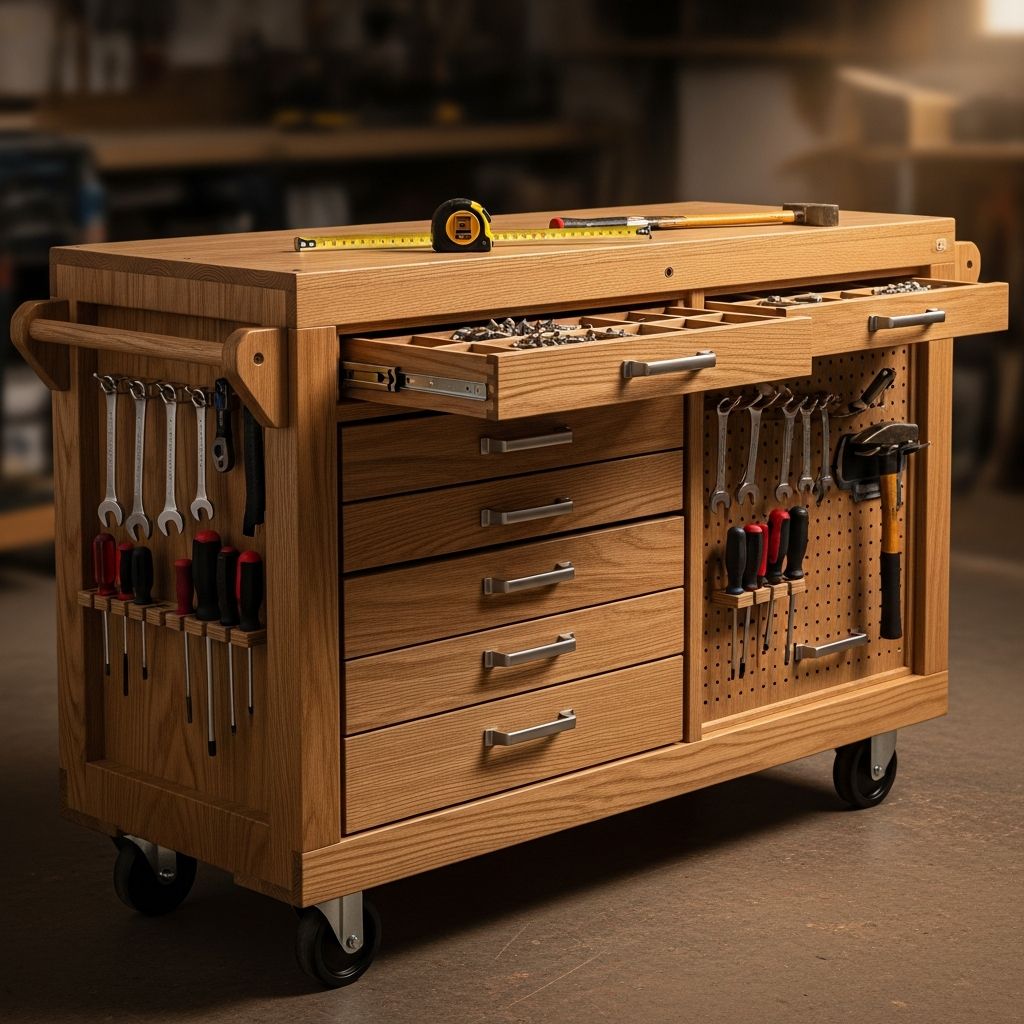
Rolling Tool Box Cart Plans: Build Your Perfect Mobile Storage Solution
A rolling tool box cart is one of the most practical investments you can make for your workshop or garage. Whether you’re a professional woodworker, a DIY enthusiast, or someone who simply needs better organization, a mobile tool storage cart offers mobility, accessibility, and efficient use of space. Instead of hunting through scattered shelves and drawers for the tools you need, a well-designed rolling cart keeps everything within arm’s reach and moves wherever you’re working. This comprehensive guide covers everything you need to know about building your own rolling tool box cart from scratch.
Why Build a Rolling Tool Box Cart?
Before diving into the plans and construction details, it’s worth understanding the practical benefits of a mobile tool cart. A rolling cart addresses several common workshop challenges:
- Saves valuable floor space by consolidating storage into a single mobile unit
- Eliminates time wasted searching for tools scattered across your workspace
- Provides easy transportation of tools between different work areas
- Creates a centralized organization system that improves workflow efficiency
- Maximizes accessibility with open shelving and quick-access storage options
- Allows customization to match your specific tool collection and storage needs
Essential Materials and Tools
Building a rolling tool box cart requires selecting the right materials and having the appropriate tools on hand. The project is manageable for anyone with basic woodworking experience, though some experience with power tools will make the process smoother.
Materials You’ll Need
- Plywood sheets (typically 3/4-inch thick for durability)
- 2×4 lumber for the frame structure
- Wood screws (1.25-inch and 2.5-inch varieties)
- Wood glue and brad nails
- Heavy-duty casters or wheels (usually 3-4 inch diameter)
- Drawer slides or cabinet tracks
- Cabinet handles or knobs for doors and drawers
- Hinges for cabinet doors
- Wood filler and sandpaper
- Paint or wood stain for finishing
Tools Required
- Table saw or track saw for cutting lumber
- Drill-driver for screws and pocket holes
- Pocket hole jig for strong, hidden joinery
- Circular saw or miter saw for crosscutting
- Level for ensuring proper alignment
- Measuring tape and combination square
- Clamps for holding pieces during assembly
- Orbital sander for smooth finishing
- Paint brushes or roller for finishing
Design Considerations and Layout Planning
Before beginning construction, careful planning ensures your cart meets your specific needs. Consider the types of tools you’ll store, how frequently you need to access them, and the available space in your workshop.
Determining Appropriate Dimensions
The size of your rolling cart should balance storage capacity with maneuverability. A typical mobile tool cart measures approximately 24-30 inches wide, 18-24 inches deep, and 36-42 inches tall. These proportions provide substantial storage without being unwieldy to move through doorways or tight spaces. Consider your workshop layout and the space where the cart will primarily operate.
Storage Organization Strategy
Effective organization is crucial for a functional tool cart. Plan which tools require easy daily access and which items you use less frequently. Upper shelves work well for frequently-used hand tools, while lower shelves accommodate heavier power tools or equipment. Drawer storage provides concealment and protection for smaller items, preventing them from getting damaged or lost.
Step-by-Step Construction Process
Building the Frame Structure
Start by constructing the basic frame using 2×4 lumber. Cut the pieces to your predetermined dimensions, creating the top and bottom perimeters of your cart. Use pocket hole joinery for strong, clean connections that won’t show screws on the exterior surfaces. Connect the front, back, and side rails using 2.5-inch wood screws with pocket holes drilled at a 15-degree angle.
Adding Internal Support Structure
Once the perimeter frame is complete, add vertical supports and shelf supports. These internal pieces provide structural integrity and give you places to attach shelves and dividers. Install supports at regular intervals—typically every 12-16 inches—to prevent shelves from sagging under the weight of tools and equipment.
Installing Shelf Systems
Shelves form the backbone of your cart’s storage capacity. Cut shelf boards from 3/4-inch plywood, sizing them to fit snugly within your frame. Support shelves with cleats attached to the side rails or with shelf pins inserted into predrilled holes. Adjustable shelf pin systems offer flexibility to reconfigure storage as your needs change. Ensure shelves are level using a level tool before securing them permanently.
Integrating Drawer Functionality
Drawers add valuable enclosed storage and help organize small items. Build drawer boxes from 3/4-inch plywood with quarter-inch plywood bottoms that slide into grooves cut into the drawer sides and front. Install quality drawer slides—either bottom-mount or side-mount, depending on your design preference—ensuring smooth operation under load. Reinforce drawer joinery with pocket holes for durability.
Installing Cabinet Doors
Enclosed cabinet sections protect tools from dust and damage while creating a finished appearance. Install cabinet doors using quality hinges mounted to the frame. Soft-close hinges prevent door slamming and add a professional touch. Add magnetic catches or ball catches to keep doors securely closed during transport.
Adding Specialized Storage Features
Beyond basic shelves and drawers, specialized storage features maximize your cart’s utility and organization capabilities.
Battery Holder Mounts
Cordless tool batteries deserve dedicated storage that keeps them organized and accessible. Mount battery holders on interior walls or shelf ends to keep batteries visible and prevent them from rolling around. Many commercial battery holders are available and install easily with screws or adhesive backing.
Parts Organizer Integration
Small plastic organizers with compartments hold screws, nails, fasteners, and other hardware. Mount these organizers on interior surfaces, taking advantage of otherwise wasted wall space. This keeps small items visible, prevents them from getting lost, and makes finding specific fasteners quick and easy.
Clamp and Supply Storage
Woodworking clamps take up significant space but are essential for many projects. Create dedicated clamp storage by making simple racks from wood blocks or specialized clamp racks. Store bottles of glue, finish, and other liquids on low shelves where spills won’t damage other tools and equipment.
Handle and Accessibility Features
Add pull and push handles to make moving your cart easier and more comfortable. Install handles at a height that’s natural for your reach, typically around 40-42 inches from the ground. Consider adding handles on both sides if your cart will be moved frequently in different directions.
Selecting and Installing Casters
Quality casters are essential for smooth operation and durability. Choose casters rated for the total weight your cart will carry, typically selecting 3-4 inch diameter casters for workshop carts.
Caster Selection Criteria
Select casters based on several factors. Swivel casters on the front allow easy directional changes, while fixed casters on the back provide stability. Braking casters on at least two wheels prevent the cart from rolling unexpectedly. Hard plastic wheels work well for smooth floors, while rubber wheels grip uneven surfaces better. Capacity ratings should exceed your anticipated load by at least 50 percent for safety and longevity.
Caster Installation Process
Mount casters by attaching mounting blocks to the bottom corners of your cart frame. Use four-inch wooden blocks to provide adequate surface area for mounting hardware. Flip the cart upside down, apply wood glue to the mounting blocks, and secure them with brad nails. Once the glue dries, screw the caster mounting plates to these blocks using the hardware provided with your casters. Ensure all casters are securely fastened and sit at the same height for stable operation.
Finishing and Protection
Proper finishing protects your cart from moisture, dust, and wear while providing an attractive appearance.
Surface Preparation
Sand all exposed wood surfaces with 120-grit sandpaper, followed by 150 or 180-grit for a smoother finish. Fill any gaps or imperfections with wood filler, sanding smooth once dry. Remove all dust with a tack cloth before finishing.
Paint and Stain Options
Paint provides excellent protection and a professional appearance. Use quality workshop-grade paint that resists scratches and cleans easily. Apply a primer first, then two coats of finish paint for durability. Alternatively, stain the wood and apply protective polyurethane for a natural wood appearance. High-gloss or semi-gloss finishes resist stains better than matte finishes in workshop environments.
Customization Ideas for Your Specific Needs
The beauty of building your own rolling tool cart is the ability to customize it for your unique requirements. Different workshops have different needs and tool collections.
For Woodworkers
Woodworkers benefit from racks for clamps, storage for sandpaper, and shelves for wood finishes and adhesives. Create a dedicated section for hand planes and chisels with protective blocks that keep blades sharp and safe.
For Mechanics and Automotive Work
Mechanics need deep drawers with strong slides to support heavy tools, plus oil drain pan storage and parts organizer compartments. Install a power strip with weatherproof outlet covers for running diagnostic equipment.
For General Contractors and Remodelers
Contractors need quick access to frequently-used hand tools, so open shelving with tool holders works well. Add power tool battery charging stations and storage for measuring tools and levels on the side.
Maintenance and Long-Term Care
Regular maintenance keeps your rolling cart functioning smoothly for years of service.
- Lubricate caster wheels and drawer slides quarterly with silicone spray
- Check caster mounting bolts monthly and tighten as needed
- Clean interior shelves regularly to prevent dust accumulation
- Inspect wood for damage or moisture issues annually
- Touch up paint or finish as wear appears in high-traffic areas
- Replace worn caster wheels before they damage your workshop floor
Frequently Asked Questions
Q: What’s the best height for a rolling tool cart?
A: The ideal height depends on your preferences, but 36-42 inches is standard. This puts the top shelf at a comfortable working height for most people while maintaining stability.
Q: How much weight can a typical rolling tool cart support?
A: A well-built cart with quality casters can safely support 300-500 pounds. Always select casters with ratings that exceed your anticipated load.
Q: Can I build this cart without advanced woodworking skills?
A: Yes. This project is manageable for beginners with basic power tools. Pocket hole joinery makes assembly straightforward and creates strong connections without complex techniques.
Q: What type of wood is best for a tool cart?
A: Plywood offers excellent value and durability. For premium results, use birch plywood. For economy, standard construction-grade plywood works well and costs less.
Q: Should I use fixed or swivel casters on all wheels?
A: Use swivel casters on the front wheels for easy steering and fixed casters on the back for stability. Include braking mechanisms on at least two wheels to prevent unwanted rolling.
Q: How do I protect my cart from rust and corrosion?
A: Apply quality finish paint or polyurethane sealer to all wood surfaces. Keep the cart in a reasonably dry environment and address any moisture issues immediately.
References
- DIY Mobile Tool Cart with Storage — 731 Woodworks. October 16, 2022. https://www.731woodworks.com/store/diy-mobile-tool-cart-with-storage
- Grab & Go Tool Storage — Family Handyman Shop. https://shop.familyhandyman.com/products/grab-go-tool-storage
- Workshop Storage Solutions — The Family Handyman. https://www.familyhandyman.com/project/rolling-tool-box-cart-plans/
Similar Articles








Read full bio of medha deb