Complete Guide to Roof Harness Safety
Master roof harness usage and fall protection for safe DIY roofing repairs.
Complete Guide to Roof Harness Safety and Fall Protection
Working on your roof can be one of the most dangerous home maintenance tasks you’ll ever undertake. Whether you’re installing new shingles, repairing flashing, or cleaning gutters, the risk of falling is significant. This is why understanding and properly using a roof harness is essential for any homeowner who plans to work at heights. A roof harness is a critical piece of fall protection equipment that can literally save your life. In this comprehensive guide, we’ll walk you through everything you need to know about roof harnesses, from selection and installation to proper usage and maintenance.
Understanding Roof Harnesses and Fall Protection
A roof harness, also known as a safety harness or fall protection harness, is a wearable system designed to catch and support a worker who loses their footing on a roof. Unlike other types of protective equipment, a harness works actively to prevent injuries by distributing the force of a fall across your body and stopping your descent before you hit the ground or other obstacles.
According to OSHA regulations, workers who are exposed to a potential fall of 6 feet or more must be protected by an appropriate fall protection system. For residential roofing work, this means that roof harnesses aren’t just recommended—they’re often required by law, depending on your local building codes. Understanding these regulations helps ensure you’re working safely and legally.
Key Components of a Roof Harness System
A complete roof harness system consists of several essential components that work together to protect you:
The Harness Itself
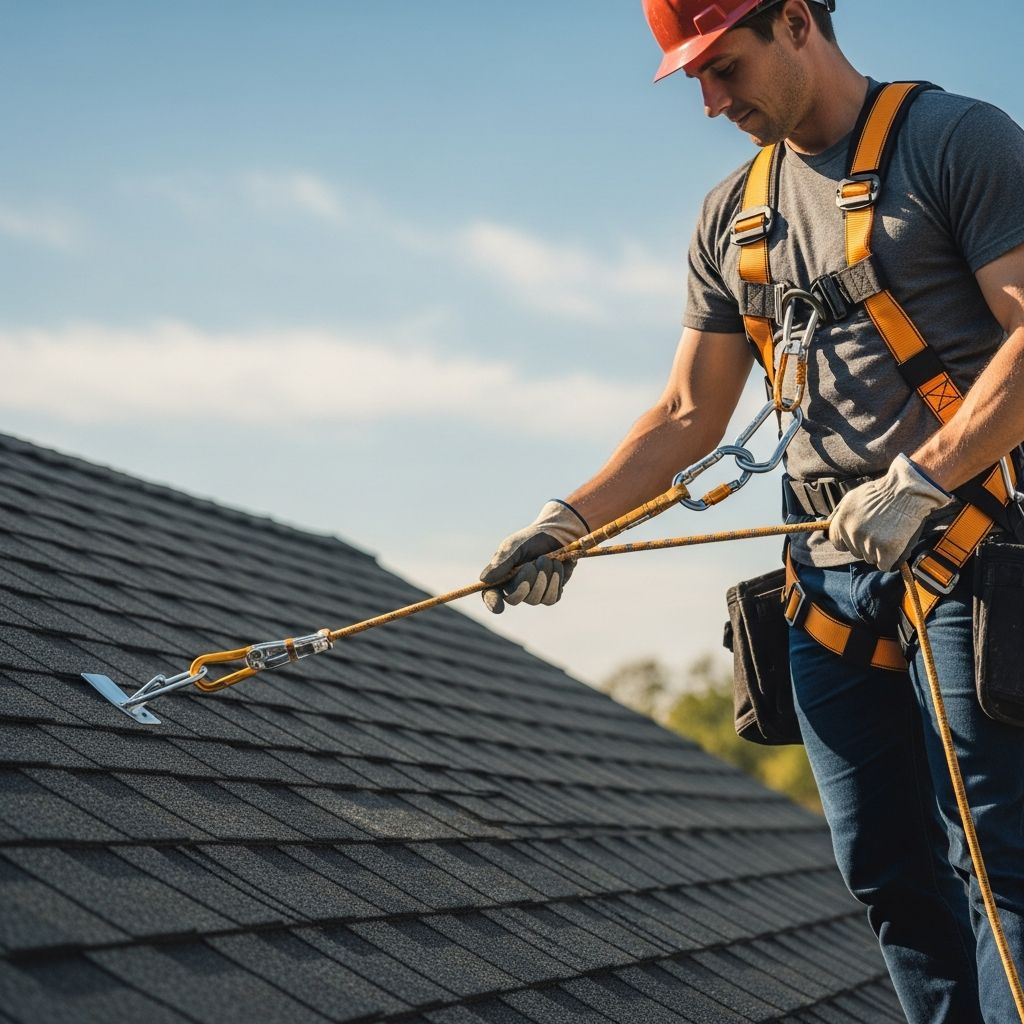
The harness is the wearable component that distributes fall forces across your body. Modern safety harnesses feature shoulder straps, leg loops, and a back attachment point (D-ring) where your lanyard connects. The harness should fit snugly but not too tightly—you want comfort during extended wear without restricting movement or blood circulation. When properly fitted, the harness should have enough give that you can fit one or two fingers between the straps and your body.
The Lanyard
The lanyard is the rope or webbing that connects your harness to an anchor point. Quality lanyards include a shock absorber—typically a stitched section that tears or extends during a fall to reduce the impact force on your body. This shock absorption is critical because it can reduce the force of impact by up to 50%, significantly decreasing the risk of serious injury. Lanyards come in various lengths, typically ranging from 4 to 6 feet, and some include adjustable mechanisms that let you change the working length while remaining tied off.
Anchor Points
The anchor point is where your lanyard attaches to the roof structure. This is perhaps the most critical component because if it fails, the entire system fails. Anchor points must be structurally sound and capable of supporting your weight plus a safety factor. Proper installation of anchor points requires identifying roof rafters and using appropriate fasteners like 16-penny nails or approved roof anchors.
Selecting the Right Roof Harness
Not all harnesses are created equal. When shopping for a roof harness, look for these important features:
Weight Rating and Certification
Ensure your harness has a weight rating that exceeds your body weight. Quality harnesses are certified by testing laboratories and clearly display this certification. Look for ANSI (American National Standards Institute) or OSHA approval markings on the harness.
Material Quality
Harnesses should be made from durable nylon webbing that resists UV damage, moisture, and wear. Check that stitching is tight and even, with no loose threads or damage. The D-rings and attachment points should be made from metal alloys that won’t corrode or degrade over time.
Comfort Features
Padded shoulder and leg straps reduce discomfort during extended use. Good harnesses also feature multiple D-rings for different attachment scenarios and easier movement around obstacles.
Adjustability
Your harness should fit properly for maximum protection and comfort. Look for models with adjustable straps that allow you to customize the fit to your body. Remember that you may be wearing the harness over other clothing during cooler weather, so the ability to adjust is important.
Properly Installing Roof Anchor Points
Installing a proper anchor point is one of the most critical safety steps. Here’s how to do it correctly:
Locate the Roof Rafters
Your anchor point must be attached to the structural roof rafters, not just the sheathing or surface materials. Use a stud finder or locate the center of the roof by finding the visible plywood seams and nail patterns. Roof framing typically occurs every 16 or 24 inches, so once you’ve located one rafter, you know where to find the others.
Install Multiple Fasteners
Never rely on a single fastener for your anchor point. Use at least two substantial fasteners, such as 16-penny nails (3.5 inches long) or approved roof anchors. Install these fasteners at angles to each other rather than directly above or below each other. This angled installation prevents splitting the rafter and ensures that if one fastener fails, the other remains secure.
Verify Structural Integrity
Before trusting your full weight to an anchor point, verify it’s secure. Give it a strong test by pulling hard on the anchor while standing safely on the roof. The anchor should not shift, flex, or show any signs of movement. If it does, reinforced it with additional fasteners before using it.
Document Your Installation
Mark your anchor points clearly so you and anyone else working on the roof knows where they are. Consider marking them with paint or tags so they’re visible for future work.
Proper Harness Fitting and Wearing
Even the best harness won’t protect you if it’s not fitted correctly. Follow these steps:
Step-by-Step Fitting Process
First, put the harness on like you would a backpack, sliding your arms through the shoulder straps. Fasten the chest strap across your chest—this strap should be positioned at approximately mid-chest height. Then secure the leg loops around each thigh, ensuring they’re snug but not cutting off circulation. The leg loops should have about one inch of clearance on each side when fastened.
Checking the Fit
Once fully dressed in the harness, perform a final check. You should be able to fit only one or two fingers between the straps and your body. The D-rings should sit at approximately waist height in the back. The harness should feel secure and shouldn’t shift or ride up when you move around.
Adjustment Before Ascending
Make all adjustments while still on the ground. Once you’re on the roof, you want minimal adjustments to keep you focused on the task and maintaining three points of contact as you move.
Using the Lanyard and Remaining Tied Off
Your lanyard is your lifeline, so knowing how to use it properly is essential:
Attaching the Lanyard
Connect your lanyard to the back D-ring of your harness using the appropriate connector—usually a carabiner or snap hook. Ensure the connection is secure and fully locked. Some lanyards have directional markings (usually marked “UP”) that indicate proper orientation for maximum shock absorption effectiveness.
Adjusting Lanyard Length
Many modern lanyards include mechanisms that allow you to adjust the working length. A lever or sliding mechanism engages teeth on the rope to lock it at a specific length. To adjust, simply lift the lever to disengage the teeth, slide the rope to your desired position, and then release the lever to lock it again. This allows you to move around your work area while remaining safely tied off.
Staying Tied Off
The most important rule is simple: always stay connected to an anchor point. Never untie your lanyard except when you’re moving from one anchor point to another, and then you should attach to the new point before disconnecting from the old one. This practice—called “continuous tie-off”—is the best way to ensure you’re always protected.
Managing Lanyard Slack
Keep your lanyard as short as possible while still allowing you to work effectively. Excess slack increases your fall distance and the forces involved in stopping that fall. A shorter lanyard means a shorter fall and less potential for injury.
Important Safety Practices and Precautions
Beyond the basic use of harnesses and lanyards, several important practices will keep you safer:
Inspect Equipment Before Each Use
Before climbing onto your roof, thoroughly inspect your entire harness system. Look for torn webbing, damaged stitching, bent or corroded metal parts, and any signs of wear. Check that all straps are functional and all connection points are secure. If you find any damage, replace the equipment—it’s not worth the risk.
Use Roof Brackets in Addition to Harnesses
While a harness provides protection if you fall, roof brackets provide a primary barrier to prevent falls from happening in the first place. These brackets create a platform that keeps you from slipping off the roof edge. Using both systems together provides redundant protection—if one fails, the other still protects you.
Work in Good Weather
Wet, icy, or windy conditions dramatically increase your risk of falling. Reschedule your roof work for calm, dry days whenever possible. Even light rain or frost can make surfaces slippery and dangerous.
Never Work Alone
Always have someone else present when you’re working at heights. In the event of an accident, they can call for emergency help immediately. Additionally, they can assist you in getting down safely if something goes wrong.
Use a Rescue Plan
Have a plan for rescue in case of a fall. Know how you’ll be retrieved and who will perform the rescue. Suspension trauma (also called orthostatic shock) can occur if you’re left hanging in a harness for too long, so quick rescue is important. Consider installing a rescue line or knowing exactly where the nearest ladder is positioned for easy access down.
Maintenance and Care of Your Harness System
Proper maintenance extends the life of your equipment and ensures it remains protective:
Storage
Store your harness in a cool, dry place away from direct sunlight. UV exposure degrades the webbing and reduces its strength over time. Avoid storing harnesses in hot attics or sheds where temperature fluctuations can damage materials.
Cleaning
Clean your harness with mild soap and water after use, especially if it’s been exposed to dirt, salt water, or other contaminants. Allow it to air dry completely before storing. Never use harsh chemicals or high-pressure washers, as these can damage the webbing and compromize structural integrity.
Replacement Schedule
Even with proper care, harnesses degrade over time. Most manufacturers recommend replacing harnesses every 5-7 years, regardless of use. If a harness has been involved in a fall (even if no injury occurred), replace it immediately—the structural integrity has been compromised.
Frequently Asked Questions
Q: How often should I replace my roof harness?
A: Most harnesses should be replaced every 5-7 years as part of a regular maintenance schedule. However, if your harness has been involved in a fall, even a minor one, replace it immediately. Additionally, inspect it regularly for signs of wear or damage and replace it sooner if needed.
Q: Can I use a general-purpose harness for roof work?
A: No. Always use a harness specifically designed and rated for roof work and fall protection. General-purpose harnesses may not have the proper certifications, shock absorption features, or structural design needed for roofing applications. Verify that your harness is ANSI-certified for fall protection.
Q: What should I do if I fall while wearing a harness?
A: Stay calm and try to remain as still as possible. Signal for help immediately. Have your rescuer call emergency services (911) while they prepare to help you down. Don’t try to climb back up or remove yourself from the harness, as this could cause additional injury. Wait for professional rescue assistance.
Q: Is it necessary to use roof brackets if I’m wearing a harness?
A: Yes. Roof brackets and harnesses work together as a comprehensive fall protection system. Brackets prevent falls from occurring, while harnesses catch you if you do fall. Using both provides the best protection and is recommended by safety professionals and often required by building codes.
Q: How do I know if my anchor point is strong enough?
A: Your anchor point must be attached to roof rafters (not just sheathing) using multiple substantial fasteners installed at angles to each other. Before trusting it with your full weight, perform a strong pull test while standing safely. The anchor should not shift, flex, or show any movement. When in doubt, add additional fasteners for reinforcement.
Q: Can I use the same lanyard for multiple anchor points?
A: Yes, you can move your lanyard between different anchor points, but never disconnect from one before connecting to the other. Use the continuous tie-off method—attach to the new anchor point while still connected to the old one, then disconnect from the old point. This ensures you’re always protected.
References
- Walking and Working Surfaces, Subpart R – Fall Protection — United States Department of Labor, Occupational Safety and Health Administration. 2023. https://www.osha.gov/laws-regs/regulations/1910/subpart-r
- How to Use a Roof Safety Harness | Fall Protection — Integrity Roofing and Painting. 2017. https://www.youtube.com/watch?v=i79gobGrMjY
Similar Articles







Read full bio of medha deb