Router Techniques for Precision Foam Insulation Cuts
Master using a wood router to achieve clean, accurate cuts on foam board insulation for superior energy efficiency in your home projects.
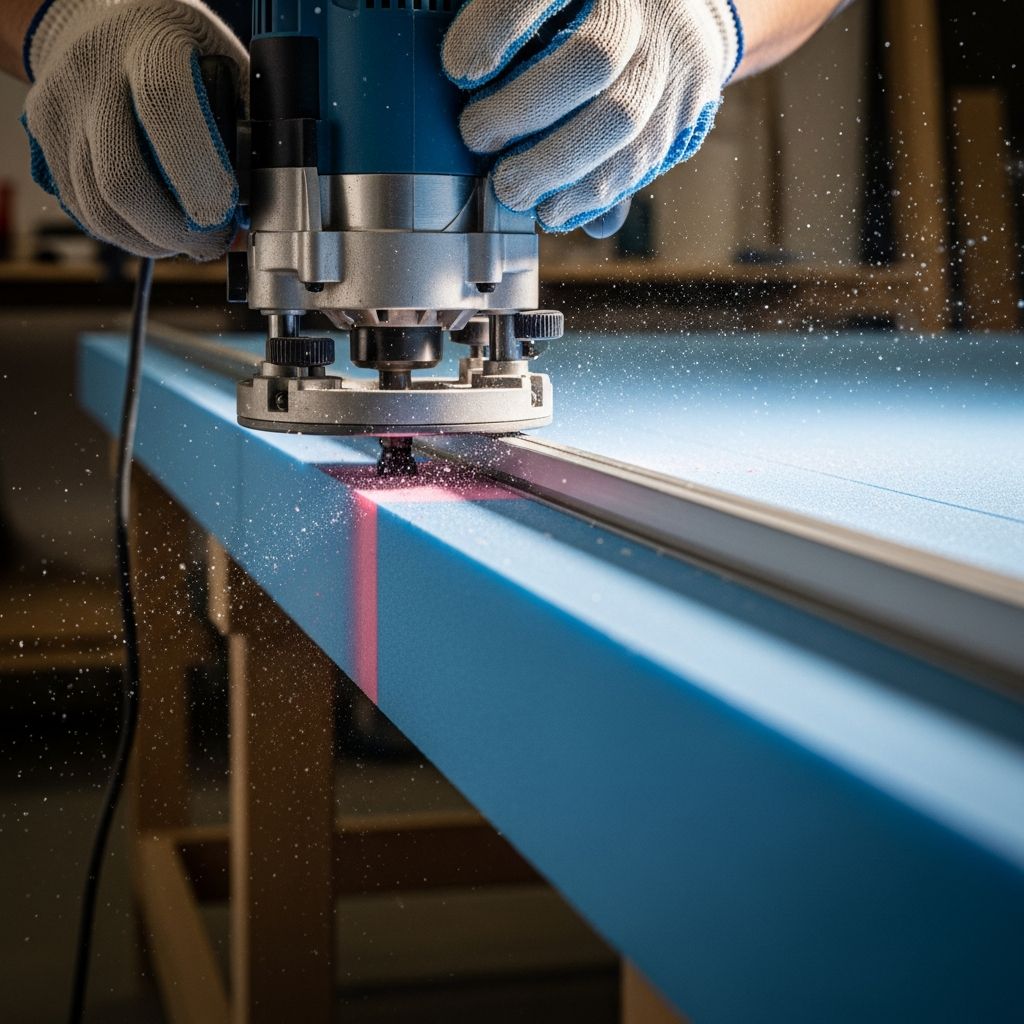
Rigid foam insulation boards offer exceptional thermal resistance, helping homeowners reduce energy costs by minimizing heat loss. Using a wood router adapted for foam cutting delivers straight, professional edges that fit seamlessly into framing, outperforming manual methods like knives for larger projects.
Why Choose a Router for Foam Board Cutting
Foam insulation, typically made from polystyrene or polyisocyanurate, comes in thicknesses from 0.5 to 6 inches and provides high R-values for walls, roofs, and foundations. Routers excel here because they produce smooth, dust-free cuts compared to saws, which create messy particles, or knives, which struggle with straight lines on thick boards.
Energy savings are significant: foam boards can save over 200 times the energy used in their production, per U.S. Department of Energy data, making precise cuts essential to avoid gaps that undermine performance.
Essential Tools and Materials
To cut foam with a router, gather these items:
- Plunge or fixed-base wood router with variable speed control (1,000-20,000 RPM range ideal for foam).
- Straight flush-trim bit or spoilboard surfacing bit (1/4-inch shank, 1-2 flute for clean passes).
- Sacrificial support board (plywood or MDF) to protect the workpiece and router base.
- Straight edge guide or router jig for straight cuts.
- Measuring tape, T-square, and marker for layout.
- Safety gear: dust mask, safety glasses, gloves, and ear protection.
- Clamps to secure materials.
Router bits designed for foam prevent melting; high-speed steel or carbide with polished flutes reduce friction.
Preparing Your Workspace Safely
Work in a well-ventilated area outdoors or with dust extraction, as foam cutting generates fine particles. Secure the foam board to a stable surface using clamps, placing a sacrificial layer underneath to catch the bit and prevent damage.
| Safety Risk | Prevention Measure |
|---|---|
| Dust inhalation | Use N95 mask and vacuum attachment. |
| Kickback or slippage | Double-clamp foam; use non-slip mat. |
| Bit binding | Select correct RPM; make shallow passes. |
| Eye injury | Wear ANSI-approved goggles. |
Always unplug the router when changing bits and inspect for damage.
Step-by-Step Router Setup for Foam
- Measure and Mark: Assess the installation space—e.g., stud bays or roof rafters. Transfer dimensions to the foam using a T-square for 90-degree accuracy. Mark lightly to avoid indentations.
- Install the Bit: Choose a 1/4-inch straight bit for straight cuts or a V-bit for grooves. Set depth to 1/8-inch initial passes for thick foam.
- Adjust Speed: Start at 16,000-18,000 RPM to avoid melting; lower for denser foams like XPS.
- Attach Guide: Clamp a straight edge parallel to the cut line, offset by bit diameter plus base clearance.
- Test Cut: Practice on scrap foam to verify edge quality.
Executing Clean Straight Cuts
For long straight runs, align the router base against the guide and plunge slowly. Feed at a consistent 10-20 inches per minute to prevent burning. Multiple shallow passes (1/4 board thickness each) ensure control on 2-inch+ boards.
Pro tip: For interlocking panels, cut 1/16-inch undersize to allow spray foam expansion, creating an airtight seal without compression.
Advanced Techniques for Custom Shapes
Curved or Notched Cuts: Freehand with a template or use a circle-cutting jig. For pipe insulation or rafter baffles, employ a ball-nose bit for rounded profiles.
Pocket Cutting: Ideal for recessed areas; use an upcut spiral bit to evacuate chips efficiently.
CNC Integration: For repetitive jobs, program a CNC router like the Infinite model with oscillating knives for full-depth profiles or router bits for details.
Table of Bit Types vs. Applications:
| Bit Type | Best For | Speed Setting |
|---|---|---|
| Straight Flute | Straight edges, dados | 18,000 RPM |
| Flush-Trim | Template following | 16,000 RPM |
| Ball Nose | Curves, 3D contours | 20,000 RPM |
| Oscillating Knife (CNC) | Thick slabs | N/A |
Troubleshooting Common Issues
- Melting Edges: Reduce RPM or increase feed rate; use compression bits.
- Chipping: Dull bit—sharpen or replace; cut from both sides on thin stock.
- Wavy Lines: Tighten baseplate; use edge guide.
- Dust Buildup: Connect shop vac; work in open air.
Test fits immediately and bevel edges slightly for friction fit in irregular framing.
Finishing and Installation Best Practices
Sand rough spots with 120-grit paper. Seal joints with foam adhesive or spray foam for R-value continuity. In timber frames, leave 1-inch gaps filled with expanding foam to accommodate wood shrinkage.
For exterior sheathing, ensure cuts align with stud centers to avoid thermal bridging.
Benefits Over Traditional Methods
Compared to utility knives (slow on thick foam) or table saws (dusty, hazardous), routers offer speed and precision. Videos show table saws cutting 4×8 sheets in minutes, but routers handle custom fits better without setup time.
Frequently Asked Questions (FAQs)
Can any wood router cut foam insulation?
Yes, most plunge routers work, but variable speed prevents overheating. Avoid fixed small trimmers for large boards.
Is a dust mask enough protection?
No—combine with goggles and ventilation; foam dust irritates lungs and eyes.
How thick can I cut with a router?
Up to 6 inches via multiple passes; for thicker, use CNC with knives.
Does routing foam void warranties?
No, as long as cuts don’t compromise structural integrity; focus on insulation performance.
What’s the cost savings of precise cuts?
Tight fits reduce air leaks by 20-30%, lowering heating bills.
Scaling Up: CNC Routers for Pros
Handheld routers suit DIY, but CNC models automate high-volume cuts for contractors. They handle varied thicknesses with tool changers, boosting efficiency for retrofits or new builds.
In summary, mastering router techniques elevates foam insulation installs from amateur to professional, ensuring energy-efficient homes with minimal waste.
References
- Maximize Foam Cutting for Insulation with the Infinite Router — AXYZ. 2023. https://www.axyz.com/maximize-foam-cutting-for-insulation-with-the-infinite-router/
- Best Foam Board Insulation Method I Have Found In The Timber Frame — YouTube (Tradesman Off Grid). 2023-10-01. https://www.youtube.com/watch?v=5msCjbvkpFU
- 5 Tips For Cutting Foam On Your CNC Router — YouTube (CNC with ME). 2023. https://www.youtube.com/watch?v=FpRjvJEcQ9c
- How To Cut Rigid Foam Insulation Like A Pro — Ernest Maier. 2024-01-15. https://ernestmaier.com/how-to-cut-rigid-foam-insulation-like-a-pro/
- Using Sacrificial Foam Board To Break Down Sheet Goods — A Concord Carpenter. 2022. https://www.aconcordcarpenter.com/using-sacrificial-foam-board-to-break-down-sheet-goods.html
Similar Articles







Read full bio of Sneha Tete