Crafting Safe Hummingbird Nectar at Home
Master the art of homemade hummingbird nectar with expert tips to attract and nourish these vibrant birds safely.
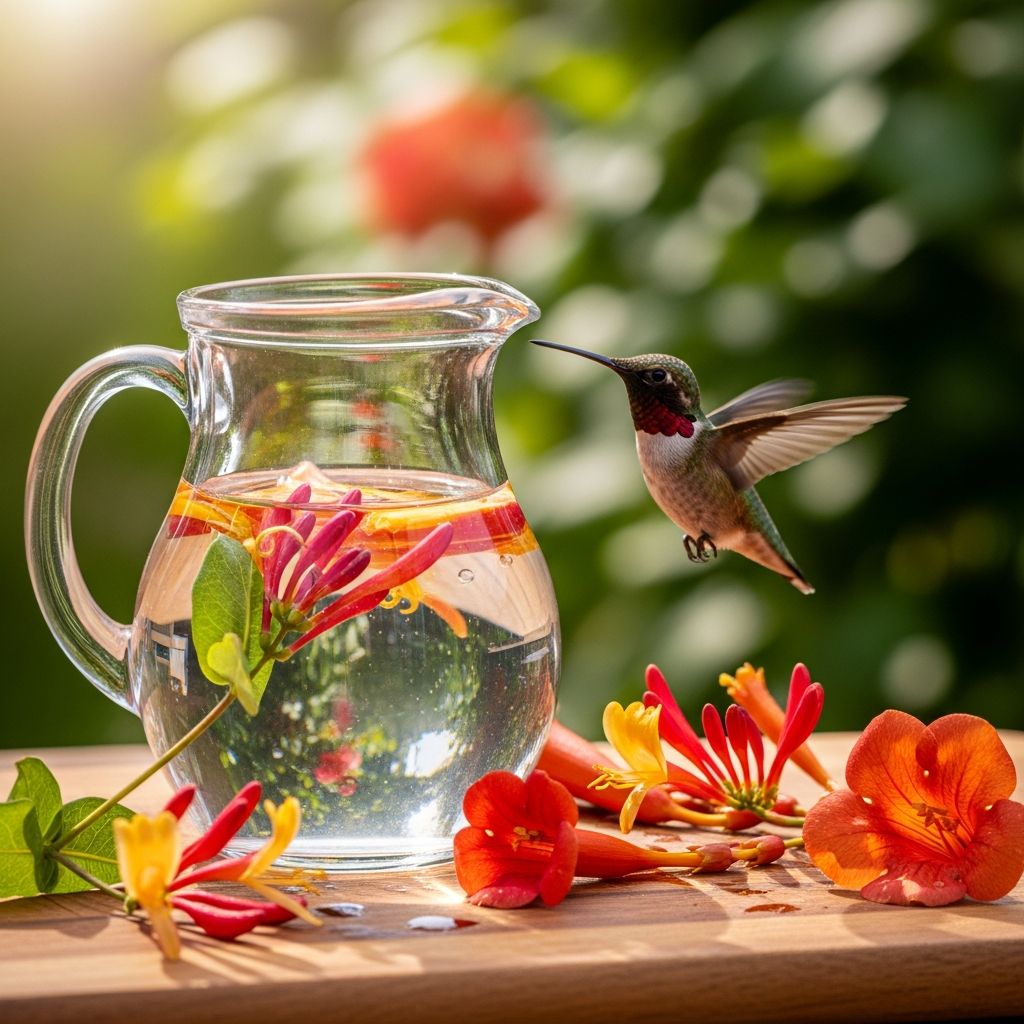
Providing nourishment for hummingbirds through homemade nectar transforms any yard into a bustling haven for these remarkable creatures. With their iridescent feathers and lightning-fast wings, hummingbirds captivate observers while relying on precise nutrition to fuel their extraordinary metabolism. This guide empowers you to prepare nectar that closely replicates natural sources, ensuring the health of these tiny dynamos.
Why Choose Homemade Over Store-Bought Nectar?
Homemade nectar offers unmatched control over ingredients, delivering pure sucrose that mirrors flower nectar without harmful additives. Commercial options sometimes include preservatives or dyes that can stress these sensitive birds. By mixing your own, you guarantee freshness and the ideal nutrient profile, boosting energy for flight and daily activities.
Hummingbirds consume up to half their body weight daily in nectar, supplemented by insects for protein. A well-crafted solution supports this high-energy demand, promoting vibrant health and frequent visits to your feeder.
Essential Ingredients for Perfect Nectar
The foundation of safe nectar is simplicity: refined white sugar and clean water. Refined white sugar, or table sugar, provides pure sucrose, the primary sugar in floral nectar that hummingbirds efficiently metabolize.
- Refined white sugar: Avoid brown sugar, honey, or artificial sweeteners, as they introduce molasses, fermentation risks, or indigestible compounds.
- Water: Use tap, filtered, or boiled water; no need for boiling unless dissolving large batches quickly.
Steer clear of red food coloring, which serves no nutritional purpose and may harm liver function. Hummingbirds locate feeders via shape and natural cues, not dye.
Step-by-Step Recipe for Hummingbird Nectar
Follow this reliable method to produce batches that attract and sustain hummingbirds year-round.
- Measure precisely: Use a 1:4 ratio—1 part sugar to 4 parts water. For example, 1 cup sugar with 4 cups water yields about 5 cups nectar.
- Combine and dissolve: Place water in a saucepan, add sugar, and warm over medium heat. Stir until fully dissolved; do not boil vigorously to prevent harmful crystals.
- Cool completely: Allow the mixture to reach room temperature before filling feeders, preventing heat damage to birds.
- Store extras: Refrigerate surplus in a covered container for up to 7 days. Discard if cloudy or moldy.
| Batch Size | Sugar | Water | Total Nectar |
|---|---|---|---|
| Small | ¼ cup | 1 cup | 1¼ cups |
| Medium | 1 cup | 4 cups | 5 cups |
| Large | 2 cups | 8 cups | 10 cups |
This ratio delivers optimal energy without excess sweetness that ferments quickly.
Seasonal Adjustments for Optimal Nutrition
Tailor nectar strength to environmental demands. In hot summer months, stick to 1:4 for hydration. During cooler fall or pre-migration periods, a slightly stronger 1:3 ratio provides extra calories for endurance flights.
Monitor local weather: Hummingbirds expend more energy in cold snaps, so denser nectar supports thermoregulation without risking dehydration.
Selecting and Preparing the Ideal Feeder
A suitable feeder enhances safety and appeal. Opt for dishes or saucers over narrow bottles to minimize spillage and ant intrusion. Red accents on feeders draw birds naturally.
- Capacity: 1-2 cups for small yards; larger for high traffic.
- Materials: Glass or sturdy plastic resists mold better than thin plastics.
- Ports: 5-10 feeding stations accommodate multiple birds.
Before first use, wash with hot water and vinegar (1:10 ratio), rinse thoroughly, and dry. Avoid soaps, as residues deter feeding.
Daily Maintenance to Prevent Health Risks
Freshness is paramount—fermented or moldy nectar causes fatal infections. In warm weather (above 80°F), refresh every 2 days; cooler conditions allow 3-4 days.
- Empty entirely.
- Scrub with bottle brush and vinegar solution.
- Rinse multiple times with hot water.
- Refill with new nectar; air dry if possible.
Hang feeders in partial shade to slow fermentation. Position 10-15 feet from windows to prevent collisions and near shelter for predator evasion.
Common Mistakes and How to Avoid Them
Even seasoned enthusiasts err. Here’s how to sidestep pitfalls:
| Mistake | Why Harmful | Solution |
|---|---|---|
| Using honey or brown sugar | Ferments rapidly, causes infections | Stick to white granulated sugar |
| Adding red dye | Toxic to liver and kidneys | Omit entirely |
| Boiling too long | Warm only until dissolved | |
| Infrequent cleaning | Mold growth leads to disease | Change every 2-4 days |
| Wrong ratio | Too weak: malnutrition; too strong: dehydration | Maintain 1:4 baseline |
These prevent issues like avian candidiasis from spoiled feed.
Enhancing Your Yard for Hummingbird Haven
Nectar alone isn’t enough—create a full ecosystem. Plant nectar-rich blooms:
- Tubular reds: Salvia, bee balm, trumpet vine.
- Native perennials: Columbine, cardinal flower.
- Vines: Honeysuckle for cover.
Install shallow baths with pebbles for drinking and mist sprayers for bathing. Minimize pesticides to protect insect prey, vital for protein.
Understanding Hummingbird Dietary Needs
While nectar fuels 50-70% of calories, insects supply proteins, fats, vitamins. Females feed bugs to nestlings. Feeders supplement, not replace, natural foraging.
Key nutrients from nectar: Sucrose for quick energy; trace minerals from water. Avoid over-reliance by diversifying yard plants.
Frequently Asked Questions
Can I use tap water for nectar?
Yes, tap water is fine unless heavily chlorinated; let it sit overnight or use filtered for purity.
Is boiling necessary?
No, but warming aids dissolving. Avoid prolonged boiling.
What if nectar turns cloudy?
Discard immediately—it’s fermenting. Make fresh batch.
Do I need red dye?
Absolutely not; it’s harmful and unnecessary.
How long does refrigerated nectar last?
Up to one week; inspect for mold before use.
Can I freeze nectar?
Yes, in ice cube trays for small portions; thaw fully before use.
When to strengthen the mixture?
In cold weather or migration seasons for extra energy.
Attracting hummingbirds rewards with dazzling displays. Consistent, safe nectar keeps them thriving, fostering a vital backyard connection.
References
- The Benefits of Homemade Hummingbird Food — Vocal Media Petlife. 2023. https://vocal.media/petlife/the-benefits-of-homemade-hummingbird-food
- Hummingbird Food / Nectar — Perky-Pet. 2024-01-15. https://www.perkypet.com/advice/hummingbirds-101/hummingbird-nectar
- The Benefits of Pop’s Nectars: Nectar Nature’s Way — Pop’s Birding. 2023. https://www.popsbirding.com/blogs/blog/nectarade-faq
- Hummingbird Nectar Recipe — Smithsonian National Zoo. 2024-06-12. https://nationalzoo.si.edu/migratory-birds/hummingbird-nectar-recipe
- Hummingbird Feeding FAQs — National Audubon Society. 2023-05-20. https://www.audubon.org/magazine/hummingbird-feeding-faqs
Similar Articles





Read full bio of medha deb