Safe, Quiet, and Affirming: A Fresh Guide to DIY Home Repairs
Practical fixes, calmer spaces, and inclusive wisdom for every DIYer
Home should feel like a refuge: safe to move around, quiet enough to rest, and reflective of who you are. This guide walks through practical, beginner-friendly home repair strategies that emphasize safety, calmer sound levels, and a sense of pride in the place you live.
Rethinking Home Repair: Comfort Over Perfection
Many people avoid DIY because they worry about doing it “wrong,” but most everyday repairs are less about perfection and more about improving comfort and function. Instead of chasing flawless finishes, the goal is to make your space safer, quieter, and easier to live in. An imperfect patch that stops a draft or a basic repair that reduces noise is still a win.
Approaching projects with a comfort-first mindset also helps reduce the pressure to know everything before you start. You can grow your skills over time, celebrating each small fix as a meaningful upgrade to your daily life.
Safety First: Non-Negotiable Habits for Every DIYer
Before touching any tool or fastener, commit to a small set of safety habits you will follow every single time. These habits protect your body, your home, and your confidence as you learn to repair more complex issues.
- Wear basic protective gear. Keep safety glasses, work gloves, a dust mask, and closed-toe shoes in one easy-to-grab spot so you never “forget” them.
- Cut power and water when needed. Flip the breaker before working on outlets or light fixtures, and shut off water valves before touching plumbing connections.
- Use the right ladder, the right way. Choose a ladder or step stool rated for your weight, fully open it on stable flooring, and avoid leaning far to one side.
- Read labels and manuals. Even simple items like caulk, patch compound, or adhesive have specific instructions that affect both performance and safety.
Protecting your future self is part of good DIY. A project done safely is more empowering than a flashy result achieved through shortcuts.
Building Your Confidence Kit: Tools That Work Hard for Beginners
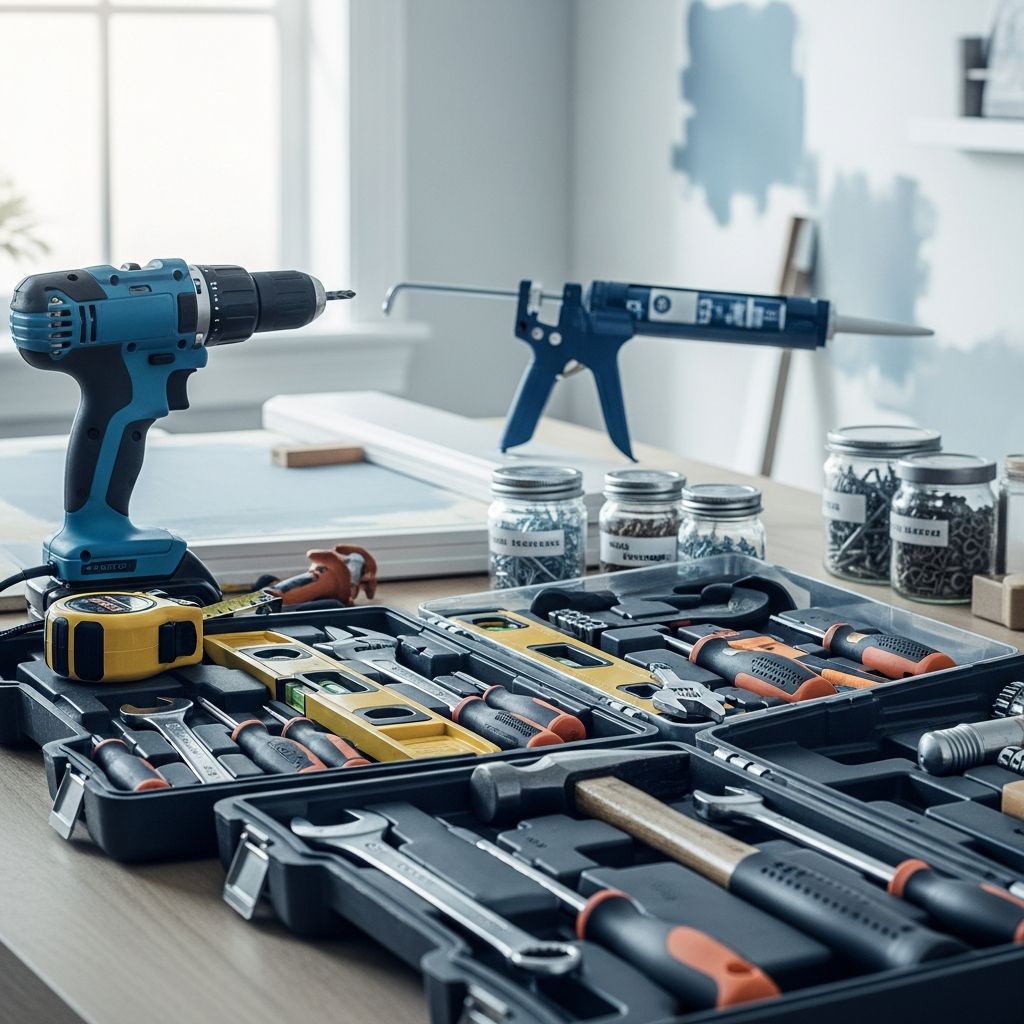
You do not need an entire workshop to start fixing your home. A small, thoughtfully chosen tool kit can handle most basic repairs and upgrades, giving you more control without overwhelming you with specialized gadgets.
Core Hand Tools Worth Owning
- Adjustable wrench and a small set of pliers for basic plumbing and hardware.
- Multi-bit screwdriver with both flat-head and Phillips options.
- Utility knife with replaceable blades for opening packages, trimming caulk, and scoring materials.
- Tape measure and small level for accurate measurements and straight lines.
- Hammer and a starter pack of nails and screws for minor framing and hanging tasks.
Gentle Power Tools for the Next Step
Once you feel comfortable, one or two power tools can greatly expand what you can do without making your home feel like a construction zone.
- Cordless drill/driver: Saves time assembling furniture, hanging shelves, or pre-drilling holes in walls.
- Battery-powered oscillating tool: Offers precise cutting, scraping, and sanding in tight spaces without the aggression of larger saws.
If storage or budget are concerns, choose compact, multi-use tools over large, single-purpose items. The best tool set is the one you actually feel comfortable using and can keep accessible.
Quieting Your Space: Everyday Sound Dampening Ideas
Sound is a major part of how a home feels. Hard surfaces and gaps can make every footstep or conversation echo, while simple adjustments can transform a noisy space into a calmer one. You do not need to rebuild walls to make a meaningful difference.
Softening Surfaces and Reducing Echo
- Add thick rugs or layered rug pads in high-traffic areas to absorb footsteps and reduce downstairs noise.
- Hang fabric curtains, especially heavy or layered ones, to soften sound reflections around windows and large bare walls.
- Introduce upholstered furniture, cushions, and fabric wall hangings to break up echo in sparsely furnished rooms.
Blocking Noise Leaks Around Openings
- Use stick-on weatherstripping around door frames to close small gaps that leak both noise and drafts.
- Install a door sweep at the bottom of noisy-room doors to reduce sound and light spilling into hallways and bedrooms.
- Seal cracks around window frames with paintable caulk, focusing on visible gaps and areas where you feel air movement.
These quiet upgrades are especially helpful if you share walls with neighbors or roommates, work from home, or simply crave a more peaceful bedroom or reading nook.
Simple Repairs That Transform Daily Life
Some repairs seem too small to matter until you finally fix them and realize how much stress they were causing. Start with issues you notice every day: sticky doors, loose handles, flickering lights, or constantly running toilets.
| Problem | Likely Cause | Beginner-Friendly Fix |
|---|---|---|
| Door that squeaks loudly | Dry or dirty hinges | Apply a small amount of household lubricant to hinge pins; open and close the door repeatedly to distribute. |
| Cabinet handle pulling loose | Stripped screw holes or missing screws | Tighten the existing screws or replace with slightly longer ones; for badly stripped holes, fill with wood filler and re-drill pilot holes. |
| Dripping faucet | Worn washer or cartridge | Turn off water, disassemble the handle, and replace the worn internal parts using a repair kit matched to your faucet style. |
| Light that flickers when bumped | Loose bulb or connection at the fixture | Cut power, tighten bulb and fixture screws; if flicker persists, consider replacing the fixture or calling an electrician. |
| Drafty gap under exterior door | Door not meeting threshold fully | Install an adjustable door sweep or replace worn weatherstripping to restore a snug seal. |
Each small victory builds your confidence. As you complete these minor tasks, you naturally gain the skills to handle larger projects in the future.
Planning Projects with Limited Energy, Time, or Mobility
Not everyone approaches DIY with the same amount of physical strength, mental bandwidth, or free time. Planning projects with your actual capacity in mind is not a limitation; it is smart strategy. A realistic plan keeps you safe and makes finishing projects far more likely.
- Break tasks into half-hour steps. Instead of “soundproof the bedroom,” plan “measure door,” “install weatherstripping,” and “hang curtain panel” as separate sessions.
- Work at a comfortable height. Bring items down from high places when possible instead of repeatedly climbing ladders, and use kneeling pads or stools for floor-level work.
- Schedule rest as part of the job. Decide in advance when you will stop for food, hydration, or a stretch, especially if you are prone to fatigue or pain.
- Ask for help with heavy or overhead tasks. Being the project lead does not require lifting every object alone.
Honoring your limits makes DIY more sustainable. The goal is to complete the project and feel good afterward, not to prove how much you can suffer through.
Making Your Space Affirming and Personal
A home repair project is also a chance to claim your home as a reflection of who you are. This may mean choosing colors that feel affirming, organizing your tools in a way that works with your body, or customizing spaces to support your daily routines.
- Use paint, hardware, and textiles that make you feel seen and comfortable rather than defaulting to “neutral” because it feels safer.
- Design storage that respects your needs, such as low hooks, labeled bins, or a visible tool wall that keeps everything within reach.
- Create small zones—a reading corner, a craft table, a meditation area—that are deliberately arranged to support how you actually live.
- Celebrate nontraditional approaches; if a repair method is safe, functional, and works for you, it is valid even if it does not match glossy magazine examples.
When your home’s layout and details match your identity and routines, repairs become more than chores. They become small acts of self-respect and care.
When to Call a Professional Without Guilt
Doing it yourself does not mean doing absolutely everything alone. Some tasks are better handled by licensed professionals because of safety, building codes, or the potential for expensive damage. Recognizing those boundaries is a sign of wisdom, not weakness.
- Major electrical work: Adding new circuits, upgrading panels, or addressing repeated breaker trips usually belongs to an electrician.
- Structural changes: Moving load-bearing walls, altering foundations, or cutting large openings requires engineering-level planning.
- Hidden water leaks: If you see significant staining, mold, or recurring dampness, a plumber or remediation specialist can help prevent long-term harm.
- Roof damage: Extensive shingle loss or sagging roof areas carry high fall risk and potential for serious interior damage.
Even when you hire help for the big issues, your DIY skills still matter. You remain the expert on how your home feels and functions every day, and you can often handle finishing touches, maintenance, and smaller follow-up projects yourself.
Frequently Asked Questions
How do I start DIY if I have zero experience?
Begin with tiny, low-risk tasks like tightening loose screws, changing a showerhead, or sealing a drafty window. Focus on just one or two new skills at a time, repeat them in different rooms, and let your comfort level grow naturally.
What if I make a mistake and ruin something?
Mistakes are part of the learning curve, and most homeowner-level errors can be patched, repainted, or reassembled. Work slowly, watch or read multiple how-tos before starting, and remember that even professionals learned through trial and error.
Can I make my apartment quieter without breaking the lease?
Many sound-dampening strategies are renter-friendly, such as thick rugs, removable door sweeps, tension-rod curtains, and peel-and-stick draft seals. Always choose reversible methods and check your lease or ask your landlord if you are unsure about a specific product.
How do I manage DIY projects if I live with chronic pain or limited mobility?
Prioritize tools with ergonomic handles, lightweight designs, and battery power so you are not fighting cords or heavy equipment. Break jobs into small segments, involve friends or family for heavy lifting, and focus on changes that reduce daily strain, such as adding grab bars or rearranging storage to reachable heights.
Is DIY really worth it compared to just hiring someone?
DIY can save money and offer a deeper sense of ownership over your space, especially for small repairs and upgrades. Even if you still hire professionals for complex tasks, having basic skills gives you more control over your home and helps you communicate clearly with contractors.
Practical Next Steps for Your Own Safe and Sound Home
Choose one small repair and one small sound-dampening upgrade as your starting point, such as fixing a squeaky door and adding a draft stopper. Gather only the tools and supplies you need for those tasks, set aside an unrushed block of time, and follow the safety habits outlined above.
As you complete these first changes, notice how your home feels: a bit quieter, a bit more reliable, and a bit more yours. Each project you finish adds another layer of safety, comfort, and affirmation to the place you call home.
Similar Articles








Read full bio of medha deb