Rodent Waste Removal: 7-Step Safe Cleanup Guide
Expert steps to safely eliminate rat droppings, protect health from diseases like hantavirus, and prevent future infestations.
Safe Rodent Waste Removal Guide
Rodent infestations pose serious health risks due to pathogens in droppings, urine, and nests, including hantavirus which can cause severe respiratory illness. Proper cleanup prevents airborne particle exposure and further contamination.
Health Dangers from Rodent Contamination
Rat and mouse waste carries viruses like hantavirus, transmitted through inhaling dust from dried droppings or urine. Bacteria and parasites also thrive in nesting materials, leading to leptospirosis or salmonellosis. Vulnerable groups include children, elderly, and those with weakened immune systems. Early detection of droppings—small, dark, rice-sized for mice or larger capsule-shaped for rats—signals urgent action.
- Hantavirus Pulmonary Syndrome (HPS): Life-threatening lung inflammation from aerosolized particles.
- Leptospirosis: Bacterial infection from urine contact, causing fever and organ damage.
- Allergens: Urine proteins trigger asthma and allergies.
Disturbing dry waste without precautions releases these hazards into the air, emphasizing preparation before any handling.
Essential Protective Equipment
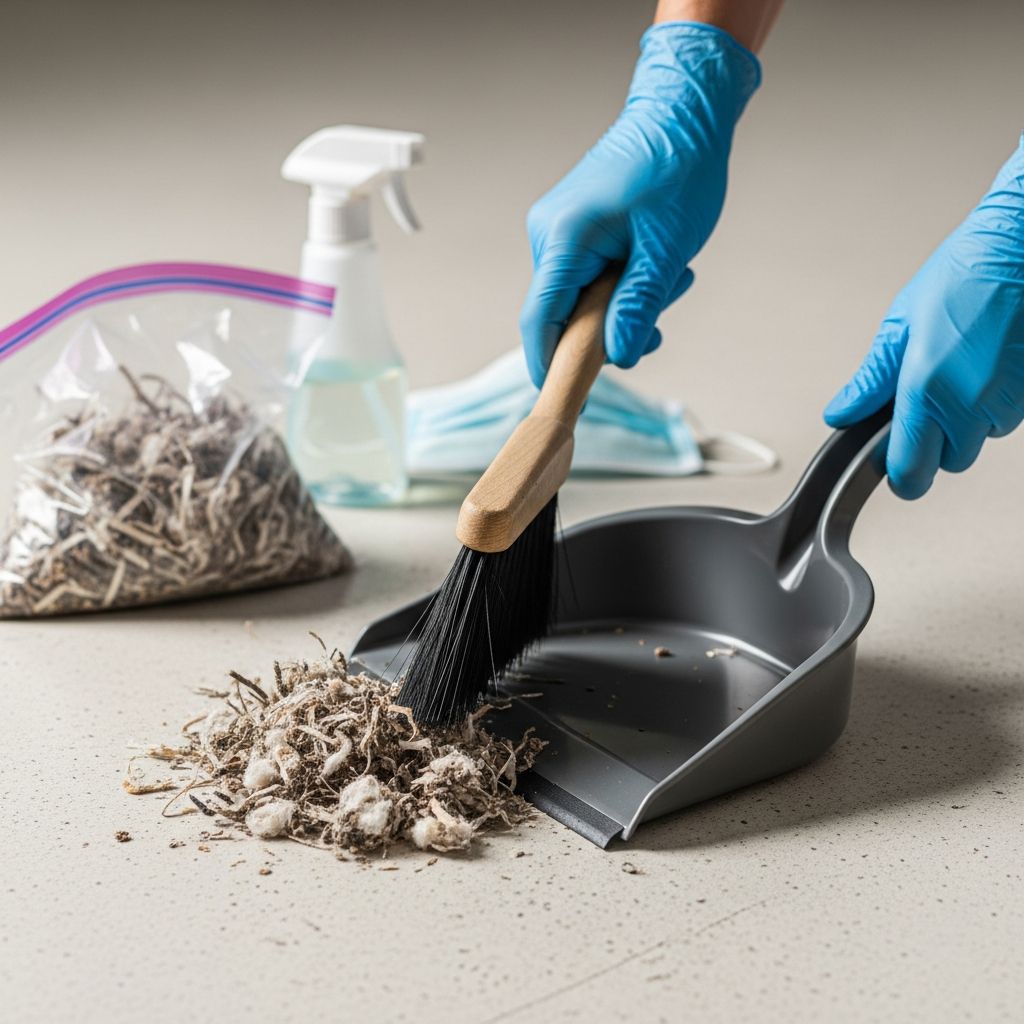
Gearing up minimizes direct contact and inhalation risks. Use N95 or higher-rated respirators to filter 95% of airborne particles. Rubber, latex, or nitrile gloves prevent skin exposure to pathogens. Safety goggles shield eyes from splashes. Long-sleeved clothing and pants tucked into boots or socks add barriers.
| Item | Purpose | Notes |
|---|---|---|
| N95 Respirator | Blocks airborne viruses | Fit-test for seal; replace after use |
| Gloves (Nitrile preferred) | Skin protection | Disposable; double-layer if heavy cleanup |
| Goggles | Eye safety | Full coverage; anti-fog type |
| Disposable Coveralls | Body coverage | Optional for extensive areas |
Stock heavy-duty trash bags for waste containment and disposable wipes or paper towels to avoid cross-contamination.
Preparing the Cleanup Area
Ventilation dilutes airborne contaminants. Open windows and doors for at least 30 minutes, using fans to create cross-breezes if safe. Avoid fans directly on dry waste to prevent stirring particles. Confine cleaning to one room at a time, sealing off others with towels under doors. For attics or crawlspaces, use battery-powered lights to minimize extension cord hazards.
Prepare disinfectant: Mix 1 part bleach with 9-10 parts water for a 10% solution effective against hantavirus. Commercial EPA-registered disinfectants work if labeled for rodent waste. Let solutions soak 5-10 minutes for pathogen kill time.
Core Cleanup Procedures
Spray droppings, nests, and urine generously with disinfectant. Saturate to prevent dust; wait 5-10 minutes. Use paper towels or disposable cloths to pick up waste gently—no sweeping or vacuuming dry materials.
- Don all PPE.
- Spray waste thoroughly.
- Soak 5-10 minutes.
- Pick up with towels; place in bag.
- Double-bag and seal.
- Wipe area again with fresh disinfectant.
- Dispose bags in outdoor covered trash.
For dead rodents, follow the same spray-and-soak method before bagging. Wash gloves post-use, remove carefully inside-out, and scrub hands 20 seconds.
Surface-Specific Cleaning Techniques
Different materials require tailored approaches to ensure thorough decontamination without damage.
Hard Surfaces (Floors, Countertops)
Wipe soaked waste with paper towels into bags. Mop with fresh bleach solution, allowing dwell time before rinsing if needed. Use enzyme cleaners for urine odors on non-porous spots.
Carpets and Upholstery
Pick droppings with damp towels or sticky pads. Steam clean with hot water extraction or carpet-safe disinfectant. Dry completely with fans to avoid mold; HEPA-vacuum afterward. Multiple treatments may be required for urine penetration.
Fabrics and Clothing
Remove waste carefully; bag and discard towels. Launder in hot water with detergent and disinfectant additive. Test colors first; air-dry in sun for extra sanitizing. Discard heavily soiled porous items.
Attics and Insulation
Wear full PPE; spray nests extensively. Remove contaminated insulation in sealed bags for disposal. HEPA-vacuum remaining debris if equipped. Professional help recommended for large areas.
| Surface Type | Method | Drying Tips |
|---|---|---|
| Hard Floors | Bleach mop; rinse | Air dry fully |
| Carpets | Steam extract; HEPA vac | Fans 24+ hours |
| Fabrics | Hot wash; disinfect | Sun dry |
| Insulation | Remove/bag; vac | Replace if soiled |
Post-Cleanup Disinfection and Maintenance
Reapply disinfectant to all touched surfaces. Wash all potentially exposed laundry in hot cycles. HEPA-filter vacuums only post-disinfection and drying. Monitor for new droppings over weeks, indicating ongoing infestation.
Store cleaning tools separately; disinfect reusables thoroughly. Empty trash promptly to curbside.
Preventing Future Rodent Issues
Seal cracks over 1/4-inch with steel wool and caulk. Trim vegetation from home exteriors. Store food in airtight metal/glass containers; elevate off floors. Eliminate water sources like leaks. Use traps or baits judiciously, consulting pros for persistent problems. Regular inspections catch issues early.
- Entry seals: Doors, vents, pipes.
- Food control: No pet food out overnight.
- Declutter: Remove nests.
- Pro pest control: For heavy infestations.
Frequently Asked Questions
Can I vacuum rat droppings?
No, vacuuming dry droppings aerosolizes pathogens. Disinfect first, then use HEPA vacuums only after soaking and on dry cleaned areas.
How long does hantavirus survive in droppings?
Hantavirus remains viable in dried droppings for days to weeks, emphasizing wet disinfection.
Is bleach safe for all surfaces?
Use diluted (1:10); test fabrics/carpets first. EPA disinfectants are alternatives.
When to call professionals?
For large infestations, attics, or health vulnerabilities, hire certified services.
How to handle rodent urine smell?
Enzyme cleaners break down uric acid; ventilate and repeat applications.
This guide ensures safe, effective rodent waste removal, protecting occupants from serious illnesses. Always prioritize ventilation, PPE, and disinfection.
References
- How to Clean Up After Rat or Mouse Infestation — Orkin. Accessed 2026. https://www.orkin.com/pests/rodents/mouse-control/how-to-clean-areas-contaminated-by-mice-infestation
- Best Way to Clean Rat Poop Safely and Effectively — TACT North Atlanta. 2025-07-15. https://tactnorthatlanta.com/biohazard-and-crime-scene-cleanup-solutions/best-way-to-clean-rat-poop-safely-and-effectively-1752429771375.html
- The Ultimate Guide to Safe Rodent Dropping and Urine Cleanup — Modern Pest Services. Accessed 2026. https://www.modernpest.com/blog/the-ultimate-guide-to-safe-rodent-dropping-and-urine-cleanup-protecting-your-health/
- 5 Important Tips for Staying Safe When Cleaning Areas with Rodents — Public Health Insider. 2018-03-19. http://publichealthinsider.com/2018/03/19/5-important-tips-for-staying-safe-when-cleaning-areas-with-rodents/
- Hantavirus – Overview — OSHA. Accessed 2026. http://www.osha.gov/hantavirus
Similar Articles



Read full bio of Sneha Tete