Relight Your Furnace Pilot Safely: 8-Step Guide
Master the step-by-step process to safely reignite your vintage furnace pilot light and restore warmth to your home this season.
Relight Your Old Furnace Pilot Safely
Older gas furnaces rely on a continuous pilot light to ignite the main burners and provide essential heating during cold months. When this small flame extinguishes, it can leave your home chilly, but relighting it is a manageable task for many homeowners if done with caution. This guide offers a complete roadmap, emphasizing safety protocols derived from established HVAC practices to help you restore function without risks.
Understanding the Role of Pilot Lights in Vintage Furnaces
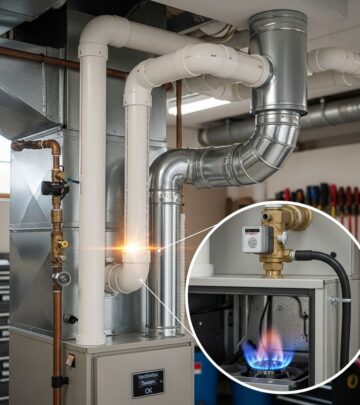
In traditional standing pilot systems found in furnaces from decades past, the pilot light serves as a perpetual ignition source. It burns a tiny stream of natural gas or propane, producing a steady blue flame that heats a thermocouple—a safety sensor that signals the gas valve to remain open. Without this flame, the thermocouple cools, shutting off gas flow to prevent leaks, which halts the entire heating process.
These systems contrast with modern electronic ignition models, which are more energy-efficient but absent in many pre-1990s units. A healthy pilot flame not only ensures reliable startups but also indicates proper combustion; deviations like weak or discolored flames signal potential hazards such as carbon monoxide buildup.
Critical Safety Measures Before Starting
Prioritizing safety prevents accidents like gas explosions or burns. Begin by shutting off power to the furnace at the circuit breaker to eliminate electrical risks. Next, locate the main gas shutoff valve—typically nearby—and turn it to the off position, allowing 3-5 minutes for residual gas to disperse.
- Smell for gas: A rotten egg odor means evacuate immediately, avoid switches or flames, and call your gas utility from outside.
- Ventilate: Open windows and doors to clear potential fumes.
- Gather tools: Use a flashlight, long-reach lighter or barbecue matches, and gloves; never short matches.
- Read labels: Access panels feature lighting diagrams and warnings—follow them precisely.
Install or test carbon monoxide detectors nearby, as incomplete combustion from faulty pilots poses poisoning risks. Local codes often mandate these devices.
Finding and Accessing Your Furnace Pilot
Consult your owner’s manual for the exact spot, but pilots usually sit at the furnace base behind a removable door. Look for labeled panels with caution stickers. Remove screws or clips carefully, propping the door aside without straining wires.
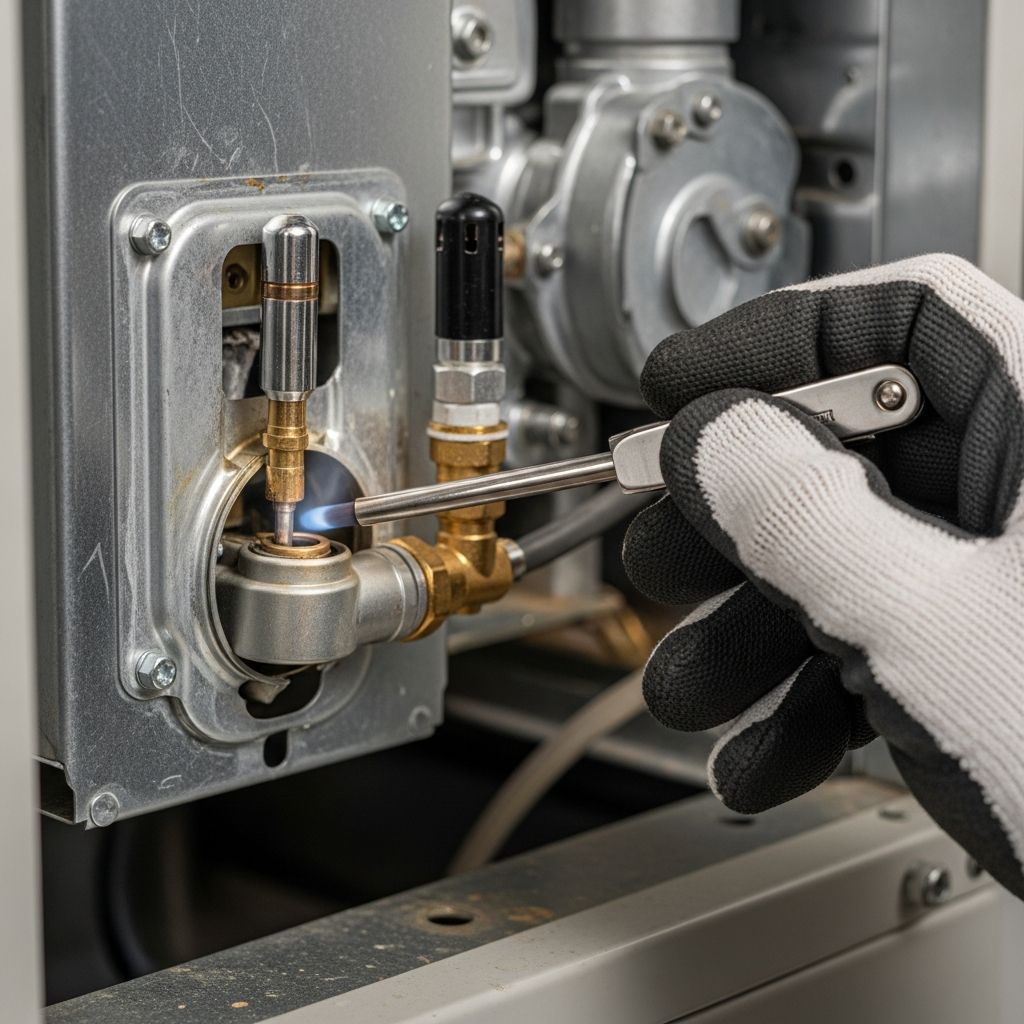
Inside, identify the pilot assembly: a small tube ending in an orifice where gas emerges, flanked by the thermocouple (a copper tube) and possibly a thermopile for millivoltage power. The gas control knob—often marked OFF, PILOT, ON—sits adjacent. Note the pilot’s position relative to main burners for later verification.
Precise Steps to Reignite the Pilot Light
Follow these sequenced actions methodically for success:
- Set to OFF: Turn the gas knob to OFF and wait 5 minutes minimum.
- Pilot position: Rotate to PILOT; some models require pressing inward.
- Depress and hold: Push the knob or reset button down firmly—this opens gas to the pilot.
- Light it: Insert long lighter into the orifice while holding the button; ignite and aim flame at the pilot hood until a blue fire appears.
- Warm the thermocouple: Hold for 30-60 seconds to heat the sensor fully.
- Release gradually: Ease off the button; if the flame holds steady (blue with minimal yellow tip), proceed.
- Switch to ON: Turn knob to ON, replace panels, restore power and gas.
- Test operation: Raise thermostat; main burners should ignite with blue flames.
| Step | Common Pitfall | Solution |
|---|---|---|
| Depress button | Not holding long enough | Extend to 60 seconds for thermocouple warmup |
| Ignition | Flame won’t catch | Ensure lighter reaches orifice; retry after full OFF cycle |
| Release test | Flame extinguishes | Repeat, holding longer; check for drafts |
Interpreting Pilot Flame Appearance
A proper flame is compact, steady, and primarily blue, enveloping the thermocouple tip. Issues include:
- Yellow/lazy: Indicates dirt, poor airflow, or venting problems—increases CO risk; shut down and service.
- Flickering/weak: Drafts, low pressure, or thermocouple failure.
- Sooty: Overrich gas mix; clean or call pro.
Observe post-relight: if abnormal, do not run the furnace.
Diagnosing Why Your Pilot Keeps Failing
Frequent outages point to underlying problems.
Thermocouple Malfunction
This sensor generates voltage from heat; if corroded or bent, it fails to signal the valve. Symptoms: pilot lights but dies on release. Test with a multimeter (20-30 millivolts expected) or replace affordably.
Drafts and Ventilation Issues
Air currents from cracks or chimneys snuff the flame. Seal gaps and ensure proper venting.
Gas Supply Problems
Low pressure starves the flame; verify regulator and lines.
Dirty Components
Accumulated dust clogs orifices; gentle brushing restores function.
Preventive Maintenance for Longevity
Annual checks extend pilot reliability. Vacuum around the assembly, inspect tubing for cracks, and confirm blue flames quarterly. Replace thermocouples every 5 years. Schedule pro tune-ups to clean burners and heat exchangers, mitigating CO dangers.
Efficiency note: Standing pilots waste 1-2% of gas annually; consider hot surface ignition upgrades for savings.
When Professional Help Is Essential
Relight only if confident and no gas smells. Call HVAC experts for persistent outages, yellow flames, unfamiliar models, or CO alarms. Certified techs diagnose exchanger cracks or valve issues safely. Costs average $100-300 for service calls.
Frequently Asked Questions
Is relighting a furnace pilot safe for DIY?
Yes, for most, if precautions are followed and no gas is detected—always prioritize manufacturer labels.
What if the pilot won’t stay lit after relighting?
Hold the button longer or inspect the thermocouple; repeated failures warrant a technician.
Can a bad pilot cause carbon monoxide?
Absolutely—yellow flames signal incomplete burn; detectors and venting are vital.
How often should I check my pilot light?
Monthly during heating season, plus annual pro inspection.
What’s the difference between pilot and electronic ignition?
Pilot is constant flame; electronic sparks on demand, saving energy.
References
- Everything to Know About Safely Relighting a Furnace Pilot Light — Buckeye Heat. 2023-10-15. https://buckeyeheat.com/knowledge-center/everything-you-need-to-know-about-safely-relighting-a-pilot-light/
- Understanding Pilot Lights: A Guide to Functionality and Safety — Ken’s Comfort Zone AC. 2023-06-01. https://kenscomfortzoneac.net/2023/06/understanding-pilot-lights-a-guide-to-functionality-and-safety/
- Furnace Pilot Light Guide — Central Washington Heating. 2024-11-20. https://centralwashingtonheating.com/blog/furnace-pilot-light-guide
- How to Relight the Pilot Light on Your Gas Furnace — Budget Heating. 2023-01-12. https://www.budgetheating.com/how-to-relight-the-pilot-light-on-your-gas-furnac/
- 12 Common Furnace Pilot Light Problems and Solutions — Season Control HVAC. 2024-05-10. https://seasoncontrolhvac.com/blog/furnace-pilot-problems-and-fixses/
Similar Articles


Read full bio of medha deb