Screen Door Rescue: A Complete Guide to Repairing and Refreshing Your Window and Door Screens
Breathe new life into sagging, torn, or outdated screens with simple, budget-friendly fixes.
Screen Door Rescue: How to Fix, Refresh, and Upgrade Your Window and Door Screens
Window and door screens quietly work hard in the background—keeping bugs out, letting fresh air in, and softening harsh sunlight. Eventually, though, they sag, tear, fade, or warp, turning from invisible helpers into eyesores that drag down your home’s appearance. The good news: most common screen problems are simple to repair with basic tools and a bit of patience.
This guide walks through how to inspect, repair, and fully replace damaged screens, plus how to upgrade to modern mesh materials that improve airflow, durability, and curb appeal.
Why Your Screens Matter More Than You Think
Because screens are thin and flexible, it’s easy to ignore them until there’s a glaring rip or a corner pops loose. But worn-out screens can quietly create several problems around the house.
- They invite insects and pests in through tears and loose edges.
- They reduce curb appeal and can make windows and doors look neglected.
- They may block too much light or airflow if the mesh is old, dirty, or poorly sized.
- They can rattle, flap, or whistle in the wind if not properly tensioned.
Common Signs Your Screens Need Attention
Before picking up tools, walk around your home and give each window and door screen a quick check. Look from both inside and outside whenever possible.
- Tears and holes: Even a small gap invites mosquitoes and flies inside.
- Sagging mesh: A belly or ripple in the center signals stretched or improperly installed screen.
- Loose spline or edges: Mesh pulling away from the frame often means the spline has shrunk, hardened, or was never seated correctly.
- Bent or warped frames: A twisted frame won’t sit flat in the window track or door opening.
- Discoloration and grime: Faded or clogged mesh reduces visibility and airflow and makes the whole window look dirty.
Basic Screen Anatomy: Know What You’re Working With
Understanding the key components makes every repair easier and ensures you buy the right replacement parts.
| Part | What It Is | Why It Matters |
|---|---|---|
| Frame | Rigid metal or vinyl structure that holds the mesh | Must be square and intact so the screen fits correctly in the window or door. |
| Mesh | Fabric that keeps insects out while allowing air and light through | Different materials and weave densities influence strength, visibility, and airflow. |
| Spline | Rubber or vinyl cord pressed into a groove | Holds the mesh in place; correct size is crucial for a tight, secure fit. |
| Corner pieces | Connect frame sections at right angles | Keep the frame square; damaged corners lead to warped screens. |
| Clips and pulls | Tabs, springs, or handles that help secure or remove the screen | Make it easier to install, remove, and clean screens. |
Choose the Right Replacement Mesh
If a screen is badly damaged or the mesh is dated and dingy, replacement is often better than patching. Different mesh types excel in different conditions.
| Mesh Type | Best For | Advantages | Considerations |
|---|---|---|---|
| Fiberglass | Most standard windows and doors | Affordable, flexible, easy to install, resists dents and creases. | Less durable than metal; can stretch slightly over time. |
| Aluminum | Areas prone to pets or light impact | Stronger than fiberglass, holds its shape well. | Can dent or crease; edges may be sharper during installation. |
| Pet-resistant mesh | Doors and low windows near pets or kids | Heavier, tear-resistant material withstands claws and rough use. | Reduced visibility and airflow; slightly higher cost. |
| Solar or privacy mesh | Sun-facing rooms or privacy-sensitive areas | Cuts glare, reduces heat, and can limit outside visibility in daylight. | Can dim the room; not ideal where maximum light is desired. |
| Ultra-fine or “invisible” mesh | Rooms with scenic views or small insects | Great visibility and fine weave that blocks tiny bugs. | Usually more delicate and more expensive. |
Tools and Supplies You’ll Need
Most screen repairs use inexpensive tools you can reuse for multiple windows and doors. Gather your supplies in one place before starting.
- Utility knife with sharp blades
- Screen spline roller (double-ended if possible)
- Flathead screwdriver or pick to remove old spline
- Measuring tape and straightedge
- Replacement spline (matching the original size or as recommended for your frame)
- Replacement mesh of your chosen type
- Optional: corner braces, replacement frame pieces, and screen repair patches
- Wide, flat work surface: a table, workbench, or clean floor area
Step-by-Step: Full Screen Replacement
Replacing the mesh on an existing frame is often easier than trying to disguise a large tear. Follow these steps for a crisp, tight, professional-looking result.
1. Remove the Screen Frame
First, carefully lift the screen out of the window or door opening. Some frames use spring clips, some use tabs, and some slide along channels. Avoid twisting the frame as you remove it; a bent frame will never sit quite right again.
2. Take Out the Old Spline and Mesh
Lay the frame flat on your work surface. Use a flathead screwdriver or pick to catch the end of the spline in a corner, then gently pull it out along the entire groove. Once the spline is removed, the mesh will lift away easily.
3. Inspect and Square the Frame
Before rolling in new mesh, check that the frame is still square and intact. If it’s bowed or racked, gently press or tap it back into shape. Replace cracked corners or bent frame sections if needed; there’s no point installing new mesh on a twisted frame.
4. Cut the New Mesh Oversized
Unroll the new mesh over the frame so it extends at least 2–3 inches beyond the outer edges on all sides. This extra material makes tensioning easier and gives you room to trim cleanly at the end.
5. Anchor the First Side
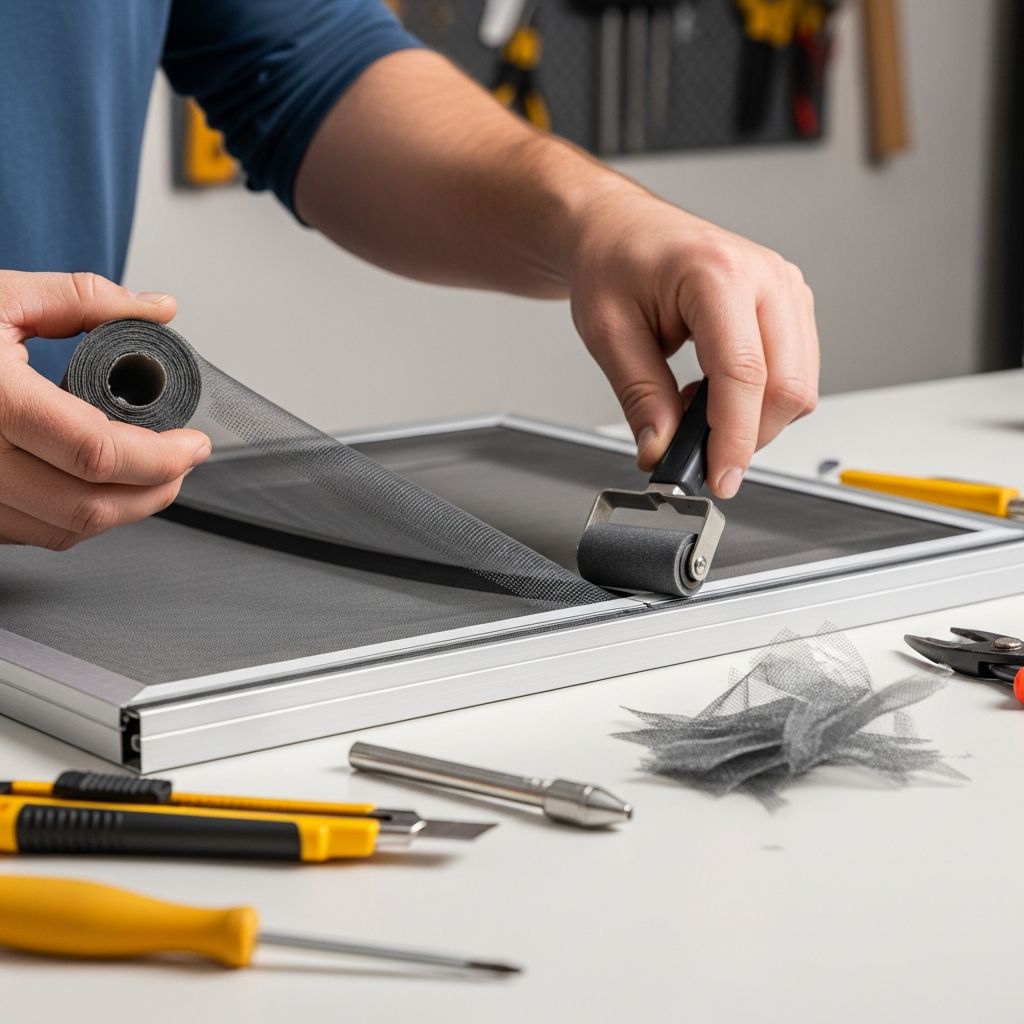
Starting with one long edge, lightly press the mesh into the spline groove with your fingers, keeping it straight. Place the spline on top of the mesh in the groove, then use the concave end of the roller tool to press the spline firmly into place from corner to corner.
6. Tension and Roll the Opposite Side
Move to the opposite long side, gently pulling the mesh taut as you roll in the spline. Aim for even tension, not brute force—too much pressure can warp the frame or cause the mesh to bow. The mesh should look smooth but not drum-tight.
7. Secure the Remaining Sides
Repeat the process for the two remaining edges, working from the center out toward each corner. Tug gently on the mesh as you go to remove wrinkles. If a ripple appears, lift a short section of spline back out and re-roll with slightly more or less tension in that area.
8. Trim Excess Mesh
Once all sides are secure and the mesh looks even, use a sharp utility knife to trim away the excess mesh right along the outside of the spline groove. Keep the blade angled slightly toward the outside of the frame so you avoid cutting into the new mesh.
9. Reinstall and Test the Screen
Return the frame to the window or door opening. Ensure it seats fully into its track or stops and that any clips or tabs engage correctly. Close the window or door to verify the screen doesn’t bind or rub.
Quick Fixes for Small Screen Problems
Not every issue calls for a full rescreen. For minor wear and tear, targeted repairs are faster and use fewer materials.
- Tiny holes or cigarette burns: Cover with a small adhesive screen patch or dab of clear household glue to seal the gap.
- Loose corner: If the mesh has pulled out slightly, gently lift the spline in that corner, reposition the mesh, and re-roll the spline into place.
- Slight sagging: On fiberglass screens, carefully re-tension one side by lifting a length of spline, pulling the mesh, and re-seating the spline.
- Rattling screen door: Tighten hinge screws, adjust closer tension, and ensure the frame is not twisted before blaming the mesh itself.
When to Replace the Entire Frame
Sometimes the easiest and most durable solution is to start over with a new frame kit or have a new screen fabricated. This is often true when the damage extends beyond the mesh.
- The frame is badly bent, kinked, or corroded.
- Multiple corners are cracked or loose.
- The frame no longer fits the opening due to structural changes or settling.
- You want to upgrade to a different frame color, thicker material, or a sliding screen system.
Design Upgrades: Turning Screens Into a Feature
While screens are mainly functional, they can also enhance the look and comfort of your home. Treat them as part of your design instead of something to hide.
- Choose frame colors that coordinate with window trim or exterior accents.
- Use “invisible” or ultra-fine mesh on windows with great views.
- Consider solar mesh on very bright exposures to cut glare and heat.
- Upgrade high-traffic doors to pet-resistant mesh and sturdier frames.
Maintenance Tips to Keep Screens Looking New
Regular light maintenance extends the life of your screens and keeps them from becoming the weak link in your home’s exterior. Build screen care into your seasonal routines so issues never get out of hand.
- Gently vacuum or brush screens at least once or twice a year to remove dust and pollen.
- For deeper cleaning, remove the screen and rinse with a hose and mild soap, then air-dry before reinstalling.
- Inspect spline and corners during cleaning; replace stiff or brittle spline before the mesh pulls free.
- Keep furniture, grills, and toys a safe distance away to prevent accidental punctures.
Safety and Comfort Considerations
Screen projects are generally low risk, but a few precautions make the work safer and more comfortable.
- Always remove screens from upper-story windows onto a stable indoor surface instead of leaning out.
- Wear gloves when working with metal mesh or cut frame pieces to avoid sharp edges.
- Use eye protection if you’re cutting metal or drilling new frame parts.
- Handle large sliding or patio door screens with a helper to prevent bending the frame.
Frequently Asked Questions About Screen Repair
How do I know if my spline is the right size?
Spline size is determined by both the frame’s groove and the thickness of the mesh. If the spline pushes in with almost no resistance or pops out easily, it is likely too small. If it is extremely hard to roll in or wrinkles the frame, it may be too large. When in doubt, take a short sample of the old spline to the hardware store and match the diameter.
Can I repair a screen without removing the frame?
Small patch jobs can be done with the frame in place, but full rescreens are much easier on a flat work surface. Leaving the frame in the window or door opening makes it harder to keep the mesh tight and increases the chance of slipping with a knife or tool.
Is fiberglass or aluminum better for most homes?
For many standard windows, fiberglass offers a good balance of price, flexibility, and ease of installation. Aluminum is more durable against impact and some pets but can dent and has sharper edges. Consider how much abuse the screen will see, how often it will be handled, and how comfortable you are working with metal mesh.
Why do my new screens still look wavy?
Mild waves can result from uneven tension or a frame that’s out of square. If the frame is perfectly square and the waves are slight, they may relax a bit as the mesh settles. For obvious ripples, pull out the spline on the affected side, adjust the tension, and re-roll, checking your progress frequently.
How long should new screens last?
With normal use and basic care, quality fiberglass mesh can last a decade or more, while metal or specialty meshes may last even longer. Harsh sun, coastal air, pets, and frequent handling can shorten that timeline, so it’s smart to inspect screens every year and address wear early.
Make Screen Care Part of Your Home Routine
Fresh, taut, clean screens instantly make windows and doors look newer and more cared for. Instead of waiting until there’s a big rip or a sagging panel, schedule screen inspection and cleaning the same way you would gutter cleaning or furnace filter replacement. With a weekend afternoon and some simple tools, you can restore crisp lines, clear views, and an insect-free breeze throughout your home.
Similar Articles







Read full bio of Sneha Tete