Sealing Pocket Doors: Complete DIY Guide
Master the art of sealing pocket doors to eliminate drafts, boost energy efficiency, and enhance indoor comfort with our detailed step-by-step instructions.
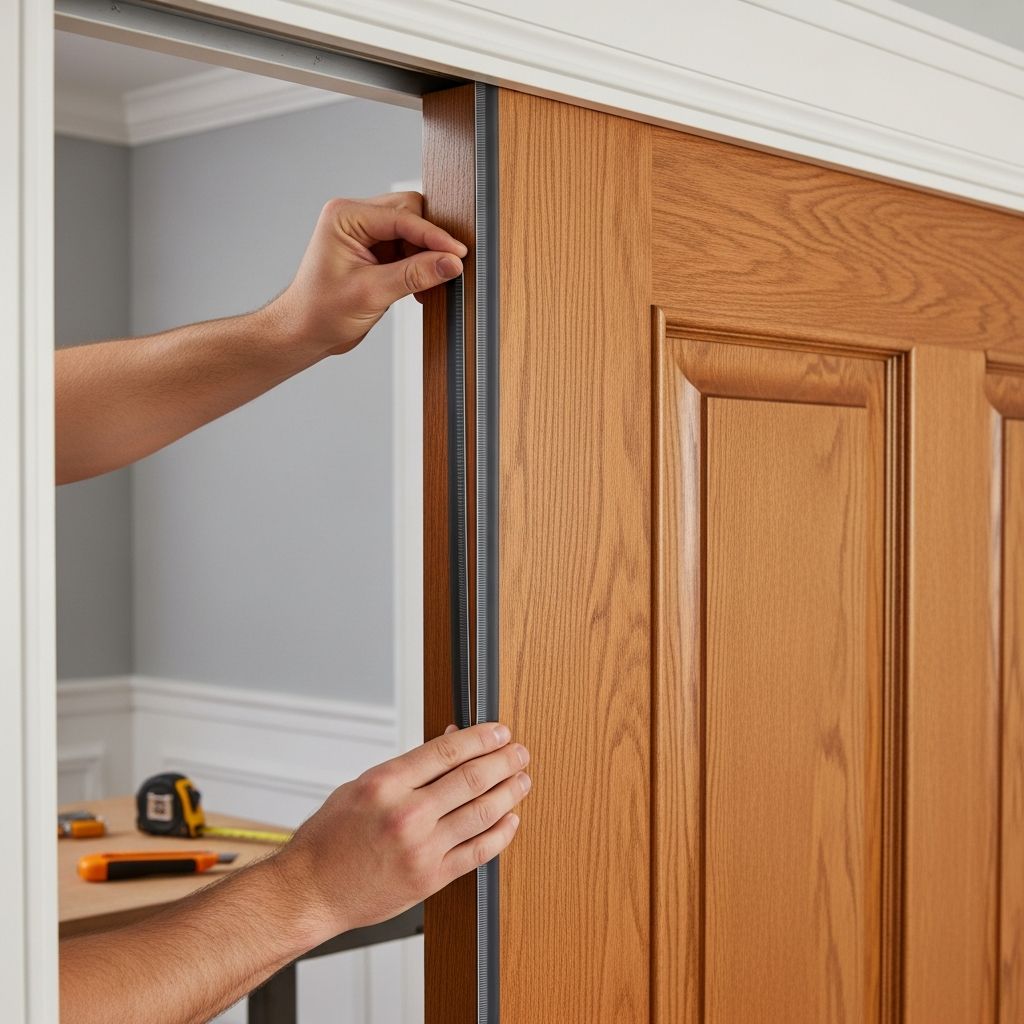
Pocket doors offer sleek, space-saving functionality by sliding into wall cavities, but they often allow drafts, noise, light, and dust to infiltrate your home. Proper sealing addresses these issues, improving energy efficiency and comfort. This guide provides an original, in-depth approach to diagnosing leaks, selecting materials, and executing installations for both interior and exterior pocket doors.
Why Seal Your Pocket Door?
Unchecked gaps in pocket doors lead to significant energy loss. Air infiltration through the wall cavity and edges can account for up to 30% of a home’s heating and cooling waste in older constructions. Sealing not only reduces utility bills but also blocks allergens, odors, and external sounds. For exterior applications, it prevents moisture ingress, safeguarding structural integrity.
- Energy Savings: Tight seals minimize conditioned air escape, potentially lowering costs by 10-20% annually.
- Comfort Enhancement: Eliminate cold spots near doorways during winter.
- Noise Reduction: Weatherstripping dampens sound transmission by up to 50%.
- Durability Boost: Protects door mechanisms from dust buildup and wear.
Understanding Pocket Door Vulnerabilities
Pocket doors slide into a framed cavity within the wall, creating multiple leak points: the top track, bottom gap, vertical edges, and the cavity itself. The cavity often remains unsealed to the exterior wall, allowing bypass airflow. Interior doors suffer from similar issues, exacerbated by settling or poor initial installation.
| Leak Area | Common Issues | Impact |
|---|---|---|
| Top Track | Gaps around rollers | Drafts from attic/ceiling |
| Bottom Gap | Uneven floor contact | Cold air rise |
| Vertical Jambs | Side air infiltration | |
| Cavity Interior | Open framing | Major thermal bridge |
Essential Tools and Materials
Gather these items before starting to ensure a smooth process. Prioritize durable, flexible materials suited for compression and repeated door cycles.
Tools
- Tape measure and ruler for precise gap sizing
- Utility knife for cutting foam and strips
- Screwdriver set (Phillips and flathead)
- Cleaning supplies: microfiber cloths, isopropyl alcohol
- Push stick: 1×2-inch wood with trimmed screw ends for cavity access
- Ladder or step stool for overhead work
Materials
- Foam Seals: Medium-density closed-cell foam strips, cuttable into wedges
- Weatherstripping: Q-Lon or fuzzy kerf-style for edges; brush seals for bottoms
- Draft Excluders: Adjustable for over/under-door gaps
- Adhesives: High-tack, removable double-sided tape
- Caulk: Acoustic or paintable silicone for permanent seams
Measure your door’s height, width, and gaps accurately—standard pocket doors range 28-36 inches wide. Opt for self-adhesive products rated for 10,000+ cycles.
Preparation Steps: Clean and Inspect
A clean surface ensures adhesion. Begin by fully opening or removing the door for cavity access. For single doors, detach the pelmet or trim at the top.
- Vacuum dust from tracks, edges, and cavity using a crevice tool.
- Wipe jambs, stops, and cavity interior with alcohol-dampened cloth. For tight trailing edges, insert a cloth-wrapped butter knife while door is closed.
- Inspect for damage: warped frames, loose rollers, or rot. Tighten hardware as needed.
- Test for drafts: Use incense smoke or a damp hand to detect airflow with door closed.
Address any frame adjustments first—shim uneven bottoms to under 1/8-inch gaps.
Step-by-Step Sealing Process
1. Seal the Cavity Depths
The cavity is the primary leak source. Use foam to fill from the back forward.
- Cut foam into wedge shapes: narrow end 1/4-inch, wide end matching cavity depth (typically 4-6 inches).
- Impale wedge on push stick screws, insert to cavity rear between horizontal framing.
- Withdraw stick, flip, and tamp foam flush with blunt end. Repeat top, bottom, sides.
- Fill track gaps with finer strips, compressing for airtight fit.
This method draught-proofs without permanent alterations, allowing door removal if needed.
2. Install Bottom Seals
Bottom gaps allow rising cold air. Brush or kerf weatherstripping excels here.
- Kerf door bottom if absent (1/8-inch slot).
- Insert Q-Lon strips, allowing 3/16-inch compression at sill.
- For no-kerf doors, adhesive brush seals: clean, peel, press along bottom edge.
Test slide: Seal should deflect smoothly without drag.
3. Address Vertical and Top Edges
Apply kerf-in or adhesive strips to stiles and head jambs.
- Attach check stiles if overlapping doors exist, rabbeting for Q-Lon insertion.
- Peel-and-stick fuzzy strips on jamb faces, overlapping door edges by 1/16-inch.
- Top track: Caulk gaps around rollers, then add foam backing.
4. Exterior Considerations
For outdoor pocket doors, prioritize weatherproofing.
- Seal rough opening with peel-and-stick membrane before framing.
- Reinforce sill splices with adhesives and dominos.
- Use corrosion-resistant screws, countersunk below tracks.
Advanced Techniques for Superior Seals
For high-performance results, integrate multiple layers.
- Acoustic Seals: Combine foam with rubber sweeps for soundproofing.
- Thermal Breaks: Install rigid foam panels in cavity voids.
- Automated Excluders: Drop-down bottom seals triggered by latch (pro install recommended).
In wall cavities interfacing exteriors, create a sealed passageway around the entire assembly, turning studs for load-bearing.
Troubleshooting Common Problems
| Issue | Solution |
|---|---|
| Seal detaches | Re-clean, use primer on painted surfaces |
| Door binds | Trim excess material, plane jambs lightly |
| Persistent drafts | Re-fill cavity fully; check adjacent wall insulation |
| Moisture stains | Upgrade to vapor barrier caulk; ventilate cavity |
Post-install, re-test with smoke. Allow 24 hours for adhesives to cure before final evaluation.
Maintenance and Longevity Tips
Seals last 5-10 years with care. Annually inspect and clean. Replace if compressed over 50%. Lubricate tracks with silicone spray, avoiding petroleum-based products that degrade rubber.
- Vacuum monthly to prevent grit abrasion.
- Re-adhere loose strips promptly.
- For high-traffic areas, choose vinyl-clad foams.
Cost Analysis and ROI
DIY sealing costs $20-100, versus $300+ professionally. Materials: foam ($10), weatherstripping ($15/pair), tools (reuse existing). Expect payback in 1-2 heating seasons via 15% energy savings.
Frequently Asked Questions (FAQs)
Can I seal a pocket door without removing it?
Yes, for edge seals, but cavity work requires full access by sliding or removing the door.
What if my door is already installed in a finished wall?
Use flexible push tools and focus on accessible edges; consider endoscopic inspection for cavity.
Is Q-Lon better than brush seals?
Q-Lon resists wind/rain better for exteriors; brushes suit interiors with debris.
How do I seal exterior pocket doors against rain?
Layer membrane flashing, Q-Lon, and sloped sills per building codes.
Will sealing affect door operation?
Proper installation allows smooth gliding; test iteratively.
Final Checks and Safety Notes
Operate the door 50+ cycles post-seal. Ensure no fire-rated walls are compromised—use compliant materials. Wear gloves during foam cutting; ventilate caulk areas.
References
- How to Seal a Cavity Sliding Door / Pocket Door — ecoMaster (YouTube). 2023. https://www.youtube.com/watch?v=OY58GWUjmdc
- The Importance Of Sealing Your Pocket Door And How To — House Digest. 2024-10-15. https://www.housedigest.com/1712892/how-to-seal-pocket-door/
- Out-of-sight Exterior Pocket Doors — This Is Carpentry. 2014-04-04. https://www.thisiscarpentry.com/2014/04/04/out-of-sight-exterior-pocket-doors/
- Pocket Door – Making Air Tight to Wall Cavity — Fine Homebuilding Forum. 2014. https://www.finehomebuilding.com/forum/pocket-door-making-air-tight-to-wall-cavity
- Weatherstripping Pocket Doors — Woodweb. N/A. https://woodweb.com/knowledge_base/Weatherstripping_Pocket_Doors.html
Similar Articles






Read full bio of Sneha Tete