Sensitive Plant: Touch-Responsive Wonder
Discover the captivating Mimosa pudica, whose leaves fold on touch, blending botanical marvel with easy indoor-outdoor care tips.
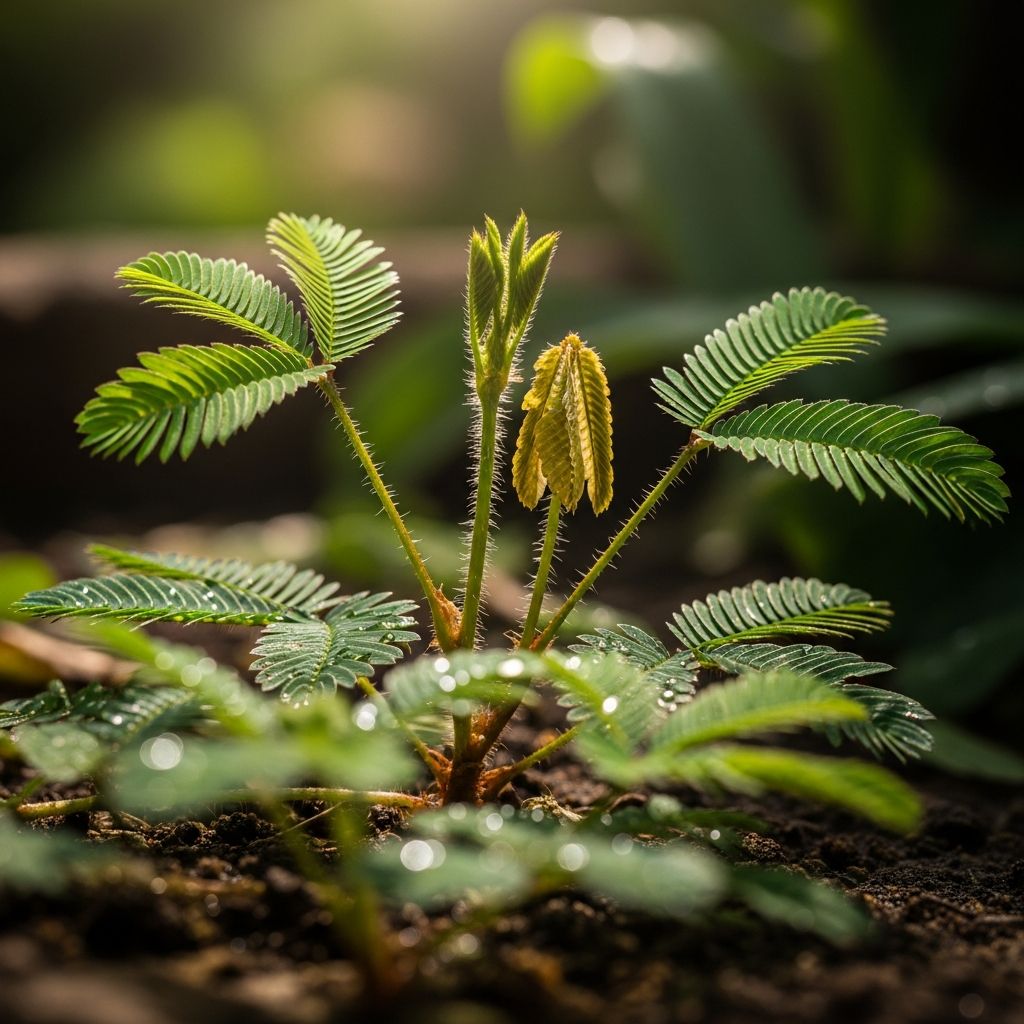
The Mimosa pudica, commonly called the sensitive plant or touch-me-not, captivates with its instant reaction to touch—leaves fold inward and droop within seconds, reopening minutes later. This phenomenon, known as thigmonasty, makes it a favorite for curiosity-driven gardeners worldwide.
Origins and Natural Habitat
Native to Central and South America, Mimosa pudica flourishes in tropical environments, often as a sprawling ground cover in disturbed soils like roadsides and grasslands. It has spread globally, naturalizing in warm regions across Asia, Africa, the Pacific Islands, and Hawaii, where it sometimes forms dense thickets. In its homeland, it thrives in sunny, moist areas but adapts to partial shade and even eroded subsoils, showcasing remarkable resilience.
Despite its delicate appearance, this plant from the Fabaceae family—related to peas and beans—grows as a prostrate or erect subshrub up to 50 cm tall, with prickly stems that deter herbivores. Its global journey began as an ornamental, but today it’s noted for invasiveness in places like Tanzania, Southeast Asia, and Pacific islands, where it outcompetes natives due to prolific seeding.
Unique Leaf Movement Mechanism
The hallmark of Mimosa pudica is its hypersensitive leaves, which respond to touch, shaking, heat, or darkness by rapidly folding. This nyctinastic and thigmonastic behavior involves specialized cells at leaflet bases releasing water quickly, causing drooping—a defense startling predators like insects or grazers.
Scientifically, touch triggers mechanoreceptors that open calcium ion channels, leading to depolarization and action potentials similar to animal nerves. Voltage-sensitive potassium channels then restore turgor, reopening leaves. Leaves also “sleep” at night, folding for protection, a trait studied since the 18th century by scientists like Jean-Jacques d’Ortous de Mairan.
| Stimulus | Response Time | Purpose |
|---|---|---|
| Touch or Shake | Seconds | Predator Deterrence |
| Darkness | Minutes | Nyctinastic Protection |
| Heat/Drought | Seconds to Minutes | Water Conservation |
Physical Characteristics and Growth
Mimosa pudica features bipinnate leaves—each divided into 10-26 pairs of tiny, linear-oblong leaflets (6-15 mm long)—on thorny stems up to 5.5 cm long. These fern-like fronds give it a feathery look. From summer, it produces fluffy, globe-shaped flowers in lilac-pink or mauve, about 1 cm wide, attracting pollinators.
- Height: 15-50 cm, sprawling or erect
- Stems: Prickly, reddish-brown, woody at base
- Pods: Bristled, containing 1-6 seeds that aid spread
- Foliage: Evergreen in warm climates, showy year-round
As an annual, perennial, or houseplant, it suits USDA zones 10-12 but needs protection below 13°C (55°F). In cooler areas, grow it indoors or as a summer annual.
Growing Mimosa Pudica Successfully
Cultivating this plant is straightforward with attention to its tropical preferences. Sow seeds in spring; they germinate quickly in warm, moist soil.
Ideal Conditions
- Light: Bright indirect or partial sun; full sun in cooler spots. Avoid intense midday rays.
- Soil: Loamy, well-draining, slightly acidic to neutral pH (6.0-7.0), enriched with organics.
- Water: Keep evenly moist, never soggy. Increase outdoors in heat.
- Temperature: 65-75°F (18-24°C); shield from drafts.
- Humidity: High—mist daily or use pebble trays.
Feed sparingly with half-strength, potassium-rich fertilizer every 2-4 weeks in growth season, as it prefers low nutrients. Prune to encourage bushiness and remove spent flowers for reblooming.
Indoor vs. Outdoor Cultivation
| Aspect | Indoor | Outdoor |
|---|---|---|
| Location | East/west windows, grow lights | Patios, containers, ground cover (zones 10+) |
| Watering | Moderate, check soil top | Frequent in sun/heat |
| Humidity | Misting essential | Natural in tropics |
| Uses | Houseplant novelty | Borders, hanging baskets |
Indoors, it excels in pots as a conversation piece; outdoors, in containers or as ground cover in suitable climates.
Common Pests and Diseases
Though resilient, Mimosa pudica faces threats. Monitor regularly:
- Spider Mites: Webbing, speckled leaves in dry air—increase humidity, use insecticidal soap.
- Mealybugs/Aphids: Sap-suckers causing yellowing—wipe with alcohol, apply neem oil.
- Root Rot: From overwatering—ensure drainage, let soil dry slightly.
- Powdery Mildew: White powder in humidity—improve airflow, fungicides.
Prevent by quarantining new plants and maintaining hygiene.
Ecological Role and Cautions
In native habitats, its movements and spines protect against herbivores, while nitrogen-fixing roots enrich soil. However, as an invasive, it forms thickets, hinders lawns, and poses fire risks when dry in places like Hawaii. Avoid planting in wild areas; hand-pull or use glyphosate carefully. Mildly irritating if ingested, keep from pets/children.
Frequent touching stresses it by depleting energy, so interact sparingly. The Royal Horticultural Society awards it merit for UK greenhouse growing.
Propagation Techniques
Easy from seeds or cuttings:
- Seeds: Scarify, soak 24 hours, sow 0.5 cm deep in 70°F soil. Germinates 7-14 days.
- Cuttings: 10 cm stem tips in moist soil, root in 2 weeks with humidity dome.
- Division: Separate rooted clumps in spring.
Self-seeds readily, ensuring persistence.
Creative Garden Applications
Beyond novelty, use in:
- Sensory gardens for children.
- Container combos with ferns or succulents.
- Hanging baskets for trailing growth.
- Educational terrariums showcasing movement.
Frequently Asked Questions (FAQs)
Why do Mimosa pudica leaves close when touched?
Rapid water loss from pulvini cells triggers folding as a herbivore defense.
Can I grow sensitive plant indoors year-round?
Yes, with bright light, humidity, and warmth; ideal houseplant outside tropics.
Is Mimosa pudica toxic?
Mildly irritating if eaten, but generally safe; monitor pets.
How often should I water it?
Keep soil moist but not wet; water when top inch dries.
Does touching harm the plant?
Occasionally fine, but frequent prodding stresses it and hinders growth.
References
- Sensitive Plant (Mimosa pudica) – Gardenia.net — Gardenia.net. 2023. https://www.gardenia.net/plant/mimosa-pudica-sensitive-plant-grow-care-guide
- Mimosa pudica – Wikipedia — Wikipedia Contributors. 2023-10-15. https://en.wikipedia.org/wiki/Mimosa_pudica
- Sensitive plant | Mimosa pudica, Touch-Me-Not, Thigmonasty — Britannica Editors. 2023. https://www.britannica.com/plant/sensitive-plant
- Factsheet – Mimosa pudica (Common Sensitive Plant) — Lucidcentral. N/A. https://keys.lucidcentral.org/keys/v3/eafrinet/weeds/key/weeds/Media/Html/Mimosa_pudica_(Common_Sensitive_Plant).htm
- Mimosa pudica – Plant Pono — Plant Pono. 2023. https://plantpono.org/high-risk-plants/mimosa-pudica/
Similar Articles








Read full bio of medha deb