Sewer Line Repair: 3 Options, Costs, And Timelines
Complete guide to sewer line repair: Signs, methods, costs, and professional solutions.
Understanding Your Sewer Line System
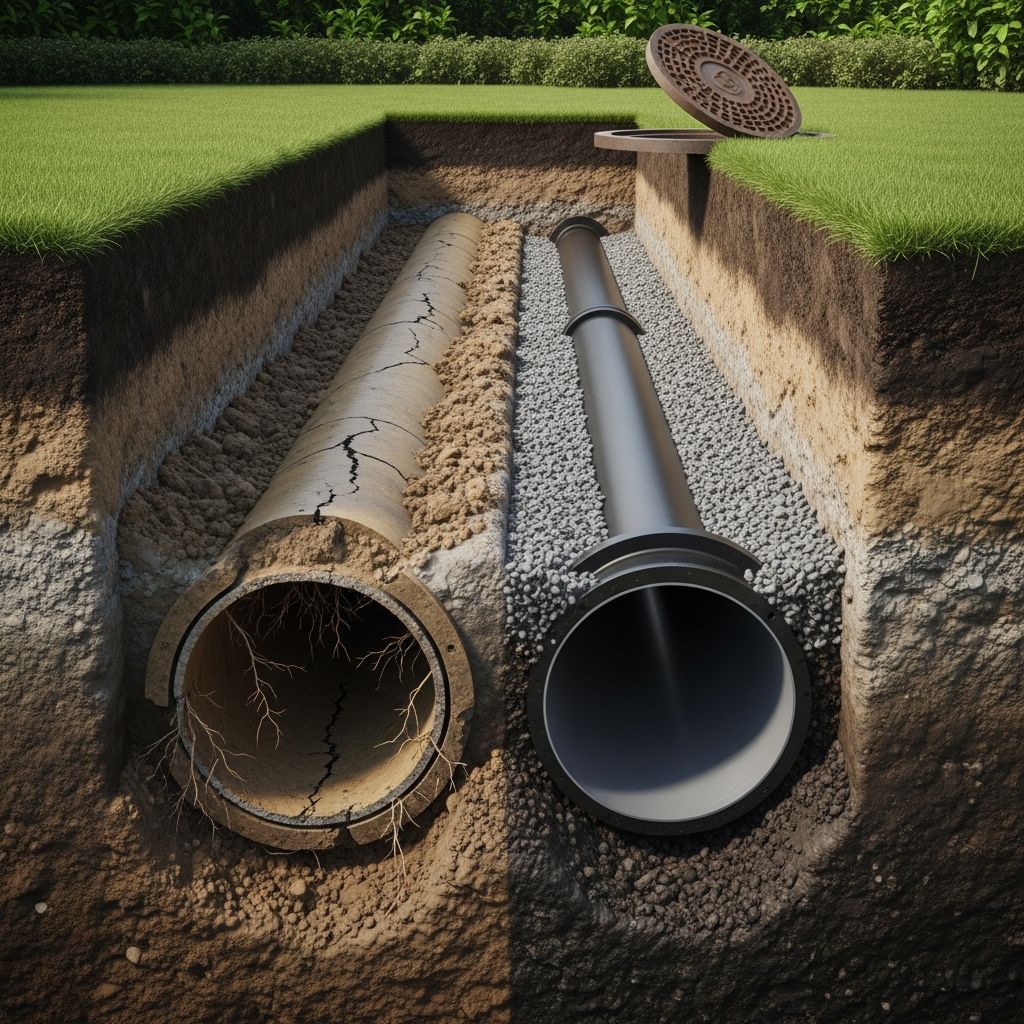
Your home’s sewer line, also known as the sewer lateral, is a critical component of your plumbing system that connects your home’s drainage to the public sewer system or septic tank. This underground pipe carries wastewater and sewage away from your property. When problems develop in this line, they can quickly escalate from a minor inconvenience to a major health and structural hazard. Understanding how your sewer line works and recognizing early warning signs can help you address issues before they become catastrophic.
The main sewer line is typically buried several feet underground, running from your home’s foundation to the street or treatment facility. Given its location and the materials it transports, sewer lines are subject to various types of damage over time, including cracks, breaks, tree root intrusion, and complete collapse. Regular inspection and maintenance can help extend the life of your sewer system and prevent costly emergency repairs.
Recognizing Signs of Sewer Line Problems
Early detection of sewer line issues can save you thousands of dollars in repairs and prevent serious damage to your property. Several warning signs indicate that your sewer line may need attention.
Multiple drain backups throughout your home suggest a problem with the main sewer line rather than individual fixtures. If you notice water or sewage backing up into toilets, sinks, showers, or basement drains simultaneously, this is a clear indication of a blockage or break in your main line.
Persistent bad odors emanating from your yard or drains can indicate a crack or leak in the sewer line, allowing sewage to escape into the soil. This smell often becomes stronger during warm weather or after heavy rainfall.
Unusual patches of green, overly lush grass in your yard may seem desirable, but they actually signal that sewage is leaking into the soil and fertilizing that area. Similarly, soft spots or indentations in your yard can indicate collapsed or sinking sewer pipes.
Slow drains and frequent clogs throughout your home suggest a partial blockage in the main line. If multiple drains are affected, professional inspection is warranted.
Pest infestations of rats or insects can sometimes indicate cracks in your sewer line that provide entry points into your home.
Professional Sewer Line Inspection
When you suspect a sewer line problem, the first step is to contact a licensed professional plumber. A technician will conduct a comprehensive inspection using specialized equipment to accurately diagnose the issue.
The primary diagnostic tool is a digital camera inspection, where a technician threads a specialized camera into the pipe to check for clogs, leaks, cracks, and other damage. This non-invasive method allows professionals to see exactly what’s happening inside your pipes without unnecessary digging. The camera footage helps determine the extent of damage and the best repair approach.
Owners of older homes should have their main sewer line inspected at least once every 10 years, even if no problems are apparent. This preventative approach can catch early signs of deterioration before they become serious issues.
Sewer Line Repair Options
Once damage is confirmed, you have two primary repair options: traditional excavation methods or trenchless repair technology. The best choice depends on the type and severity of damage, your property layout, and your budget.
Traditional Sewer Line Repair
For certain types of damage, such as tree root penetration and severe breaks, excavation is often necessary. This method involves digging a trench along the sewer line to access the damaged pipe directly.
The traditional repair process typically includes these steps:
The plumbing company begins by surveying the area and marking all underground utilities to prevent damage. Traffic control devices are positioned if work will affect streets or walkways.
Heavy machinery such as backhoes or excavators excavates trenches along the sewer line path. When digging deeper than 4 feet, technicians shore up walls for safety to prevent collapse.
The old pipe sections are carefully disconnected and lifted using clamping devices and chains. Depending on the damage severity, sections may be patched or completely removed.
New sewer pipe is laid in sections and properly sloped for optimal drainage. The sections are fused or sealed together to create a continuous line.
Lateral pipes from your home are reconnected to the new sewer main using flexible couplings. Any required maintenance holes are installed at this time.
Trenches are backfilled with gravel and compacted to proper density. The surface is patched or repaved to match the surrounding area.
Pipe Bursting Technology
Pipe bursting is a trenchless method that replaces the old pipe with new pipe without extensive excavation. This technique is ideal for complete line replacement when the old pipe is severely damaged.
The pipe bursting process works as follows:
The plumbing technician digs small pits at entry and exit points along the pipe path, then lowers the bursting equipment into the entry pit.
New HDPE (high-density polyethylene) pipe is attached behind the bursting head, which is then launched into the old pipe.
Hydraulic power pushes the bursting head forward, breaking apart the old pipe as it pulls the new line behind it. Once the head reaches the exit pit, the old pipe has been completely replaced end-to-end.
Plumbers connect the new pipe to your plumbing system, fill in the entry and exit pits, and restore the surface.
Pipe Lining Repair (CIPP)
For minor cracks and leaks in pipes that are otherwise structurally sound, pipe lining offers a minimally invasive solution. This repair doesn’t require excavation or pipe replacement.
The most common type of lining is Cured-in-Place Pipe (CIPP). These liners can extend the life of aging sewer, water, gas, and industrial pipes by 50 years or more. The liner restores flow capacity, prevents infiltration, and protects against further corrosion.
The pipe lining process includes these steps:
A plumbing technician inspects the old pipe and cleans it using hydraulically-powered devices with hydro-jetting. A liner tube of absorbent felt fabric is then saturated with thermosetting resin.
The technician inserts the liner tube into the old pipe through an access point such as a manhole. An inflatable bladder pushes and holds the liner against the inner walls while circulation hoses inject hot water or steam to cure and harden the resin into a smooth, jointless pipe liner.
After curing is complete, the technician reopens lateral connection points using robotic cutting devices that bore through the liner and reconnect service lines from your home. The ends of the liner are sealed and access points are restored.
Timeline Expectations for Sewer Line Repair
The duration of your sewer line repair project depends on the severity of the damage and the repair method chosen.
Minor Repairs (1-2 Days): If the issue is a small crack or simple blockage, plumbers can often fix it within a day using trenchless repair methods such as pipe lining or pipe bursting.
Partial Pipe Replacement (2-3 Days): When only a section of the sewer line needs replacement, the job may take a few days, especially if excavation is required.
Full Sewer Line Replacement (3-5 Days): If the entire sewer line needs replacement, it can take several days due to excavation, pipe installation, and backfilling.
Unexpected Delays (Additional Time): Factors like poor weather, extensive root intrusion, or complications such as collapsed pipes may extend the timeline.
Benefits of Professional Sewer Line Repair
Expertise and Experience: Licensed plumbers have years of technical training and hands-on experience diagnosing and repairing sewer line issues. They understand the complexities of different pipe materials and damage types.
Minimized Property Damage: Trenchless repair methods allow professionals to fix sewer problems with little to no digging, preserving landscaping, hardscaping, driveways, and patios.
Warranties and Guarantees: Many plumbing companies offer warranties on their work, giving homeowners peace of mind in case future problems arise. These guarantees often cover workmanship and materials for specified periods.
Proper Equipment and Safety: Professional plumbers have access to specialized equipment needed for inspections, cleaning, and repairs. They also follow safety protocols to protect workers and your property.
Accurate Problem Diagnosis: Professional camera inspections provide clear identification of problems, ensuring the right repair method is chosen rather than guessing or unnecessary full replacements.
Preventing Future Sewer Line Problems
While some sewer line issues cannot be completely prevented, several practices can help minimize risk and extend the life of your system.
Avoid planting large trees near your sewer line, as roots are a common cause of damage and blockages. If trees already exist near the line, regular inspections are especially important.
Never flush non-biodegradable items, paper towels, wipes, or grease down your drains. These materials can cause blockages that eventually damage the line.
Schedule regular inspections every 3 to 5 years, or annually if your home is older than 50 years or you’ve experienced previous sewer problems.
Maintain proper drainage around your property to prevent water from pooling near your foundation and sewer lines. Proper grading and downspout management help reduce hydrostatic pressure on pipes.
Address minor issues promptly before they escalate into major problems requiring expensive repairs or replacement.
Frequently Asked Questions
Q: How often should I have my sewer line inspected?
A: Homeowners should have their main sewer line inspected at least once every 10 years. Owners of older homes or those with previous sewer problems should consider more frequent inspections every 3 to 5 years.
Q: What’s the difference between pipe lining and pipe bursting?
A: Pipe lining (CIPP) is used for minor cracks and leaks and installs a new liner inside the existing pipe without replacing it. Pipe bursting replaces the entire pipe by breaking apart the old pipe while pulling new pipe behind it. Bursting is more suitable for severely damaged pipes requiring complete replacement.
Q: How much does sewer line repair typically cost?
A: Sewer line replacement costs average $3,320, with most homeowners paying between $1,390 and $5,320 depending on pipe material, line length, repair method, and damage severity. Minor repairs using trenchless methods are significantly less expensive than full excavation and replacement.
Q: Can sewer line repairs be done without digging up my yard?
A: Yes. Trenchless repair methods such as pipe lining and pipe bursting can fix many sewer line problems with minimal or no digging. However, some severe damage or specific situations may require traditional excavation.
Q: What causes sewer line problems?
A: Common causes include tree root intrusion, ground settling and shifting, corrosion of older pipes, cracks from age or structural movement, grease and debris blockages, and soil erosion around the line.
Q: How long does a sewer line repair take?
A: Timeline depends on the repair type. Minor repairs take 1-2 days, partial replacements take 2-3 days, and full replacements take 3-5 days. Weather and complications can extend these timeframes.
Q: Should I repair or replace my sewer line?
A: This depends on the damage extent. Minor cracks are best repaired with pipe lining. Severe damage, multiple breaks, or complete collapse typically require full or partial replacement. A professional inspection will help determine the best option.
References
- Sewer Line Repair and Replacement — This Old House. 2024. https://www.thisoldhouse.com/plumbing/sewer-line-repair
- How to Repair a Sewer Pipe Under a Concrete Slab — This Old House. 2024. https://www.thisoldhouse.com/plumbing/21017132/how-to-repair-a-sewer-pipe-under-a-concrete-slab
- How Much Does a Sewer Line Replacement Cost? — This Old House. 2024. https://www.thisoldhouse.com/plumbing/sewer-line-replacement-cost
Similar Articles


Read full bio of Sneha Tete