The Great Shoe Debate: Creating a Clean, Organized Home Without Losing Your Mind
Smart shoe rules and storage ideas to keep every room cleaner, calmer, and more organized.
The Great Shoe Debate: How to Keep Your Home Cleaner and Happier
Few household habits spark as much quiet controversy as the simple question: should shoes come off at the door or not? Some people feel half-dressed without shoes indoors, while others cringe at the idea of street dirt touching their floors or carpets. The truth is, both comfort and cleanliness matter, and a successful approach usually blends etiquette, health, and practical storage solutions.
This guide explores how to think through a shoe-on versus shoe-off policy, what shoes really track into your space, and how to design smart storage systems that support whatever rules you choose. You will find ideas for every size of home, from tiny apartments to busy family houses, plus easy strategies to keep everyone on board.
Why Shoes Matter More Than You Think
Shoes do more than take you from place to place; they quietly shape how your home looks, feels, and even smells. Every pair carries a mix of dust, oils, moisture, and microscopic debris picked up throughout the day. Over time, that buildup shows up as dingy grout, dull hardwood, stained rugs, and a general sense that the house never feels quite clean.
On the other hand, shoes also offer structure and support, especially for those who spend long hours walking or standing. A thoughtful plan balances protection for your flooring with comfort for feet, knees, and backs—without turning your entryway into a chaotic pile of sneakers and boots.
Health and Cleanliness: What Shoes Bring Inside
When discussing shoe rules, cleanliness is usually the first concern. Even if you cannot see obvious mud or grass, soles pick up fine particles from sidewalks, parking lots, public restrooms, and transit areas. These particles contribute to indoor dust, which can affect allergies and air quality over time.
In rainy or snowy climates, wet footwear increases moisture levels near doors and on carpets. That moisture can encourage mildew, leave musty odors, and degrade flooring finishes. For households with crawling babies, pets, or anyone with respiratory sensitivities, controlling what enters on shoes becomes even more important.
- Less dirt tracked in means fewer deep-cleaning sessions and longer intervals between professional carpet or floor treatments.
- Reduced moisture near doors decreases the risk of slippery surfaces and water damage to flooring and baseboards.
- Limiting outdoor particles can help ease allergy symptoms for some people, especially during high-pollen seasons.
Comfort, Culture, and Guest Etiquette
Any shoe policy has to account for more than sanitation. Cultural norms, physical comfort, and social grace all play important roles. Many households around the world remove shoes at the door as an unquestioned standard, while others see indoor footwear as completely normal and even necessary.
Imposing a new rule without sensitivity can feel awkward or even rude to visitors. At the same time, it is reasonable to protect your home’s cleanliness and your family’s health. The key is clarity, kindness, and some flexible options for guests who may be unaccustomed to going barefoot or sock-footed.
Questions to Help You Choose a Policy
- Do you have young children who crawl or play frequently on the floor?
- Does anyone in your household have allergies, asthma, or a compromised immune system?
- How much mud, sand, or snow does your household usually encounter during an average week?
- Is your primary flooring carpet, hardwood, tile, or a mix?
- Do you often entertain guests who may not share the same shoe customs?
Your answers can guide you toward a strict no-shoes rule, a flexible hybrid approach, or a relaxed policy that emphasizes organization rather than restriction.
Common Home Shoe Policies (And How They Work)
There is no universal right answer, but understanding the main approaches can help you pick the one that fits your space and lifestyle. You can always adjust over time as seasons, family size, or health needs change.
| Policy Type | What It Means | Best For | Key Challenge |
|---|---|---|---|
| Strict no-shoes | All outdoor shoes come off at the entry, with slippers or socks indoors only. | Homes with kids, allergies, or frequently wet or muddy conditions. | Communicating expectations to guests without awkwardness. |
| Hybrid / Zone-based | Shoes off in certain rooms (like bedrooms or carpeted areas), allowed in others. | Mixed flooring homes and households that want flexibility for special occasions. | Remembering boundaries and keeping storage in the right places. |
| Shoes-on with rules | Shoes generally allowed, but dirty, wet, or heavy boots must stay near the door. | Adults-only households or homes with durable hard flooring. | Preventing gradual buildup of grit that dulls floors over time. |
Designing an Entry That Works Hard
No matter what rules you settle on, your entry area should quietly support those habits. A well-planned threshold space acts like a filter, catching dirt, corralling clutter, and reminding everyone—gently—what to do the moment they walk in.
Core Elements of a Functional Entry
- Durable doormat inside and out: A coarse mat outside and an absorbent one inside capture grit and moisture before it travels farther.
- Stable seating: A sturdy bench or chair makes shoe removal easier for kids, older adults, and anyone carrying bags.
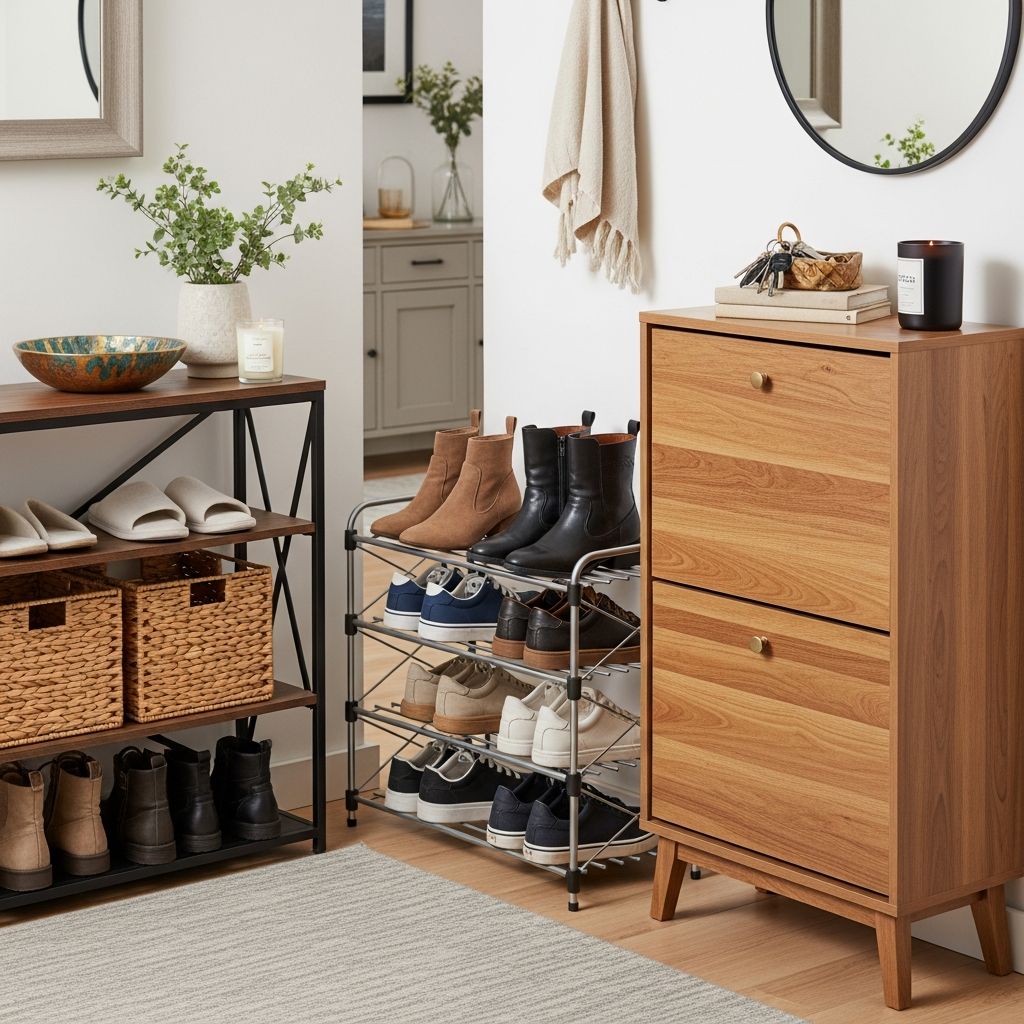
- Visible shoe parking: Shelves, trays, or cubbies placed directly beside the seating area encourage immediate use.
- Wall storage: Hooks and small racks keep bags and outerwear off the floor so shoes have defined space.
Entry Layout Ideas by Home Size
- Studio or small apartment: A narrow shoe cabinet, a wall-mounted rack, and a folding stool can create a mini-mudroom beside the door.
- Family house with mudroom: Assign each person a cubby, basket, or shelf. Labeling spaces helps children learn where their shoes live.
- Older home with no foyer: Use a low-profile bench and a compact mat to define an “imaginary” entry zone inside the main room.
Storing Shoes by Frequency of Use
One of the biggest mistakes people make is trying to keep all shoes in one location. Instead, think in categories: everyday, occasional, and rarely used. Storing each group according to how often it is worn keeps entrances clear and closets more manageable.
Everyday Pairs
These are the shoes worn several times a week: go-to sneakers, work flats, school shoes, and favorite slippers. They should live within arm’s reach of the door used most often.
- Limit the number of everyday pairs per person to a realistic handful, rotating seasonally.
- Use open shelves, pull-out baskets, or low bins for quick grab-and-go access.
- Place a waterproof tray or mat under the wettest pairs to protect flooring.
Occasional and Seasonal Shoes
Dress shoes, specialty athletic footwear, sandals in winter, and snow boots in summer do not need prime real estate at the entry. Relocating these to closets or under-bed storage instantly frees up space.
- Group by category—heels, formal, sports, or seasonal—so you can scan quickly when dressing up or packing for activities.
- Clear boxes or labeled bins allow stacking without losing visibility.
- Consider shallow under-bed drawers or rolling containers for off-season pairs.
Rarely Worn or Sentimental Pairs
These include souvenir shoes, costume footwear, and sentimental pairs you are not ready to part with. Keeping them mixed with everyday options creates unnecessary visual clutter.
- Store them in upper closet shelves or harder-to-reach zones, clearly labeled.
- Use protective covers or boxes if you are preserving them long term.
- Review the “archive” once a year to confirm what still deserves a spot.
Smart Shoe Storage Solutions for Every Room
Shoes do not have to be confined solely to closets and entries. Strategic secondary storage zones prevent piles from forming where people naturally drop their footwear—under desks, beside beds, and near back doors.
Bedroom and Closet Ideas
- Tiered shelves: Adjustable shelves let you vary heights for boots, sneakers, and heels, maximizing vertical space.
- Over-the-door organizers: Fabric or plastic pockets on the back of a closet door work well for lightweight shoes and flip-flops.
- Under-bed drawers: Rolling containers keep out-of-season or infrequently worn shoes dust-free but still accessible.
Living Room and Multiuse Spaces
- Storage ottomans: Hinged ottomans near sofas can hide slippers or house shoes while doubling as extra seating.
- Console tables with baskets: In small spaces, woven baskets beneath a console near the entry keep shoes tidy yet informal.
- Built-in bench cubbies: If renovating, include open cubbies under bench seating to create a permanent shoe zone.
Garage, Porch, and Back Door Zones
- Heavy-duty racks: Metal or plastic shelves tolerate mud, snow, and work boots better than delicate furniture.
- Boot trays: Deep trays with ridges contain melting snow and dirt from outdoor gear.
- Hooks and baskets: Assign each family member a hook for outdoor gear and a basket beneath it for shoes.
Choosing House Shoes and Slippers
One way to make a no-shoes or hybrid policy more comfortable is to offer indoor footwear. House shoes provide warmth, support, and a psychological transition from outside to inside while keeping floors cleaner.
- Opt for washable styles so you can freshen them regularly.
- Choose non-slip soles to reduce the risk of falls on hard floors.
- Keep a small basket of guest slippers in multiple sizes near the entry for visitors.
Keeping the System Tidy: Maintenance Habits
Even the best storage systems fail if daily habits do not support them. The goal is not perfection but simple, repeatable routines that everyone in the household can follow with minimal effort.
Daily and Weekly Routines
- Do a 60-second shoe reset each evening, returning stray pairs to their designated zones.
- Once a week, wipe down mats and trays and sweep or vacuum around entry areas.
- At the start of each season, rotate shoes: move off-season pairs out of the entry and bring in what you will actually wear.
Decluttering Your Shoe Collection
Most households own more pairs than they realize, especially when everyone’s shoes are scattered. Gathering them all in one place can be eye-opening and is often the first step toward a calmer system.
- Discard shoes that are irreparably damaged, uncomfortable, or never worn.
- Donate wearable pairs that no longer fit your lifestyle or style.
- Set a reasonable limit per category—for example, a maximum number of dress shoes or sneakers per person—and stick to it.
Teaching Kids and Housemates the New Routine
Changing shoe habits is easier when everyone understands why the change matters and how to participate. Explaining the benefits—cleaner floors, fewer lost shoes, and less morning chaos—often motivates cooperation more than rigid rules alone.
- Use clear labels or photos on bins and cubbies for younger children.
- Model the behavior yourself, consistently removing or storing shoes in the same place.
- Make occasional “shoe check-ins” fun, such as a quick weekend game of seeing who can return stray pairs the fastest.
Frequently Asked Questions About Shoes in the Home
Do I have to make guests remove their shoes?
No rule is absolute, and you can adjust based on the situation. Some hosts feel strongly about shoe removal for cleanliness or health reasons, and that is valid; others prefer to prioritize guest comfort. If you do ask visitors to take off shoes, a friendly sign, a welcoming tone, and the offer of clean slippers can make the request feel more like hospitality than a demand.
What if someone needs to wear shoes for support?
People with certain medical conditions may rely on shoes, braces, or orthotics to move safely and without pain. In those cases, flexibility is both kind and practical. You could encourage dedicated indoor-only supportive shoes that never go outside, or simply exempt those individuals from the rule while focusing shoe restrictions on everyone else.
How many pairs of shoes is too many?
The right number depends on lifestyle, climate, and storage capacity. Instead of aiming for an arbitrary limit, ensure every pair has a home and a clear purpose. If you routinely find shoes shoved into random corners or stacked precariously, it may be time to reduce the collection or expand storage.
Can I keep a shoes-on policy and still protect my floors?
Yes, especially if your home has mostly hard, easy-to-clean surfaces. Focus on trapping dirt at the door with high-quality mats, cleaning floors regularly, and requiring removal of visibly dirty or wet footwear. You might also keep the most delicate areas, such as light-colored rugs or bedrooms, as shoe-free zones even if the rest of the house is more relaxed.
What should I do with shoes that smell?
Odors often come from moisture and trapped bacteria in insoles and linings. Allow shoes to dry thoroughly between wears, consider rotating pairs so each has recovery time, and use washable insoles or liners when possible. Placing a small dish of baking soda nearby, using odor-absorbing sachets, or periodically washing appropriate styles can also help keep your shoe zones fresher.
Bringing It All Together
Whether you enforce a strict no-shoes rule, embrace a hybrid approach, or stick with shoes-on living, the goal is the same: a home that feels clean, comfortable, and easy to navigate. Clear expectations at the door, thoughtful storage throughout the house, and realistic daily habits all work together to reduce clutter and protect your floors.
By treating shoes as both a cleanliness issue and a design opportunity, you can transform scattered piles into streamlined systems that support your routines. With a little planning, every pair will have a place, and the debate about where shoes belong will feel far less complicated.
Similar Articles



Read full bio of Sneha Tete