Installing Shower Surrounds Over Existing Tile
Transform your bathroom by installing modern shower surrounds directly over existing tile surfaces.
Installing Shower Surrounds Over Existing Tile: A Comprehensive Guide to Modernizing Your Bathroom
Updating your bathroom doesn’t always require tearing out existing tile. One of the most practical approaches to bathroom renovation involves installing a new shower surround directly over your current tile surface. This method saves time, reduces waste, and provides a cost-effective way to achieve a fresh, modern bathroom aesthetic. Whether your existing tile shows signs of wear or you simply want a different look, understanding the proper installation process ensures a long-lasting, functional result.
Understanding Your Options: Different Approaches to Surround Installation
Before beginning your project, it’s important to recognize that shower surrounds can be installed using different methods, each with distinct advantages. The most common approach for installation over existing tile involves using adhesive-based systems specifically formulated for moisture environments. These surround kits typically include wall panels made from acrylic, fiberglass, or other composite materials designed to bond securely to your existing surface.
Another installation method involves direct-to-stud installation, where the surround anchors directly to wall framing. However, when working over existing tile, the adhesive method proves more practical since it eliminates the need to access studs behind the tile. The adhesive approach creates a watertight seal while maintaining structural integrity.
Evaluating Your Existing Tile for Compatibility
The condition and type of your existing tile significantly impact the installation process. Before proceeding with any surround installation, conduct a thorough assessment of your current tile surface. Look for loose tiles, cracks, or areas where moisture has penetrated behind the tile layer. If you discover extensive damage, mold growth, or significant structural issues, removing the tile before installing the surround becomes necessary.
Solid, well-adhered tile in good condition provides an acceptable base for surround installation. The tile acts as a stable substrate that the surround panels will bond to using specialized adhesives. However, ensure the tile surface is clean and free from soap residue, mildew, and loose debris. Glazed tiles present a smooth surface that may require additional surface preparation to ensure proper adhesive bonding.
Gathering Materials and Tools for Your Project
Successful surround installation requires specific materials and tools designed for moisture-prone environments. Begin by selecting a shower surround kit that matches your shower dimensions and aesthetic preferences. Quality kits typically include wall panels, a base or pan, trim pieces, and hardware mounting templates.
Essential materials for installation include:
- Moisture-rated adhesive formulated for bathroom applications
- Silicone caulk for sealing joints and seams
- Primer designed for preparing tile surfaces
- Screws rated for moisture environments with flat washers
- Corner trim and edge pieces
Required tools encompass both basic and specialized equipment. A level ensures your panels install plumb and true. A stud finder helps locate wall framing behind the tile, which assists with screw placement. A power drill with appropriate bits allows you to create pilot holes and drive fasteners. A caulking gun applies adhesive and caulk with precision. For cutting panels to accommodate plumbing fixtures, a utility knife or jigsaw becomes necessary depending on your panel material.
Additional helpful items include a notched trowel for applying adhesive evenly, a tape measure for accurate measurements, pencils for marking reference lines, and drop cloths to protect your fixtures and flooring during work.
Preparing Your Bathroom Space for Installation
Proper preparation establishes the foundation for a successful installation. Begin by removing all shower fixtures, including the showerhead, faucet handles, spout, and any accessories like soap dishes or grab bars. Protect your tub or existing shower base with cardboard or drop cloths to prevent damage from tools or debris.
Next, thoroughly clean the tile surface. Remove all soap scum, mildew, and mineral deposits using appropriate bathroom cleaners. A degreaser helps remove stubborn buildup that could compromise adhesive bonding. Rinse completely and allow the surface to dry fully before proceeding. Some installations benefit from applying a primer to the tile surface, which enhances adhesion and creates a more uniform bonding surface.
If you’re installing a new shower pan as part of your project, install it at this stage following manufacturer instructions. Ensure the pan is level and properly secured before proceeding with wall panel installation.
Marking Reference Points and Preparing Panels
Accurate measurements and markings determine whether your surround installs level and properly aligned. Use the surround kit carton as a template to mark the locations where plumbing fixtures will protrude through the wall panels. Mark positions for the showerhead, faucet handles, and spout on the appropriate panel.
Once marked, carefully cut these openings using a hole saw for round openings or a jigsaw for irregular shapes. Ensure all cuts are clean and precise, as poorly fitted openings compromise both function and appearance. Have someone assist you in test-fitting the panel against the wall to verify that all openings align correctly with your existing plumbing.
While holding the panels in place, mark the top and side edges on the wall. Use a level to ensure all reference lines are perfectly horizontal and vertical. These marks serve as guides during the actual installation process, preventing panels from shifting during adhesive application.
Applying Adhesive and Installing Wall Panels
The adhesive selection and application technique directly impact the longevity and performance of your surround installation. Use only moisture-rated adhesive specifically formulated for bathroom applications. Silicone-based adhesives provide superior water resistance and flexibility compared to standard construction adhesives.
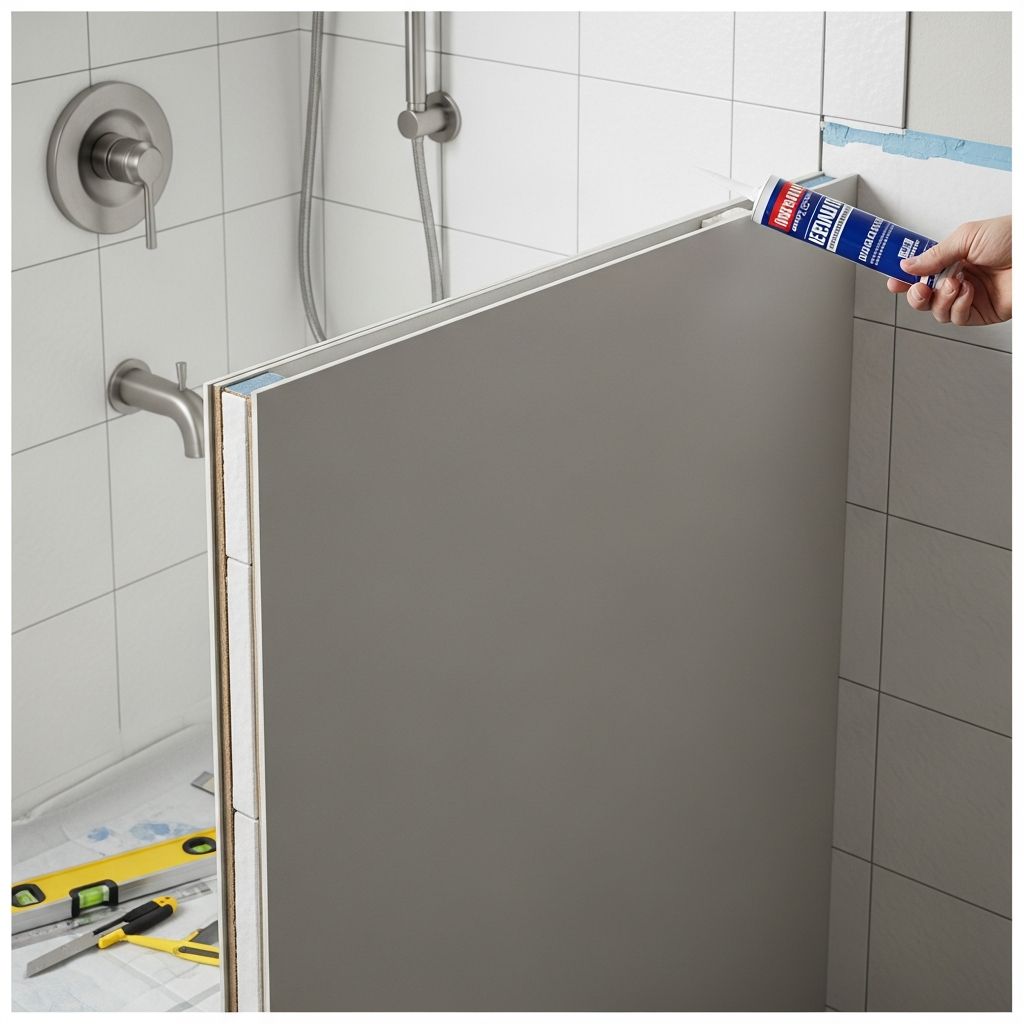
Apply adhesive to the tile surface using a notched trowel, creating uniform ridges that ensure proper coverage. The notched pattern allows air to escape during panel installation while creating a strong, continuous bond. Work on the back panel first, as this provides the most structural support. Apply adhesive in a continuous pattern across stud locations and along the perimeter.
Carefully position the panel, aligning it with your reference marks and ensuring it seats properly on the shower base. Press firmly against the wall, working from top to bottom to eliminate air pockets. Check for level frequently during installation. Once positioned correctly, screw the panel to the wall studs, ensuring fasteners are rated for moisture environments and feature flat washers to distribute pressure evenly.
Repeat this process with side panels and additional wall sections. Each panel must be level and properly aligned with adjacent panels. The corners require particular attention, as tight seals at these junction points prevent water intrusion. Apply additional adhesive along corner seams to create a waterproof seal where panels meet.
Securing Corners and Managing Transitions
Corner installations present unique challenges in surround installation. The inside corners where wall panels meet must be sealed completely to prevent water penetration behind the panels. Apply a small bead of moisture-rated adhesive in these corner areas before installing adjacent panels.
Outside corners often feature trim pieces designed to hide the panel edges and create finished transitions. These corner trim pieces typically apply over the panel edges using adhesive or fasteners. Ensure all corner trim sits flush against the panels with no gaps that could allow water infiltration.
If your shower features plumbing panels or access points, these sections require careful measurement and secure attachment. The manufacturer’s instructions specify where additional blocking or reinforcement may be necessary. Follow these guidelines precisely to ensure adequate support for any pipes or fixtures located behind these panels.
Finishing Touches and Waterproofing Measures
After all panels are installed and the adhesive begins setting, shift focus to creating a completely waterproof enclosure. Caulk all joints between panels and at the base trim using silicone caulk rated for bathrooms. This flexible sealant accommodates minor movement while maintaining a water-tight seal. Proper caulking prevents water from seeping behind panels and reaching the tile or substrate beneath.
Pay special attention to the seam where the surround meets the shower base or pan. This critical junction requires a continuous bead of caulk to prevent water from traveling underneath during showering. Similarly, seal any screw holes or fastener locations, though quality moisture-rated screws with proper washers minimize this concern.
Remove any protective film from panel surfaces and trim pieces. Clean all surfaces thoroughly to remove adhesive residue or dust that may have accumulated during installation. A clean surround showcases the finish and demonstrates professional workmanship.
Reinstalling Fixtures and Hardware
Once the adhesive has cured sufficiently—typically 24 hours, though verify manufacturer recommendations—you can reinstall your shower fixtures. Begin with the shower valve trim kit, which typically includes decorative escutcheon plates and finishing hardware. These components hide rough openings and create a polished appearance.
Carefully install the showerhead, faucet handles, and spout, ensuring all connections are tight and secure. Test the function of all controls before completing the project. Some hardware may require adjustment after installation to ensure proper alignment and operation.
Reinstall any accessories like soap dishes or grab bars according to manufacturer specifications. Ensure these elements are securely fastened and won’t create water intrusion points.
Maintenance and Long-Term Care
Proper maintenance extends the lifespan of your new shower surround significantly. Regular cleaning with mild soap and water preserves both the appearance and functionality of the panels. Avoid abrasive cleaners or scrubbing pads that can damage panel surfaces.
Inspect caulked seams periodically for deterioration or separation. When caulk begins to crack or pull away from panel edges, remove it completely and apply fresh silicone caulk. This preventive maintenance stops water infiltration before it becomes problematic.
Ensure proper bathroom ventilation by running exhaust fans during and after showers. This moisture control prevents excessive condensation, which can compromise panel adhesion over extended periods. Adequate ventilation also inhibits mold growth at panel seams and corners.
Troubleshooting Common Installation Issues
Despite careful preparation, some installations encounter challenges. Panels that don’t sit flush against the wall may indicate an uneven tile surface underneath. In such cases, additional adhesive or careful shimming may be necessary to achieve proper seating and level alignment.
If panels shift during adhesive curing, temporary bracing with adjustable shower rods or wooden supports can maintain proper positioning until the adhesive sets completely. Ensure any bracing doesn’t damage panel surfaces and remove it once adhesive has hardened.
Water appearing behind panels shortly after installation typically indicates caulk seams weren’t properly applied or sealed. Address these issues immediately by removing and reapplying caulk to affected areas.
Comparing Installation Methods
| Installation Method | Best For | Advantages | Considerations |
|---|---|---|---|
| Adhesive Over Tile | Existing solid tile surfaces | No tile removal, faster installation, cost-effective | Requires clean, well-prepared surface |
| Direct-to-Stud | New construction or complete renovations | Maximum structural support, professional appearance | Requires wall access, more time-intensive |
| Hybrid Approach | Mixed conditions with some damaged tile | Addresses problem areas while preserving good tile | Requires careful planning and assessment |
Frequently Asked Questions
Can I install a shower surround over cracked tile?
Small cracks may be acceptable if the tile remains firmly attached to the wall. However, extensive cracking or loose tile sections require repair or removal before surround installation. A solid substrate ensures the surround adheres properly and performs as intended.
How long does the adhesive take to cure completely?
Most moisture-rated adhesives achieve initial set within 24 hours, but full cure may require 48 to 72 hours depending on product specifications and environmental conditions. Always follow manufacturer instructions and avoid using the shower until complete curing has occurred.
What type of caulk should I use for sealing surround seams?
Silicone caulk specifically rated for bathroom or shower use provides superior water resistance and flexibility compared to acrylic caulk. Avoid polyurethane-based products that can degrade in wet environments. Ensure any caulk product is mildew-resistant for long-term performance.
Do I need to remove existing tile before installing a surround?
Not necessarily. If tile is in good condition and firmly adhered to the wall, a surround can install directly over it. However, remove tile if it shows signs of water damage, mold growth, or poor adhesion to the substrate.
Can I use a shower surround in a standard bathtub area?
Yes, many surrounds are designed specifically for bathtub enclosures. Ensure you select a kit manufactured for your tub dimensions and configuration. Some kits accommodate both showers and tubs with appropriate modifications.
Conclusion: Achieving Professional Results
Installing a shower surround over existing tile represents an accessible DIY project that dramatically transforms your bathroom’s appearance and functionality. By following proper preparation procedures, using quality materials, and applying techniques that prioritize waterproofing, you achieve results comparable to professional installations. The combination of adhesive bonding and mechanical fastening creates a durable, long-lasting shower enclosure that withstands years of regular use. With attention to detail and patience during the curing process, your bathroom renovation project will deliver satisfaction and improved home value.
References
- Install a Glue-to-Wall Tub or Shower Surround — Lowe’s Home Improvement. 2025. https://www.lowes.com/n/how-to/install-tub-shower-surround
- How to Install a Shower Surround — The Home Depot. 2025. https://www.homedepot.com/c/ah/how-to-install-a-shower-surround/9ba683603be9fa5395fab90f735e8c9
- Guide to DIY Shower Wall Panel Installation — Flexstone Products. 2025. https://flexstoneproducts.com/guide-to-shower-wall-panel-installation/
- How To Install a Direct-To-Stud Shower Enclosure — The Home Depot. 2025. https://www.youtube.com/watch?v=8OMzart3IFc
- How To Install Delta Shower Surround & Direct to Stud — Home Rapid Repair. April 15, 2023. https://www.youtube.com/watch?v=UcjOiOj2NTc
Similar Articles







Read full bio of Sneha Tete