Shrub Pruning Dos and Don’ts: Complete Guide
Master shrub pruning with expert dos and don'ts for healthy, beautiful plants.
Shrub Pruning Dos and Don’ts: A Comprehensive Guide
Pruning shrubs is one of the most important maintenance tasks for any gardener. When done correctly, pruning encourages healthy growth, improves plant appearance, and maintains the structural integrity of your landscape. However, improper pruning techniques can damage plants, invite disease, and create unattractive results. This comprehensive guide covers the essential dos and don’ts of shrub pruning to help you achieve professional-quality results in your garden.
Understanding the Importance of Proper Pruning
Before diving into specific techniques, it’s essential to understand why proper pruning matters. Healthy shrubs require regular maintenance to remove dead or diseased branches, improve air circulation, and maintain an attractive shape. Poor pruning practices can lead to weak growth, increased susceptibility to disease and pest infestations, and a deteriorated appearance that takes years to recover from. By following established pruning guidelines, you can ensure your shrubs thrive while maintaining the aesthetic appeal of your landscape.
Essential Pruning Tools and Equipment
Having the right tools is crucial for effective and safe shrub pruning. Each tool serves a specific purpose and should be selected based on the branch diameter and type of cut required.
Hand Pruners
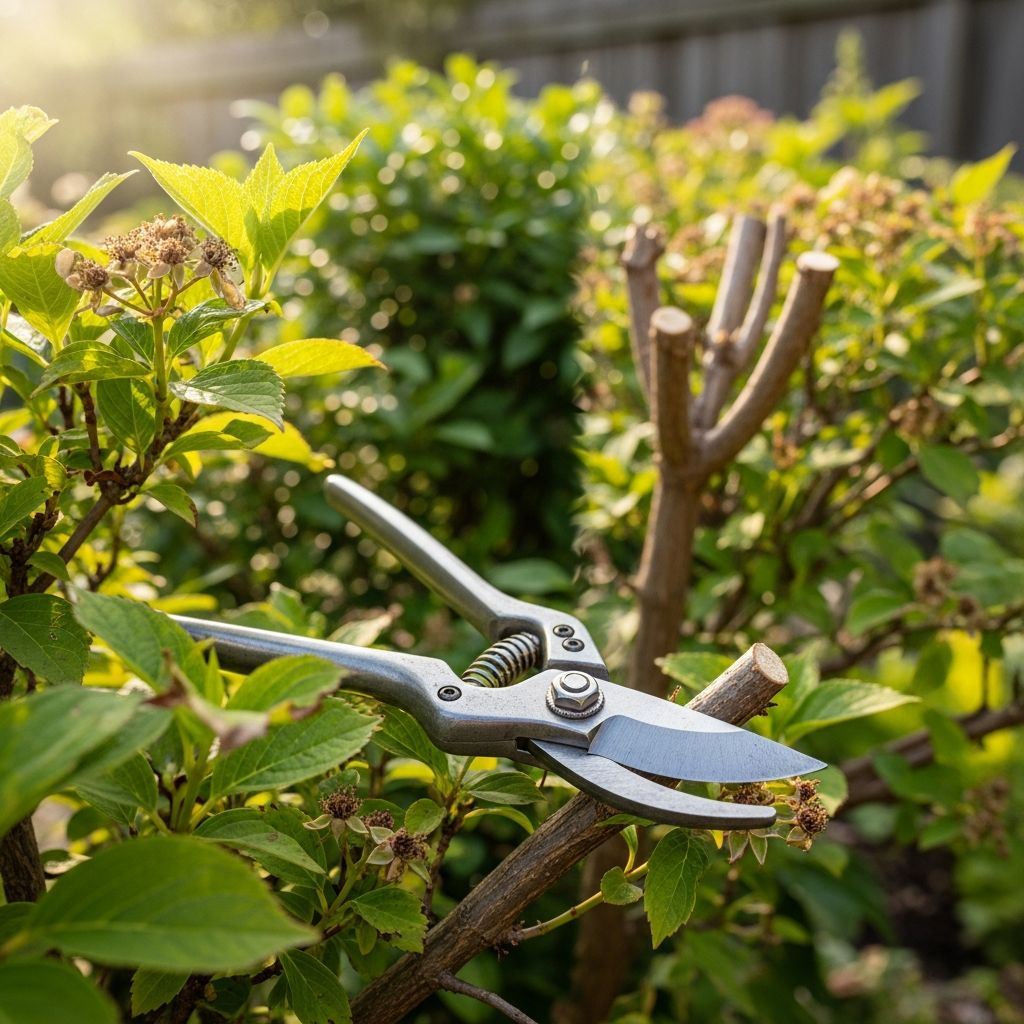
Hand pruners are the most versatile pruning tool and should be the foundation of any gardener’s toolkit. These tools are designed for cutting branches up to 3/4 inch in diameter and are ideal for detailed pruning work. Bypass pruners, which work like scissors, provide clean cuts on live wood and should be your first choice for most pruning tasks. Anvil pruners, featuring a blade that cuts against a flat surface, are better suited for dead wood. Always use hand pruners to cut just above a healthy bud or branch junction to promote proper healing and regrowth.
Loppers
Loppers are designed for cutting branches between 3/4 inch and 1 1/2 inches in diameter. These tools feature longer handles than hand pruners, providing extra leverage for tougher cuts and allowing you to reach higher branches safely. Loppers are particularly useful for thinning out dense growth and removing older, thicker branches from mature shrubs. The extended reach makes them invaluable when working on tall or overgrown specimens.
Pruning Saws
For branches larger than 1 1/2 inches in diameter, pruning saws are the appropriate tool. These come in various styles, including folding saws for convenient storage and pole saws for reaching high branches safely from the ground. A quality pruning saw with sharp teeth will make quick work of larger branches and reduce the effort required to complete the cut.
Hedge Shears and Long Shears
For formal hedges and boxwoods, long shears are the tool of choice. These allow for precise shaping and can quickly remove large amounts of foliage in a uniform manner. Hedge shears are specifically designed for this purpose and help create clean, professional-looking edges.
Key Pruning Techniques: The Dos
Making Clean Cuts at the Right Angle
One of the most important dos of shrub pruning is making clean cuts at a 45-degree angle, positioned just above a bud or branch junction. This angle allows water to run off rather than pooling on the cut surface, which helps prevent disease. The cut should be positioned approximately 1/4 inch above an outward-facing bud. This positioning encourages the new growth to develop outward, maintaining the shrub’s natural shape while promoting fuller, more vigorous development.
Using Sharp, Clean Tools
Always use sharp, clean tools when pruning. Dull blades tear and crush plant tissue rather than making clean cuts, leaving the plant vulnerable to disease and pest infestations. Before each pruning session, sharpen your tools if necessary and clean them with a disinfectant solution to prevent spreading disease from one plant to another. This simple practice can dramatically improve the health of your landscape.
Employing Proper Thinning Cuts
Thinning cuts involve removing entire branches back to the nearest limb or trunk, cutting just outside the branch collar without leaving a stub. The branch collar is the swollen area where the branch attaches to the trunk. This technique improves air circulation and light penetration while maintaining the plant’s natural shape. Thinning is less aggressive than heading and helps open up the interior of dense shrubs, allowing sunlight and air to reach all parts of the plant.
Practicing Heading Cuts for Dense Growth
Heading cuts promote side branching and denser growth. By cutting branches at a 45-degree angle approximately 1/4 inch above an outward-facing bud, you encourage the plant to develop multiple new shoots at that location. This technique is particularly useful for young shrubs that need to develop a fuller, bushier form. However, heading cuts should be used judiciously on mature plants, as excessive use can lead to an unnatural appearance.
Timing Your Pruning Correctly
Proper timing is crucial for successful shrub pruning. Most shrubs should be pruned during their dormant season, typically in late winter or early spring before new growth appears. Flowering shrubs have specific requirements: those that flower in spring should be pruned immediately after blooming, while summer-flowering varieties can be pruned in late winter. Understanding your specific shrubs’ growth habits ensures you prune at the optimal time for maximum benefit.
Removing Dead, Diseased, and Damaged Branches
Always remove any dead, diseased, or damaged branches as soon as you notice them. These branches serve no purpose and can harbor pests and diseases that spread to healthy tissue. When removing diseased branches, disinfect your tools between cuts to prevent spreading the problem to other parts of the plant or to other plants in your landscape.
Gradual Rejuvenation for Overgrown Shrubs
For older or overgrown shrubs, rejuvenation pruning can restore vigor. The preferred method is to remove approximately one-third of the oldest branches annually for three consecutive years. This gradual approach encourages new growth while maintaining the plant’s overall structure and appearance throughout the process. By spreading the rejuvenation over three years, you avoid the shock of excessive pruning in a single season.
Common Pruning Mistakes: The Don’ts
Never Over-Prune Your Shrubs
One of the most common and damaging mistakes is over-pruning. Removing more than one-third of the shrub’s growth in a single season can severely stress the plant and reduce flowering and new growth. Over-pruning also creates an unnaturally thin appearance and can take years to recover from. Always exercise restraint and remember that you can always prune more in the future, but you cannot replace removed growth quickly.
Avoid Leaving Stubs
Never leave stubs when making pruning cuts. A stub is a portion of a branch left between the cut and the branch collar. Stubs become entry points for pests and diseases and detract from the plant’s appearance. Always cut just outside the branch collar to ensure the wound heals properly and the plant can compartmentalize and seal off the injured area.
Don’t Use Dull or Dirty Tools
Using dull tools or failing to disinfect between cuts is a significant don’t. Dull blades crush tissue and create poor wound closure, while dirty tools spread disease from plant to plant. Maintain your tools properly by keeping them sharp and clean. This simple practice prevents many common problems and promotes faster healing of pruning wounds.
Never Make Improper Cuts
Improper cuts that damage the plant and cause disease should be avoided at all costs. Always cut at the proper angle and position, and never cut flush against the trunk or leave long stubs. Poor cuts not only look unattractive but also invite disease and pest problems that compromise plant health.
Avoid Creating Dense Outer Shells
Excessive shearing can create a dense outer shell with sparse growth inside. This situation occurs when the exterior of the shrub becomes so thick that light cannot penetrate to the interior branches. These interior branches eventually die from lack of light, leaving you with a hollow shrub that looks attractive from the outside but is structurally weak. Prevent this problem by using thinning cuts to open up the plant’s interior and allow light to reach all areas.
Don’t Prune at the Wrong Time
Pruning at the wrong time of year can eliminate flowering, stress the plant, or stimulate tender new growth that falls victim to late frosts. Always research the specific requirements of each shrub type before pruning. Spring-flowering shrubs should be pruned after flowering, while most other shrubs benefit from late winter pruning during dormancy.
Never Attempt Hard Pruning on Non-Compatible Species
Hard pruning—cutting the entire plant back to 6-12 inches above the ground—should only be performed on shrubs that are known to respond well to this drastic treatment. Not all shrubs can tolerate hard pruning, and attempting it on sensitive species will kill the plant. Before performing hard pruning, verify that your shrub species can withstand this treatment and that the plant is healthy enough to survive the stress.
Pruning Different Shrub Types
Formal Hedges and Boxwoods
Formal hedges and boxwoods require regular maintenance with long shears to maintain their precise shape. These plants tolerate frequent pruning and develop a naturally dense habit. Focus on maintaining clean lines and consistent shape, using long shears to create uniform edges.
Evergreen Shrubs
Evergreen shrubs, such as yews and junipers, require consistent upkeep to prevent excessive density that can lead to disease. Use long shears for overall shape maintenance, hand pruners for removing dead or diseased branches, and loppers for periodic thinning of older growth. Regular pruning prevents these shrubs from becoming overly dense and maintains their attractive appearance.
Large, Fast-Growing Shrubs
Fast-growing shrubs like privet or forsythia can quickly become unruly without proper pruning. Use powered shears to quickly trim large hedges, loppers for cutting back thicker branches, and hand pruners for detailed shaping and thinning. These shrubs typically benefit from more frequent pruning than slower-growing varieties.
Special Pruning Considerations
Pinching for Compact Growth
Pinching is a hand technique used on shrubs to encourage bushier development and compact shape. By pinching off the tips of new growth early in the season, you stimulate lower branches to develop, creating a fuller plant with less height. This technique is particularly useful for young shrubs that need to develop a more desirable form.
Maintenance Pruning for Flowering Shrubs
Maintenance pruning involves removing dead, diseased, or damaged branches and thinning crowded areas to maintain shape and health. This regular, gentle pruning keeps flowering shrubs attractive and productive throughout their lives. Perform maintenance pruning each season, removing problem branches as soon as you notice them.
Seasonal Considerations
Different shrubs have different seasonal requirements. Spring-flowering shrubs should be pruned immediately after blooming to avoid removing next year’s flower buds. Summer-flowering shrubs can be pruned in late winter. Most evergreens benefit from pruning in late winter or early spring. Understanding these requirements ensures successful pruning that doesn’t eliminate flowering or stress the plant.
Frequently Asked Questions
Q: When is the best time to prune shrubs?
A: Most shrubs should be pruned during their dormant season in late winter or early spring. However, spring-flowering shrubs should be pruned immediately after blooming, while summer-flowering varieties can be pruned in late winter. Always research your specific shrub type for optimal timing.
Q: How much of a shrub can I safely prune in one season?
A: Never remove more than one-third of the shrub’s growth in a single season. This conservative approach prevents excessive stress on the plant and allows it to recover quickly while maintaining its structure and appearance.
Q: Can I use the same tools for all shrubs?
A: While hand pruners are suitable for most pruning tasks, different branch sizes require different tools. Use hand pruners for branches up to 3/4 inch, loppers for branches 3/4 to 1 1/2 inches, and pruning saws for larger branches. Using the correct tool ensures clean cuts and prevents damage.
Q: What should I do if I over-prune a shrub?
A: If over-pruning occurs, stop immediately and allow the plant to recover. Water deeply and regularly, apply mulch around the base, and avoid fertilizing, which can stimulate excessive new growth. Most shrubs will eventually recover, though it may take several years to regain their original appearance.
Q: Is it ever safe to perform hard pruning on shrubs?
A: Hard pruning—cutting back to 6-12 inches above the ground—can be performed on select shrub species that tolerate this drastic treatment. Before attempting hard pruning, verify that your specific shrub variety can withstand it and that the plant is healthy and vigorous enough to survive.
Q: How do I prevent disease transmission when pruning?
A: Always use sharp, clean tools and disinfect them between cuts and between different plants. Clean your tools with a disinfectant solution regularly throughout the pruning season. This practice prevents spreading disease from plant to plant and maintains the overall health of your landscape.
References
- Early-Spring Pruning Primer: A Comprehensive Guide — This Old House. https://www.thisoldhouse.com/gardening/21015506/how-to-prune-in-early-spring
- Best Tools for Shrub Pruning — This Old House. https://www.thisoldhouse.com/gardening/97823/best-tools-for-shrub-pruning
- How To Prune Small Trees and Shrubs — This Old House. https://www.thisoldhouse.com/landscaping/21015586/how-to-prune-small-trees-and-shrubs
- Everything You Need To Know about Pruning and Dividing Plants — This Old House. https://www.thisoldhouse.com/gardening/21018674/everything-you-need-to-know-about-pruning-and-dividing-plants
Similar Articles



Read full bio of medha deb