Simple Kitchen Cabinet Repairs You Can DIY
Master easy kitchen cabinet fixes and upgrades without hiring professionals.
Kitchen cabinets are among the hardest-working features in any home, opening and closing hundreds of times each year. Over time, this constant use can lead to wear and tear that makes your cabinets look tired or function poorly. The good news is that many common cabinet problems can be fixed without calling an expensive professional contractor. Whether you’re dealing with sagging doors, sticky drawers, or outdated hardware, these simple DIY repairs can restore your cabinets to like-new condition and breathe fresh life into your kitchen.
Most cabinet repairs require only basic tools and a little patience. By learning how to handle these common issues yourself, you can save hundreds of dollars while gaining the satisfaction of completing a home improvement project. Let’s explore the most common kitchen cabinet problems and how you can fix them.
Adjusting Cabinet Doors
One of the most common cabinet problems is misaligned or sagging doors. When cabinet doors don’t close properly or hang unevenly, they can be annoying to use and make your kitchen look neglected. Fortunately, adjusting cabinet doors is one of the easiest repairs you can do yourself.
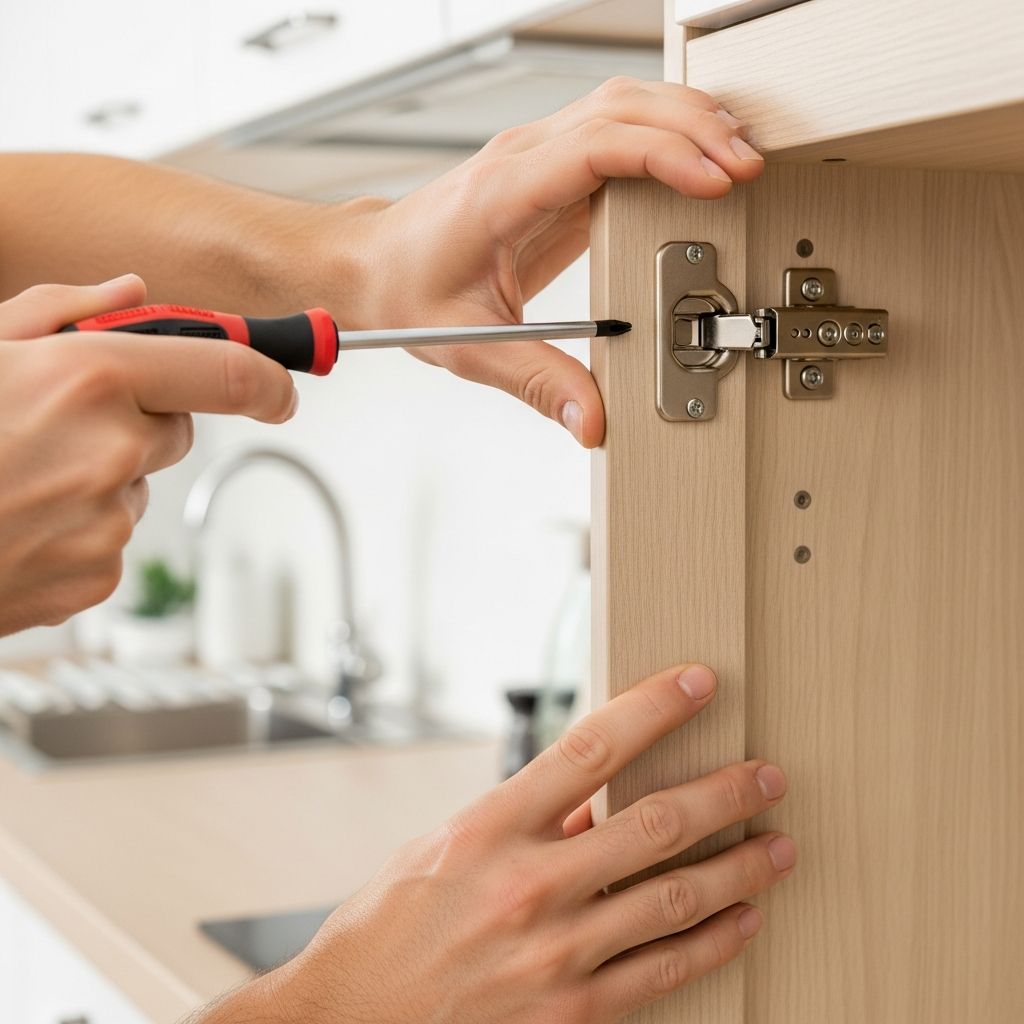
Most modern cabinet hinges have adjustment screws that allow you to fine-tune door alignment. There are typically three adjustments you can make:
- Side-to-side adjustment: Loosen the outer hinge screw slightly and turn the adjustment screw to move the door left or right. This helps align the door with its neighbors and ensures even gaps.
- Up-and-down adjustment: The inner adjustment screw controls vertical movement. Turn it to raise or lower the door until it’s level with adjacent doors.
- In-and-out adjustment: This screw controls how far the door protrudes from the cabinet frame. Adjust it to ensure doors are flush with the frame and each other.
Start by loosening the adjustment screws only slightly—typically just a quarter turn. Make small adjustments and test the door fit frequently. It’s much easier to make another small turn than to over-correct and have to adjust again. Once you’ve achieved the desired alignment, tighten all screws firmly to keep the adjustment in place.
Replacing Cabinet Hinges
If your cabinet hinges are worn out, broken, or simply outdated, replacing them is a straightforward project that can dramatically improve your kitchen’s appearance and functionality. Modern soft-close hinges are particularly popular because they prevent cabinet doors from slamming and add a touch of sophistication to any kitchen.
To replace cabinet hinges, first remove the old hinges by unscrewing them from both the cabinet door and the cabinet frame. Keep these screws in case you need them later. Before installing new hinges, inspect the screw holes. If they’re damaged or stripped, you may need to fill them with wood filler and drill new holes.
For installing new hinges, use a depth-stop drill bit to ensure consistent hole depth, which is especially important for cup-style hinges. Mark the hinge positions carefully—most hinges are positioned 2 to 3 inches from the top and bottom of the door. Use a hinge jig if available, as it ensures accurate, repeatable positioning for all your cabinet doors.
Soft-close hinges typically require the same hole spacing as standard hinges, so if your cabinets already have holes from previous hinges, you may be able to use them directly. However, always verify the specifications of your new hinges before drilling.
Fixing Sticky or Misaligned Drawers
Sticky drawers that won’t open smoothly or drawers that hang at odd angles are both common cabinet problems. These issues usually stem from either misaligned drawer slides or buildup of dust and debris inside the slides.
Start by cleaning your drawer slides thoroughly. Remove the drawer completely and vacuum out any dust and crumbs from the slides. Use a damp cloth to wipe down the metal tracks, and dry them completely. Sometimes this simple cleaning is all you need to restore smooth operation.
If cleaning doesn’t solve the problem, the drawer slides may need adjustment. Most modern drawer slides have adjustment screws that allow you to shift the drawer left, right, forward, or backward. Consult your specific drawer slide manufacturer’s instructions, as adjustment mechanisms vary. Generally, you’ll loosen the adjustment screws slightly, reposition the drawer, and then retighten.
For drawers that stick badly, applying a small amount of silicone-based lubricant to the slides can help. Avoid using oil-based lubricants, as these attract dust and can make the problem worse over time. Apply lubricant sparingly and wipe away any excess.
Cabinet Door Refacing
If your cabinet doors are still structurally sound but look dated or worn, refacing is an excellent alternative to complete replacement. Cabinet refacing involves applying a new veneer or laminate to the existing door surface, giving it a completely fresh appearance.
The refacing process begins with thorough preparation. Remove all doors from the cabinet frame and label them carefully so you remember where each one belongs. Sand the door surfaces smooth with medium-grit sandpaper to create a good surface for the new veneer to adhere to. Pay special attention to getting an even, smooth finish.
Next, cut your veneer strips to the appropriate width using a veneer cutting tool or table saw. Quarter-sawn white oak is a popular choice for cabinet refacing because its distinctive grain pattern adds visual interest and elegance. Cut strips slightly oversized—approximately one-eighth inch larger than needed—so you have room to trim them flush after installation.
Apply the veneer using contact cement or peel-and-stick adhesive, depending on your chosen material. Work systematically across each door, smoothing out air bubbles as you go. Once the veneer is applied, use a flush-cut router bit to trim the edges perfectly even with the door edges.
After refacing, edge-banding hides the raw edges of your plywood door cores. Apply edge banding to all exposed edges using contact cement or heat activation, depending on the type. Sand everything smooth with fine-grit sandpaper, then apply your finish. Water-based polyurethane is an excellent choice because it remains clear over time, unlike oil-based finishes which can yellow.
Fixing Cabinet Face Frame Issues
The face frame—the wooden border around cabinet openings—can develop various problems over time. Loose joints, cracked wood, or warped boards can all affect both appearance and function.
For loose joints, try tightening any visible screws or bolts first. If this doesn’t help, you may need to remove the cabinet and reinforce the joint. This might involve adding additional fasteners, applying wood glue to loose joints and clamping them, or installing corner braces on the inside of the cabinet.
Small cracks in the face frame can be filled with wood filler that matches your cabinet finish. Apply filler to the crack, smooth it flush with the surface, and sand smooth once dry. For finishing, apply your cabinet’s existing stain and finish over the repair to blend it seamlessly.
Warped face frames are more challenging to fix. If the warping is severe, replacement may be necessary. However, minor warping can sometimes be addressed by strategically placing shims behind the cabinet to pull it straight against the wall.
Replacing Cabinet Hardware
Updating cabinet hardware is one of the quickest and most dramatic ways to refresh your kitchen’s appearance. Handles, knobs, and pull styles have a huge impact on the overall kitchen aesthetic, and fortunately, replacing them is simple.
Start by removing the old hardware using a drill or screwdriver. Check whether the existing mounting holes will work for your new hardware. If not, you’ll need to fill old holes with wood filler and drill new ones in the correct positions.
Use a cabinet hardware template if available—these help ensure consistent placement across all doors and drawers. Mark all hole locations carefully before drilling. For drilling mounting holes in cabinet doors, use a depth-stop drill bit to avoid drilling through the door completely.
Install new hardware according to the manufacturer’s instructions, tightening all fasteners securely. The right hardware can transform your entire kitchen, so take time to choose pieces that complement your cabinet style and kitchen design.
Repainting or Staining Cabinets
If your cabinets are structurally sound but just need a color update, painting or staining is an affordable refresh option. This process requires patience but delivers impressive results.
Begin by removing all cabinet doors, drawers, and hardware. Sand all surfaces thoroughly with medium-grit sandpaper to ensure proper paint or stain adhesion. Fill any holes, gaps, or damaged areas with wood filler, then sand smooth.
Apply primer appropriate for your chosen finish. For paint, use a high-quality cabinet paint or enamel that resists chipping and moisture. For staining, select a stain color that complements your kitchen design and overall home decor.
Apply finish coats according to product instructions, typically waiting the recommended time between coats. Sand lightly between coats with fine-grit sandpaper for best adhesion. Most cabinet finishes require at least two or three coats for optimal coverage and durability.
Installing Soft-Close Drawer Slides
Upgrading to soft-close drawer slides is a luxurious improvement that makes your kitchen feel more refined and expensive. These slides prevent drawers from slamming and feature dampening mechanisms that slow the drawer as it closes.
Start by removing existing drawer slides. Clean the drawer box thoroughly and inspect it for any damage. Most soft-close slides mount in the same locations as standard slides, though you should verify this with your specific product.
Measure carefully to ensure accurate placement. Soft-close slides must be perfectly aligned—any deviation will cause the drawer to bind or close unevenly. Use a mounting jig if available to ensure consistent positioning across all drawers.
Install slides according to manufacturer instructions, typically using screws provided. Test drawer operation before reinstalling drawer fronts. Properly installed soft-close slides should glide smoothly and close gently without any binding or wobbling.
Addressing Cabinet Door Gaps
Uneven gaps between cabinet doors create a sloppy appearance and can indicate alignment problems. Fixing these gaps requires careful adjustment of hinges and door positioning.
First, determine whether the gap is consistent around the entire door or only in specific areas. Consistent gaps across all doors usually indicate that the cabinet frame itself is out of square. Inconsistent gaps suggest individual door misalignment.
Use hinge adjustment screws to move doors until gaps are uniform. This typically requires adjusting multiple screws on both hinges of each door. Make small adjustments—usually quarter-turn increments—and frequently check your progress.
Gaps should typically be consistent at approximately one-eighth inch. This spacing allows doors to operate freely without binding while maintaining a clean, professional appearance.
Frequently Asked Questions
How often should kitchen cabinets be maintained?
Kitchen cabinets should be inspected quarterly for any signs of wear, damage, or misalignment. Regular cleaning and immediate attention to minor problems prevents larger, more expensive repairs later.
Can I replace just the cabinet doors without replacing the entire cabinet?
Yes, replacing cabinet doors is a common and cost-effective way to update your kitchen. You can either purchase new doors that fit your existing cabinet frame or have custom doors made to your specifications.
What’s the best finish for kitchen cabinets?
Water-based polyurethane is ideal for kitchen cabinets because it resists moisture, remains clear over time, and is easier to apply than oil-based finishes. It’s durable enough for the kitchen environment while providing excellent protection.
How much does cabinet refacing typically cost?
Professional cabinet refacing typically costs $4,000 to $9,000 for an average kitchen. DIY refacing can cost significantly less, though it requires time and effort. Material costs for veneers and edge banding are usually $500 to $2,000 depending on quality and wood species.
What tools do I need for basic cabinet repairs?
Basic cabinet repairs typically require a drill, screwdriver set, sandpaper, tape measure, level, and possibly a circular saw or table saw for larger projects. Specialized tools like hinge jigs and veneer cutters make some projects easier but aren’t always necessary.
How can I prevent cabinet damage?
Prevent cabinet damage by closing doors gently, cleaning spills immediately, maintaining proper humidity levels in your kitchen, and avoiding excessive weight on shelves. Regular maintenance and prompt attention to small problems prevent major repairs.
References
- Cabinet Construction and Installation Standards — Woodworking Institute. 2024. https://www.woodworkinstitute.org/standards
- Best Practices for Kitchen Cabinet Maintenance — National Association of Home Builders. 2023. https://www.nahb.org/guides/home-maintenance
- Wood Finishing and Surface Preparation Guide — American Woodworkers Association. 2024. https://www.americanwoodworkers.org/resources
- Understanding Cabinet Hardware Standards — Hardware Manufacturers Association. 2023. https://www.hardwaremfg.org/standards
- DIY Home Improvement Safety Guidelines — Consumer Product Safety Commission. 2024. https://www.cpsc.gov/safetyguides
Similar Articles







Read full bio of medha deb