How to Remove Skunk Smell: The Complete Guide
Learn the proven methods to eliminate skunk odor from pets and home effectively.
Few experiences are more unpleasant than discovering that your beloved pet has had an encounter with a skunk. The pungent odor that results from skunk spray can linger for weeks if not properly treated, affecting not only your pet but also your home and your sanity. Despite the prevalence of home remedies like tomato juice and beer, most of these solutions are merely temporary fixes that mask the problem rather than solve it. Understanding how skunk spray works and learning the science-backed method for removal can save you time, money, and countless hours of discomfort.
Understanding Skunk Spray and Its Composition
Before tackling removal methods, it’s important to understand what exactly makes skunk spray so notoriously offensive. A skunk stores its distinctive spray in two specialized glands located along its anus, equipped with nipple-shaped openings that allow the skunk to direct its defense mechanism with remarkable precision. When threatened, a skunk will lift its tail and either accurately spray an intruder if it sees them approaching, or disperse the spray in a cloud up to ten feet away in hopes of deterring the potential threat.
The key component of skunk spray that makes it so difficult to remove is the presence of thiols—organic compounds containing sulfur that create the characteristic rotten egg smell combined with other pungent notes. These oily thiols are the reason why simple masking odors or washing with water alone proves ineffective. The thiols are hydrophobic, meaning they repel water and cling to fur, skin, and fabric. To truly eliminate skunk odor, these thiols must be chemically transformed into odorless compounds, rather than merely masked or diluted.
Why Common Home Remedies Fail
The most persistent myth about skunk odor removal is that tomato juice works. This widespread misconception likely originated because the strong smell of tomato juice can temporarily mask the skunk odor, but it does nothing to neutralize the thiols causing the problem. In fact, applying tomato juice to your pet may leave you with a confusing blend of rotten egg, skunk, and tomato juice aromas that is arguably worse than the original skunk smell.
Other common home remedies fare no better. Beer and oatmeal, frequently recommended online, also fail to address the core issue. Since only chemical neutralization can transform the thiols into odorless compounds, any remedy that doesn’t chemically alter these sulfur compounds will prove disappointing. Water alone is particularly ineffective because it can actually reactivate dried thiols, prolonging the smell whenever your pet gets wet.
The Science-Backed Solution: Hydrogen Peroxide and Baking Soda
The most effective method for removing skunk odor was developed by chemists and has been proven through decades of professional use by groomers and pet owners. This formula works because it chemically neutralizes the thiols rather than merely masking them. The combination of hydrogen peroxide, baking soda, and dish detergent creates a reaction that transforms the malodorous compounds into odorless substances.
Hydrogen peroxide breaks down the thiols and oxidizes them into harmless byproducts. Baking soda contributes to this chemical process while also helping to absorb residual odors. The dish detergent is equally important—it removes the oily residue left by the skunk spray, ensuring that the thiols don’t linger on the fur or skin where they can continue to cause problems.
The Proven Recipe for Skunk Odor Removal
The following recipe should be made fresh immediately before use, as the mixture loses effectiveness if stored:
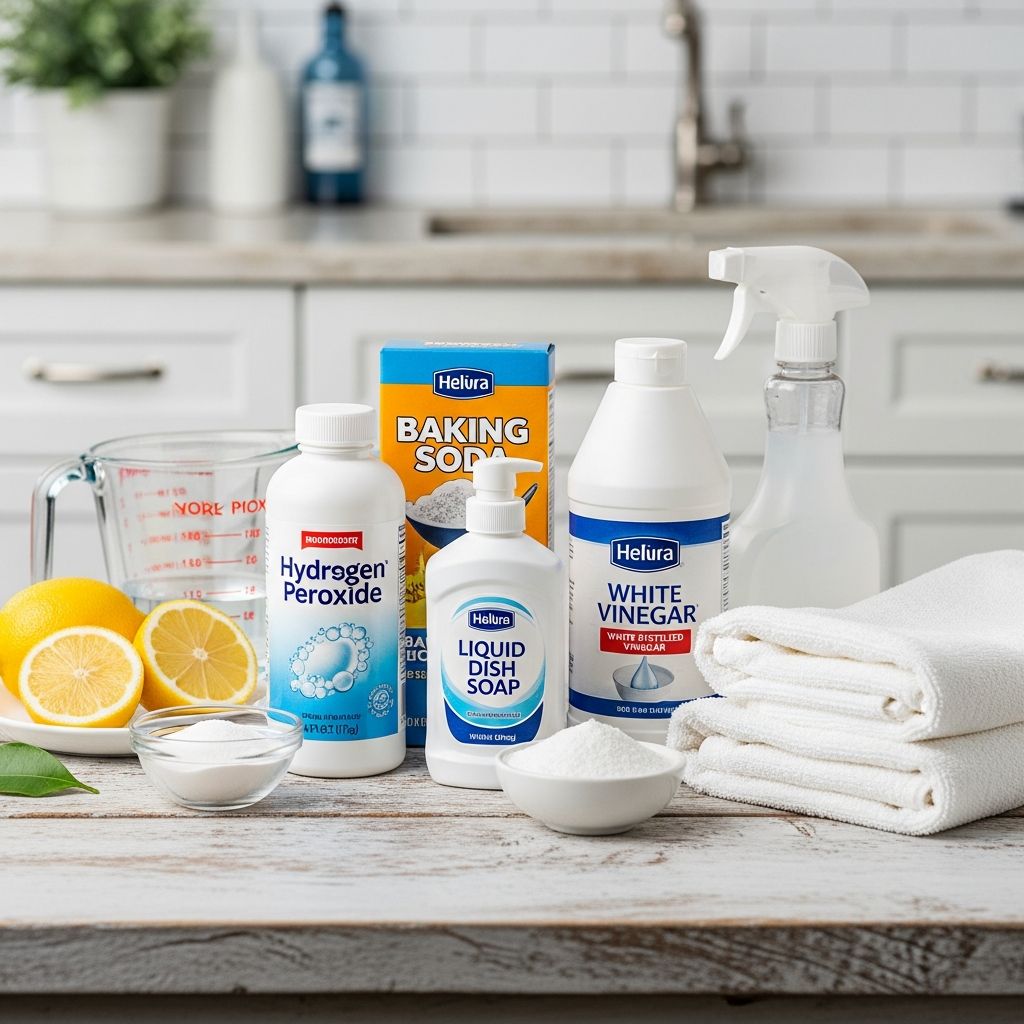
- 1 quart (0.95 liters) of 3% hydrogen peroxide in a fresh bottle
- 1/4 cup (70 grams) of baking soda (sodium bicarbonate)
- 1-2 teaspoons (5-10 milliliters) of liquid dish soap
Mix all three ingredients together in an open container immediately before application. This mixture should never be stored or prepared in advance, as the hydrogen peroxide will lose its potency over time.
Step-by-Step Application Instructions
Preparation: Before applying the mixture, examine your pet carefully to determine where the skunk spray made contact. In most cases of direct hits, the spray concentrates on the front of the dog—the face, head, chest, and front legs—since the dog typically faces the skunk when the encounter occurs.
Application: Wearing rubber gloves, thoroughly shampoo the mixture into your pet’s fur, paying special attention to areas that received direct spray. Work the solution down to the skin, as the thiols can penetrate deep into the coat. For areas around the eyes and mouth, use a soft sponge to gently apply the solution. Don’t be shy about saturation; the more thoroughly you work the mixture in, the more effective the treatment.
Waiting Period: Allow the mixture to sit on your pet’s coat for at least five minutes. Some experienced groomers recommend leaving it on longer—anywhere from five to fifteen minutes—to ensure complete neutralization. During this time, the chemical reaction that breaks down the thiols is occurring.
Drying Before Rinsing: This step is crucial and often overlooked. Allow your dog’s coat to dry completely while the treatment mixture remains on it before rinsing. This extended contact time ensures that any thiols that have penetrated deeply into the fur are fully neutralized. If you rinse too early or get your pet wet before the coat is completely dry, remaining thiols will reactivate when exposed to water, potentially prolonging the smell for weeks.
Rinsing and Final Wash: Once the coat is completely dry, rinse your pet thoroughly with tap water. After rinsing, follow up with a regular dog shampoo and conditioner to restore your pet’s coat to its normal condition and pleasant smell.
Special Considerations for Different Situations
Eyes and Mouth Contamination: If your pet was sprayed directly in the face, special care is needed for the eyes and mouth. Use a soft sponge to apply the solution around these sensitive areas. For eye contamination, consider using a pet-safe eye wash solution liberally to flush away any spray before applying the main treatment. If your pet ingested skunk spray or was sprayed in the mouth, be prepared for the possibility of lingering breath odor that can persist for a week or more, even after successful treatment of the fur.
Long-Haired Dogs: Owners of long-haired breeds in areas where skunks are common should keep extra supplies on hand—three to four quarts of hydrogen peroxide and a large box of baking soda—since longer coats require more solution for thorough saturation. For long-haired pets, you may need to make multiple batches of the treatment mixture.
Paw Contamination: If the spray hit your pet’s feet, pour the treatment solution into a plastic cup or bowl and have your pet stand in it one leg at a time, allowing the mixture to soak through the paw pads and between the toes where thiols can hide.
Treating Skunk Odor in Your Home
Sometimes the skunk spray affects more than just your pet. If odor has spread throughout your home, household remedies can help. Setting out cereal bowls half-filled with vinegar throughout affected areas can help neutralize airborne odors. Some people have reported success by boiling vinegar and leaving it to simmer in a crockpot overnight, which circulates the vinegar vapors throughout the home and significantly reduces lingering skunk smell.
Preventing Future Incidents
Understanding skunk behavior can help prevent future encounters. Skunks are less likely to spray when confined in small enclosed spaces, making live traps an effective removal tool. If you do need to move a trapped skunk, wrap the entire trap in a plastic tarp to contain any potential spray. Be aware that even a trapped skunk can spray if frightened, so approach slowly and carefully.
Important Safety Notes
While skunk spray won’t cause lasting damage to your pet, a direct hit to the face can cause temporary blindness and significant discomfort. If your pet has been sprayed in the eyes, flush them immediately with water or pet-safe eye wash to minimize irritation. Some pets may experience mild skin irritation from the spray, but this typically resolves on its own within a few days.
The hydrogen peroxide and baking soda solution is safe for pets when used as directed. The 3% concentration used in this recipe is mild enough for topical application and won’t harm your pet’s skin when left on for the recommended time. However, never leave the mixture on for more than a few hours, and always rinse thoroughly afterward.
Frequently Asked Questions
Q: Will tomato juice really remove skunk smell?
A: No. Tomato juice temporarily masks the odor but does not neutralize the thiols that cause skunk smell. It’s a persistent myth that has no scientific basis.
Q: How many times will I need to treat my pet?
A: In most cases, one thorough application of the hydrogen peroxide and baking soda mixture will completely eliminate the odor. However, if the spray was particularly heavy or hit multiple areas, you may need to repeat the treatment.
Q: Can I store the hydrogen peroxide mixture?
A: No. The mixture must be made fresh immediately before use. Hydrogen peroxide loses effectiveness quickly once mixed, so storing it will reduce its odor-neutralizing power.
Q: What if my pet’s breath still smells like skunk after treatment?
A: If your pet ingested spray or was sprayed in the mouth, the breath odor can persist for a week or longer. This is normal and will gradually fade on its own as your pet’s body processes the spray.
Q: Is this solution safe for cats?
A: Yes, the hydrogen peroxide and baking soda solution is safe for cats when used as directed. However, be extra cautious around cats’ faces and eyes, as cats are more sensitive to the solution than dogs.
Q: How quickly does the solution work?
A: The chemical neutralization begins immediately upon application. However, allowing the mixture to sit for at least five minutes, and ideally until the coat dries, ensures complete odor elimination.
References
- How to Remove Skunk Scent from Dogs — The Nature Conservancy. 2022-06-21. https://blog.nature.org/how-to-remove-skunk-scent-from-dogs-and-no-its-not-tomato-juice/
- Sprayed by a Skunk — Penn State Extension. 2025-10-27. https://extension.psu.edu/sprayed-by-a-skunk/
- Removing Skunk Odor from House — Fine Homebuilding. https://www.finehomebuilding.com/forum/removing-skunk-odor-from-house
Similar Articles





Read full bio of Sneha Tete