Smart Entryway Storage: Stylish Ways to Tame Life’s Daily Clutter
Turn the first five feet of your home into the hardest-working space in the house.
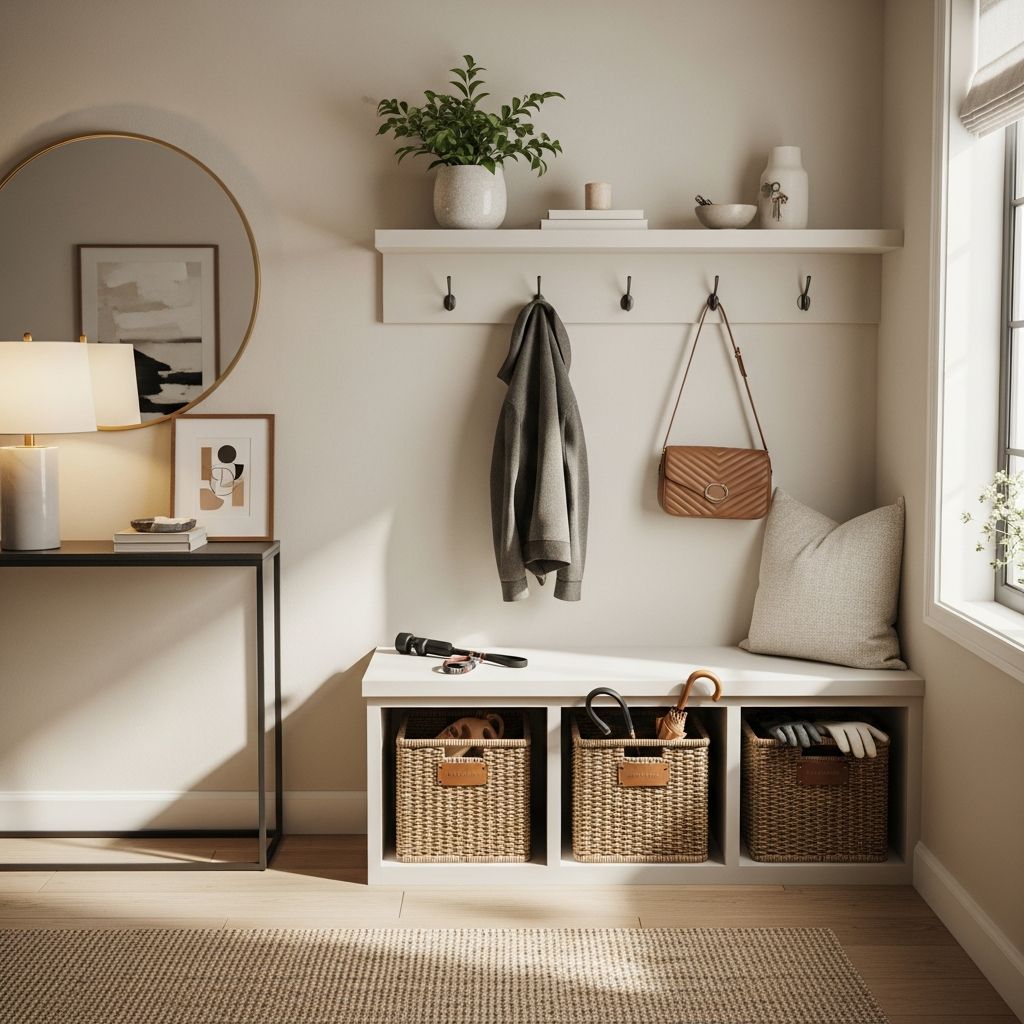
Smart Entryway Storage Ideas for a Calm, Clutter-Free Home
The entryway is the first space you see when you walk through the door—and often the first place to turn into a pile of shoes, bags, and mail. With thoughtful storage, this high-traffic zone can stay beautiful, functional, and easy to maintain.
This guide walks through practical, design-forward ways to organize every type of entry, from a tiny apartment nook to a busy family mudroom, using easy-to-adapt ideas and layouts.
Why Entryway Storage Matters
Good storage at the door saves time every morning, prevents mess from spreading through the house, and makes your home feel calmer the moment you step inside. A well-planned entry also protects floors and furniture from dirt, water, and heavy use.
Instead of treating this small area as an afterthought, think of it as your home’s command center where everything you carry in and out has a defined place to land.
Start With a Simple Entryway Assessment
Before buying storage furniture or drilling into walls, take a few minutes to assess how your entry currently functions and what constantly ends up on the floor or kitchen counters.
- Count daily items: Think coats, shoes, backpacks, purses, keys, dog leashes, and mail.
- Measure your space: Note wall width, ceiling height, door swing, and any nearby outlets.
- Observe patterns: Where do people naturally drop things now? Design storage around those habits instead of fighting them.
Core Storage Zones Every Entry Needs
Even in a very small hallway, you can create distinct zones to manage clutter. These zones don’t need to be large; they just need to be intentional and consistent.
| Zone | Main Purpose | Typical Storage Pieces |
|---|---|---|
| Landing spot | Catch small items immediately at the door. | Console table, wall shelf, tray, small bowl. |
| Shoe area | Keep floors clear and dirt contained. | Shoe rack, cabinet, bench with cubbies, boot tray. |
| Outerwear zone | Organize coats, bags, and hats. | Wall hooks, coat rack, peg rail, small closet system. |
| Paper & mail station | Prevent piles on counters and tables. | Wall sorter, file box, labeled baskets or folders. |
| Specialty storage | Handle items like umbrellas, sports gear, or pet supplies. | Umbrella stand, lidded bin, baskets, labeled tubs. |
Space-Saving Storage for Small Entryways
Tiny entries and apartment hallways can still feel organized with a light footprint and smart use of vertical space. The goal is to add storage without blocking movement or making the area feel cramped.
- Choose shallow pieces: Look for shoe cabinets or consoles under 12 inches deep that hug the wall but still offer hidden storage.
- Use the wall height: Install hooks, narrow shelves, or pegboards up the wall to hold bags, hats, and accessories.
- Opt for lift-top seating: A slim bench with interior storage doubles as a place to sit and stash shoes or seasonal gear.
Designing a Family-Friendly Drop Zone
In busy households, the entryway has to handle backpacks, sports bags, school papers, and multiple pairs of shoes for each person. A simple, repeatable system makes it easier for everyone to clean up quickly.
- Create a station per person: Use hooks and cubbies labeled with names or icons so kids can recognize their own zone.
- Add open bins for grab-and-go items: Baskets for hats, gloves, and scarves keep daily extras contained but easy to reach.
- Lower storage for kids: Place hooks and shoe baskets at kid height to encourage independence and reduce bottlenecks around one coat rack.
Entry Benches That Work Overtime
An entry bench is one of the hardest-working pieces you can add. It provides a place to sit while tying shoes, adds a visual anchor, and often doubles as hidden storage.
- Lift-top benches: Great for hiding bulky items like extra shoes, sports equipment, or seasonal accessories.
- Bench with baskets: Open cubbies paired with labeled baskets make it easy to see and reach what you need.
- Drawer benches: Ideal when you want a neat, streamlined look and dust-free storage for smaller items.
Wall Storage: Hooks, Rails, and Pegboards
Walls are often the most underused part of an entryway. Thoughtful wall storage frees up precious floor space while keeping everyday items visible and accessible.
- Hooks and peg rails: Install a row of hooks for coats and bags, and a second lower row for kids or smaller items.
- Floating shelves: A narrow shelf can hold mail, keys, sunglasses, and decor without requiring a full piece of furniture.
- Pegboard or slatwall: Perfect for flexible storage; rearrange pegs, baskets, and small shelves as your needs change.
Shoe Storage That Actually Gets Used
The best shoe storage is the one your household will use every day without thinking. Matching the system to your habits is more important than maximizing capacity.
- Open racks: These make it easy to see every pair and encourage quick drop-off as people walk in.
- Closed cabinets: Great when you want a tidy look and have time to tuck shoes behind doors or into pull-out drawers.
- Boot trays and mats: Contain dirt, water, and salt near the door, especially in climates with snow or heavy rain.
Consoles, Sideboards, and Slim Cabinets
If your entry opens into a slightly larger foyer or hallway, a console table or slim cabinet can act as a command center for the household. Choose pieces that feel balanced with the scale of the space.
- Console with drawers: Perfect for hiding keys, chargers, masks, and other small items that otherwise end up in a junk bowl.
- Sideboard or credenza: Works well near a dining room entry to store table linens, entertaining supplies, and seasonal decor alongside daily essentials.
- Narrow cabinet with doors: Ideal when you prefer everything concealed but still need easy access to shoes and bags.
Using Baskets, Bins, and Boxes Wisely
Containment is the secret to a visually calm entryway. Baskets and bins corral loose items, reduce visual noise, and make it easier to clean up quickly when guests arrive.
- Mix sizes and shapes: Large bins for shoes or sports gear, medium baskets for scarves and hats, and smaller containers for keys and mail.
- Choose sturdy materials: Woven baskets, metal bins, and canvas totes stand up to daily traffic and are easy to clean or replace.
- Label everything: Simple tags or clip-on labels help everyone know where items belong and keep the system running smoothly.
Mail, Paperwork, and Key Control
Without a plan, mail and paperwork quickly overrun kitchen counters and dining tables. A small, dedicated station by the door keeps paper clutter in check.
- Wall-mounted organizers: Use vertical sorters with sections for incoming mail, items to process, and outgoing documents.
- Key hooks and trays: Install tiny hooks or a magnet strip, and pair them with a small tray for loose items like change and receipts.
- Routine clean-out: Set a weekly time to empty the organizer so it doesn’t become a long-term storage spot.
Multi-Purpose Entryway Furniture
In compact homes, every piece of furniture should earn its footprint. Look for items that combine storage, seating, and display without feeling bulky.
- Hall trees: These combine a bench, hooks, and sometimes drawers or shelves in one vertical unit.
- Storage ottomans: Use a pair under a console or in front of a window for extra seating and hidden storage.
- Convertible pieces: Consider modular cube systems or stacking units that can evolve as your household changes.
Entryway Lighting and Mirrors
Good lighting and a well-placed mirror make an entry feel welcoming and help it function smoothly in early mornings and late nights. They also affect how spacious the area appears.
- Layered lighting: Combine an overhead fixture with a table lamp, wall sconce, or motion-sensor nightlight near the floor.
- Mirrors with storage: Choose mirrors with small shelves, hooks, or ledges built in to maximize every inch.
- Light colors and reflective finishes: Pale walls, glass, and metallic accents bounce light and make compact entries feel larger.
Rugs, Mats, and Floor Protection
Rugs and mats do more than add color; they protect your floors and help define the entry as its own zone. The right material also makes cleanup easier.
- Outdoor and indoor mats: Use a coarse mat outside to catch debris and a more absorbent rug just inside to handle moisture.
- Low-pile or flatweave rugs: These are safer around doors, easier to vacuum, and less likely to show wear in high-traffic areas.
- Washable runners: Ideal for long hallways that act as extended entries, especially in homes with kids and pets.
Seasonal and Occasional Storage Strategies
Entryway needs shift with the seasons, so plan for items that come and go throughout the year. Flexible systems keep this transition simple instead of chaotic.
- Rotate items: Store out-of-season gear in higher cabinets or a different closet, and bring only current essentials down to entry level.
- Use vacuum bags and under-bench bins: These keep bulky coats and boots compact and dust-free when not in use.
- Keep a guest basket: Fill it with spare slippers, an umbrella, and lightweight blankets for visitors.
Entryway Design Tips for Style and Personality
Storage does not have to look purely utilitarian. With a few styling tricks, your entry can feel designed and welcoming while still working hard behind the scenes.
- Limit your color palette: Choose two or three main colors for rugs, baskets, and furniture to avoid a chaotic look.
- Mix textures: Combine wood, metal, woven baskets, and soft textiles to add depth and warmth.
- Add personal touches: Hang art, family photos, or a statement mirror to make the space feel intentional rather than purely functional.
Easy Maintenance Routines for a Tidy Entry
Even the best storage system fails without simple habits. Light, consistent routines keep the entry organized without turning it into a big weekly chore.
- Daily two-minute reset: Hang coats, return shoes to their spots, and clear the landing tray at the end of the day.
- Weekly sweep: Shake out rugs, wipe surfaces, and quickly sort any lingering mail or papers.
- Monthly edit: Donate or relocate items that no longer belong near the door, such as outgrown shoes or unused accessories.
Frequently Asked Questions
How can I organize an entry with no closet?
If your home lacks a dedicated coat closet, build a “closet on the wall” using a combination of hooks, a freestanding garment rack, and a storage bench or shoe cabinet. Add baskets or bins above or below for accessories, and consider a tall hall tree if you have enough ceiling height.
What is the best way to store shoes at the door without making the space look messy?
Limit the number of pairs allowed in the entry and use a contained system such as a closed shoe cabinet, lidded baskets under a bench, or a low rack with a boot tray underneath. Keep extras in a bedroom closet, rotating only current favorites and everyday pairs to the entryway.
How much space do I need for an entry bench?
Many entry benches are between 32 and 48 inches wide, but even a 24-inch-wide bench can work in tight spaces if it leaves comfortable clearance for the door to open. Aim for at least 18 inches of depth or less in narrow hallways so traffic can flow easily past the seating.
How do I keep my kids from dropping everything on the floor?
Give each child a specific hook and bin at their own height and walk them through the routine of using it every day. Make the system as easy as possible—no lids to remove, no tiny compartments—and praise quick clean-up to help it become a habit.
Can an entryway be both minimal and practical?
Yes, as long as storage is built into streamlined pieces like hidden cabinets, benches with interior compartments, or wall-mounted systems that blend with the wall color. Keep surfaces mostly clear, limit decor to a few well-chosen items, and rely on concealed storage to manage visual clutter.
Similar Articles






Read full bio of Sneha Tete