Restoring Solid Wood Tables: Complete Crack Repair Guide
Master the art of fixing wood table cracks with proven techniques and materials
Wood is a living material that naturally expands and contracts with seasonal humidity changes, making cracks and splits in solid wood tables a common occurrence over time. Whether your table has developed a hairline fracture or a more substantial split, understanding the right repair approach can restore your furniture to its former beauty and functionality. This comprehensive guide walks you through the various methods available for addressing wood table cracks, helping you choose the most appropriate solution for your specific situation.
Understanding Why Solid Wood Tables Develop Cracks
Before tackling repairs, it’s important to understand the root causes of wood cracking. Solid wood moves constantly as it responds to moisture in the air. During dry seasons or in climate-controlled environments with low humidity, wood loses moisture and shrinks. Conversely, when humidity increases, wood absorbs moisture and expands. This natural movement can create internal stress that eventually leads to visible cracks, particularly along the grain. The orientation and grain pattern of your wood significantly affect crack formation and propagation.
Tables made from quality hardwoods may seem more prone to cracking than others, but this is actually because solid hardwood moves more noticeably than engineered wood products. The wider the table surface, the more dramatic the movement can be, creating greater stress that leads to splitting. Understanding this fundamental property helps explain why prevention and proper repair techniques matter so much.
Assessing the Damage Before Beginning Work
The first step in any repair project involves carefully evaluating the crack’s characteristics. Examine whether the crack runs with the grain or against it, as this affects repair strategy. Check the crack’s depth by gently probing with a thin tool to determine if it’s surface-level or extends through the table’s thickness. A crack that passes completely through requires different treatment than one that affects only the top surface or veneer.
Consider the location of the crack relative to the table’s structure. Cracks near the edges differ from those in the center, and splits along stress-bearing areas need more robust reinforcement. Measure the crack’s length to understand the scope of the problem. Small hairline cracks may require minimal intervention, while longer splits demand more comprehensive solutions to prevent further propagation.
Primary Repair Methods for Wood Table Cracks
The Adhesive Reinforcement Approach
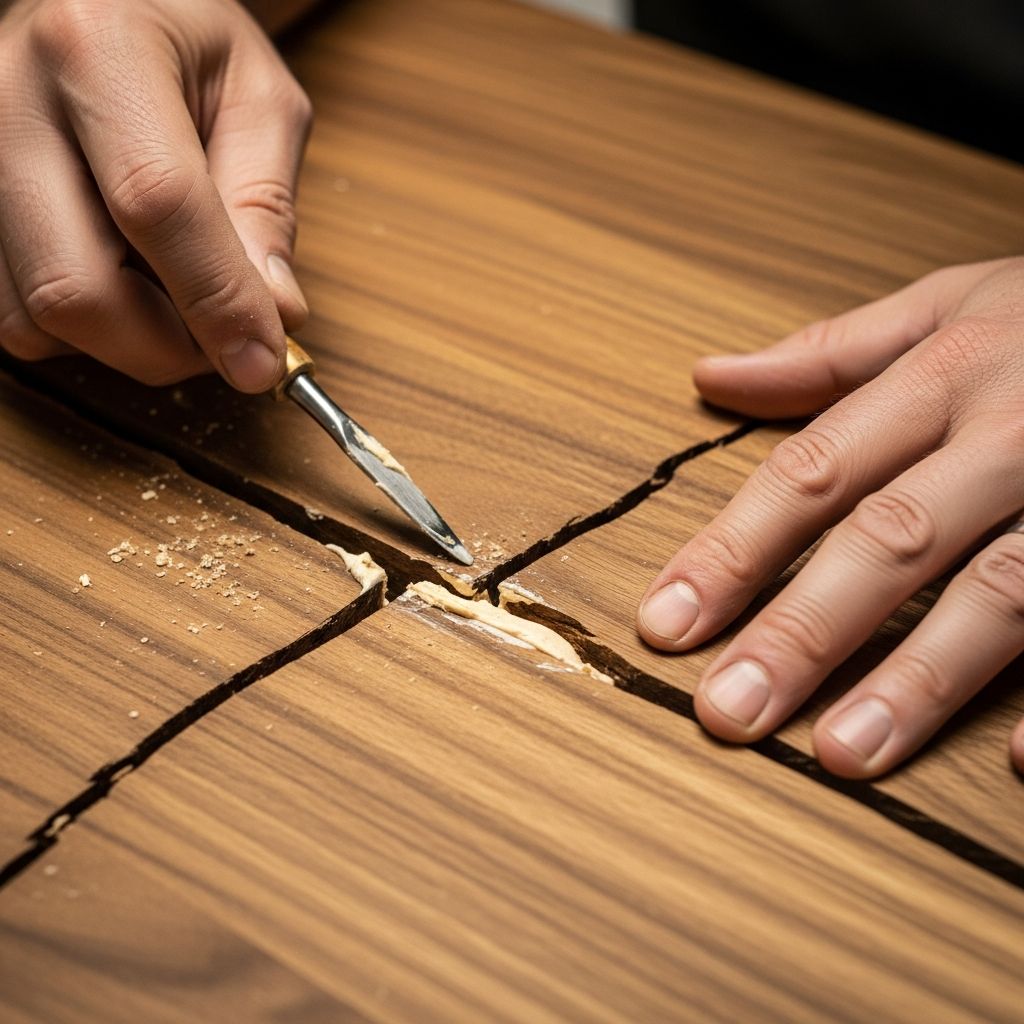
For cracks that haven’t completely severed the wood, using high-quality wood glue provides an effective solution that leverages the wood’s natural cohesion. This method works best when you have access to both sides of the crack and can apply proper clamping pressure. Start by carefully cleaning out the crack using a thin blade or compressed air to remove any dust, debris, or loose wood particles that might prevent proper glue penetration.
Apply the wood glue generously into the crack, working it deep into the opening with a thin applicator or syringe-style glue bottle. For very deep cracks, you may need to apply glue in multiple applications, allowing each layer to begin setting before adding more. Position a barrier—such as painters’ tape or masking tape—underneath the crack to prevent glue from dripping through onto the table’s underside and damaging any existing finish.
Once the glue fills the crack, use appropriate clamping pressure to hold the wood together while the adhesive sets. Ratchet straps, bar clamps, or C-clamps can provide the necessary tension. Place scrap wood blocks between the clamps and the table surface to protect the finish from clamp marks. Leave the clamps in place for the full curing time recommended by the glue manufacturer—typically 24 hours for standard wood glues.
The Epoxy Fill Technique
Epoxy offers advantages when cracks are too wide for glue alone or when you need a filler material. Two-part epoxy can bridge gaps and, when combined with additives like wood shavings or glass beads, creates a stronger repair that fills voids completely. Mix epoxy according to product instructions, typically combining resin and hardener in specified ratios.
Prepare the crack surface by cleaning thoroughly and removing any loose material. Apply painters’ tape to the underside of through-cracks to act as a dam, preventing epoxy from flowing through to the bottom of the table. Mix the epoxy thoroughly to ensure the hardener fully activates the resin, then apply it into the crack using a plastic spreader or putty knife. Work methodically to ensure the epoxy reaches all areas of the crack.
Epoxy requires patience during curing—most formulations need 24 to 72 hours to fully harden, depending on ambient temperature and the specific product used. Once fully cured, sand the surface smooth to blend the repair with surrounding wood, then refinish to match the original table appearance.
The Bowtie Reinforcement Method
For significant cracks that threaten structural integrity, a bowtie—a figure-eight-shaped piece of wood inlaid across the crack—provides mechanical reinforcement that prevents the crack from reopening. This technique involves cutting a precisely-angled slot into the table’s surface that crosses perpendicular to the crack direction. A matching bowtie piece is then glued into this slot, physically bridging and restraining the crack.
Creating a bowtie requires more advanced woodworking skills and tools, including a router or specialized sawing equipment to cut the symmetrical slot. The repair remains visible once completed, so many craftspeople use contrasting wood for aesthetic appeal, creating an intentional decorative feature rather than attempting to hide the repair.
Tools and Materials Required for Different Approaches
| Repair Method | Essential Tools | Key Materials | Curing Time |
|---|---|---|---|
| Wood Glue Adhesion | Clamps, tape, thin applicator | Quality wood glue, scrap blocks | 24 hours |
| Epoxy Filling | Mixing cup, spreader, sandpaper | Two-part epoxy, painters’ tape, sanding materials | 24-72 hours |
| Bowtie Reinforcement | Router, chisels, clamps, saws | Contrasting wood stock, quality adhesive | 24 hours |
| Dowel Reinforcement | Drill, dowels, clamps, saw | Wood dowels, glue, sandpaper | 24 hours |
Advanced Techniques: Dowel Reinforcement
When a crack originates from end grain or occurs in areas prone to seasonal splitting, drilling perpendicular to the crack direction and inserting wood dowels provides additional strength. This technique works by creating mechanical locks that prevent the crack from opening. Mark points along the crack at regular intervals—typically 1 to 2 inches apart—and drill holes from the table’s side edge, angling slightly to pass through the crack area.
Apply quality wood glue into both the drilled holes and the crack itself. Insert dowels into the holes, ensuring they sit flush or slightly proud of the surface, then clamp the assembly. Once the glue cures, sand the dowel ends smooth to blend with the surrounding surface. This reinforcement method has proven effective for seasonal cracks that traditionally resist other repair approaches.
Surface Preparation and Finishing Steps
Regardless of which repair method you choose, proper surface preparation ensures professional-looking results. After the adhesive or filler has cured completely, use a hand plane or power planer to level any raised areas where glue, epoxy, or dowels extend above the original surface. Follow with progressive sanding, starting with coarser grits and working toward finer grits to achieve a smooth, even surface.
Begin with 100-grit sandpaper to address major irregularities, progress to 150-grit for smoothing, then finish with 220-grit or higher for a refined surface suitable for staining. Sand with the grain direction to avoid creating scratches that become visible once you apply finish. Remove all dust with a tack cloth before proceeding to finishing.
Match the finish to your table’s original appearance. If the table has a stain, apply matching stain to the repair area first, allowing it to penetrate equally with surrounding wood. Apply topcoat finishes—whether polyurethane, lacquer, or oil—in the same manner as the original finish to ensure color and sheen consistency across the entire surface.
Prevention Strategies for Future Crack Development
After investing time and effort into repairing a crack, protecting your table from future damage makes sense. Maintain stable indoor humidity levels between 30 and 50 percent, as this minimizes the expansion and contraction cycles that create stress in wood. Use humidifiers in dry climates and dehumidifiers in damp environments to maintain these levels year-round.
Protect table surfaces from direct sunlight, which causes uneven drying and stress on the wood. Position tables away from heating vents, air conditioning outlets, and other sources of rapid moisture fluctuation. Use coasters under beverages and place mats under decorative items to prevent moisture from being absorbed into specific areas of the surface.
Apply appropriate finishes that provide moisture barriers while still allowing some wood movement. High-quality topcoats help regulate moisture absorption, reducing the severity of expansion and contraction cycles. Regular maintenance with appropriate wood care products keeps the finish intact and protective.
When Professional Help Becomes Necessary
Some situations warrant consultation with a professional furniture restorer or master woodworker. If a crack affects the table’s structural integrity or has caused multiple secondary cracks to develop, professional assessment helps determine whether repair or replacement is more practical. Tables with valuable wood species, antique tables, or pieces with significant monetary or sentimental value deserve expert care to ensure restoration efforts enhance rather than diminish the piece.
Professional restorers have specialized equipment and materials not typically found in home workshops, including industrial-grade epoxies, specialized clamping systems, and advanced finishing capabilities. They also possess extensive experience diagnosing crack causes and recommending preventive measures specific to your table and environment.
Frequently Asked Questions
How long does it take to repair a cracked wood table?
Basic repairs using wood glue and clamps can take 30 minutes to an hour of active work time, plus 24 hours curing time. Epoxy repairs require similar work time but extend curing to 24-72 hours. More complex repairs involving bowties or dowels may require additional time for cutting and fitting components before assembly.
Can I use regular wood filler for table cracks?
While wood filler works for small surface gouges, it’s not ideal for structural cracks in tables. Filler can shrink and crack over time, and it doesn’t restore the wood’s strength. For functional repairs, adhesives or epoxy provide superior results.
What’s the difference between wood glue and epoxy for repairs?
Wood glue works best when you can apply pressure and the crack surfaces fit together closely. Epoxy fills gaps and works better for cracks that have separated or widened. Epoxy requires no clamping but needs longer curing time.
Will my repaired table withstand daily use?
Yes, when completed properly using appropriate methods and materials. The repaired area should match or exceed the strength of surrounding wood, making it fully functional for normal table use. Proper finishing protects the repair and helps prevent future cracking in that area.
How can I prevent new cracks from forming?
Maintain consistent humidity levels, avoid placing the table in direct sunlight or near heat sources, and use proper coasters and mats. Apply protective finishes and conduct regular maintenance to keep the wood properly sealed and protected.
References
- Fixing a Crack in a Solid Wood Table Top — YouTube. 2024. https://www.youtube.com/watch?v=6LF4IyAFtLs
- How to Repair Cracks in Wooden Furniture — Laurel Crown. 2024. https://www.laurelcrown.com/how-to-repair-cracks-in-wooden-furniture
- Repairing an End Grain Crack in a Table Top — WoodWeb. https://woodweb.com/knowledge_base/Repairing_an_End_Grain_Crack_in_a_Table_Top.html
- Fixing a Cracked or Split Table Top (Easy DIY) — YouTube. 2024. https://www.youtube.com/watch?v=yQaBnCoW13k
- Wood Repair: Simple Methods to Fix Cracks — YouTube. 2024. https://www.youtube.com/watch?v=ZBbCf_UX7Z8
Similar Articles



Read full bio of medha deb