Build a Space-Saving Coil Garden Hose Station for a Tidy Yard
Organize your outdoor watering with a compact, custom coil hose system.
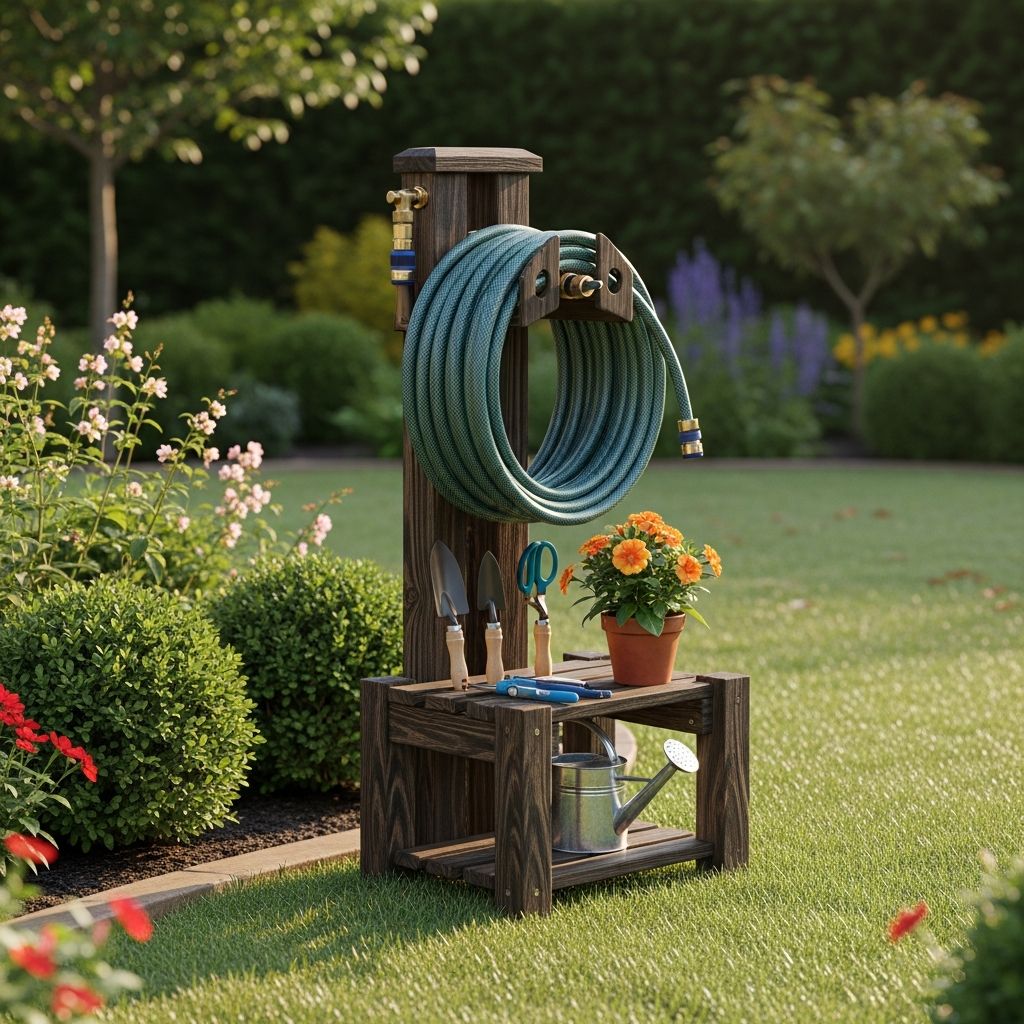
A coil garden hose station is a simple DIY upgrade that keeps your hose neatly contained, prevents tripping hazards, and makes everyday watering feel organized instead of chaotic. Instead of dragging a heavy hose across the yard and wrestling it back into a tangled pile, you can create a compact, wall-mounted or freestanding system that lets the hose stretch where you need it and coil back into place when you are done.
Why Choose a Coil Garden Hose System?
Traditional hoses often end up in messy heaps that encourage kinks, leaks, and premature wear. A coil garden hose system manages the full length of the hose within a defined footprint, so it retracts more predictably and stays off high-traffic areas. This approach saves time every time you water while protecting the hose from damage caused by crushing, sharp bends, and constant sun exposure.
Beyond convenience, a dedicated station can improve safety by reducing trip hazards near doors, walkways, and driveways. It also adds a professional, finished look to your outdoor space, especially when the base, hardware, and hose color coordinate with siding, trim, or fencing.
Planning Your Hose Station Layout
Before buying hardware or cutting lumber, spend a few minutes thinking about how and where you actually water. A good layout minimizes unnecessary walking, avoids sharp corners that stress the hose, and keeps the connection point close to your existing spigot. This planning step shapes your choice of hose type, mount style, and footprint size.
Ask yourself how far the hose needs to reach in every direction and whether you want it anchored to a wall, fence, or a freestanding post. Also consider whether you prefer a tightly wound coil for maximum compactness or a looser, more relaxed coil that is easier to pull from and rewind.
Key Questions Before You Start
- Where is the main outdoor spigot located in relation to your garden beds, lawn, or driveway?
- Do you have a sturdy wall, fence, or post that can support the weight of the hose and hardware?
- How many feet of hose do you realistically need for everyday watering?
- Will the hose station live in full sun, deep shade, or a mix of both conditions?
- Do you want the system to be semi-permanent or easily removable for winter storage?
Choosing the Right Hose and Materials
The success of a coil hose station depends heavily on matching the hose and materials to your space and usage. Lightweight hoses work well for tight coils and frequent use, while heavier, commercial-grade hoses tolerate rough surfaces but may require a larger diameter coil or stronger mounting hardware. Aim for a balance that feels easy to handle but durable enough for your climate.
Pay attention not only to hose diameter and length but also to the fittings and any quick-connect accessories you want to use. High-quality brass or stainless fittings reduce leaks and stand up better to repeated twisting as the hose coils and uncoils around the station.
Material Comparison for Hose Stations
| Component | Common Material | Advantages | Considerations |
|---|---|---|---|
| Mounting base | Pressure-treated lumber | Easy to cut and work with; strong; paintable or stainable. | Must be sealed properly; heavier than metal brackets. |
| Coil support frame | Galvanized steel or aluminum | Resists rust; slim profile; supports heavy hoses. | May require metal-specific drill bits and fasteners. |
| Fasteners | Exterior-grade screws/lag bolts | Secure attachment to studs or posts; weather-resistant. | Incorrect length can weaken the mount or damage siding. |
| Hose type | Coil or flexible garden hose | Stores compactly; easy to extend and retract. | Cheaper versions may kink or crack under UV exposure. |
Tools and Supplies Checklist
Gather your tools and supplies before assembly so you can work efficiently and avoid mid-project trips to the store. Most hose station designs rely on common carpentry and plumbing tools that many DIYers already own, with just a few specialty items for exterior mounting.
Lay everything out near your work area and verify that drill bits, screws, and anchors match the materials you are fastening into. This simple step prevents stripped holes, loose brackets, and wobbly mounts that shorten the life of the station.
Typical Tools
- Measuring tape and pencil for marking hole locations and clearances.
- Drill/driver with wood and masonry bits, depending on your wall type.
- Level for aligning the base and coil supports.
- Hand saw or circular saw if cutting boards for a backing panel or post.
- Adjustable wrench or pliers for tightening plumbing fittings.
- Safety glasses and work gloves to protect eyes and hands.
Sample Materials List
- Garden hose (length based on your layout).
- Mounting board or post (cedar, redwood, or treated lumber).
- Coil support hardware (metal loops, hooks, or shaped brackets).
- Exterior-grade screws, lag bolts, or anchors suitable for your wall.
- Thread seal tape for threaded plumbing connections.
- Optional quick-connect fittings and shut-off valves for convenience.
Designing the Coil Shape and Size
The physical shape of the coil controls how easily the hose feeds out and retracts. A tight spiral saves the most space but can increase stress on stiff hose materials, while a looser pattern allows smoother movement and faster use. Design your coil so each loop lies flat without crossing or pinching adjacent loops.
For most residential hoses, aim for an inner coil diameter large enough that the hose bends without feeling forced. If the hose fights the shape or wants to spring out of the coil, expand the diameter or reduce the number of layers stacked vertically on the station.
Coil Layout Options
- Vertical spiral: Loops stack on top of each other on a wall-mounted frame, ideal for narrow spaces.
- Horizontal reel-style coil: Hose wraps around a central hub or drum, good for long hoses and frequent use.
- Layered basket coil: Hose rests in a shallow container or open box with guides to keep layers in place.
Building a Wall-Mounted Coil Hose Station
A wall-mounted station suits patios, garage exteriors, and fence lines where you can easily access framing or sturdy posts. The basic idea is to secure a backing board to the structure, then attach coil-shaped supports that guide the hose into a tidy stack. Take your time with alignment to keep the coil square and balanced.
Even a simple arrangement of two or three concentric loops can efficiently store a full-length hose when placed at a comfortable height. If several people will use the hose, choose a mounting height that works for the shortest adult user to avoid strain during rewinding.
Step-by-Step Assembly
- Mark the mounting area: Use a level and pencil to outline the top and bottom of the backing board, making sure it clears nearby doors, windows, and outlets.
- Attach the backing board: Pre-drill holes through the board and into studs or post centers, then fasten with exterior-grade screws or lag bolts.
- Install coil supports: Attach metal loops, shaped brackets, or custom-cut wooden arms in a pattern that creates your desired coil diameter.
- Connect the hose: Thread the hose onto the spigot or a short extension pipe, using seal tape on threaded joints to prevent leaks.
- Test the coil: Pull the hose fully out and rewind it slowly, adjusting support spacing wherever loops overlap or pinch.
Creating a Freestanding Hose Station
If you do not have a suitable wall or fence, a freestanding post is an effective alternative. This design uses a buried or anchored post to support the coil hardware at a convenient height, often near a spigot or in the middle of a large garden where coverage matters most. Choose rot-resistant lumber or metal for longevity in damp soil.
Because a freestanding station supports all the hose weight without help from a structure, the base must be secure. Set posts in concrete or use ground anchors rated for the combined weight of the station and a fully wet hose.
Freestanding Build Basics
- Dig a post hole deep enough to sit at least one-third of the post’s length below grade.
- Level the post and brace it temporarily while concrete sets or anchors are tightened.
- Attach a mounting panel and coil supports once the base feels solid.
- Route a short, flexible connector hose from the spigot to the station if needed.
Reducing Kinks and Extending Hose Life
The way you coil and uncoil the hose matters just as much as the station’s design. Forcing the hose to twist against its natural curve creates kinks that weaken the wall of the hose and may eventually cause leaks. Learn to follow the hose’s preferred bend direction while guiding it into the coil.
When possible, straighten the hose on the ground before the first use and let it warm in the sun, then form the initial coil gently. Over time, the material will develop a memory for that shape, making it easier to rewind with fewer tangles or sudden bends.
Best Practices for Daily Use
- Turn off the water and release pressure from the nozzle before rewinding the hose.
- Walk the hose back toward the station, guiding loops into place rather than dragging it across rough surfaces.
- Avoid tight, sharp bends around corners or posts that can compress the hose wall.
- Store the hose out of direct midday sun when possible to slow down cracking and fading.
Finishing Touches and Aesthetic Upgrades
A coil hose station does not have to be purely utilitarian. With a bit of extra effort, the backing board, post, and hardware can become a subtle design feature that blends into your landscaping. Matching the finish to your house trim or deck railings helps the station disappear visually while remaining easy to use.
Consider adding small shelves, hooks, or labels to keep nozzles, sprinklers, and watering wands organized. Grouping related tools around the station means you do not have to chase parts across the yard whenever you switch from a spray nozzle to a soaker attachment.
Simple Customization Ideas
- Paint or stain the backing board in a color that coordinates with nearby structures.
- Use decorative metal brackets that echo existing outdoor hardware or railings.
- Add a small sign or label to distinguish hot and cold spigots if both are present.
- Install a narrow shelf above the coil area for hose nozzles and hose repair kits.
Maintenance, Repairs, and Seasonal Care
Regular attention keeps both the hose and the station performing well season after season. Inspect the coil supports and mounting hardware periodically for rust, loosening, or cracks in the backing material, especially after severe storms or freeze-thaw cycles. Tighten or replace hardware as needed before minor issues become failures.
For the hose itself, look for flattened spots, bulges, or persistent kinks while it is under pressure. Addressing these early with simple repair couplings or trimming out damaged sections prolongs hose life and avoids mid-watering bursts that waste water and create muddy patches.
Seasonal Care Tips
- Before the first freeze, disconnect the hose, drain it fully, and store it indoors or in a sheltered area.
- In early spring, check for leaks at fittings and around the spigot before daily use resumes.
- Reapply exterior sealant or paint to wooden components every few years as needed.
- Lubricate any moving parts on reels or swivel connectors according to manufacturer instructions.
Frequently Asked Questions
How long should a garden hose be for a coil station?
Choose a hose length that reaches the farthest area you need to water plus a small buffer, rather than buying the longest hose available. Oversized hoses are heavier, harder to coil, and more likely to snag on corners, so matching length to actual use keeps the station compact and manageable.
Can a coil hose station handle heavy commercial hoses?
Yes, but the structure and hardware must be scaled accordingly. Use a stronger backing board or post, larger-diameter coil supports, and heavier fasteners rated for exterior loads, and keep the coil height modest so the station does not tip or pull away from its mounting surface.
Is it better to mount the hose horizontally or vertically?
Horizontal reel-style mounting is usually best for very long hoses and frequent use because it distributes weight evenly around a central hub. Vertical coils on a wall or post are ideal for shorter hoses and tight spaces where a low-profile footprint is more important than maximum capacity.
Do I need special tools to build a coil hose station?
Most projects only require basic carpentry and drilling tools along with exterior-grade screws or anchors. Specialty tools are generally optional, reserved for more elaborate metalwork, custom brackets, or advanced plumbing modifications beyond a simple spigot connection.
How do I keep the hose from tangling when rewinding?
Release water pressure, walk the hose toward the station, and guide it into the coil along its natural curve instead of twisting it aggressively. Consistent technique helps the hose develop a predictable memory for the coil pattern, so it feeds out and returns smoothly with minimal tangling.
Similar Articles





Read full bio of medha deb